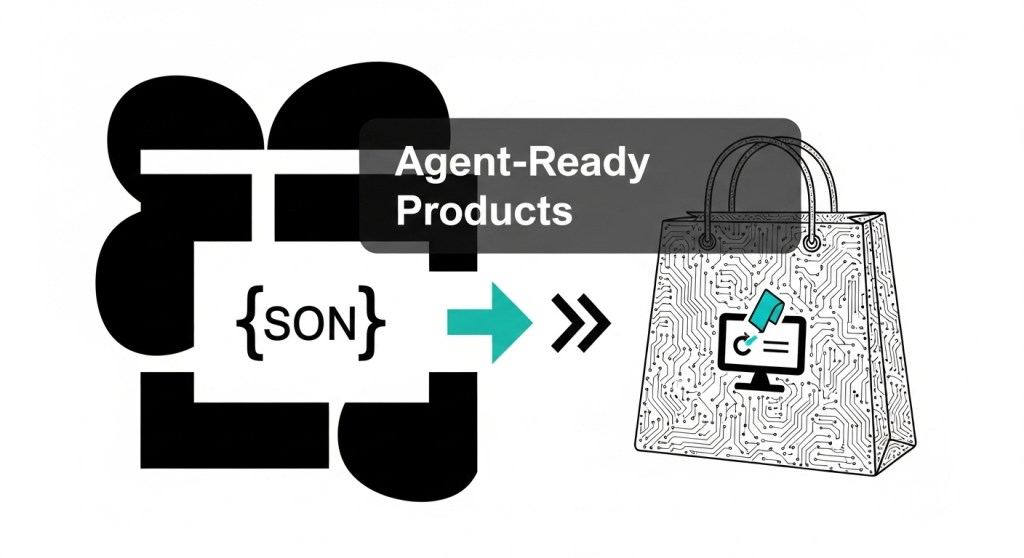
TL;DR: Agent checkout is here. With Google’s Agent Payments Protocol (AP2) and OpenAI/Stripe’s Agentic Commerce Protocol (ACP), buyers can complete purchases inside agents like ChatGPT or via interoperable agent flows. Expose your catalog cleanly and safely with seven lightweight assets: JSON‑LD, product sitemaps, a minimal Products API, an MCP server, AP2/ACP endpoints (or stubs), a secure agent webhook, and observability. Then track agent‑led revenue with a few key KPIs.
Why now? Google announced AP2 with backing from more than 60 payments and tech partners, and Stripe/OpenAI launched ACP to power Instant Checkout in ChatGPT. Microsoft, meanwhile, is backing open agent protocols like A2A and MCP across its platforms. Together, this signals a pragmatic shift from demos to dependable agent commerce. TechCrunch on AP2, Google Cloud blog, Stripe on ACP, Worldpay support, Microsoft + A2A, Anthropic on MCP.
Who this is for
- Shopify/WooCommerce operators who want agent‑led discovery and checkout (AP2/ACP) without a full rebuild.
- Founders and product leads who need measurable wins (catalog exposure, safer payments, traceable attribution) this quarter.
- Dev leads who prefer standards (Schema.org, MCP, OpenAPI) and minimal glue code over monoliths.
The 7‑Asset Starter Kit
Use these seven assets to make your products easy for agents to find, understand, and purchase.
1) Product JSON‑LD (Schema.org Product + Offer)
Add rich structured data to every PDP. This is still the lowest‑effort way to make details unambiguous to answer engines and agents.
<script type="application/ld+json">
{
  "@context": "https://schema.org",
  "@type": "Product",
  "name": "Acme Road Helmet",
  "sku": "AC-HELM-42",
  "image": ["https://example.com/img/helmet42.jpg"],
  "description": "Lightweight MIPS road helmet with magnetic buckle.",
  "brand": {"@type": "Brand", "name": "Acme"},
  "offers": {
    "@type": "Offer",
    "price": "119.00",
    "priceCurrency": "USD",
    "availability": "https://schema.org/InStock",
    "url": "https://example.com/products/helmet-42"
  }
}
</script>
Tip: keep titles concise, expose SKU/GTIN, and include canonical URLs and in‑stock signals.
2) Product sitemap (fast discoverability)
Ship a dedicated sitemap_products.xml including PDPs and category hubs. Update hourly during promotions. Link it from /robots.txt.
3) Minimal Products API (documented with OpenAPI)
Expose a read‑only, rate‑limited JSON endpoint for agents to fetch what the page already shows (no privileged data). Document it with OpenAPI.
openapi: 3.0.3
info: { title: Products API, version: 1.0.0 }
paths:
  /api/products/{sku}:
    get:
      summary: Get product by SKU
      parameters:
        - in: path
          name: sku
          required: true
          schema: { type: string }
      responses:
        "200":
          description: OK
          content:
            application/json:
              schema:
                $ref: '#/components/schemas/Product'
components:
  schemas:
    Product:
      type: object
      properties:
        sku: { type: string }
        name: { type: string }
        description: { type: string }
        images: { type: array, items: { type: string, format: uri } }
        price: { type: number }
        currency: { type: string }
        availability: { type: string }
        url: { type: string, format: uri }
4) MCP server (catalog as tools)
The Model Context Protocol lets agents call your tools safely. Provide two tools: search_products and get_product_by_sku. Host locally first; add auth and per‑IP rate limits before public exposure. See Anthropic’s announcement and official GitHub org for SDKs and server examples. MCP overview, MCP GitHub.
{
  "name": "acme-catalog-mcp",
  "version": "0.1.0",
  "tools": [
    {"name": "search_products", "input_schema": {"q": "string", "limit": 10}},
    {"name": "get_product_by_sku", "input_schema": {"sku": "string"}}
  ]
}
5) AP2 or ACP checkout endpoints (agent‑safe transactions)
Pick the path your customers will meet first:
- ACP (OpenAI/Stripe) for ChatGPT Instant Checkout. Implement create/update/complete/cancel cart endpoints, secured with HMAC + HTTPS. Stripe ACP.
- AP2 (Google) for mandate‑based, payment‑agnostic flows. Implement intent and cart mandates; keep audit trails. Google AP2, coverage.
You can stub both in parallel and graduate the one your audience uses more.
6) Secure agent webhook (events + verification)
Create a single /agent-events webhook to ingest AP2/ACP events. Require signatures, rotate secrets, and store request/response bodies for dispute resolution. Consider Nvidia’s guardrails (content safety, topic enforcement, jailbreak prevention) if your agents converse pre‑checkout. TechCrunch.
7) Observability (OpenTelemetry + KPIs)
Emit traces from MCP tool calls and checkout steps. Three KPIs to watch:
- Agent‑discoverable coverage: % of in‑stock SKUs with valid JSON‑LD + sitemap entry + API response.
- Agent‑to‑cart rate: AP2/ACP intents that progress to cart mandates (or ACP checkout session creation).
- Agent AOV vs. site AOV: catch bundle/upsell opportunities surfaced in agent conversations.
For a deeper attribution setup, see our 14‑day playbook: From Clicks to Mandates.
Security and governance (don’t skip)
- Principle of least privilege: The Products API and MCP tools should only return public PDP data. No PII or admin‑only fields.
- Mandate hygiene: For AP2, store both intent and cart mandates with timestamps and IDs. For ACP, retain signed checkout payloads.
- Patch quickly: Early agent‑web stacks have had security hiccups; patch and pin dependencies, and add SSRF/path‑traversal tests to CI. Example.
- Human‑in‑the‑loop: For high‑risk SKUs (e.g., age‑restricted), route to review. Nvidia’s guardrails can help enforce topic/flow limits. Details.
Example: A weekend pilot
Scenario: Acme Cycling runs Shopify. Goal: win agent citations and enable Instant Checkout in ChatGPT while preparing for AP2.
- Embed JSON‑LD on top 50 PDPs; validate with Rich Results Test.
- Publish sitemap_products.xml; link from robots.txt.
- Stand up a read‑only Products API (
/api/products/{sku}); document with OpenAPI. - Deploy a local MCP server with
search_productsandget_product_by_sku. - Implement ACP endpoints for 1–2 SKUs; dogfood in staging; enable HMAC verification.
- Add /agent-events webhook; log all events; ship OpenTelemetry traces.
- Launch with a test cohort; monitor agent‑to‑cart and AOV for a week; iterate.
Want a deeper platform comparison before you pick browser vs. API agents? Read: Browser Agents vs API Agents and AP2 vs ACP checklist.
What good looks like by Day 14
- 80%+ in‑stock SKUs with valid JSON‑LD and API responses.
- AP2 or ACP integration live for your top 20 SKUs, with audit‑ready mandates/receipts.
- Agent traffic and conversions visible in your analytics, broken out by protocol/source.
- Guardrails and on‑call runbooks in place for agent incidents.
Reality check: agents aren’t magic
Operator stories show agents can over‑promise, confabulate, or wander without tight scopes, evals, and guardrails. Build instrumentation first; widen powers later. Wired case study.
Next steps
- Follow our AEO playbook to earn citations and answers from AI systems: Agent SEO (AEO) in 2025.
- Make your store agent‑ready end‑to‑end with practical steps and KPIs: Weekend build guide.
- Harden identity and anti‑spoofing before peak: 14‑day playbook.
Call to action: Ready to make your catalog agent‑readable? Book a 30‑minute working session with HireNinja. We’ll review your PDPs, generate the seven assets, and stand up a safe, measurable AP2/ACP pilot.
 HireNinja: Blog
Leave a comment