Planned steps checklist
- Scan what’s new: A2A for inter‑agent comms, MCP for tool/data access, AP2 for payments.
- Map 3 high‑ROI use cases (checkout recovery, returns/exchanges, proactive upsell) and required guardrails.
- Stand up a secure agent control plane (registry, IAM, gateway, observability).
- Implement AP2 mandates and A2A agent cards; enforce least‑privilege MCP.
- Instrument SLOs, red‑team, and go live behind feature flags.
Why this matters now
In 2025, three open standards matured fast enough to make agent‑led commerce viable:
- Model Context Protocol (MCP): open spec (introduced by Anthropic) to let agents access tools, files, and business systems via standard servers. Source.
- Agent2Agent (A2A): Google‑origin open protocol (now Linux Foundation) for secure agent‑to‑agent communication and capability discovery across apps and clouds. Microsoft added support in Azure AI Foundry and Copilot Studio. TechCrunch, Linux Foundation, Reuters.
- Agent Payments Protocol (AP2): payments layer that uses cryptographic mandates so agents can buy things safely on users’ behalf. Google and PayPal showcased merchant flows; AP2 extends A2A + MCP. Google Cloud, AP2 announcement (JP), ecosystem.
Translation: by 2026, your store won’t just sell to humans; you’ll negotiate and transact with customer agents. Early movers will control the experience, the data, and the margin.
Plain‑English primer
- MCP = your store’s secure set of “tools” (e.g., inventory, pricing, discounts, order APIs) exposed via standard servers that any compliant agent can use—under tight permissions.
- A2A = how agents talk to each other. Think secure handshakes with “agent cards” describing capabilities, auth, and endpoints.
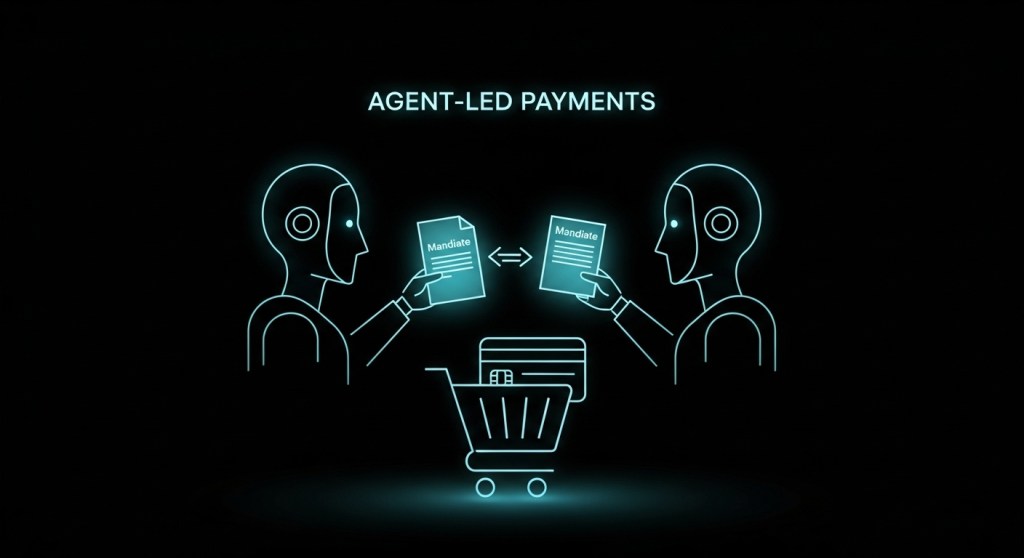
- AP2 = how agents pay. Mandates are cryptographically signed instructions (“buy 2 tickets, max $200”), creating an auditable trail that issuers and networks can verify.
Reference architecture for an AP2‑ready commerce agent
- Agent control plane: Registry of approved agents + identity/permissions for each. Start here: Ship an AI Agent Registry + IAM in 7 Days.
- MCP servers: Wrap your core commerce functions (catalog, pricing, carts, orders, refunds). Enforce least‑privilege tokens and per‑tool scopes. See our 30‑Day AI Agent Security Hardening Plan.
- Agent gateway: A policy and isolation layer to authenticate agents, filter prompts/tool calls, and control network/file access. Docker and others have warned about insecure MCP tooling; run tools in hardened containers and prefer signed images. InfoQ.
- A2A for interop: Publish an agent card with your capabilities (search, add‑to‑cart, returns). This lets customer agents interoperate with your shop agent.
- AP2 mandates: Implement Cart and Payment Mandates so issuers and networks can verify user intent and agent presence. Example.
- Observability: Trace every step with OpenTelemetry—inputs, tools, outcomes, cost—and wire alerts. Start here: Agent SLOs That Matter.
- Human handoff + dispute flows: Define when to escalate to a human and how AP2 records tie into your refund/chargeback process.
The 30‑day rollout plan (security‑first)
Week 1: Scope and guardrails
- Pick 1–2 flows: checkout recovery and returns/exchanges. We’ve published 48‑hour playbooks you can reuse: Checkout Recovery and Returns/Exchanges.
- Threat model prompt‑injection, tool abuse, and data leaks; codify deny‑lists and rate limits. See our 48‑hour red‑team guide.
- Decide browser‑agent vs API integration; use our decision framework: Browser Agents vs APIs.
Week 2: Control plane + interop
- Stand up the agent control plane with registry, IAM, and policy. 7‑Day control plane.
- Expose read‑only MCP for catalog and pricing; add write scopes for carts and returns. Consider Cloudflare’s remote MCP server for auth and traffic control. Cloudflare.
- Publish your A2A agent card so customer agents can discover your capabilities.
Week 3: Payments and proofs
- Implement AP2 Cart and Payment Mandates; bind user‑present authorization to a specific basket and total.
- Map mandates to issuer/network requirements (e.g., risk signals for agent presence) and store non‑repudiable evidence for disputes. AP2 details.
- Run observability end‑to‑end with OpenTelemetry; track time‑to‑first‑tool (TTFT), task success, escalations, and cost.
Week 4: Evals, SLOs, and launch
- Define SLOs for success rate, refund accuracy, max cart delta, and MTTR for human handoff. Ship dashboards and alerts. SLOs guide.
- Red‑team the full flow: prompt injection at product pages, tool poisoning, mandate tampering, and payment replay.
- Launch behind feature flags to a small cohort; enable rollback and manual override.
Security pitfalls you must address
The MCP ecosystem is evolving; several high‑severity CVEs and analyses highlight common misconfigurations and insecure tools:
- OAuth and command‑injection flaws in popular MCP clients/relays (e.g.,
mcp-remote), enabling arbitrary OS command execution if you connect to untrusted servers. Wiz. - Drive‑by localhost attacks against developer tools used for MCP inspection/debugging; patch and avoid exposing proxies. Wiz.
- Container isolation: Docker’s research found widespread tool flaws; they recommend signed, isolated containers and strict egress policies. InfoQ.
- Zero‑trust policy: Centralize MCP traffic and enforce per‑user, per‑server policies; Cloudflare and others now offer MCP controls. Cloudflare.
- Vendor landscape: A wave of MCP security products (e.g., gateways) is emerging; TechCrunch’s Runlayer launch shows enterprise demand for all‑in‑one security/observability. TechCrunch.
Compliance notes (PCI DSS, privacy, and disputes)
- PCI scope: Keep card data out of agent memory. Use tokenized payment methods and delegate authorization via AP2 mandates.
- PII minimization: Scope tools narrowly; redact at the gateway; prefer transient contexts.
- Dispute readiness: Store mandate artifacts (who/what/when/limits) to speed chargeback resolution and reduce friendly fraud.
KPIs and SLOs that matter
- Checkout agent success rate (recovered carts ÷ attempts)
- Average cart delta vs mandate limit
- Escalation rate to human + MTTR
- Refund accuracy and no‑regret refunds ratio
- Cost per task and per $100 of GMV recovered
Instrument these with OpenTelemetry; enforce budget guards and auto‑pause on anomalies. See: our 7‑day SLO plan.
Build vs. buy and what to ask vendors
If you plan to buy, draw from our 2026 AI Agent Platform RFP Checklist. Add payments‑specific questions:
- Do you support A2A agent cards and AP2 mandates end‑to‑end, including issuer/network evidence?
- How do you isolate MCP tools (containers, signed artifacts, egress controls)?
- What CVE response/SLA do you offer for MCP components?
- Can you route all traces/logs to our SIEM and enforce policy at the gateway?
- What are your default SLOs for agent‑led checkout and returns?
Real‑world starting points you can ship this month
- 24‑hour checkout recovery agent with mandate‑aware discounts and escalation. Guide
- 48‑hour returns & exchanges agent on WhatsApp with mandate‑backed refunds and policy checks. Guide
- Interop‑ready control plane so partners’ customer agents can talk to yours. Interop playbook
Before you go live
- Patch known MCP toolchain CVEs; block connections to untrusted MCP servers by default (allow‑list only).
- Run an agent canary in production to detect prompt‑injection and mandate tampering.
- Document rollback and human‑in‑the‑loop steps; practice the drill.
Further reading: For a grounded view of agent strengths and failure modes, see this field story of an “all‑agent” startup—useful perspective as you design guardrails. WIRED.
Call to action
Want help shipping an AP2‑ready checkout or returns agent? Our team has shipped secure, observable agents with MCP + A2A in days, not months. Talk to HireNinja or subscribe for new playbooks.
 HireNinja: Blog
Leave a comment