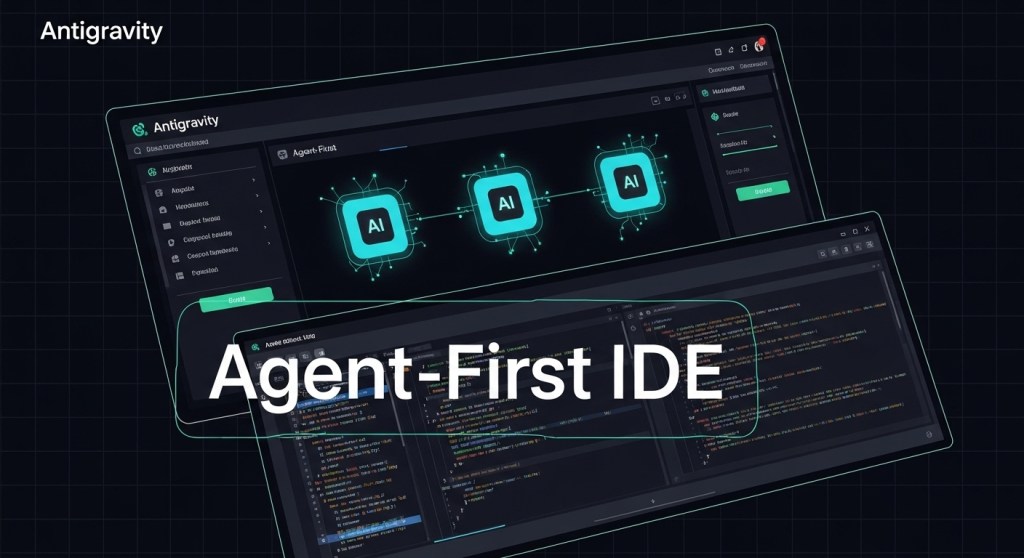
TL;DR: Google just launched Antigravity, an agent‑first IDE alongside Gemini 3. It introduces a Manager view for multi‑agent orchestration and “Artifacts” that make agent actions easier to verify—now in public preview. Below is a founder‑friendly, 14‑day pilot to try Antigravity safely, wire it into your stack, and measure ROI. citeturn2news12turn1search2turn2search2
What changed on November 18, 2025—and why it matters
Antigravity reframes coding from autocomplete to agentic workflows: agents get direct access to the editor, terminal, and an integrated browser—and can coordinate in parallel via a Manager view. Google also introduced “Artifacts” (plans, screenshots, browser recordings) to make outcomes auditable for humans. The tool is in public preview and supports Gemini 3 Pro plus other models. For CTOs and product leads, this accelerates real multi‑agent delivery and gives you better surface area for review. citeturn2news12turn1search2
Google’s own announcement positions Antigravity as a new developer experience powered by Gemini 3’s reasoning and tool‑use gains, slotting into AI Studio, Vertex AI, and the broader IDE ecosystem. That means you can pilot without ripping out your toolchain—and compare it directly with your Copilot/Cursor or internal agent stacks. citeturn2search2
Who this guide is for
- Startup founders/CTOs evaluating agent platforms for 2026 delivery velocity and quality.
- E‑commerce leads who want agents to fix front‑end issues, run experiments, and ship small features faster.
- Engineering managers testing multi‑agent workflows with observability and governance from day one.
Before you start: plug the new building block—Chrome DevTools MCP
Google released a Chrome DevTools MCP server that lets AI coding agents debug and profile live pages in Chrome. If you already use MCP elsewhere, this is a drop‑in capability that improves agent accuracy on web tasks and gives you standard interfaces to wire in policies. We’ll use it in the pilot. citeturn3search0
A 14‑day Antigravity pilot plan (vendor‑agnostic)
This plan assumes one Staff+ engineer and 0.5 PM doing a contained, high‑impact trial.
- Days 1–2: Baseline & Scope
- Pick 1–2 visible tasks: e.g., fix a CLS issue on PDP, ship a price‑drop badge, or add a post‑purchase survey. Keep scope under 2–3 PRs.
- Document the current manual effort (story points/hours) and defect escape rate—this becomes your control.
- Days 3–4: Install Antigravity, set guardrails
- Install Antigravity on a hardened workstation with least‑privilege repo access. Enable the Manager view but restrict agent permissions to the target repo and a sandbox environment.
- Configure code owners and branch protection. Require PRs to pass tests plus human review of Antigravity Artifacts (plans, recordings). citeturn2news12
- Days 5–6: Wire observability
- Add OpenTelemetry spans around agent tasks (plan → edit → run → verify). Track token spend, retries, and tool errors per task.
- Define 3 SLOs: task success rate, mean cycle time, and revert rate. See our Agent Reliability Engineering starter for a template.
- Days 7–8: Add Chrome DevTools MCP
- Attach the DevTools MCP server so agents can profile, inspect DOM, and capture performance traces while iterating on UI tasks.
- Gate MCP access behind your proxy; log all MCP calls via OTel for audit. citeturn3search0
- Days 9–10: Multi‑agent orchestration
- Use the Manager view to split work: one agent plans/tests, another codes, a third runs web checks. Require human approval before merge.
- Compare throughput vs. control sprint. Capture Antigravity Artifacts as evidence in your PR template. citeturn2news12
- Days 11–12: Governance & security
- Map agent risks and controls to our 30‑Day Agent Governance Starter and Agent Security Baseline.
- Enforce identity per agent, scoped secrets, and audit trails for every external call.
- Days 13–14: ROI review & go/no‑go
- Report deltas vs. control: cycle time, change failure rate, hotfixes, and token/$ per merged PR.
- Decide where Antigravity fits: keep for front‑end sprints, compare against your existing stack, or explore enterprise options like Agentforce if you’re heavily on Salesforce. citeturn1search0
How Antigravity fits your 2026 stack
Interop: Treat Antigravity as a developer‑centric agent surface. Use MCP for browser/devtools and documentation sources; keep your production automations on your existing agent platform, but share identity, policy, and telemetry across both. If you’re just starting, use our 2026 Agentic Interop Stack as a blueprint. citeturn3search0
Verification: Build reviews around Artifacts—they’re easier for humans to check than raw tool logs. Save them in your PRs and incident retros to strengthen auditability. citeturn2news12
Security quick‑wins
- Isolate agents in per‑repo sandboxes; only grant production credentials to your CI/CD, not to Antigravity workspaces.
- Rotate short‑lived tokens; centralize secrets and deny network egress by default.
- Continuously log agent tool calls and MCP interactions; alert on high‑risk actions.
- Run weekly red‑team scenarios (prompt injection, malicious tool descriptors) and keep runbooks ready. See our incident playbook.
What about model choice?
Antigravity is optimized for Gemini 3, which Google positions as improved in planning, tool use, and coding—key for agent reliability. Because Antigravity supports other models, use your pilot to A/B for your codebase: planning accuracy, tool‑use errors, and total cost per merged PR. citeturn2search2
Success metrics you can defend in the boardroom
- Throughput: +X% PRs merged per sprint with unchanged headcount.
- Quality: −Y% hotfixes within 7 days of deploy, stable test pass rate.
- Efficiency: Token/$ per merged PR, and agent retry rate below threshold.
- Lead time: Cycle time from ticket → merged PR.
How this compares to enterprise agent platforms
If your workflows live mostly in Salesforce, Agentforce 360’s tighter CRM/Slack integration may still win for business operations. But Antigravity can be your engineering team’s “mission control” for building and fixing product experiences—then hand off to your ops agents. Many teams will run both: dev teams on Antigravity; GTM/support on an enterprise agent platform. citeturn1search0
Related playbooks to extend this pilot
- The 2026 Agent Platform RFP & Scorecard
- Agent Attribution for 2026
- Agentic SEO: weekly experiments with MCP + OTel
SEO snapshot (fast pass)
- Primary keyword: Google Antigravity
- Secondary: agent‑first IDE, Gemini 3 agents, AI coding agents, Antigravity Artifacts, Chrome DevTools MCP
- Top SERP: The Verge explainer; VentureBeat coverage; Google’s Gemini 3 blog. Competition still light; recency advantage matters. citeturn2news12turn1search2turn2search2
- On‑page: Use this post’s H1/H2s, include “Antigravity,” “Artifacts,” and “MCP,” and keep meta under 160 chars.
Call to action: Ready to run this 14‑day pilot? Book a 30‑minute Agent Readiness session with HireNinja, and we’ll help you wire Antigravity, MCP, and OpenTelemetry into a safe, measurable workflow—then compare it to your current stack.
 HireNinja: Blog
Leave a comment