Google’s AI Mode Will Link Out More. Here’s Your 7‑Day SEO Plan for 2026.
Published: December 15, 2025
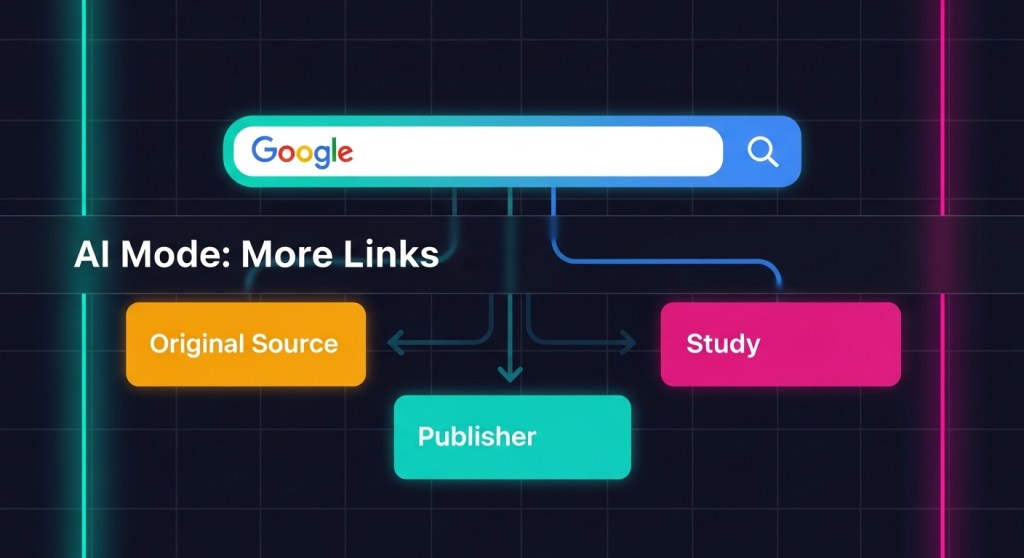
Google is rolling out updates to AI Mode in Search that surface more in‑line source links, add clearer attribution, and expand features like Preferred Sources and the Web Guide powered by Gemini. For founders and marketers, this is a rare, positive signal: if your content is verifiable, well‑structured, and fast, AI overviews are more likely to link back to you instead of absorbing your hard‑won traffic.
This guide breaks down what’s changing, why it matters for growth, and a 7‑day plan you can implement this week. We also include agent‑era considerations and tools you can ship with HireNinja to execute faster.
What exactly is changing?
- More in‑line links inside AI Mode answers: Google says AI summaries will include more visible citations with short explanations of why a source was used.
- Preferred Sources expansion: Users can pin publishers they trust; Google will highlight their content more prominently across surfaces (rolling out first in English).
- Web Guide upgrades: Gemini is now categorizing results faster and across more query types, which rewards clean information architecture, strong headings, and consistent schema.
- Publisher pilots: Google is testing AI‑generated summaries and new ways to surface subscribed content carousels—useful for media and B2B blogs with premium posts.
Pair these changes with the same‑day momentum around Google’s Deep Research agent and OpenAI’s GPT‑5.2 and you get the picture: AI‑summarized discovery is here—link‑worthy content wins.
Why this matters for growth
- From zero‑click to link‑rich: Extra source links mean more chances to earn clicks from AI overviews—if your page is fast, authoritative, and trustworthy.
- Trust is now a UI element: AI Mode explains why it cited you. Pages with clear authorship, citations, and conflict‑of‑interest disclosures score better with both algorithms and humans.
- Structure feeds summaries: Headings, lists, and schema make it easy for AI to quote you accurately—and for users to validate claims quickly.
- Agents will read you, too: Open standards for agents are advancing quickly. If your content is machine‑friendly, both Google’s AI and third‑party agents will surface you more often. See our analysis of open standards here.
Your 7‑Day, Ship‑Today SEO Plan
Use this as a sprint; repeat monthly.
Day 1: Make content AI‑linkable
- Rewrite key pages to lead with a plain‑language summary, then support with bullets, stats, and cited sources.
- Enforce one clear intent per URL (definition, comparison, tutorial, pricing, case study).
- Add a “Last updated” timestamp and change log so AI Mode prefers your fresher page over stale competitors.
Day 2: Add the right schema and evidence
- Implement or validate Article, FAQ, HowTo, Product, and Review schema where relevant.
- Link to primary sources and embed small tables or checklists AI can lift without distorting context.
- Create an Author page with credentials, socials, and editorial standards.
Day 3: Speed, UX, and crawl logistics
- Hit Core Web Vitals thresholds; compress images and prefetch critical CSS/JS.
- Fix thin/duplicate content; consolidate cannibalized pages into the strongest URL.
- Ensure
sitemap.xml,robots.txt, and canonical tags are correct and updated.
Day 4: Preferred Sources play
- Publish an on‑site “Why you can trust us” page and link it site‑wide; this boosts pin‑worthiness for savvy users.
- Launch a newsletter or subscribe flow so Google can surface your content in subscription carousels.
- Align site nav and pillar pages to your core topics so users (and AI) see a consistent brand POV.
Day 5: Make your site agent‑friendly
- Expose clean RSS and test well‑structured APIs/feeds for product and article data.
- Consider MCP/NLWeb‑style endpoints so research agents and enterprise tools can query your corpus directly. Start with a public status page and a lightweight “/ai‑guide” index.
- Review our take on agent standards and governance—and how to roll out safely—here.
Day 6: Programmatic coverage of long‑tail questions
- Ship a Q&A library targeting the exact questions your buyers ask. Use internal linking to connect Q&As to your pillar pages.
- Create comparison and alternatives pages with honest pros/cons; these frequently appear in AI summaries.
- For e‑commerce: ensure returns policy, shipping times, and warranty are explicit and structured—shopping queries get cited details.
Day 7: Measure and iterate
- Track impressions and clicks for AI‑overview queries (look for new referrers and query classes in Search Console).
- Refresh winning pages monthly with new proofs, charts, and examples to maintain link‑worthiness.
- Spin out a weekly “Source‑Ready” release—a short post designed for AI Mode to quote (definition + data + source).
Tactics that work right now
- Source‑first writing: Lead with the finding. Immediately follow with a one‑sentence reason and a link to the primary data.
- Evidence blocks: Add a “What we checked” box: dates verified, versions, regions, sample sizes.
- Design for skimmability: 12–18 word sentences, bullets, and short sub‑sections reduce summarization errors.
- Agent & human parity: The page that convinces a person will also convince an agent—if it’s fast, factual, and structured.
Example: a DTC skincare brand
Instead of one generic “Vitamin C Serum Guide,” create a hub with:
- Short explainer with ingredient %, pH, and photostability table.
- How‑to with morning vs. night routines plus interactions (retinoids, AHAs).
- Comparison page vs. top alternatives with measurable claims (SPF compatibility, oxidation rate).
- FAQ schema answering exact questions from your support inbox.
- Returns/warranty and patch test instructions as a structured list.
Each of these pages is quotable, scannable, and linkable inside AI Mode.
Agent‑era alignment (so you don’t fall behind)
Agentic discovery is accelerating. Read our takes on Google Deep Research + GPT‑5.2 and AAIF open standards. The takeaway: your content should be accessible to both Google’s AI and third‑party agents. That means clear APIs/feeds, schema, and governance.
What to ship with HireNinja this week
- Content velocity: Spin up our HireNinja WordPress Blogger ninja to produce “source‑ready” briefs and Q&A pages at scale.
- Support to insights loop: Deploy the Customer Support ninja to mine real questions, then convert them into FAQ schema and articles.
- Governance: Use our ninjas to keep “Last updated” stamps fresh, verify links monthly, and enforce style + schema checklists before publish.
Key pitfalls to avoid
- Thin summaries: If your page mirrors the AI overview, it won’t earn a link. Add depth: methods, tables, examples, and calculations.
- Messy ownership: Anonymous posts without author pages or editorial policy are less cite‑worthy.
- Slow pages: AI Mode may still cite you, but users won’t wait. Speed issues erase your win.
The bottom line
Google’s AI Mode becoming more link‑friendly is a window for growth. Build source‑ready content, ship structured evidence, and make your site agent‑friendly. If you move now, you can win citations—and clicks—as AI discovery scales through 2026.
Next up: Read our breakdown of Google Deep Research + GPT‑5.2 and why it resets agent roadmaps.
Ready to ship your SEO sprint? Start with HireNinja and launch your 7‑day plan today.
 HireNinja: Blog
Leave a comment