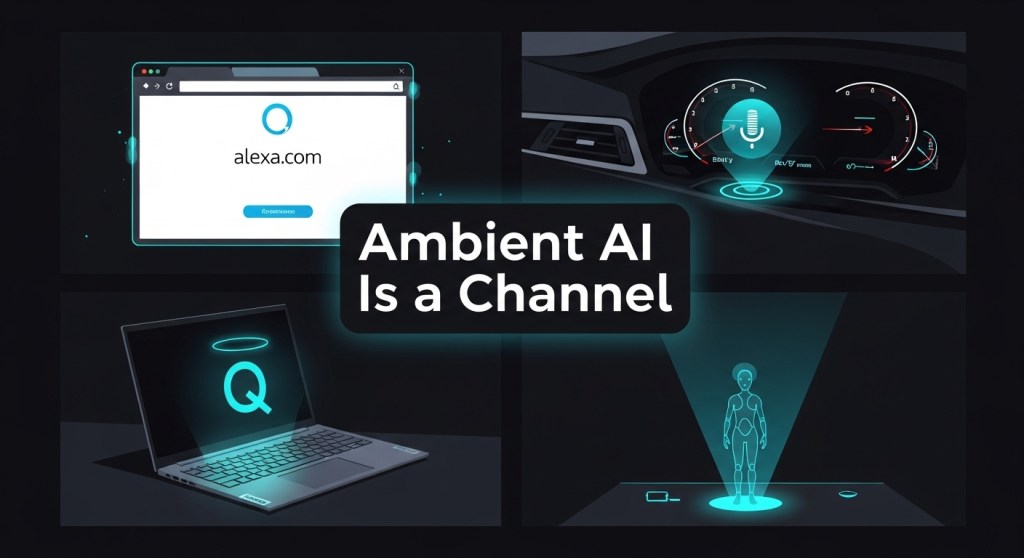
Ambient AI Surfaces Break Out: Alexa.com Web, BMW’s Alexa+, Lenovo Qira — A 48‑Hour Attribution & Conversion Plan
Published: January 9, 2026
TL;DR — What you’ll get from this post
- What changed this week across Alexa+, BMW in‑car, Lenovo Qira, and desk AI devices.
- Why “ambient AI” is a new growth channel for SaaS, marketplaces, and e‑commerce.
- A 48‑hour plan to attribute, convert, and stay compliant across web, TV, desk, and in‑car assistants.
- Event taxonomy, UTM scheme, and testing scripts you can copy‑paste.
- Playbooks and tools to ship faster, including links to HireNinja.
What just changed (and why it matters)
CES 2026 turned “ambient AI” into real distribution. Highlights founders should care about:
- Alexa+ is expanding across surfaces, with a web experience and new device integrations — turning alexa.com and living‑room screens into discovery and conversion points.
- BMW announced Alexa+ inside the upcoming iX3, making in‑car voice a natural extension of a customer’s at‑home assistant — continuity matters for bookings and reorders.
- Lenovo introduced Qira, an ambient, cross‑device intelligence that helps users “pick up where they left off” across PC and phone — ideal for cross‑session cart recovery and intent follow‑ups.
- Desk companions are becoming their own channel (e.g., Razer’s Project AVA, SwitchBot’s playful desk displays) — expect impulse intent (“show me options,” “buy the top pick”) right at the workstation.
Translation for founders: assistants are now everywhere your users already are — and they’re increasingly capable of gathering context, invoking flows, and closing transactions. Treat them like you would organic search or paid social: build surfaces, measure, and iterate.
The 48‑Hour Attribution & Conversion Plan
1) Map intents to bookable actions
List your top 5 intents that assistants should handle end‑to‑end. Examples:
- B2B SaaS: “Start free trial,” “Book demo,” “Generate report,” “Invite teammate,” “Upgrade plan.”
- Marketplace/Local: “Get a quote,” “Book appointment,” “Check technician ETA,” “Reschedule,” “Add card on file.”
- E‑commerce: “Find size,” “Check store pickup,” “Apply discount,” “Reorder last purchase,” “Buy gift.”
Create a one‑line assistant brief for each intent: input → guardrails → output → follow‑up. Keep actions atomic and reversible (refunds, cancels) to build trust.
2) Expose assistant‑friendly endpoints
Assistants need fast, typed endpoints that return structured results. Ship a thin /assistant API layer with these minimal routes:
POST /assistant/intents:match— returns canonical intent, confidence, and next‑best actions.POST /assistant/quote— quote/pricing with SKU or service codes, currency, and expiry.POST /assistant/booking— hold/confirm slots with idempotency keys.GET /assistant/order/{id}— order/booking state with cancel/modify tokens.
For web surfaces, also add JSON‑LD for products, services, and local business to help assistants summarize on your behalf. See our Assistant‑Ready Product Pages framework.
3) Standardize account linking and consent
Implement OAuth 2.0 with short‑lived tokens and scoped permissions per action (e.g., read_profile, create_booking, charge_payment). Always present: what’s happening, cost, cancellation policy, and a human‑escalation option. If your flows moved off locked channels recently, grab our 2026 AI Messaging Compliance Playbook.
4) Get attribution right with a unified UTM and event schema
Add these UTMs to any link the assistant sends to your site or checkout:
utm_source: alexa-plus | bmw-in-car | lenovo-qira | samsung-tv | desk-aiutm_medium: voice | ambient | webutm_campaign: intent name (e.g., book-dermatology, start-trial)utm_content: variant (e.g., flow-a, flow-b)
Event taxonomy to add to your analytics/CDP:
- assistant_view: surface, vendor, model, locale
- intent_matched: intent, confidence, disambiguation_required
- quote_presented: price, currency, sku/service_code, expires_at
- booking_hold: slot_start, slot_end, policy_version
- purchase_completed: order_id, revenue, discount_code, payment_method
- handoff_to_human: reason, elapsed_seconds, csat_prompted
Define success windows: view→intent under 15s; intent→quote under 30s; quote→purchase under 3m for voice, 5m for TV/web companion.
5) Build assistant‑ready offers
Assistants convert when choices are simple and reversible. Create one starter and one best value bundle per top intent. Include:
- A clear guarantee (free cancel within 24h or risk‑free trial).
- One‑tap reorder or reschedule links.
- Human fallback (“Talk to a specialist”) with business hours and SMS/email capture.
6) Ship fast with a 10‑minute test per surface
- Alexa+/Web: Ask for your top intent; verify the assistant summarizes correctly and offers your two packages with prices. Clickthrough should include UTMs and land on a checkout that recognizes the context.
- BMW (in‑car preview): Validate that long requests (e.g., “Reschedule next Wednesday after 3pm and apply my loyalty discount”) decompose into steps and confirm back before charging.
- Lenovo Qira (PC→phone): Start a cart on PC, continue on phone, then complete. Confirm attribution stitched across devices under the same session chain.
- Desk AI: Trigger from a keybind; ensure on‑screen overlays include privacy indicators and one‑click privacy pause. Confirm “reorder” is two steps or fewer.
Real‑world examples and starter templates
For e‑commerce, follow our 48‑hour store checklist to make product pages assistant‑ready (schemas, inventory answers, refunds): framework and Shopify/WooCommerce playbook.
If you’re a SaaS or marketplace founder targeting the new surfaces launched this week, pair those with our Alexa.com 48‑hour playbook and desk‑companion strategy from Desk AI Is a Channel Now.
Guardrails: privacy, transparency, and audits
- Data minimization: Collect only what the intent requires; retain quotes and holds with TTLs.
- Transparent confirmations: Before charges or bookings, assistants must read back price, policy, and cancellation window.
- Human review loop: Log every high‑risk action (refunds, address changes) with agent/executor, parameters, and trace IDs.
- Opt‑out & redaction: Provide a universal privacy toggle and redact on‑device transcripts after fulfillment unless the user consents to improvements.
Where HireNinja helps
HireNinja is built for this moment — orchestrating multi‑surface assistants, unifying attribution, and enforcing guardrails so your team ships in days, not months.
- Pre‑built flows for trial starts, bookings, quotes, reorders, and handoffs.
- Connectors to common commerce stacks and CRMs with event schemas aligned to the taxonomy above.
- Compliance guardrails for consent, read‑backs, and audit trails.
- Attribution stitching that tags assistant surfaces and preserves UTMs across handoffs.
Ready to turn ambient AI into a real channel? Try HireNinja or book a demo today.
 HireNinja: Blog
Leave a comment