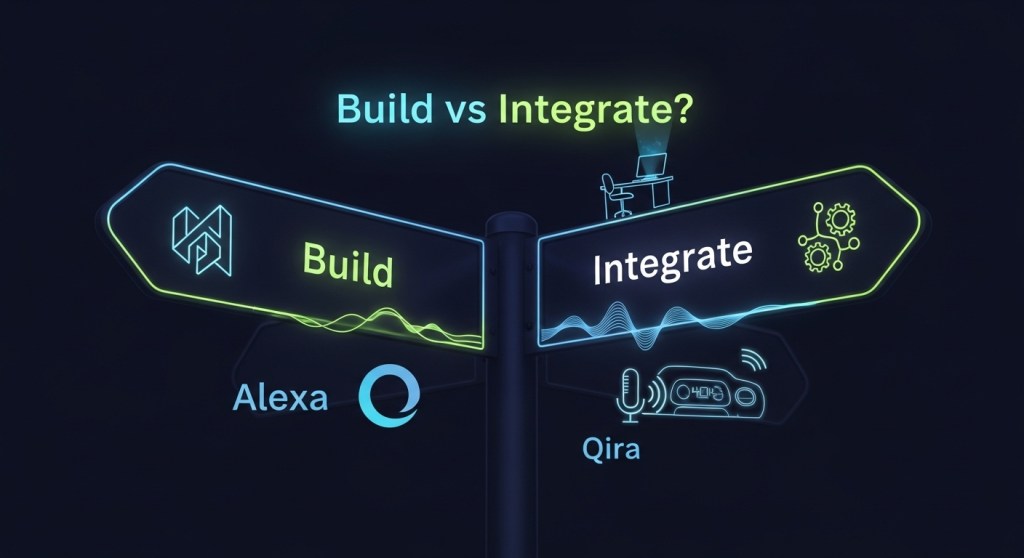
Build vs Integrate in 2026: Should You Ship Your Own AI Assistant or Ride Alexa.com, Lenovo Qira, and Razer AVA?
Updated: January 10, 2026
CES 2026 turned ambient AI from a demo into distribution. Amazon rolled out Alexa.com for Alexa+ on the web, BMW’s 2026 iX3 ships with Alexa+ in‑car, Lenovo unveiled cross‑device ambient intelligence with Qira, and Razer opened reservations for its desk companion Project AVA (shipping H2 2026; reservation details). As Wired put it this week: software maturity and deployment matter more than another flashy AI label.
If you lead a startup or e‑commerce brand, you have a near‑term strategy call: do you integrate with these channels now, or do you build your own assistant? Below is a practical framework to choose—and a one‑week plan to ship.
What changed this week (and why it matters)
- Alexa is now everywhere: Web via Alexa.com and in cars via BMW’s iX3. Amazon’s push takes Alexa+ beyond the home and into browsing and driving—bringing your catalog and flows to new moments of intent.
- Ambient, cross‑device AI: Lenovo Qira aims to make assistance a system service across PCs, tablets, and phones—not just an app.
- Desk companions as a channel: Razer’s AVA puts an expressive AI presence on the desk. It’s early, but the UX surface is real and shippable later this year.
Net: Ambient AI is a distribution layer. Treat it like SEO circa 2008 or app stores circa 2011—move early and you compound.
The decision: build your own assistant or integrate first?
Integrate first if you need growth now
For most commerce and SaaS teams, the fastest path to conversions is to make your products and actions addressable by these assistants. You get discovery and bookings without a ground‑up AI build.
Build your own if AI is your product moat
If your core value is a specialized agent (e.g., a finance copilot with proprietary data), you’ll still want a first‑party assistant. But you should also integrate with ambient channels for top‑funnel discovery and handoffs.
A quick scorecard
- Speed to value: Integrations = days/weeks. Building = months.
- Control & differentiation: Building wins. Integrations can still differentiate with superior data quality, intents, and UX.
- Compliance risk: Platform rules change. Example: WhatsApp bans general‑purpose AI chatbots effective January 15, 2026—fine for customer‑service bots, not OK for broad assistants (policy; EU scrutiny).
What “integration” actually looks like in 2026
Alexa.com and in‑car Alexa+
- Expose actionable intents: Buy, subscribe, book, reorder, track, schedule. Keep each intent under 3–5 steps for voice.
- Make product and service data assistant‑readable: Include structured attributes (price, availability, shipping/lead time, return policy, variant options). Start with the assistant‑ready product page framework.
- Provide deep links for handoff: When the assistant can’t finish the transaction, send users to a prefilled cart or checkout URL with clear UTM parameters for attribution.
Lenovo Qira cross‑device
- Design for continuity: Assume users start a task on PC, continue on phone. Use short links and session tokens that survive device switches.
- Context windows: Tailor prompts and responses for “working,” “meeting,” or “creating” contexts (Qira highlights these modes). Deliver just‑in‑time suggestions, not generic chat.
Razer Project AVA (desk companion)
- Pilot, don’t overbuild: It’s concept‑to‑ship in H2 2026. Treat as a limited beta channel for gaming‑adjacent or creator tools. Build 1–2 intents that demo well on a desk.
- Privacy posture on camera‑aware surfaces: Offer a one‑click “privacy mode” and visible state indicator. Keep sensitive processing on‑device when possible.
Compliance and guardrails you can’t ignore
- WhatsApp’s January 15, 2026 policy: No general‑purpose AI chatbots. Keep WhatsApp for customer support and order updates; route assistant use cases to web, in‑app, or channels like Alexa.com. See our weekly founder briefing.
- Consent and logging: On in‑car and desk companions, clearly request permission before accessing location, camera, or calendars. Log consent events for audits.
Rough costs and timelines
- Integrations (per channel): 1–2 sprints to ship MVP (data mapping, intents, deep links, analytics). Great candidates for a small squad or an external partner.
- Build your own assistant: 8–12 weeks to MVP (model orchestration, memory, tool use, safety rails, auth), plus ongoing tuning and evals.
The attribution stack (so you can prove it worked)
- Source tags: Append
utm_source=alexa,utm_medium=voice,utm_campaign=ambient(or equivalents for Qira/AVA). - Event mapping: Track Intent Started, Handoff (with deep link), Completion, Drop‑Off Step.
- Channel pages: Create lightweight landing pages for each assistant surface to absorb direct traffic spikes and rank for “[brand] on Alexa/Qira.”
For a step‑by‑step plan, use our 48‑hour Attribution & Conversion Plan and the post‑CES Founder Playbook.
Seven‑day action plan
- Inventory intents: List the 5 tasks customers do most (buy, book, reorder, track, schedule). Rank by revenue impact.
- Map data: Ensure each product/service has price, availability, variants, lead time, policies, and media in a structured format.
- Design flows: Draft 3–5 step versions of each task for voice and desk. Add error handling and a web handoff URL.
- Ship assistant‑ready pages: Implement our page framework on your top 20 SKUs or plans.
- Wire analytics: Add UTM tags, events, and a channel dashboard.
- Pilot channels: Launch on Alexa.com/Alexa+ first; prepare Qira handoffs; scope an AVA demo intent.
- Review compliance: Purge any general‑purpose bot plans for WhatsApp; keep WhatsApp for support updates and order notifications only.
Two real‑world patterns that work
E‑commerce
A DTC brand exposes “Find size,” “Add to cart,” and “Track order” as intents. Alexa+ handles sizing Q&A and starts checkout, then hands off to a prefilled URL. Result: less friction for repeat buyers and measurable conversions from ambient surfaces.
SaaS
A B2B tool exposes “Create report,” “Schedule demo,” and “Start 14‑day trial.” In‑car Alexa+ supports quick scheduling; Qira suggests the next “report” variant while the user is in a work context. Sales attribution improves with channel‑specific UTMs.
Common pitfalls
- Vague prompts: Assistants need crisp intents and parameters. Don’t rely on “chat” to find the path.
- Long flows: Voice breaks at step 6. Keep it short and offer a clean web handoff.
- Ignoring privacy signals: Surfaces like AVA may see your screen/camera. Be explicit and reversible with permissions.
Bottom line
In 2026, you don’t have to choose between building an assistant and integrating with ambient channels—you should likely do both. Integrate now to capture demand from Alexa.com, in‑car Alexa+, emerging Qira surfaces, and (later this year) desk companions. Build strategically where a proprietary copilot is your moat. Move early, measure rigorously, and keep compliance tight.
Need hands to ship this fast?
Hire a vetted automation squad to map intents, wire data, and launch your ambient AI channels in days—not months. Talk to HireNinja.
 HireNinja: Blog
Leave a comment