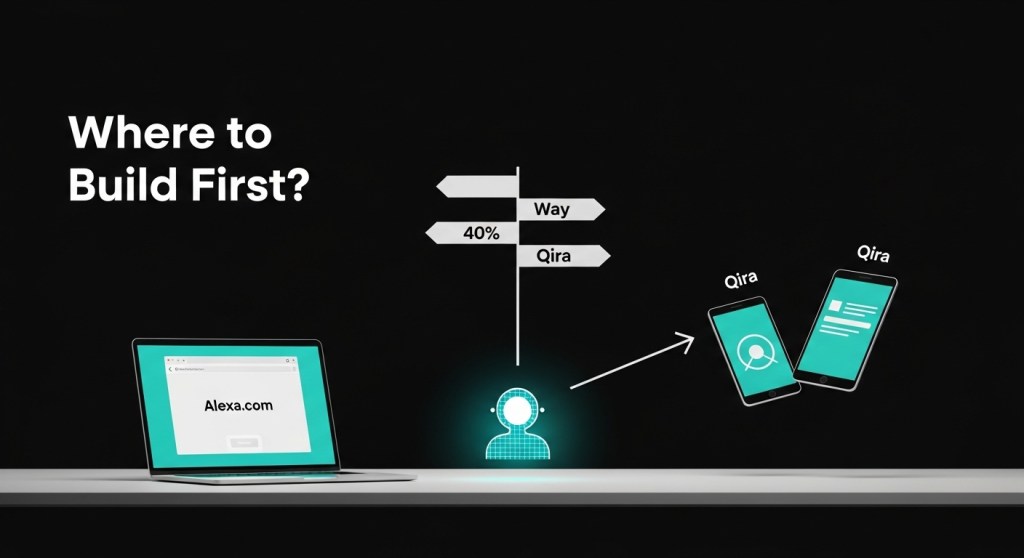
Where Founders Should Build First After CES 2026: Alexa.com vs. Lenovo Qira vs. Razer AVA
Publishing checklist
- Scan last 7 days of TechCrunch, Wired, The Verge, and vendor PR for assistant news.
- Prioritize by what’s live now vs. shipping later and potential ROI for startups/e‑commerce.
- Map data/consent requirements and analytics attribution.
- Define a 7‑day build plan with quick wins and guardrails.
- Link deeper playbooks and offer a done‑for‑you path via HireNinja.
CES 2026 made one thing painfully clear: assistants are no longer a side project. In the last week, Amazon rolled Alexa.com to the web for Alexa+ Early Access users, BMW confirmed Alexa+ in the 2026 iX3, Lenovo introduced cross‑device ambient intelligence with Qira, and Razer took a big swing at the desk with Project AVA (reservations open; shipping expected H2 2026). If you run a startup or online store, where should you build first?
The short answer (build order)
- Alexa.com + Alexa app (now): It’s live on the web and mobile, making this the fastest path to discovery, trials, and conversions. See our 7‑day plan: How to Rank on Alexa.com…
- Lenovo Qira (next): Qira is system‑level “ambient intelligence” across Lenovo/Motorola devices. Prepare intents and data contracts so your product is composable when distribution ramps.
- Desk companions (Razer AVA, Loona DeskMate) (later): Useful for brand presence and demos, but hardware ship dates push revenue impact to H2 2026+. Good to prototype; don’t bet the quarter.
Why this order?
- Surface area today: Alexa+ already spans millions of devices and now the browser via Alexa.com + the revamped app. That means you can drive traffic without waiting on hardware shipments.
- Intent density: Customers ask Alexa to do things (book, buy, summarize, schedule). That maps neatly to carts, subscriptions, demos, and lead capture.
- Data/consent complexity: Desk companions add cameras/screen‑vision. You’ll need clear consent UX and logging before you scale. Use our 48‑hour consent playbook.
What “assistant‑ready” looks like in January 2026
Think of assistants as new distribution. Your job is to make your product legible, callable, and measurable.
1) Legible: structure your data
- Add rich schema to product and pricing pages (JSON‑LD for Product, Offer, HowTo, FAQ). See our assistant‑ready page framework.
- Publish a capabilities manifest: the actions you support (e.g., “Create trial,” “Book demo,” “Check order status”), their parameters, and authentication needs.
- Expose clean deep links for top actions (example:
/signup?plan=startup,/book-demo,/cart?sku=).
2) Callable: define intents and OAuth
- Create a minimal intent catalog for assistants: Discover (who/what), Decide (compare/FAQ), Do (trial/cart/booking).
- Support OAuth or secure tokens where the action touches accounts (trial creation, order lookup).
- Return small, structured responses (title, summary, price, URL) with a single “next best action.”
3) Measurable: attribute assistant traffic
- Create a new channel in analytics: Assistant. Tag
utm_source=assistantandutm_medium=alexa|qira|desk. - Log intent → action → outcome with consent. Keep transcripts minimal and rotate keys.
- Define success: CTR to deep links, trials created, AOV, repeat actions per user.
Channel notes by surface (as of Jan 12, 2026)
Alexa.com + Alexa app
- Status: Live on web for Alexa+ Early Access; app redesign puts chat up front.
- Strength: Largest near‑term reach; web UX helps with forms, carts, and B2B lead capture.
- Focus: Publish intents and deep links; optimize snippets for “assistant SEO”; build a Discover → Decide → Do flow.
- Example build: “Create 14‑day trial” intent that returns a one‑tap link to your prefilled signup page with plan and coupon.
Lenovo Qira
- Status: Announced as ambient, cross‑device intelligence across Lenovo/Motorola hardware.
- Strength: System‑level context (presence, app state) could drive proactive help for work, meetings, and shopping.
- Focus: Prepare privacy‑safe event hooks (meeting started, page viewed, item added) and map them to nudges with explicit user consent.
Desk companions: Razer AVA, Loona DeskMate
- Status: AVA reservations open; shipping targeted for H2 2026. Loona’s DeskMate turns an iPhone into a personable desk assistant.
- Strength: High novelty and brand impact; great for demos, show booths, and community.
- Focus: Prototype a “demoable” workflow (e.g., product compare + coupon) and a privacy‑first consent screen if using camera or screen‑vision.
7‑day build plan
- Day 1: Pick 3 intents (Discover, Decide, Do). Draft copy for each outcome.
- Day 2: Add schema and publish a lightweight capabilities page (
/assistant). - Day 3: Wire deep links for trials, demos, and carts; add UTM tags.
- Day 4: Implement OAuth (or token) for account‑level actions.
- Day 5: Configure an Assistant channel in analytics; log intent → action → outcome.
- Day 6: Ship consent + data retention policy. Use this 48‑hour guide: Consent‑First AI.
- Day 7: Launch on web and announce: “Now assistant‑ready on Alexa.com.” Start collecting examples and iterate.
E‑commerce specifics
- Bundle pages win. Create a Best Starter Bundle with one CTA and a short buying guide. Assistants love opinionated answers.
- Use FAQs with crisp comparisons (shipping time, returns, warranty). Assistants often quote these verbatim.
- Offer a “buy later” hand‑off: add‑to‑cart via link, plus SMS/email reminder opt‑in.
- Follow our Shopify/WooCommerce blueprint: Assistant‑Ready Product Pages.
Governance and risk
With desk devices (camera, eye‑tracking, or screen‑vision), make consent unmissable: explicit opt‑in, visual indicator when active, red‑team prompts, and 30‑day retention by default. Keep a data contract for every event you collect and log access for audits. If you need a turnkey path, our consent‑first checklist is here: Consent‑First AI.
What good looks like in 30 days
- 20–30% of organic chat queries resolved with a single actionable snippet and one clear CTA.
- +10–15% lift in trial starts or demo bookings from Assistant source.
- Documented consent flows for any camera/screen‑vision features.
- A simple weekly loop: review top 25 intents, add missing deep links, tighten copy.
Need a done‑for‑you build?
HireNinja can ship your assistant‑ready schema, intents, deep links, and consent logging in a week—and run ongoing optimization.
- Try HireNinja — get a working assistant‑ready funnel in 7 days.
- Talk to an AI Ninja — scope your intents and analytics with our team.
Keep going: the full CES round‑up for ambient OS platforms is here: Ambient OS Showdown. And if you’re on the fence about building your own assistant vs. integrating, read this framework: Build vs. Integrate in 2026.
Call to action: When someone asks Alexa about your product this week, make sure the answer ends in a click that converts. Start with HireNinja today.
 HireNinja: Blog
Leave a comment