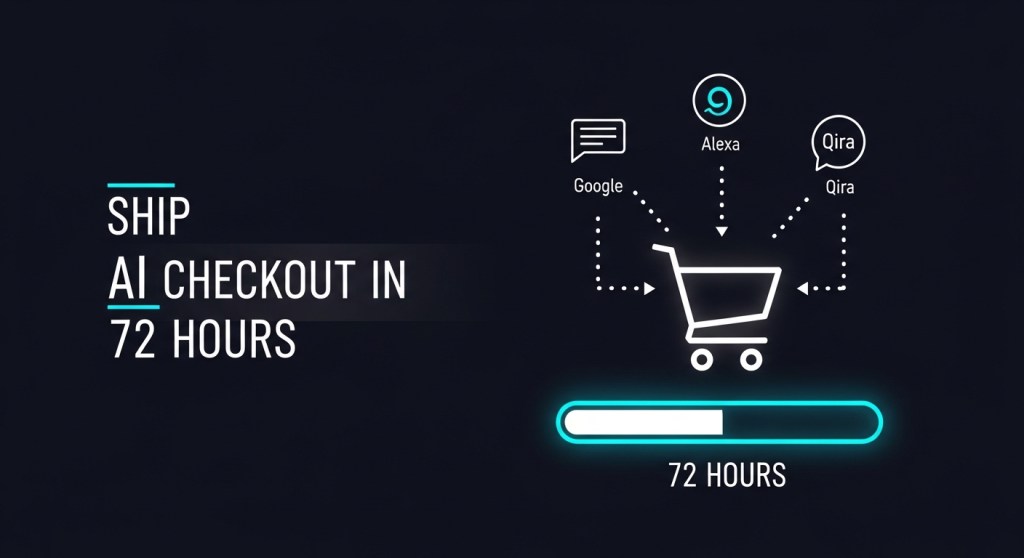
UCP Is Live: A 72‑Hour Plan to Turn On AI Checkout in Google and Alexa.com (and Get Ready for Lenovo Qira)
Three big moves just landed: Amazon launched Alexa.com on January 5, 2026, Google unveiled the Universal Commerce Protocol (UCP) on January 11, 2026, and Lenovo introduced Qira at CES on January 6, 2026. Together, they make agentic commerce real: assistants can now find your products, check out natively, and handle post‑purchase support. This guide gives founders a 72‑hour plan to go live fast—without wrecking SEO, attribution, or pricing trust.
Checklist: What youll do in this guide
- Map your catalog, identity, and order flows to UCPs core surfaces (Checkout, Identity Linking, Order).
- Enable native checkout in Google AI Mode and prep your brand for Alexa.com discovery.
- Stand up post‑purchase automation (status, returns, CX) agents in parallel.
- Ship safe pricing and consent controls that wont erode customer trust.
- Instrument the 10 metrics that prove ROI across agents—fast.
Why this matters right now
UCP creates a common language for agents, retailers, and payment providers to talk to each other, so you dont need dozens of custom integrations. Alexa.com puts Amazons assistant on the web (not just speakers), and Lenovos Qira signals a cross‑device, ambient assistant that will surface commerce moments everywhere. If your products arent agent‑ready this week, your competitors products will be.
The 72‑Hour Plan
Day 1: Inventory, identity, and trust
- Map your data to UCP. Create a one‑pager that lists: catalog API (products, availability, pricing), checkout API (cart, tax, shipping, payment), and order events (confirmations, shipment, returns). Flag any gaps (e.g., missing SKU‑level inventory or tax logic). See the spec overview at ucp.dev.
- Turn on Identity Linking. Decide how agents authenticate. Use OAuth 2.0 for account linking and limit scopes to purchase, order status, and returns. Keep scopes readable; avoid blanket permissions.
- Protect pricing trust. Lock transparent pricing and discount rules before you flip any agent live. If you havent already, adopt our surveillance‑pricing prevention checklist and publish a one‑paragraph pricing policy on your site.
- Choose your first surface. Most brands should start with Googles AI Mode checkout because its closest to search. If youre voice‑led or have strong Prime overlap, prioritize Alexa.com discovery this week, checkout next.
- Set up measurement upfront. Implement clean UTM and event tagging from day one. Copy the tracking plan from our 2026 Agentic Commerce Metrics Playbook.
Day 2: Ship UCP checkout + AI discovery
- Enable UCP Checkout (MVP).
- Expose a production‑ready checkout session endpoint with cart, tax, and shipping calculations.
- Wire payment to your PSP via native tokens (start with Google Pay; add PayPal when available).
- Add Order webhooks (created, paid, shipped, delivered, returned) and log every agent action for auditability.
- Claim and configure Google Business Agent. Define your brand voice, product intents, and safety rails. Use our Business Agent setup plan plus the 48‑hour Shopify playbook if youre on Shopify.
- Make your brand findable on Alexa.com. Apply Assistant App Store Optimization (AASO): structured product language, short answers, canonical entities, and clear disambiguation. Follow our AASO guide.
- Draft post‑purchase flows. Build agent‑friendly responses for the top five support intents: order status, delivery ETA, change address, start a return, and refund policy. Connect them to your UCP Order webhooks.
Day 3: QA, launch, and support automation
- Run a 25‑query QA gauntlet. Test ambiguous, adversarial, and edge‑case prompts (e.g., Do you price‑match this color in size XXL?). Keep a red/green scorecard. We included a starter set in the Shopify playbook above.
- Publish your UCP & Agents disclosure. One page, human‑readable: data use, identity scopes, pricing rules, and what the agent canand cannotdo on behalf of customers. Link it in your footer.
- Turn on fail‑safes. Add circuit breakers for stockouts, tax errors, delivery ZIP exceptions, and discount conflicts. Define an agent off‑ramp: SorryI cant complete that. Heres a direct checkout link.
- Launch with controlled exposure. Start with 10–20% of eligible traffic in Googles AI Mode. Monitor conversion, return intent rate, and cart error rate hourly for 48 hours.
- Automate support. Connect WhatsApp, email, and chat to your order webhooks so customers can resolve issues without waiting on a human. If you need a turnkey agent layer, Try HireNinja.
What to measure (and when to kill a test)
- Assistant‑attributed conversion rate (AACR): uplift vs. control. Kill if AACR < 0.5x sitewide CVR after 1,000 sessions.
- Cart error rate: keep < 1.5% (watch tax/shipping mismatches).
- Return intent rate: proxy via start a return intents within 7 days; target within 10% of site baseline.
- First response accuracy: 85%+ for top 10 intents (status, returns, warranty, promo eligibility, size/fit, compatibility).
- Attribution sanity: agent vs. organic/paid cannibalization. Use our metrics playbook.
Common pitfalls (and quick fixes)
- Dynamic pricing drift: Agents see inconsistent discounts across channels. Fix by centralizing eligibility rules and exposing a read‑only pricing API with timestamps.
- Tax/shipping surprises at confirm: Calculate early in the agent flow and surface ranges (e.g., $7–$9 ground) to reduce abandonment.
- Unscoped identity: Too‑broad OAuth scopes trigger consent drop‑off. Trim scopes and add plain‑English explanations.
- Unsupported returns: If your RMA system isnt agent‑aware, accept returns via a fallback link and email a prepaid label automatically.
- Orphaned orders in BI: Tag all agent orders with a distinct
channel=agent:<surface>and pipe to your warehouse and finance systems on day one.
Whats next: Prep for Lenovo Qira and multi‑device agents
Qira will push commerce beyond a browser or speaker into a cross‑device, ambient layer. Two action items you can do now:
- Make context portable: Store preferences (sizes, addresses, loyalty IDs) behind privacy‑first identity linking so assistants can act without re‑asking.
- Design one‑breath answers: Write concise, unambiguous responses for top product and policy questions. Thats how you rank in Alexa.com today and in Qira tomorrow. Use our AASO guide to tune them.
Resources
- UCP developer docs: ucp.dev
- Weekly briefing: Agentic Commerce This Week
- Compliance starter: AI Shopping Compliance Playbook
Bottom line
Assistant checkout is no longer a demo. If you follow this plan, you can ship a safe, measurable UCP checkout in 72 hours, show up in Googles AI Mode and Alexa.com, and be ready when Lenovos Qira starts surfacing commerce across devices. Need help shipping in days, not months? Talk to HireNinja and get an agent‑ready build plan this week.
 HireNinja: Blog
Leave a comment