Publishing checklist
- Scan competitor coverage and trends (agentic checkout, AP2, ACP).
- Clarify audience and intent (merchants, e‑commerce leads, compliance).
- Map content gaps vs. our recent AP2/MCP posts.
- Do focused SEO (agentic checkout + PCI/SCA terms).
- Draft an audit‑ready, step‑by‑step guide with KPIs and a 14‑day plan.
- Cite authoritative sources and link to our related playbooks.
PCI + SCA for Agentic Checkout: Map AP2/ACP to PCI DSS 4.0 in 10 Steps
Agent‑driven commerce just moved from demo to production. OpenAI is piloting in‑chat checkout and open‑sourcing the Agentic Commerce Protocol (ACP), while Google’s Agent Payments Protocol (AP2) aims to standardize how agents authorize and pay on our behalf. For merchants, the question is no longer “if,” but “how to do this safely and compliantly.” citeturn1search0turn2search2turn1news12
This guide maps AP2/ACP flows to PCI DSS 4.0 and PSD2 Strong Customer Authentication (SCA), so you can launch agentic checkout without blowing up audits, fraud rates, or customer trust. We’ll also share a 14‑day rollout plan, KPIs, and common pitfalls.
Who this is for
- Heads of e‑commerce/ops enabling agentic checkout on Shopify, WooCommerce, or custom stacks.
- Risk, security, and compliance leads who own PCI/SCA, fraud, and audit evidence.
- Founders/PMs validating agentic channels before peak season.
Quick primer: AP2 and ACP
AP2 (Agent Payments Protocol) is a partner‑backed proposal from Google and payments networks to let agents execute purchases using cryptographically signed mandates and standardized authorization flows. Think: a trusted, auditable way to say “buy this on my behalf,” with clear accountability. citeturn1news12
ACP (Agentic Commerce Protocol), open‑sourced with Stripe and piloted via ChatGPT Instant Checkout, lets agents present checkout, collect payment credentials safely, and hand the transaction to the merchant of record—without exposing raw card data to the agent. citeturn1search0turn2search2
Regulatory backdrop in 2025
- PCI DSS 4.0 is the active standard, with future‑dated sub‑requirements that became effective on March 31, 2025 (for example, authenticated internal scans and payment‑page tamper detection). citeturn2search1turn2search4turn2search3
- PSD2 SCA still governs EU/UK remote payments: two‑factor auth (knowledge/possession/inherence) and dynamic linking to the amount and payee, with limited exemptions. The EBA clarifies scope and responsibilities, including when SCA can be outsourced and when it cannot. citeturn2search6turn2search0
10 steps to map AP2/ACP to PCI DSS 4.0 + SCA
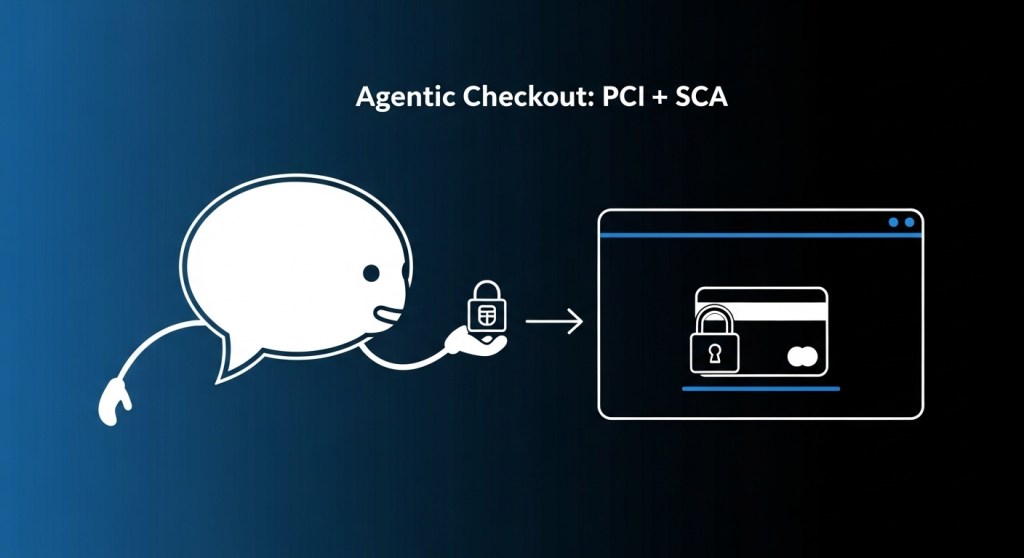
- Define your data flows and scope boundary. With ACP, the agent shows checkout but the merchant (and PSP) remain the card data processors. Document that agents receive tokens, not PAN, and keep agents out of your Cardholder Data Environment (CDE) by design. Map to PCI DSS Req. 3–4 (protect and transmit account data). citeturn2search2
- Use signed mandates for delegated purchases. AP2’s cryptographically signed “mandates” express user intent and the agent’s delegated authority. Store mandate artifacts and link them to order IDs for disputes and audits (PCI Req. 10/12: logging and policy). citeturn1news12
- Enforce MFA for admin and service access to CDE. PCI DSS 4.0 requires MFA for all access into the CDE. Ensure privileged access pathways (admin panels, CI/CD, secrets managers) require phishing‑resistant MFA. citeturn2search1
- Implement payment‑page tamper detection. Add change/tamper detection for payment pages (e.g., script integrity, CSP, SRI, runtime checks). This aligns with Req. 11.6.1. citeturn2search4
- Run authenticated internal vulnerability scans. Meet Req. 11.3.1.2 by configuring credentials for your VA scanner (covering agent‑exposed admin endpoints, too). citeturn2search4
- Differentiate “good agents” from bad bots. ACP anticipates new fraud signals so merchants can decide to accept/decline. Add risk features that verify agent identity (key pinning, signed claims), rate‑limit, and maintain an allowlist for approved agent origins. citeturn2search2
- Design SCA flows that won’t crush conversion. Support 3DS2 with exemptions (TRA, low‑value, MIT where applicable). Document who triggers SCA (issuer/acquirer) and how agent‑collected credentials map to dynamic linking. The issuer remains responsible for SCA even when parts are outsourced. citeturn2search0turn2search6
- Instrument end‑to‑end observability. Trace the agent’s tool calls, mandate presentation, SCA challenge outcome, and PSP auth/settlement. Keep immutable logs for forensics and chargeback defense. Pair with our Agent Observability blueprint.
- Harden your approval UX. For high‑impact actions (subscriptions, high AOV, address changes), require explicit user confirmation (e.g., signed AP2 mandate + out‑of‑band confirm). Log the consent artifact with the order. citeturn1news12
- Codify incident response for agentic flows. Extend your IR plan: prompt‑injection playbooks, agent key rotation, mandate revocation, SCA failure spikes, and PSP failover. Start with the controls in our 2025 Agent Governance Checklist.
14‑day rollout plan (merchant edition)
Days 0–3: Baseline
- Data‑flow diagram: agent → ACP checkout → PSP → order system (mark token vs. PAN).
- Enable 3DS2 in test; define exemption policy with acquirer/PSP.
- Turn on CSP/SRI; deploy payment‑page tamper detection.
Days 4–7: Controls + sandboxes
- Authenticated internal scans (cover admin, webhooks, agent endpoints).
- Log mandate artifacts; wire to order and dispute objects.
- Add bot/agent fingerprinting; create allowlist for approved agent origins.
Days 8–14: Pilot + go/no‑go
- Run an agentic checkout pilot on 5–10 SKUs with A/B against your standard checkout. Use our Agentic Checkout in 14 Days playbook for guardrails.
- Evaluate: SCA challenge rate, auth rate, drop‑off, fraud review time, chargebacks.
- Finalize runbooks for mandate revocation, SCA retries, PSP failover.
KPIs to watch
- Checkout conversion (agentic vs. baseline) and SCA challenge rate.
- Authorization rate and post‑auth fraud/chargeback rate.
- Time‑to‑refund and dispute win rate (mandate/log evidence quality).
- Mean time to detect (MTTD) payment‑page tampering; MTTR to rollback.
Common pitfalls (and fixes)
- Letting agents touch PAN: keep agents at token boundaries; merchant remains MoR. citeturn2search2
- No proof of delegated intent: store signed mandates; link to order and risk review. citeturn1news12
- Skipping tamper detection: PCI 4.0 expects it for payment pages—ship it. citeturn2search4
- Unclear SCA ownership: issuers can outsource steps, not responsibility—document roles. citeturn2search0
Go deeper
- Make Product Pages Agent‑Readable (AP2/ACP/AEO)
- A2A Interoperability: AgentKit × Agentforce × MCP
- Agent Identity: AgentCards, AP2 Mandates, OAuth/OIDC
- ROI Playbook: KPIs + 30‑60‑90
Bottom line
Agentic checkout is safe to ship in 2025—if you keep agents outside the CDE, enforce mandate‑based consent, meet PCI 4.0’s new controls, and design SCA to minimize friction. AP2/ACP give you the rails; your security and ops make it production‑ready. citeturn1news12turn2search2
Need help? HireNinja helps teams launch AP2/ACP‑ready checkout with observability, governance, and fraud guardrails. Talk to us or subscribe for weekly playbooks.


Leave a Reply