- Scan the latest agent platform trends to confirm urgency.
- Define Agent FinOps goals and unit economics.
- Instrument OpenTelemetry GenAI metrics + tracing.
- Stand up budgets, guards, and cost-aware routing.
- Optimize for margin and reliability with continuous evals.
Why now: Agent sprawl is real
Enterprise agent platforms are moving fast—Microsoft’s Agent 365, OpenAI’s AgentKit, and new MCP/A2A tooling make it easy to deploy many agents quickly. That’s great for velocity—and dangerous for spend without guardrails. A pragmatic Agent FinOps plan helps you scale agents while controlling cost and preserving reliability. (See recent coverage of Agent 365 and AgentKit for context. citeturn0news12turn0search0)
Security is also top of mind: new funding is flowing into MCP-focused security startups, and Microsoft’s research shows agents can fail in surprising ways in realistic simulations—costly retrials and loops included. Your cost program and your safety program should ship together. citeturn0search4turn0search6
What is Agent FinOps?
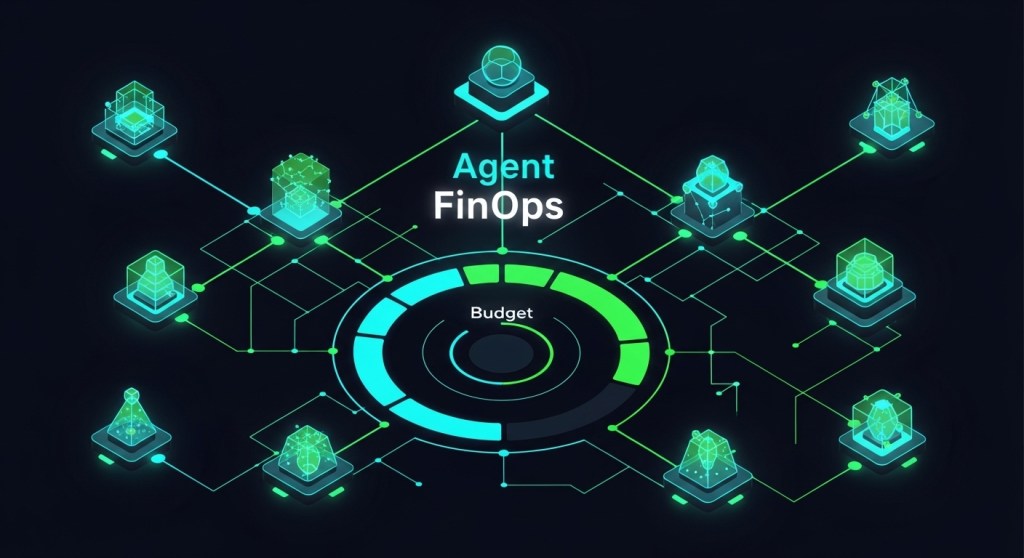
Agent FinOps applies cloud FinOps discipline to AI agents: attribute costs and latency to each agent and task; set budgets and SLOs; route intelligently across models/tools; and continuously evaluate cost, quality, and risk. Instrumentation relies on OpenTelemetry’s Generative AI semantic conventions so you can standardize tokens, costs, and errors across vendors. citeturn2search3turn2search9
Outcomes to target in 90 days
- 30–50% lower run-rate for the top 5 agent workflows via routing, caching, and guardrails.
- Clear unit economics (cost-per-resolution, cost-of-pass) per agent.
- Automated alerts for budget breaches and runaway loops.
- Weekly evals and trace grading to ensure cost cuts don’t degrade quality. citeturn1search1turn1search3
Day 1–30: Instrument everything
1) Adopt OpenTelemetry GenAI metrics + traces
Start with vendor-neutral telemetry. Emit gen_ai.client.token.usage, request/response sizes, model name, provider, latency, and error attributes for every agent step. Correlate with spans for tools, RAG calls, and browser actions. This prevents blind spots as you switch providers or add MCP/A2A integrations. citeturn2search3turn2search9
// Example (pseudo-TypeScript)
span.setAttributes({
  'gen_ai.system': 'openai',
  'gen_ai.model': 'gpt-4.1-mini',
  'gen_ai.request.id': runId,
  'gen_ai.client.token.input': inTokens,
  'gen_ai.client.token.output': outTokens,
  'gen_ai.cost.total_usd': cost,
  'agent.name': 'checkout-recovery',
  'agent.user_tier': 'pro'
});
2) Trace-grade and evaluate
Enable trace grading and agent evals to connect cost changes with quality and reliability. Keep a baseline suite (representative tasks, expected outcomes) and run weekly. If cost drops but grade/consistency falls, roll back. citeturn1search1turn1search3
3) Tie telemetry to your registry + IAM
Every agent should have an identity, owner, data access policy, and cost center. If you haven’t yet, stand up an internal registry + IAM and attach cost metadata so budgets and alerts roll up to teams. See our 7‑day guide: Ship an AI Agent Registry + IAM in 7 Days.
Day 31–60: Budgets, guardrails, and cost-aware routing
4) Set budgets and SLOs per agent
- Monthly budget caps with soft/hard stops per agent and per customer tier.
- SLOs that balance cost, latency, and success rate (e.g., 95% task success, P95 < 4s).
- Policy: when to degrade gracefully (switch to smaller model, reduce tool calls) vs. escalate to human.
5) Add cost-aware model/tool routing
Route simple tasks to cheaper models; reserve premium models for tough cases. Use dynamic routing based on real‑time grades and budget headroom. Research shows constrained policies can cut costs materially without hurting reliability—use this as a north star for your heuristics while you iterate. citeturn4academia14
6) Rein in loops and browser actions
Most surprise bills come from retries, tool loops, and browser agents. Set max‑step limits, per‑tool rate limits, and loop detectors. Microsoft’s synthetic marketplace work highlights how agentic behaviors can go off‑rails—design for it. citeturn0search6
7) Secure-by-default to avoid expensive incidents
Prompt injection and tool abuse waste spend and create risk. Apply MCP security best practices and isolate credentials. Consider specialized MCP security tooling as your footprint grows. citeturn0search4
Related guides: 30‑Day AI Agent Security Hardening Plan and Build an Internal AI Agent Control Plane in 7 Days.
Day 61–90: Optimize unit economics and interoperability
8) Define unit economics that matter
- Cost‑per‑resolution (CPR): total cost to complete a task (refund, booking, lead).
- Cost‑of‑pass: cost to achieve a correct outcome on a benchmark task suite.
- Agentic margin ratio: revenue or savings per task minus agent cost, divided by revenue/savings.
Apply these to revenue‑tied agents first—e.g., Checkout Recovery and Returns & Exchanges—so savings/revenue gains are obvious.
9) Standardize interop (MCP + A2A) without vendor lock‑in
Use MCP for tool connectivity and A2A for agent‑to‑agent messaging so you can swap models/vendors without rewiring the house. Microsoft and others are pushing MCP support across platforms; A2A aims to standardize inter‑agent communication. Bake cost metadata into these messages to keep cross‑agent work accountable. citeturn1news12turn3search1
For platform comparisons, see our 2026 AI Agent Platform RFP Checklist.
10) Close the loop with continuous evals
Run weekly evals with cost, latency, and reliability targets (not just accuracy). Emerging enterprise frameworks propose multi‑dimensional scorecards—adapt them pragmatically to your domain. citeturn1search1
Build vs. buy: the pragmatic stack
- Agent SDKs/platforms: OpenAI AgentKit offers evaluators, builder UI, and connector registry; pair with your own OTel pipeline. citeturn0search0
- Observability: Use OpenTelemetry end‑to‑end; many tools export OTel for agents out of the box.
- Security: MCP‑aware security and policy enforcement as you scale. citeturn0search4
Common pitfalls (and quick fixes)
- Only tracking API bills: Add per‑tool and per‑agent spans so non‑LLM costs (RAG, search, browser) are visible. citeturn2search9
- Cutting cost, breaking quality: Require passing trace grades before shipping cost changes. citeturn1search3
- Lock‑in via proprietary plugins: Prefer MCP/A2A‑based connectors for portability. citeturn1news12turn3search1
Quick-start checklist (copy/paste)
- Emit OTel GenAI metrics + spans in staging; verify tokens/costs roll up by agent. citeturn2search3
- Create budgets and alerts in your observability backend.
- Implement a simple router: small ↔ big model based on confidence/grade.
- Set loop caps and per‑tool rate limits; add human‑escalation policy.
- Run weekly evals; block deploys on grade regressions. citeturn1search1
The bottom line
Agents are crossing the enterprise chasm; cost and reliability discipline must keep pace. Instrument with OpenTelemetry, govern with budgets and SLOs, and iterate with evals. You’ll cut spend materially without slowing teams down. citeturn0news12turn2search3
Call to action: Want a ready‑to‑use Agent FinOps dashboard for MCP + AgentKit? Subscribe for our upcoming template or contact HireNinja for a 30‑minute teardown of your top agent workflow.


Leave a Reply