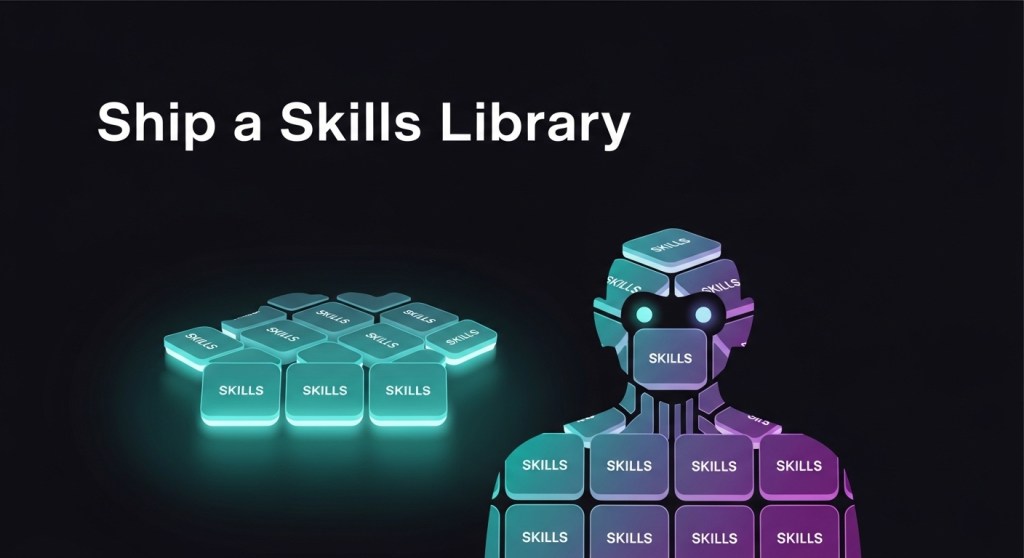
Stop Shipping More Agents—Ship a Reusable AI Skills Library (7‑Day Founder Plan)
Skills beat agent sprawl. Here’s a practical, founder‑friendly plan to consolidate what you’ve built into a governed skills library you can ship in a week.
Why this matters right now
Two headlines in the last few days changed the conversation for 2026:
- Federal direction for AI compliance: The new U.S. AI Executive Order (signed December 11, 2025) signals a more centralized framework, reducing state‑by‑state chaos and pushing startups toward consistent governed AI practices. See our guide: What Startups Must Ship in the Next 7 Days.
- Brand IP goes inside models: Disney’s licensing deal with OpenAI made brand‑safe, licensed AI output mainstream. That favors reusable, auditable skills (prompts, tools, policies) over spawning yet another bespoke agent. Background: AI Brand Licensing Playbook.
At the same time, leading researchers and builders are urging teams to stop multiplying agents and instead invest in a skills library—modular capabilities that any agent (or app) can load, evaluate, and govern. That approach is faster to ship, easier to secure, cheaper to maintain, and simpler to license.
Agents vs. skills: what’s the difference?
- Agent: a runtime persona with memory, tools, and objectives.
- Skill: a reusable capability—well‑scoped prompts, tool contracts, guardrails, and tests—that any agent can call (e.g., “summarize order history,” “generate product sizing video script,” “refund under $50”).
Ship skills, not clones. A governed skills library cuts duplication, creates one place to add policies and telemetry, and makes distribution (internal teams, partners, or future agent app stores) straightforward.
The upside for founders
- Smaller attack surface: One hardened skill beats 10 similar agents. Pair with an agent firewall to enforce policy before tools run.
- Faster shipping: Skills are versioned like code; teams reuse building blocks instead of re‑prompting from scratch.
- Licensing‑ready: You can grant partners access to specific skills with usage caps, provenance, and audit logs—perfect post‑Disney–OpenAI.
- Measurable: Skills carry their own evals and KPIs, so you can prove value (or roll back) in hours, not quarters.
Your 7‑day plan to ship a skills library
Day 1 — Inventory and deduplicate
- List every agent and automation you run across support, marketing, ops, and engineering.
- Cluster overlapping behaviors into skill candidates (e.g., “order lookup,” “RMA logic,” “FAQ summarizer,” “size/fit recommender”).
- Pick 8–12 high‑impact skills for v1.
Day 2 — Define the skill contract
- For each skill: inputs, outputs, required tools/APIs, guardrails, timeouts, and observability (events/metrics).
- Write a tight prompt template and a policy section (allowed/prohibited content, PII rules, tone).
- Add a changelog and semantic version (e.g.,
refunds@1.2.0).
Day 3 — Add evals before you trust it
- Create golden tests and edge‑case probes. Aim for precision on safety and recall on task coverage.
- Use battle‑tested patterns from our post: Ship Agent Evals in 7 Days.
- Set “fail closed” defaults for risky skills.
Day 4 — Wire in security and policy
- Put an enforcement layer between prompts and tools (policy → evals → tool call).
- Block prompt injection, tool abuse, and data exfiltration; log every decision.
- Adopt open schemas so partners can integrate safely. Primer: Open Standards for AI Agents.
Day 5 — Package and publish
- Publish skills as a private catalog (docs, examples, SLAs, usage caps).
- Expose a
/skillsendpoint and SDK stubs so any agent/app can load → call → observe. - Attach license terms for internal teams and (later) partners.
Day 6 — Pilot one surface, prove lift
- E‑commerce: “size/fit recommender” + “returns reason classifier” → measure AOV and return rate.
- Support: “order status” + “refund under $50” → measure FRT and full resolution time.
- Content/SEO: “on‑brand snippet” + “fact check + cite” → measure CTR and time‑on‑page.
Day 7 — Rollout and governance loop
- Gate new skills behind a release checklist (policy, evals, owner, on‑call, rollback).
- Schedule weekly red‑team drills and review incident metrics (violations per 1,000 runs, tool abuse, injection attempts).
- Publish a human‑readable Model Use Policy. Re‑run evals when models update.
KPIs that actually move
- Growth: CTR, AOV, ROAS lift vs. control; localized content velocity.
- Support: ticket deflection, first‑response time, full resolution time, CSAT.
- Risk: policy violations, data egress events, and block/allow ratios at the firewall.
- Efficiency: cost per successful task, time‑to‑ship new skills.
Real‑world security: don’t skip this
Modern agents can be tricked by cloaked pages, indirect prompt injection, and tool abuse. If you only change prompts, you’re not secure. Use an agent firewall, run pre‑flight evals, and log every tool call with inputs/outputs. Treat each skill as production software: code review, tests, and rollbacks.
Example stacks that work
- Catalog + contracts: your repo or an internal package registry hosting skills as versioned folders.
- Policy + firewall: enforce content, safety, and tool access before execution.
- Evals: golden sets, adversarial tests, and live sampling on real traffic.
- Observability: trace spans for prompts, tools, tokens, latencies, and outcomes—exported to your data warehouse.
- Execution partner: If you’d rather not build all of this in‑house, HireNinja ships governed skills libraries, agent firewalls, and evals in days—not months.
Related reading (from this blog)
- AI Brand Licensing: 7‑Day Playbook
- The New U.S. AI Executive Order: What Startups Must Ship
- Ship Agent Evals in 7 Days
- Agent Firewalls Are Here
- Open Standards for AI Agents
Bottom line: 2026 belongs to teams that treat AI like product, not a playground of one‑off agents. Consolidate what works into a governed skills library, prove lift with evals and KPIs, and license or distribute with confidence.
Need a jumpstart? Book a free consult and see live skills libraries, eval harnesses, and agent firewalls in action: HireNinja.


Leave a Reply