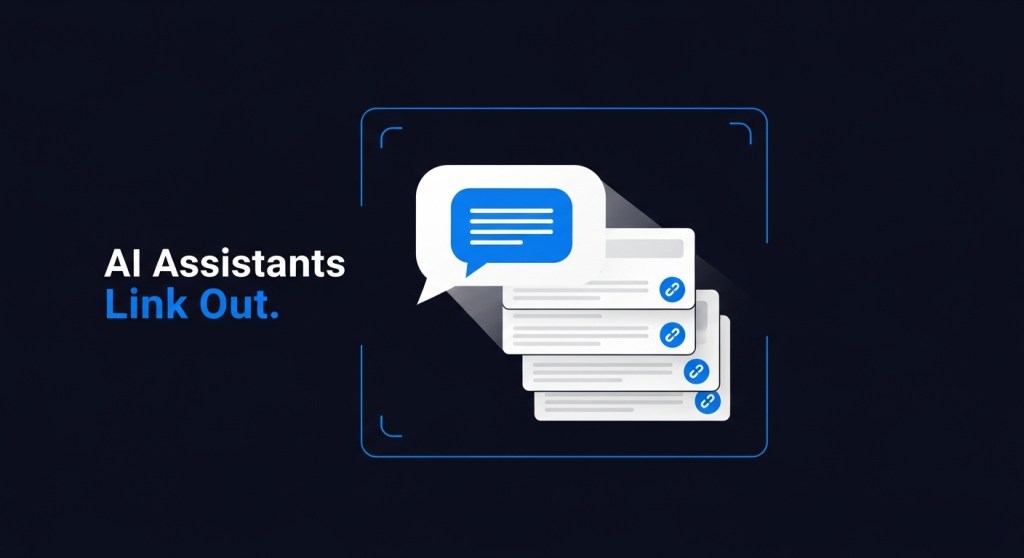
Meta AI’s News Deals Change Distribution. Your 7‑Day Plan to Capture Assistant Traffic in 2026.
Trending brief: On December 5, 2025, Meta announced commercial data agreements with publishers so Meta AI can answer news questions with real‑time information and outbound article links. Distribution is shifting from feeds and search toward AI assistants. Here’s a fast plan to get your brand and content eligible, visible, and measurable.
Source: Meta signs commercial AI data agreements with publishers
Quick checklist
- Add correct Article/NewsArticle schema, timestamps, bylines, and citations.
- Decide your licensing posture (allow, meter, or bill AI assistants) and document it.
- Ship a newsroom page and AI terms page; update robots and headers.
- Publish short, factual updates tied to live events in your niche.
- Enable assistant referral tracking with UTM conventions and log analysis.
- Harden governance & security for content and prompts.
Why this matters now
Assistants are steadily becoming the default UI for information. We’ve already seen browsers and search engines lean into AI modes that promise more outbound links. Meta’s move accelerates that trend inside the social ecosystem. In parallel, Google previewed a deeper research agent built on Gemini 3 and an Interactions API—clear evidence that assistants will browse, cite, and attribute more often to maintain trust.
For founders and e‑commerce teams, this isn’t just “PR meets AI.” It’s a new top‑of‑funnel: credible, time‑sensitive answers that can now point to your site—if you’re crawlable, licensed, and structured for assistants.
Who should act
- B2B SaaS/startups: publish product updates, release notes, incident write‑ups, benchmarks, or regulatory explainers as newsy, source‑rich articles.
- E‑commerce: create time‑bound updates (holiday shipping windows, returns policy changes, limited drops) that assistants can safely cite.
- Developers/DevRel: maintain changelogs and security advisories with strong metadata so assistants surface the latest instructions.
Your 7‑Day Plan
Day 1 — Convert your blog into a mini newsroom
- Create a dedicated News or Updates hub with a clear URL path (e.g., /news/ or /updates/).
- Standardize bylines, publish + updated timestamps, citations, and disclosures. Assistants reward verifiability.
- Implement Article or NewsArticle schema (headline, datePublished, dateModified, author, publisher, mainEntityOfPage, citation).
- Ship a house style guide for factual tone and short paragraphs. Assistants prefer concise, scannable text.
Day 2 — Decide your licensing & robots stance
Pick a posture: allow, allow‑with‑metering, or restrict. Make it explicit in an AI Use & Licensing page. Align it with your SEO strategy and any pay‑to‑crawl experiments.
- Document allowed use (summaries, snippets, full text) and required attribution/linking.
- Update robots.txt and relevant HTTP headers to reflect your policy; coordinate with your CDN.
- Add a visible footer link to your AI policy so assistants and auditors can discover it.
Day 3 — Structure content for assistant answers
- For each newsy post, add a TL;DR (3–5 bullets) and a Key Facts section. Assistants often quote these blocks.
- Use FAQ sections with schema to capture long‑tail questions users will ask assistants.
- Link out to original sources (press releases, standards, filings) and to your own evergreen guides.
- Ensure Open Graph and Twitter Card tags are complete (title, description, image). Even assistants fetch them.
Day 4 — Prove E‑E‑A‑T (experience, expertise, authority, trust)
- Add author bios with credentials and links to previous work.
- Publish an Editorial Standards page (review process, corrections policy, conflicts of interest).
- Create a fact‑check checklist and require two source links per claim where possible.
- Map governance to your org: see our prompt security and governance plan here.
Day 5 — Publish timely, useful updates
Ship two short, factual posts this week tied to live concerns in your niche. Examples:
- E‑commerce: “Holiday shipping cutoff for 2‑day delivery” + “Extended returns through Jan 31.”
- SaaS: “New SOC 2 Type II report available” + “Platform status RCA for 12‑hour incident.”
- AI startup: “Model upgrade notes and evals” + “Data retention policy changes.”
Keep each to 300–500 words, include a TL;DR, and tag with your newsroom taxonomy.
Day 6 — Instrument for assistant traffic
- Add UTM parameters to internal CTAs (e.g., utm_source=assistant&utm_medium=ai&utm_campaign=news) so visits from assistant surfaces are trackable after the click.
- Build a simple log dashboard (server/CDN) to watch for emerging assistant user agents and referers.
- Group likely assistant sessions in analytics: direct traffic to news posts with immediate scroll + short dwell + no referrer often indicates assistant click‑through.
- Set up alerts when assistants suddenly link to a page so you can update it fast.
Day 7 — Close the loop with distribution partners
- Join relevant industry wires and niche newsletters; cross‑post summaries that point back to your canonical.
- For bigger brands, explore licensing marketplaces and partnerships aligned with your AI policy. Our brand‑safe playbook is here.
- Keep a fresh Media Kit (logo, product shots, expert quotes). Assistants surface these in answer cards.
Tech stack notes (what’s changing under the hood)
AI agents are getting better at browsing, citing sources, and following policies. Google’s deeper research agent built on Gemini 3 and the broader agentic tooling wave from AWS re:Invent (policy controls, eval harnesses) suggest assistants will be more policy‑aware and link‑friendly in 2026. That’s good news if your site is fast, structured, and explicit about licensing.
- Expect more policy‑aware crawlers that respect site‑level AI terms and headers.
- Expect more links in answer summaries when sources are clear and claims are verifiable.
- Expect better evals for assistant quality—accuracy and attribution will be measured, not just promised.
Related reads: Google’s deeper research agent overview, AWS re:Invent’s agent updates roundup, and our browser AI action plan.
Governance and compliance reminders
- Keep privacy claims consistent with app and SDK behavior—regulators are watching. Review our 7‑day compliance sprint.
- Disclose affiliate links, sponsorships, and AI involvement in content creation or summarization.
- Refresh your incident response for content errors and AI hallucination risks; publish corrections quickly.
What success looks like (signals to watch)
- Assistant‑sourced sessions with high scroll depth and rapid conversions on newsy posts.
- Upward trend in branded queries + direct traffic following time‑sensitive posts.
- Inclusion of your brand in third‑party roundups and Q&A answers about your niche.
- Improved assistant answers citing your TL;DR or FAQ blocks verbatim.
Bottom line
Assistants are finally linking out in meaningful ways—and Meta just put more fuel in the engine. If you ship structured, factual, and policy‑aware content this week, you can earn durable assistant visibility before your competitors even update their robots file.
Next steps with HireNinja
HireNinja can help you ship this in days, not months:
- Auto‑generate Article/NewsArticle schema, FAQs, and TL;DR blocks.
- Enforce AI licensing headers and robots policies across your site.
- Publish newsroom‑ready updates and syndicate to your channels.
- Detect assistant traffic patterns and alert your team.
Try HireNinja to launch an assistant‑ready newsroom in a week, or explore our recent app‑store playbook for additional distribution.


Leave a Reply