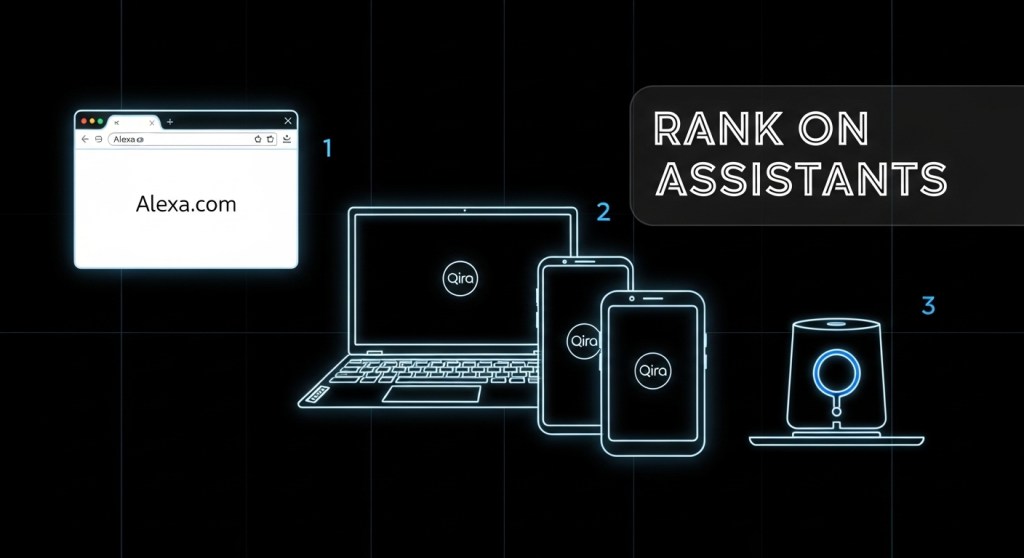
Assistant App Store Optimization (AASO): Rank, Book, and Get Paid on Alexa.com, Lenovo Qira, and Razer AVA
Between January 5–12, 2026, assistants officially became a channel you can optimize and monetize. Amazon rolled out Alexa.com for the web and said 97% of shipped devices can support Alexa+. Lenovo introduced Qira, a cross‑device personal AI for Lenovo and Motorola, and Razer showcased AVA, a desk companion moving from concept to developer‑ready. For founders and e‑commerce operators, that means a new discipline: Assistant App Store Optimization (AASO).
What changed last week—and why it matters
- Alexa.com is now a web surface (January 5, 2026). This puts Alexa+ side‑by‑side with ChatGPT and Gemini in the browser—and opens discovery and conversion funnels you can track like any web referral.
- Payments and bookings are native. Alexa+ has integrations with Square, Expedia, Yelp, and Angi, turning assistant intent into transactions.
- Qira is cross‑device (January 6, 2026). Your offers, services, and content should follow users from PC to phone to wearables—without re‑authentication hoops.
- Desk companions are a channel. Razer AVA and other desk AIs bring always‑visible prompts, perfect for repeat tasks like reorders and subscriptions.
AASO: the 7 levers that drive ranking and conversions
Think of assistants as a blended search + marketplace + concierge. Ranking isn’t just keywords; it’s intent coverage, structured data, fulfillment, and trust. Here’s the playbook:
1) Map intents to actions (not just keywords)
List the top 15 intents you want assistants to fulfill. Use action verbs users actually say: “book,” “reserve,” “reorder,” “upgrade,” “track,” “compare,” “configure,” “subscribe,” “return.” For each, define the minimum inputs an assistant needs (e.g., date, location, variant) and the happy path response (confirmation with order ID, ETA, calendar entry, or deep link).
2) Publish assistant‑ready structured data
Add JSON‑LD to your product and service pages so assistants can parse your catalog fast. Prioritize:
Product+Offer: name, brand, images, SKU, GTIN/UPC, price, availability, shipping regions, return policy.Service: area served, service type, priceRange, booking URL, provider.HowTo: step‑by‑step tasks the assistant can summarize or execute.FAQPage: concise Q/A pairs that match spoken phrasing.
Use canonical URLs and keep images lightweight but high quality (1200×630 works well across surfaces).
3) Build a clean action API (even if it’s just a webhook)
Assistants reward completion. Provide a single endpoint for “create‑order,” “create‑booking,” and “subscribe.” Return machine‑friendly confirmations (orderId, status, total, next steps). If you don’t have an API, expose a fallback deep link with prefilled parameters.
4) Turn on native integrations where available
- Payments: If you use Square in‑store or online, connect the Alexa+ integration so “book”/“pay” can complete without hand‑offs.
- Travel and local: Sync your inventory/menu/hours with Expedia, OpenTable, Yelp, and Angi so assistants can resolve availability in‑line.
- Subscriptions: Offer assistant‑friendly plans (“reorder every 30 days”) with one‑shot confirmation flows.
5) Create assistant landing experiences
When an assistant must hand off to the web, send users to fast, minimal pages that match the spoken request. Include:
- Headline that mirrors the intent: “Reserve a 30‑min consult for Tuesday at 2 PM.”
- Prefilled form fields from the assistant context (date, SKU, size, location).
- Low‑friction payment (Apple Pay, Google Pay, Shop Pay, Square). Under 15 seconds to complete.
6) Instrument attribution from day one
Tag assistant referrals with UTM sources like utm_source=alexa, utm_source=qira, or utm_source=desk_ai, plus utm_medium=assistant and an intent param. Track completion events (“assistant_booking_confirmed”) in your analytics and CRM.
7) Ship trust signals and consent
Short, spoken‑first privacy and refund policies increase completion rates. Publish a compact consent policy and log the user’s opt‑in alongside order IDs. If you need a template, see our guide: Consent‑First AI (48‑Hour Playbook).
Your 7‑day launch plan (works for SaaS, services, and stores)
- Day 1: Draft 15 intents; map inputs and outputs. Add a lightweight
/assistantlanding page with links to your top actions. - Day 2: Add JSON‑LD to your top 25 SKUs/services. Create
/api/assistantendpoints or deep links. - Day 3: Turn on Square and Expedia/Yelp/Angi connections where relevant. Test end‑to‑end bookings.
- Day 4: Build 3 assistant‑specific landing pages (consults, top product bundle, top FAQ).
- Day 5: Add UTM tags and event tracking. Route “assistant leads” to your CRM with an owner SLA.
- Day 6: Record 30‑second product/service clips; assistants often surface short video summaries on hand‑off. Add transcripts.
- Day 7: Run a test cohort: 20 customers use Alexa.com or a Lenovo PC with Qira to complete a task. Measure time‑to‑complete and drop‑offs; iterate.
E‑commerce examples that convert
- “Reorder my 3‑pack energy gels” → assistant checks SKU, last purchase date, size preference → confirms with Apple Pay/Square → sends shipment tracking link.
- “Book a 15‑minute bike fit on Friday afternoon” → assistant resolves availability via your calendar → captures deposit with Square → sends calendar invite with location.
- “Compare 27‑inch 4K monitors under $400” → assistant summarizes 3 options from your catalog with pros/cons → deep link to prefilled cart → one‑click checkout.
Founder shortcuts with HireNinja
If you don’t have time to wire this up from scratch, HireNinja can help you ship the essentials fast:
- Assistant‑ready product feed (Autogenerates JSON‑LD + availability API).
- Action endpoints (create‑order, reserve‑slot, subscribe) with confirmations.
- Attribution kit (UTMs, event schema, and dashboards).
Book a consult: www.hireninja.com
Internal resources to go deeper
- E‑Commerce Playbook: Rank and Sell via Alexa.com, Lenovo Qira, and Razer AVA in 7 Days
- Where Founders Should Build First After CES 2026
- Ambient AI Surfaces Break Out: A 48‑Hour Attribution & Conversion Plan
Benchmarks to watch in January
- Assistant completion rate: target 70%+ of initiated assistant sessions ending in a success (order, booking, subscription).
- Median time‑to‑complete: under 45 seconds from first prompt to confirmation.
- Surface mix: web (Alexa.com) vs. device (Qira PC/phone) vs. desk AI—optimize pages that over‑index.
Common pitfalls (and quick fixes)
- Thin confirmations: Always return orderId, line items, total, ETA, and a help link. Assistants rank reliable merchants higher.
- Ambiguous intents: If users say “book a call,” ask one clarifying question (duration or day). More than one follow‑up increases drop‑off.
- Missing consent copy: Add one sentence the assistant can read aloud about data use and refunds, then link to the full policy.
Bottom line: Alexa.com brings web‑scale discovery, Qira makes it persistent across devices, and desk companions keep you top‑of‑mind at work. If you can turn intents into instant actions—and measure them—you’ll win early AASO. Need a jumpstart? Talk to HireNinja and ship your assistant‑ready catalog this week.


Leave a Reply