• Agent App Stores Are Closer Than You Think: How to Package, Price, and Distribute Your AI Agents in 2026

    Agent infrastructure matured fast; the next bottleneck is distribution. As major clouds and platforms push catalogs, registries, and marketplaces for AI agents, your advantage in 2026 will come from how quickly you can package, price, and publish reliable agents—then iterate on usage data like a SaaS product. This roadmap turns the week’s agent news into a concrete, founder‑friendly go‑to‑market.

    Why now: from demos to distribution

    • Platforms are productizing research and reasoning agents, while also dangling APIs that will surface agents across Search, productivity suites, and finance tools.
    • Enterprises are rolling out admin hubs that treat agents like digital employees—registered, governed, and measured.
    • Clouds are baking in policy, evaluations, and memory to make agents enterprise‑safe and measurable.
    • Open standards are accelerating interoperability so your agent can run in more places with less glue code.

    Translation for founders: shipping the agent isn’t the hard part anymore—getting distribution is.

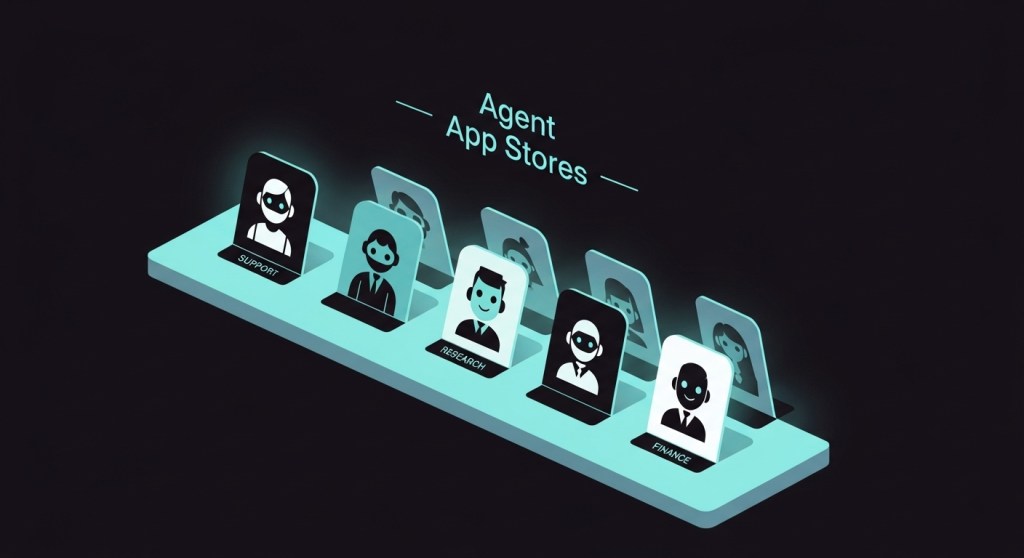
    What an “agent app store” looks like (and where yours will live)

    Expect multiple shelves for the same agent:

    • Cloud marketplaces: List agents where enterprises already buy software. Package with billing, SLAs, observability, and policy controls.
    • Enterprise catalogs: Companies are creating internal registries where approved agents are published, versioned, and monitored.
    • Product surfaces: Search, docs, and chat apps will expose task‑specific agents as native actions. Your agent’s skills become “features” inside user workflows.
    • Open standards rails: Use emerging standards (tool/skill contracts, context protocols) so your agent runs across vendors without rewrites.

    Package your agent like a product, not a prompt

    Great packaging reduces risk for buyers and increases approvals by Security, Data, and Finance. Ship these seven ingredients:

    1. Problem statement and outcome: e.g., “Deflect WISMO tickets by 40% in 30 days.” Include 2–3 validated use cases and expected lift.
    2. Skills library (tools): List callable skills with contracts: inputs, outputs, auth scopes, and latency SLOs. Keep skills modular so they can be reused across agents later.
    3. Policies and guardrails: Define what the agent can and cannot do. Include human‑in‑the‑loop thresholds (e.g., auto‑refund up to $100; escalate above).
    4. Data boundaries: Enumerate sources (CRM, ticketing, catalog), PII handling, and retention. Provide a one‑page DPIA template to speed procurement.
    5. Evals & telemetry: Ship a prebuilt eval suite (correctness, safety, tool‑use accuracy) and expose traces via OpenTelemetry. Buyers will ask.
    6. Rollout plan: Stage by group/region. Provide a 7‑day pilot with success criteria and rollback steps.
    7. Buyer docs: Admin guide, quickstart, and a one‑page architecture diagram. Less mystery = faster sign‑off.

    Want a shortcut? Try deploying a pre‑built agent (“Ninja”) and customize only the skills and policies you need: Get started with HireNinja.

    Pricing that clears procurement

    Buyers hate unbounded usage. Anchor price to value, cap risk, and give Finance something to model:

    • Per‑task bundles (e.g., “10k ticket triages/month”), with metered overages and hard caps.
    • Per‑seat + usage for knowledge‑worker agents embedded in daily tools.
    • Outcome‑based tiers (shared savings, conversion lift) once you have baselines.
    • Environment tiers: sandbox, pilot, production—with stricter SLAs and policy packs as you move up.

    Tip: create a pilot SKU with a fixed price and success checklist. The moment Procurement sees bounded risk, cycles compress.

    Distribution playbook: 7 days to a publishable agent

    Use this as your first GTM loop. Ship fast, measure, and iterate.

    1. Day 1 — Define the job: Pick one job‑to‑be‑done per agent (e.g., “reduce WISMO tickets”). Write the outcome, guardrails, and success metric.
    2. Day 2 — Assemble skills: Connect only the 3–5 tools you need (orders API, CRM, catalog, email). Keep credentials scoped and rotate keys.
    3. Day 3 — Add policy: Encode data access, spending limits, and escalation rules. Include a kill‑switch and human‑review paths.
    4. Day 4 — Evals & traces: Build an eval set from 50 historic tasks. Track step‑level traces and tool‑use accuracy. Set pass/fail gates for release.
    5. Day 5 — Package docs: Write the admin quickstart, architecture diagram, and a one‑page DPIA. Prepare a pilot SLA (latency, uptime, RTBF).
    6. Day 6 — Pilot SKU: Price the pilot, cap usage, and define go/no‑go metrics. Draft a 30‑minute onboarding script.
    7. Day 7 — Publish one channel: Submit to a marketplace or your customer’s internal catalog. Announce with a 200‑word launch note and a Loom demo.

    Example agents you can ship this month: e‑commerce support automations, research/diligence agents, and refund/cancellation handlers with spending controls.

    Security and compliance: win the CISO early

    Bake security into your pitch, not just your stack:

    • Agent firewalling: Gate tools behind policy checks; require approvals for privileged actions. See our guide: Agent Firewalls Are Here.
    • Identity: Issue a distinct agent identity and rotate credentials. Map agent roles to least‑privilege scopes.
    • Data governance: Log every tool call with purpose, input, and output. Honor RTBF/DSAR across caches and memory.
    • Evals as change control: Ship model/skill updates behind eval gates. No eval pass, no deploy. For production runbooks, see Coding Agents in Production.

    Standards that unblock distribution

    Interoperability shortens your path to new shelves. Align with emerging conventions for skills/tools, context passing, and tracing. Our explainer covers what’s landing and why it matters: Open Standards for AI Agents.

    Metrics that matter post‑launch

    • Adoption: approved installs, active tenants, seats provisioned.
    • Engagement: tasks per user/day, tool‑use success, time‑to‑completion.
    • Quality: eval pass‑rate in production, intervention rate, escalation accuracy.
    • Value: deflection %, AOV lift, cycle‑time saved, cost per resolved task.
    • Reliability: p95 latency per skill, error budgets burned, rollback count.

    Productize these as in‑product dashboards so buyers can see outcomes without exporting logs.

    Two sample packages (copy/paste)

    1) “WISMO Deflector” for e‑commerce

    • Outcome: 40% ticket deflection in 30 days
    • Skills: orders API, shipping API, knowledge base, email/SMS
    • Policy: auto‑resolve under $100; escalate above; no free‑text PII
    • Evals: 100 historic tickets, success = correct resolution + customer CSAT proxy
    • Price: $2,500 pilot (10k tasks), then $0.12/task with caps

    2) “Diligence Reader” for founders & investors

    • Outcome: 4‑hour turnaround on 50‑page memos
    • Skills: web crawl, PDF RAG, spreadsheet summary, call notes
    • Policy: redact PII; never execute links; cite sources to reviewer
    • Evals: 30 docs with rubric for coverage and correctness
    • Price: $1,500 pilot (500 docs), then per‑doc bundles

    Go further with this week’s key shifts

    Deep research and higher‑fidelity models make long‑running tasks viable; enterprise hubs make agents manageable; cloud policy/evals reduce risk; and open standards improve portability. Put together, this is the moment to stop building bespoke bots and start shipping packaged agents where your buyers already shop.

    Recommended next reads

    Call to action

    Ship your first revenue‑ready agent without the yak‑shaving. Spin up a pre‑built Ninja, plug in your tools, and publish to your buyer’s catalog in a week. Try HireNinja or Schedule a quick demo.
  • Google’s Deep Research Agent and OpenAI GPT‑5.2 Just Reset Your 2026 Agent Roadmap: A 7‑Day Founder Plan

    Google’s Deep Research Agent and OpenAI GPT‑5.2 Just Reset Your 2026 Agent Roadmap: A 7‑Day Founder Plan

    Published: December 12, 2025

    At a glance

    • Google re‑launched its Deep Research agent with an Interactions API and plans to thread it into Search, Finance, Gemini, and NotebookLM.
    • OpenAI released GPT‑5.2 the same day—turning this into a platform race for long‑running, multi‑step agent work.
    • Pair this with the new AAIF open standards moment and AWS AgentCore updates, and you’ve got the blueprint for secure, governed agents in 2026.
    • Below: a pragmatic, 7‑day plan you can ship next week—complete with security, evals, and KPIs.

    What changed this week (and why it matters)

    On December 11, 2025, Google introduced a reimagined version of its Deep Research agent, exposing “research-as-a-service” via a new Interactions API and previewing integrations into core Google surfaces. On the same day, OpenAI dropped GPT‑5.2. The signal is clear: long‑running, multi‑step research agents that read widely, reason deeply, and deliver traceable findings are no longer a demo—they’re the new competitive edge for 2026.

    Zooming out, this lands in a week where open standards for agents (AAIF) and AWS AgentCore policy/evals make enterprise‑grade guardrails achievable without a 20‑person platform team. If you’re a founder or ops leader, the window to turn agent pilots into durable capability is open—and short.

    Founder questions this article answers

    • Where should we use a research agent first (and where not)?
    • How do we keep agents safe (policy, identity, firewalls) while moving fast?
    • What KPIs and evals prove value in a week?
    • Build vs. buy: when should we try an off‑the‑shelf agent like HireNinja?

    The 7‑Day Plan (you can start Monday)

    Day 1 — Pick one “deep‑work” use case

    Choose a high‑leverage, document‑heavy workflow where humans spend 4–10 hours synthesizing sources. Examples: vendor due diligence, competitive tear‑downs, security policy comparison, or SKU & review synthesis for e‑commerce merchandising. Define “done”: source list, a 1‑page brief, and a traceable appendix.

    Day 2 — Establish identity and least‑privilege

    Register your agent, give it a scoped identity, and lock tool access to read‑only where possible. Follow our practical blueprint in Agent Identity in 2026.

    Day 3 — Put a policy “firewall” in the loop

    Before you let any agent take actions, enforce human‑readable guardrails. Use policy checks to constrain tool calls (e.g., allow refunds ≤ $100; escalate above). Our 7‑day rollout in Agent Firewalls Are Here shows how to ship this fast with Google, AWS, and Microsoft stacks.

    Day 4 — Build an evaluation harness

    Wire step‑level evals for faithfulness, citation coverage, and tool‑use accuracy. Start with model‑assisted rubric checks and a small human panel. See our runbook: Coding Agents in Production for OpenTelemetry traces and rollback patterns. If you’re on AWS, lean on AgentCore’s prebuilt evals; on OpenAI, use Evals for Agents and AgentKit.

    Day 5 — Prototype with Google Deep Research and an OpenAI baseline

    Run the same task with two stacks: Google’s Deep Research for breadth and traceability; OpenAI’s latest model for speed and language quality. Capture diffs in: sources covered, hallucination rate (manual spot‑checks), cost, and time‑to‑first‑brief. See coverage on Google’s launch here.

    Day 6 — Standardize interfaces and telemetry

    Abstract your “research skill” behind a common interface so agents across vendors can call it. Adopt AAIF‑aligned contracts and MCP‑style tool declarations to avoid vendor lock‑in. Our explainer: Open Standards for AI Agents.

    Day 7 — Ship a guarded pilot + executive dashboard

    Release to 3–5 power users behind feature flags. Instrument a single dashboard with: time saved per brief, % briefs accepted without edits, hallucination incidents, and cost/brief. Define rollback: kill‑switch, model swap, or human‑only mode.

    Where a research agent shines (and where it doesn’t)

    Great fits: diligence packets, RFP/RFI synthesis, trend scans, policy comparisons, and technical landscape reviews. For e‑commerce, think: merging reviews, community chatter, and competitor catalogs into weekly “What to fix and test” briefs—pair this with the automations from Holiday Support, Solved.

    Bad fits: high‑stakes irreversible actions (wire transfers, compliance filings) without a human in the loop; tasks with no source material to verify claims.

    Security, compliance, and governance—without slowing down

    • Identity & registry: Treat agents like digital employees—unique IDs, lifecycle, and access logs. See our take on agent registries and Microsoft’s direction in This Week in AI Agents.
    • Policy guardrails: Natural‑language policies attached to tools and data scopes stop unsafe actions before they execute. Start with read‑only research.
    • Evaluations: Track faithfulness, coverage, novelty, and cost; fail closed on low confidence.
    • Telemetry: Trace every step, tool call, and source; ship incident playbooks.

    Build vs. buy (and when to try HireNinja)

    If you have platform engineers and a clear use case, prototyping with Google/OpenAI is a fast path to learning. If you need value this week, consider a ready‑to‑hire agent. With HireNinja, you can start with a prebuilt research or support “Ninja”, then grow into custom workflows. Pricing is transparent and you can scale up or down as ROI becomes clear—see plans.

    KPIs to watch in Week 1

    • Throughput: briefs/week per analyst (target: +3–5×).
    • Coverage: sources reviewed per brief (target: +2×), % primary sources cited.
    • Quality: stakeholder acceptance on first pass (target: ≥70%), zero‑hallucination spot‑checks.
    • Cost: $/brief vs. human‑only baseline (target: −40–60%).
    • Safety: policy violations blocked, escalations caught by human‑in‑the‑loop.

    The bottom line

    Google’s Deep Research and OpenAI’s GPT‑5.2 escalated the agent platform race. Pair them with AAIF standards and enterprise‑grade policy/evals and you can ship a safe, measurable research agent next week—without betting the company. Start small, measure ruthlessly, and keep humans in the loop where it matters.

    Next step: Want a done‑for‑you pilot? Try HireNinja or talk to us about a scoped research agent that plugs into your stack.

  • Agent Firewalls Are Here: Lock Down AI Agents with Google Model Armor, AWS AgentCore Policy, and Microsoft Agent 365 [7‑Day Plan]

    Agent Firewalls Are Here: Lock Down AI Agents with Google Model Armor, AWS AgentCore Policy, and Microsoft Agent 365 [7‑Day Plan]

    Agents moved from demos to production headlines this week. Google launched managed MCP servers with Model Armor (an agent‑aware firewall) and an Interactions API; AWS shipped AgentCore Policy and Evaluations; Microsoft is rolling out Agent 365 to manage fleets like digital employees. This playbook turns that news into a concrete, one‑week rollout.

    Sources: Google’s managed MCP servers + Model Armor, Deep Research + Interactions API, AWS AgentCore Policy/Evals, Microsoft Agent 365, AAIF open standards.

    Why this matters now

    • Agents can act. OS‑ and desktop‑level control plus API access means agents can move money, update records, and trigger deploys—great for speed, risky for security.
    • The ecosystem is converging on a control plane. Registries, identity, policy, and telemetry are no longer optional; they’re being productized (Agent 365, AgentCore) and standardized (AAIF, MCP).
    • Attack surface is real. Browser/desktop agents are vulnerable to prompt injection and data exfiltration without guardrails. See TechCrunch’s overview of agent security risks.

    What is an “agent firewall” in 2026?

    Think of it as a new layer that sits between your agents and the outside world. It combines four controls:

    1. Identity: Every agent has its own verifiable identity and least‑privilege credentials.
    2. Policy: Every tool/API call is checked against allow/deny/confirm rules before execution.
    3. Telemetry: Every step is traced for auditability and rollback.
    4. Standards: Connect via MCP and publish predictable instructions so skills remain portable.

    Concretely, that looks like Microsoft Entra Agent ID + Agent 365 (registry/identity), AWS AgentCore Policy/Evaluations (real‑time checks and quality), and Google’s managed MCP servers + Model Armor (secure, audited connectors with an agent‑aware firewall).

    Ship it in 7 days (copy‑paste plan)

    Day 1 — Inventory surfaces and risks

    • List your top 10–20 agent tasks (e.g., WISMO, refunds ≤$100, flaky test triage, catalog updates). Note tools touched, data classes (PII/PCI), and blast radius.
    • Write three non‑negotiables (e.g., “No PII export,” “No payouts >$100 without HITL,” “No prod deploys without green canary”).

    Helpful references: our 10‑step agent security checklist.

    Day 2 — Put policy in front of every tool call

    • If you’re on AWS, turn on AgentCore Policy and codify allow/deny/confirm rules in plain language (e.g., “Auto‑approve refunds ≤$50; 2FA + human above”).
    • Elsewhere, enforce the same checks in your gateway/orchestrator before agents hit Salesforce, Shopify, Slack, or payment APIs.

    Day 3 — Register agents and issue identities

    • Create a registry (name, owner, environment, scopes, SLA). If eligible, pilot Agent 365 for centralized visibility.
    • Issue per‑agent identities (e.g., Entra Agent ID) with least privilege, short‑lived secrets, and lifecycle policies (provision → review → deprovision).

    Deep dive: Agent identity blueprint.

    Day 4 — Standardize connectors with MCP; add Model Armor

    • Expose your internal tools via MCP so agents discover and use them predictably. If you’re on Google Cloud, test the new managed MCP servers for Maps, BigQuery, and GCE; secure with IAM and Model Armor for agent‑aware filtering, logging, and threat defenses.
    • If you use Apigee, evaluate the “API → MCP server” translation to reuse your existing quotas, auth, and monitoring.

    Context: Google’s managed MCP + Model Armor.

    Day 5 — Baseline reliability with evaluations

    • Stand up a 25–50 example eval set per workflow and track: success rate, policy compliance, tool selection accuracy, latency, and cost.
    • On AWS, enable AgentCore Evaluations (13 prebuilt evaluators). Otherwise, wire OpenAI Evals or your CI to run the suite on every change.

    Tutorial: Agent Evals in 7 Days.

    Day 6 — Turn on trace‑level telemetry and tripwires

    • Emit OpenTelemetry spans for prompts, tool calls, tokens, cost, and policy decisions. Alert on sensitive file reads, high‑risk actions, or unusual egress.
    • Add kill switches and auto‑rollback for policy violations; keep canary deploys and feature flags on for any agent that can change state.

    Runbook: 14‑day incident‑safe rollout.

    Day 7 — Red‑team prompt injection; ship a guarded pilot

    • Test agents against untrusted inputs (web pages, PDFs, emails). Verify your policy wall blocks risky actions and your MCP connectors stay least‑privilege.
    • Launch two guarded workflows (e.g., refunds ≤$50 with HITL >$50; flaky test fixes via PR only). Review metrics after one week, then expand deliberately.

    Example policies you can copy

    • Refunds: “Auto‑approve ≤$50; $51–$200 requires 2FA + manager approval; >$200 human‑only.”
    • PII: “Mask emails/phones by default; block CSV export unless ticket is escalated + approved.”
    • Deploys: “No direct pushes to main; PR + canary (10%) + green tests are mandatory.”

    Founder FAQ

    Do I have to pick one vendor? No. Use AAIF‑aligned standards (MCP, Agents.md, Goose) so your skills and connectors stay portable across Agent 365, AgentCore, and Google’s stack.

    Where do I start if I have no security team? Start with the policy wall, per‑agent identities, and evals. That gets you 80% of the risk reduction in a week.

    How do I measure success? Track success rate, policy‑violation rate, median latency, cost per resolution, and human‑handoff rate. Review weekly and tighten policies before expanding autonomy.

    What good looks like after 30 days

    • Reliability: ≥92% task success on scoped workflows; Safety: zero unauthorized actions; Efficiency: median latency < 90s; Cost: clear cost‑per‑resolution with trend down as skills improve.

    Keep going


    Want this done‑for‑you? Hire a managed Ninja and ship a governed pilot fast—policy walls, MCP connectors, evals, and dashboards included.

  • OS‑Level Agents Are Here: AWS ‘Kiro’, Simular 1.0, and the New Agent Control Plane

    Dec 11, 2025 — AI agents just jumped from the browser into the operating system. In the past 10 days, AWS previewed three agents, including “Kiro,” a coding agent that can work for days, while Simular launched its 1.0 desktop agent for macOS and raised $21.5M. Meanwhile, open standards accelerated as OpenAI, Anthropic, and Block formed the Agentic AI Foundation (AAIF) under the Linux Foundation to push interoperability via MCP, Agents.md, and Goose. For startup founders and operators, that’s not just news—it’s a new architecture decision.

    What changed, exactly?

    • OS‑level execution is real. Agents aren’t just clicking around in a sandboxed browser anymore; they can move the mouse, open apps, and operate your desktop workflows. That unlocks automations across tools that never shipped APIs.
    • Agent control planes are becoming mandatory. As agents gain system permissions, you’ll need identity, registry, policy, and observability—just like human employees or microservices.
    • Standards are consolidating. MCP, Agents.md, and Goose moving into AAIF signals a shift toward portable skills and cross‑vendor orchestration.

    Why this matters to founders and e‑commerce operators

    If you run a startup or an online store, the near‑term value is practical:

    • Fewer brittle integrations: OS agents can automate tasks in legacy tools while you phase in APIs.
    • Faster time‑to‑value: Coding and support agents can ship incremental wins (bug triage, WISMO deflection, refunds) without a platform rewrite.
    • Better governance: With registries, identity, and policy, you can grant least‑privilege access and audit every action.

    What’s new this week (and why it’s a big deal)

    1. AWS “Kiro” (preview): A coding agent designed to keep working autonomously for extended periods, spanning code generation, reviews, and incident prevention. Source
    2. Simular 1.0 (macOS): A desktop agent that controls the OS itself—literally moving the cursor and completing multi‑step tasks across apps—with Windows support on the way. Source
    3. AAIF under the Linux Foundation: Open standards for agent interoperability consolidate around MCP, Agents.md, and Goose—paving the way for cross‑tool, cross‑cloud workflows. Source

    The 7‑day action plan to get ready for OS‑level agents

    Use this short, safe plan to pilot OS‑level agents without blowing up production. Each step links to deeper playbooks we’ve published this week.

    1. Day 1: Inventory tasks and guardrails. List 10–20 high‑volume, repeatable tasks (coding chores, WISMO, refunds, catalog updates). Classify each by data sensitivity and blast radius. Define “must never” constraints and manual approval steps. For support examples, see Holiday Support, Solved.
    2. Day 2: Stand up a basic agent registry. Track every agent with owner, permissions, environment, and purpose tags. Compare options and a 14‑day rollout in Agent Registries Are Here.
    3. Day 3: Establish agent identity and least privilege. Issue identities per agent, segment secrets, and gate tool access. Start with the blueprint in Agent Identity in 2026.
    4. Day 4: Baseline reliability with evals. Before expanding permissions, measure task success, time‑to‑complete, and regression risk using trace‑level grading. Use our eval recipe in Agent Evals in 7 Days.
    5. Day 5: Lock down security. Apply output filters, tool whitelists, network egress controls, and approval gates for high‑risk actions. If you missed this morning’s incident headlines, don’t. Ship the checklist from After “IDEsaster,” Lock Down Your AI Agents.
    6. Day 6: Orchestrate with open standards. Wire agents to your tools using AAIF components (e.g., MCP for tool connections, Agents.md for site rules). Our primer: AAIF: What It Means + 7‑Day Plan.
    7. Day 7: Run a 1‑week pilot on two tasks. Choose one coding task (e.g., flaky test triage) and one ops/support task (e.g., WISMO deflection). Track cost per resolution, cycle time, and human‑in‑the‑loop (HITL) load. Roll forward only if metrics beat your baseline with stable evals.

    Which agent goes where? A quick mapping

    • Coding & DevOps: Long‑running coding agents like AWS’s Kiro (preview) or a managed HireNinja Coding Ninja can handle bug fixes, refactors, and CI/CD chores—if gated by evals and approvals. Pair with an incident‑safe rollout from our 14‑day runbook.
    • Customer support: OS‑level agents can process refunds or re‑shipments in legacy tools that lack modern APIs. Start with low‑risk deflection and add HITL for monetary actions. Examples in this 72‑hour plan. Consider a managed Customer Support Ninja.
    • Growth & content: A WordPress Blogger Ninja can research, draft, and publish updates—then an OS agent can localize in desktop tools where your team still lives (Slides, Excel, design apps).

    Architecture notes for the 2026 agent stack

    Putting it all together, here’s a pragmatic reference stack we’re seeing work in early pilots:

    1. Control Plane: Central registry + policy + identity (service accounts per agent, short‑lived credentials, environment scoping). See Agent Registries.
    2. Standards Layer: Use AAIF components (MCP, Agents.md, Goose) to reduce integration debt and keep your agents portable across vendors as the market shifts.
    3. Execution Layer: Mix browser agents (safe for web tasks) and OS agents (needed for non‑API apps). Encapsulate risky actions behind HITL and approval steps.
    4. Observability & Evals: Trace every tool call, grade steps, and auto‑rollback when metrics drift. Start with the 7‑day evals plan we published.
    5. Security: Output filters, prompt‑injection defenses, allow‑lists for domains/apps, and network egress controls. Follow the 10‑step hardening checklist.

    What about OpenAI’s and Google’s agents?

    If you’re already piloting ChatGPT’s general‑purpose agent or Google’s Project Mariner/Gemini‑powered computer use, treat them as channels within your control plane. Favor AAIF‑aligned connectors where possible so your skills library remains portable. Avoid hard‑coding prompts or tools to a single provider unless there’s a clear, durable advantage for your use case.

    Founder takeaways

    • Start small, measure hard: Two tasks, one week, evals on. Treat early wins as signals to scale, not guarantees.
    • Prioritize governance over model hype: In 2026, the winners won’t be the flashiest models—they’ll be teams that run agents like production systems.
    • Leverage managed agents to move faster: If you don’t have the bandwidth to build everything yourself, hire a managed agent and keep your control plane in‑house. Explore HireNinja and compare plans.

    Ready to try this safely? Spin up a managed agent from HireNinja, then follow our incident‑safe runbook and 7‑day evals to keep risk low while you validate ROI.

  • After “IDEsaster,” Lock Down Your AI Agents: A 10‑Step Security Checklist for 2026

    After “IDEsaster,” Lock Down Your AI Agents: A 10‑Step Security Checklist for 2026

    IDEsaster showed how AI‑powered IDEs and coding agents can leak data or execute code. Pair that wake‑up call with fresh guardrails from AWS (AgentCore Policy/Evaluations), Microsoft (Entra Agent ID), and the new Agentic AI Foundation (AAIF) standardizing MCP and more—and you’ve got a concrete path to safer agents in 2026.

    What happened and why it matters. Security researchers disclosed 30+ flaws across AI‑powered IDEs—demonstrating agent attack chains that combine prompt injection, auto‑approved tool calls, and legitimate IDE features to cause data exfiltration or remote code execution. If your agents can read files, write configs, fetch schemas, or run tools, you’re in scope. This isn’t just a dev‑tool problem; it’s a pattern for any agent with system access.

    The good news: in the last two weeks we’ve seen real progress on guardrails and standards:

    Who this is for

    Startup founders, e‑commerce operators, and engineering leaders running coding agents, support agents, or workflow automations in production (or soon). You’ll map today’s headlines to concrete actions you can ship this sprint.

    The 10‑step agent security checklist (ship this in the next 14 days)

    1) Put a policy wall in front of every tool call

    Adopt a policy engine that inspects and approves each agent action before it hits external tools or sensitive data. If you’re on AWS, start with AgentCore Policy (preview) to define allowlists/denylists in plain English that compile to Cedar. Elsewhere, use OPA/Cedar‑style checks in your gateway or orchestrator.

    2) Register every agent and give it an identity

    No anonymous agents. Issue verifiable credentials, rotate secrets, and scope permissions per agent persona/environment. If you’re in the Microsoft ecosystem, pilot Entra Agent ID. For an architecture overview, see our blueprint: Agent Identity in 2026.

    3) Kill auto‑approve in dev tools; force human‑in‑the‑loop

    Turn off “auto‑execute” actions in coding agents and require explicit confirmation for write/execute operations. Disable “trust workspace” defaults, and prevent automatic fetches (e.g., remote JSON schemas) that can exfiltrate secrets. Treat every inbound context (READMEs, filenames, MCP responses) as potentially hostile.

    4) Contain blast radius with sandboxed compute and network egress

    Run agents in ephemeral sandboxes with read‑only mounts by default. Enforce egress controls (domain allowlists), block file:// and local socket access unless required, and record outbound requests.

    5) Move from “more agents” to “reusable skills”

    Anthropic and others argue the breakthrough is skills—modular, governed capabilities—rather than proliferating agents. Centralize skills with approvals, versioning, and tests so improvements propagate safely across use cases.

    6) Instrument agents like services (telemetry + audits)

    Emit traces for every tool call with inputs/outputs and policy decisions. Alert on sensitive file reads, config writes, and unusual egress. If you’re on AWS, wire AgentCore telemetry to CloudWatch; elsewhere, standardize on OpenTelemetry and ship logs to a SIEM.

    7) Stand up continuous agent evaluations

    Run evals that reflect real attack chains (prompt injection → tool call → IDE/OS feature abuse). Start with AgentCore Evaluations or adapt our hands‑on playbook: Agent Evals in 7 Days.

    8) Treat the IDE as part of the threat model

    IDEsaster wasn’t “just one CVE.” It showed that legacy editor features become attack surfaces when agents can act. Lock down settings that run code on open/save, ban risky extensions, and block remote schema fetches. Train developers on prompt‑injection hygiene and poisoned context patterns. For background, see the original coverage in The Hacker News.

    9) Standardize how tools connect: MCP + open specs

    Consolidate integrations using MCP and emerging AAIF patterns so every tool connection passes through the same auth, logging, and policy layers. That reduces bespoke glue code (and bespoke bugs). Quick primer: MCP is becoming the de facto agent interface, and AAIF is formalizing an open ecosystem. We break down what AAIF means—and how to respond—in our AAIF explainer + 7‑day plan.

    10) Build your agent control plane (registry, policy, identity, evals)

    Centralize agent registration, identity, policy, and evaluations in one control plane. If you’re choosing platforms, compare Microsoft’s Agent 365 vs. AWS AgentCore using our founder’s guide: Agent Registries Are Here.

    Copy‑paste starter plan (7 days)

    1. Day 1: Inventory agents, tools, and data scopes. Turn off auto‑approve for destructive actions.
    2. Day 2: Add a gateway with policy checks in front of tool calls (AgentCore Policy if on AWS).
    3. Day 3: Issue identities per agent (Entra Agent ID where available). Rotate secrets.
    4. Day 4: Egress controls + sandbox defaults. Block remote schema fetches in IDEs.
    5. Day 5: Stand up baseline evals (success, tool choice, safety). Add attack‑chain tests.
    6. Day 6: Centralize reusable skills with versioning and approvals.
    7. Day 7: Ship dashboards and alerts for sensitive actions; rehearse a kill‑switch playbook.

    What this means for startups and e‑commerce

    • Startups: You don’t need a SOC team to get safer. A thin gateway with policy checks, per‑agent identities, and evals gets you 80% of the way while you scale. When you’re ready to pilot coding agents, use our 14‑day incident‑safe runbook.
    • E‑commerce: Customer‑facing agents (WISMO, returns, up‑sells) should use skills for brand policy and offer logic, with hard policy walls for discounts/refunds. If you’re racing to handle Q4 traffic, start with these 10 ready‑to‑ship automations.

    Further reading


    Need help standing this up? HireNinja’s AI ninjas can spin up governed skills, add policy guardrails, and wire up telemetry and evals without slowing your roadmap.

    • Explore HireNinja—see examples of task‑ready ninjas and our pricing.
    • Get started—stand up a proof‑of‑concept agent with guardrails in days, not months.

    Prefer to DIY? Start with our AAIF explainer and control‑plane guides linked above, then layer skills, policy, identity, and evals step‑by‑step. Your agents—and your incident queue—will thank you.

  • Open Standards for AI Agents Are Here: What AAIF Means for Your 2026 Roadmap (+ 7‑Day Action Plan)

    Open Standards for AI Agents Are Here: What AAIF Means for Your 2026 Roadmap (+ 7‑Day Action Plan)

    Published: December 10, 2025

    Meta: OpenAI, Anthropic, and Block launched the Agentic AI Foundation (AAIF) under the Linux Foundation, donating MCP, AGENTS.md, and goose. Here’s why it matters—and exactly what founders can do this week.

    Quick plan for this article

    • Scan trusted coverage to confirm what’s new and why it matters.
    • Translate the news into founder‑ready implications (interoperability, security, procurement).
    • Provide a practical 7‑day action plan you can actually ship.
    • Link out to deeper runbooks for identity, registries, evals, and production safety.
    • Close with a lightweight procurement checklist and resources.

    What happened (and why it’s big)

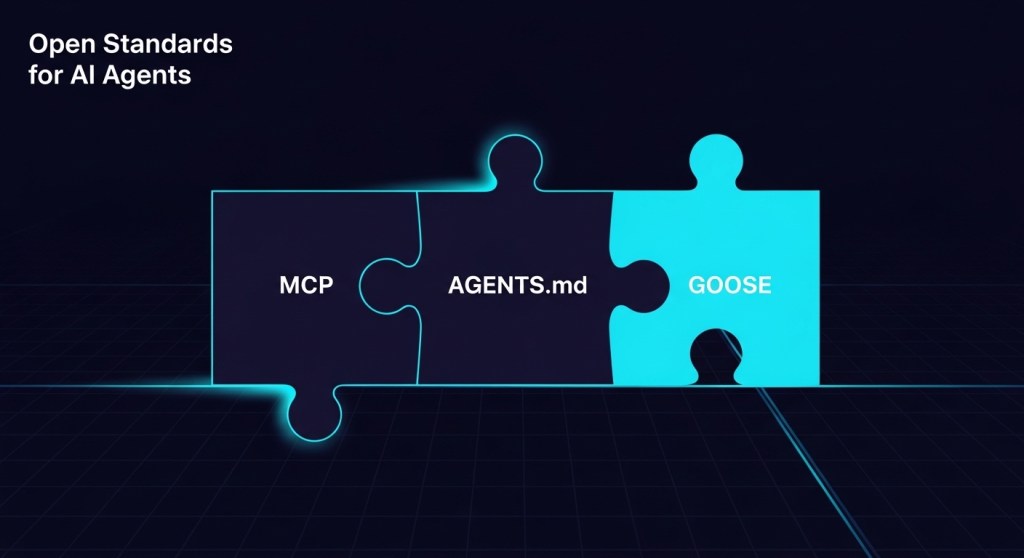
    On December 9, 2025, OpenAI, Anthropic, and Block announced the Agentic AI Foundation (AAIF) under the Linux Foundation. They’re donating three cornerstone projects to a neutral home:

    • Model Context Protocol (MCP) by Anthropic — the fast‑growing way agents connect to tools, apps, and data.
    • AGENTS.md by OpenAI — a lightweight, markdown convention for project‑level instructions that make coding agents predictable across repos and toolchains.
    • goose by Block — a local‑first agent framework built for structured, reliable workflows.

    Independent reporting and announcements from WIRED, the Linux Foundation, Anthropic, and OpenAI confirm the move and list early backers including AWS, Microsoft, Google, Bloomberg, and Cloudflare.

    Why founders and e‑commerce teams should care

    • Interoperability gets real: A neutral body reduces the risk of vendor lock‑in and makes agent → tool integration portable across clouds and frameworks.
    • Faster path to production: Standards like MCP + AGENTS.md shorten integration time and improve reliability—critical as you scale agents beyond prototypes.
    • Security and governance align: With Microsoft’s Agent 365 and AWS’s new AgentCore Policy/Evaluations, the ecosystem is converging on registries, policy, identity, and telemetry—exactly what enterprises need.
    • Risk management improves: Recent “IDEsaster” findings show how coding agents can chain IDE behaviors into RCE and data leaks; standards + policy layers make mitigations repeatable.
    • For merchants: Standardized agents mean faster rollouts for WISMO, returns, and proactive CX agents across Shopify, WooCommerce, and Amazon without rewiring your stack each time.

    Do this in the next 7 days

    Use this founder‑friendly plan to align your roadmap with AAIF—without stalling current work.

    Day 1–2: Inventory and choose your control plane

    • Catalog agents and tools: List every agent, tool call, and data boundary. Note which already speak MCP.
    • Pick a control plane: Evaluate Agent 365 vs. AWS AgentCore for your environment (identity, policy, observability, and cost model).
    • Create an AGENTS.md template: Standardize repo‑level instructions for coding agents (testing, build steps, style, guardrails).

    Day 3: Enable MCP across your app surface

    • Stand up an MCP gateway or compatible connectors for the top 3–5 tools your agents use (CRM, billing, order status, inventory, docs).
    • Map auth flows to your IdP and establish agent identity (service and delegated identities, token vaulting, rotation).

    Day 4: Add policy and evaluations

    • Define “allow/deny/confirm” boundaries per tool and user context. If you’re on AWS, pilot AgentCore Policy and Evaluations; if on Microsoft, map to Agent 365 policy + DLP.
    • Adopt a minimal evals suite now; expand later. Start with our 7‑day agent evals playbook.

    Day 5: Instrument telemetry and incident safety

    • Turn on OpenTelemetry traces for every tool call and decision node; pipe to your existing observability.
    • Follow our incident‑safe runbook to set tripwires, break‑glass, and rollback plans.

    Day 6: Red‑team assumptions (especially coding agents)

    • Recreate the “IDEsaster” class of attacks in a sandbox; disable risky default IDE behaviors and add human‑in‑the‑loop for sensitive actions.
    • Scope a fix‑forward plan for any exploit chains you surface.

    Day 7: Executive readout and 30‑day follow‑ups

    • Share a 1‑pager on AAIF impact, costs, and KPIs (deflection, resolution time, revenue lift, MTTR).
    • Green‑light a 30‑day sprint to ship an agent‑ready surface and align with upcoming A2A/AP2 requirements.

    AGENTS.md: a tiny example you can copy

    Drop this in the root of a repo to make coding agents more predictable across environments.

    # AGENTS.md
    Role: Senior Build Engineer for this repo.
    Primary tasks: run tests; build; create PRs; fix failing checks.
    Key rules:
    - Never commit secrets. Run secret scan before PR.
    - For package updates, run smoke tests.
    - If tests fail, open an issue with failing steps and logs.
    Tooling:
    - Test: `npm test`
    - Build: `npm run build`
    - Lint: `npm run lint`
    Approvals:
    - Never push to main. Always open a PR with description and risk notes.
    Outputs:
    - PR title: chore/test: <summary>
    - PR body: steps, logs, risk, rollback.

    Procurement checklist (20 minutes)

    • Standards: Does the vendor support MCP and AGENTS.md today? Roadmap ETA?
    • Identity: Entra/Okta/Cognito integration for agent identities and delegated access?
    • Policy: Can we intercept and audit every tool call (allow/deny/confirm)?
    • Telemetry: OTEL traces across planning, tool use, and outputs? Export to your APM?
    • Evaluations: Built‑in evals and CI gates for tasks we care about?
    • Sandboxing: Secure browser, code execution, and data scoping by tenant?
    • Portability: If we switch models/clouds, what breaks? What’s standardized?

    For e‑commerce leaders

    Standardized agents mean you can pilot fast and scale safely. Start with high‑ROI automations (WISMO, returns eligibility, shipping exceptions) and make them portable across storefronts and support channels. Use our 72‑hour starter to ship the first ten automations: Holiday Support, Solved.

    Further reading

    The takeaway

    AAIF signals a standards‑driven 2026: agents that talk the same language, with policy, identity, and telemetry built in. Treat this as your chance to de‑risk, move faster, and keep your options open across vendors. Start this week, keep momentum for 30 days, and you’ll be in front of the curve when your competitors are still untangling integrations.

    Work with HireNinja

    Want a turnkey pilot aligned to MCP, AGENTS.md, and your control plane of choice? Talk to HireNinja. We’ll help you ship a governed agent pilot in two weeks—complete with policy, evals, and telemetry—and turn early wins into lasting growth.

  • Holiday Support, Solved: 10 Agent Automations E‑commerce Stores Can Ship in 72 Hours

    Holiday Support, Solved: 10 Agent Automations E‑commerce Stores Can Ship in 72 Hours

    Updated: December 9, 2025

    It’s peak season. Ticket queues are spiking, response times are slipping, and manual returns are eating margins. The good news: you don’t need a months‑long CX transformation to stabilize support. In 72 hours, you can launch a tight set of AI agent automations that deflect WISMO tickets, accelerate refunds and exchanges, and protect AOV—without blowing up costs or control.

    What you’ll deploy in 3 days

    • 10 high‑impact automations that work with Shopify, WooCommerce, and common helpdesks.
    • Guardrails that keep policy decisions consistent and safe.
    • A simple scorecard to prove impact by the end of Week 1.

    The 10 automations

    1) WISMO deflection with live order status

    Connect your agent to order data and carriers so it can answer “Where is my order?” instantly via chat, email, or WhatsApp. Show last scan, ETA, and a one‑tap notify me on delivery option. Target: 30–50% deflection on WISMO within 7 days.

    2) Returns and refunds self‑serve (policy‑aware)

    Let customers initiate RMAs, generate labels, and choose returnless refunds for low‑value items under thresholds. The agent enforces policy windows, item exclusions, and geography rules, then posts outcomes to your helpdesk and ERP.

    3) Exchange instead of refund

    When a return is eligible, the agent proposes size/color swaps and in‑stock alternatives, checking inventory and price differences. Offer instant store credit bonuses to nudge exchanges over refunds.

    4) Shipping exception triage

    For delays, lost, or damaged shipments, the agent opens a carrier ticket, sends proactive apologies, and applies goodwill credits under caps. Escalate to human if claim windows or value thresholds are exceeded.

    5) Out‑of‑stock waitlist and back‑in‑stock concierge

    Convert disappointment into intent. The agent captures size/color preferences, subscribes the customer, and pushes personalized restock alerts and alternatives.

    6) Pre‑purchase FAQs that actually convert

    Ground the agent on your product catalog, sizing, materials, and policy pages. Add Buy Now and Add to Cart actions directly in chat for decisive shoppers.

    7) VIP and wholesale fast lane

    Detect high‑value customers by tags or LTV; route them to a priority queue with a human‑in‑the‑loop. The agent drafts answers; humans hit send. Measure first response time and conversion lift on this segment.

    8) Fraud checks before cancellations

    Instead of canceling borderline orders, the agent requests alternate verification (e.g., address confirmation or different payment method) and holds stock for a short window. Recover legitimate revenue without manual back‑and‑forth.

    9) Review requests and UGC harvesting

    After delivery, the agent schedules a friendly review request and invites a short video or photo. It tags common themes (fit, quality, shipping) to feed merchandising and PDP copy.

    10) Account deletion and privacy requests (fast & consistent)

    Automate DSAR and deletion flows with confirmations and audit trails. You reduce backlog and meet compliance SLAs while keeping human oversight for edge cases.

    Launch plan: 72 hours

    Day 1 — Connect, ground, and guard

    • Connect your store (Shopify/Woo) and helpdesk. Import policies (returns, warranty, price match) as a single source of truth.
    • Ground the agent on FAQs, PDPs, and shipping pages. Add carrier API keys.
    • Define red lines: refunds over $X, hazardous goods, international duties—must escalate.

    Day 2 — Ship the big three

    • WISMO status with proactive notifications.
    • Policy‑aware returns and exchange offers.
    • Shipping exception triage with goodwill credits under caps.

    Day 3 — Tune and expand

    • Add VIP routing, OOS waitlist, and post‑delivery review requests.
    • Instrument analytics and start your weekly scorecard.
    • Run guardrail tests and a quick eval sweep on critical flows.

    Measure what matters

    • Deflection rate (WISMO, FAQ)
    • Median first response time (by channel)
    • Refund cycle time (initiation → completion)
    • Exchange rate (% of returns converted)
    • CSAT and resolution time
    • Cost per ticket and agent errors per 100 tickets

    If you’re new to agent evaluation, start with scenario tests and trace grading. Our 7‑day blueprint shows how to establish reliable baselines: Agent Evals in 7 Days.

    Safety, identity, and cost control

    Support automations touch money, privacy, and brand. Put these guardrails in place from day one:

    • Policy gates: Only allow refunds/exchanges under explicit thresholds; require human approval for exceptions. See Secure Desktop AI Agents.
    • Agent identity: Register agents, issue credentials, and log actions so you always know which agent did what. Reference: Agent Identity in 2026.
    • Control plane: Centralize policies, secrets, and telemetry across chat, email, and WhatsApp. Learn how in Agent Registries Are Here.
    • FinOps: Cap tokens per conversation, cache frequent answers, and route simple queries to smaller models. Practical tactics: Agent FinOps: 18 Tactics.

    Implementation notes (that save hours)

    • Grounding first, generation second: Pull exact order data and policy snippets; then let the model generate human‑style responses.
    • Deterministic templates for money moves: Refund approvals, RMA emails, and exchange quotes should use locked templates with variable slots.
    • Proactive beats reactive: Push shipment updates and restock alerts. Every proactive message prevents a ticket.
    • Escalation clarity: Define when to hand off, who owns it, and how the agent packages context for humans.

    Get this live with HireNinja

    If you’d rather not stitch this together solo, try a prebuilt Customer Support Ninja that ships the WISMO, returns/exchanges, and shipping‑exception flows out of the box. You can start free and add guardrails as you scale.

    Try HireNinja — Free

    Week‑1 scorecard (copy/paste)

    Channel: Chat / Email / WhatsApp
    Tickets per day: ____  Deflection: ____%
    Median FRT: ____ min   CSAT: ____/5
    Refund cycle time: ____ days  Exchange rate: ____%
    Agent errors /100 tickets: ____   $/ticket: ____
      
  • This Week in AI Agents: IDEsaster, Agent 365, and Anthropic’s “Skills over Swarms”

    This Week in AI Agents: IDEsaster, Agent 365, and Anthropic’s “Skills over Swarms”

    Published: December 9, 2025 — For startup founders, e‑commerce operators, and hands‑on tech leaders.

    The last seven days in agentic AI were a wake‑up call—and a map forward:

    • Dec 6: Researchers disclosed 30+ vulnerabilities in AI‑powered IDEs, nicknamed “IDEsaster.”
    • Dec 4–6: Reports surfaced that Google’s Antigravity IDE wiped a developer’s drive after a misinterpreted “clear cache” request.
    • Today (Dec 9): Anthropic researchers argued the industry needs fewer agents and more reusable skills—modular capabilities you attach to a general‑purpose agent—rather than an ever‑growing bot zoo. Read the interview.
    • Meanwhile: Microsoft’s Agent 365 and AWS’s Kiro preview underline where enterprise ops are heading: registries, policies, evals, and long‑running coding agents.

    Below is a clear summary of what changed—and a 7‑day plan you can ship this week to reduce risk and increase ROI.

    What changed (and why it matters)

    1) “IDEsaster” shows agent + IDE is a new attack surface

    The research connects three ingredients most teams already have: prompt injection, auto‑approved tool calls, and legitimate IDE features. Chained together, they enable data exfiltration and even code execution—without a single CVE in your agent plugin. This isn’t hypothetical; multiple vendors have assigned CVEs and shipped guidance.

    2) Real‑world incident: destructive actions without guardrails

    The Antigravity story illustrates a basic failure mode: a semi‑autonomous agent interprets a vague request and performs a destructive command, silently. The lesson isn’t “never use agents”; it’s that destructive commands must be gated by policy and human confirmation.

    3) Platform direction: control planes are table stakes

    Agent 365’s release validated a pattern we’ve been advocating: treat agents like digital employees with identity, lifecycle, and access policy. Pair a registry with conditional access and runtime checks; otherwise, you’re flying blind.

    4) Architecture pivot: from “swarms” to skills

    Anthropic’s message is refreshing for builders: standardize capabilities once (reconciling invoices, triaging tickets, generating PRs) and attach them as skills to a smaller number of trustworthy agents. It’s cheaper to govern, easier to evaluate, and less brittle than creating a new agent for every task.

    A 7‑day response plan you can run now

    Use this to brief your team today and execute by next Tuesday.

    1. Freeze destructive actions to “confirm-only.” For any agent with file, shell, or external API write permissions, enforce dry‑run + explicit user confirmation for delete, drop, truncate, or force‑push operations. If your IDE/agent doesn’t support confirmations, remove the tool.
    2. Register every agent. Stand up a basic control plane. If you’re on Microsoft, adopt Agent 365 with Entra Agent ID. Track: owner, purpose, scopes, allowed tools, and environments. Not on Microsoft? Document these in a lightweight registry first, then migrate to a platform.
    3. Enforce least privilege. Create dedicated service identities for agents with repo‑scoped PATs, read‑only by default. Isolate secrets. Prohibit wildcard globs in file tools (e.g., rmdir /q D:\* is never OK).
    4. Add eval gates. Build a tiny, stable evaluation set per agent (10–30 tasks). No merge or deploy unless tests and evals pass. For coding agents, mirror issues in your repo (docs, unit tests, linters) and measure pass rate weekly.
    5. Instrument with traces. Use OpenTelemetry for prompts, tool calls, token spend, and errors. Pipe to Datadog, Grafana, or Jaeger. If something goes wrong, you need causality, not vibes.
    6. Roll out by surface. Start with API‑only or browser‑sandbox agents before desktop agents. When you reach desktop automation, apply device hardening (TCC/PPPC on macOS, WDAC on Windows) and strict allowlists.
    7. Ship a “skills first” backlog. Identify 5 repeatable skills (e.g., “reconcile Stripe payouts,” “close duplicate support tickets,” “fix flaky tests”). Document inputs, steps, expected outputs, and guardrails. Attach skills to a small number of agents you can evaluate deeply.

    Bring this to life with our companion playbooks

    Vendor watch: questions to ask this week

    Microsoft (Agent 365)

    • How do we register third‑party and homegrown agents? Can we apply conditional access and per‑tool policies?
    • Do you surface OpenTelemetry spans for prompts and tool calls? Can we export to our SIEM?

    AWS (AgentCore / Kiro)

    • Which runtime policies can block destructive file ops by default (delete, chmod, rmdir)?
    • What’s the sandbox story for Kiro’s “days‑long” runs? How do we cap scope, time, and cost?

    Google (IDE/desktop agents)

    • What confirmations exist for destructive commands across IDE and desktop agents?
    • Is there a registry + audit trail for every agent action we can export if something goes wrong?

    What “good” looks like in 30 days

    • Safety: Zero destructive actions without human confirmation; all agents registered with owners, scopes, and expiry dates.
    • Reliability: Eval pass rate ≥ 85% on your task set; trace coverage ≥ 95% of tool calls.
    • Cost: Token spend per resolved task visible in dashboards; 30–50% lower than human‑only baseline for the same class of work.
    • Velocity: Two production skills automated end‑to‑end (e.g., invoice match, PR test‑fixes).

    Common pitfalls to avoid (highlighted by this week’s news)

    • Vague instructions + broad permissions. Natural‑language requests like “clean the cache” plus write/delete rights are a recipe for disaster. Constrain tools and require structured intents.
    • No registry. If you can’t list your agents, owners, and allowed tools in one place, you can’t govern them.
    • Skipping evaluations. Benchmarks are great, but reliability only improves when you test against your tasks and regressions are visible.
    • Zero telemetry. Without traces, post‑mortems devolve into guesswork and vendor blame.

    Ready to act?

    If you’d like help setting this up, our team at HireNinja can launch a controlled pilot, wire up identity + policy + evals, and get your first two skills into production safely.

    Try HireNinja
     or 
    book a 30‑minute consult to see how our pre‑built Ninjas map to your backlog.

  • Coding Agents in Production: A 14‑Day, Incident‑Safe Runbook for 2026

    Coding Agents in Production: A 14‑Day, Incident‑Safe Runbook for 2026

    A practical plan to ship value with coding agents—without breaking prod. Built for startup founders, e‑commerce operators, and hands‑on tech leaders.

    Why this matters now

    Agentic coding is moving from R&D to reality. AWS just previewed three enterprise agents—including “Kiro,” a coding agent designed to run autonomously for days—signaling that vendors expect real workloads, not demos. citeturn0search0 At the same time, OS‑level desktop agents like Simular’s are graduating to 1.0 and attracting serious funding, broadening where agents can safely act. citeturn0search1 OpenAI’s AgentKit has also lowered the friction to design, deploy, and evaluate agents end‑to‑end. citeturn0search2

    But there’s still a gap between glossy keynotes and dependable ops. Recent reporting shows that running a company with agents can be messy—memory limits, wander, and oversight needs are real. citeturn0news12 So how do you pilot coding agents safely, prove ROI, and earn stakeholder trust?

    What you’ll deliver in 14 days

    • A scoped coding agent that fixes low‑risk issues in one repo (e.g., docs, tests, internal tooling).
    • Guardrails: identity, least‑privilege, policy gates, evals, and OpenTelemetry traces.
    • Change management: branch protections, staged rollouts, canaries, and fast rollback.
    • Executive‑visible KPIs: change failure rate, lead time, MTTR, and cost per resolved issue.

    Architecture at a glance

    Agent runtime: OpenAI AgentKit (primary) with your model of choice. citeturn0search2
    Interoperability: A2A for cross‑vendor agent messaging; optional AP2 if any action triggers payments. citeturn2search4turn2search0
    Identity & control plane: Microsoft Entra Agent ID + Agent 365 for registration, policy, and lifecycle. citeturn4search0turn4search3turn4search2
    Observability: OpenTelemetry with OpenLLMetry for LLM/agent spans. citeturn5search0turn5search2

    Already working on agent identity, registries, or evals? See our companion guides: agent identity blueprint, agent control planes, and agent evals in 7 days.

    The 14‑Day Runbook

    Days 1–2: Pick the smallest valuable slice

    Choose one repository and constrain scope to safe changes: tests, docstrings, minor lint, or internal tools. Define a weekly error budget (e.g., max 1 reverted PR) and exit criteria (e.g., agent merges 5 PRs with < 1% rollback).

    Days 2–3: Prepare the lanes (branching, CI, rollbacks)

    • Enable branch protections, required reviews, and status checks.
    • Set up an automated revert bot (e.g., GitHub Action) that rolls back on failed canary.
    • Require canary deploys (5–10% traffic) for any runtime‑affecting change.

    Days 3–4: Stand up the agent stack

    • Spin up an AgentKit project; wire tools for repo edit, unit test, and build. citeturn0search2
    • Optionally evaluate AWS’s coding agent (Kiro preview) in a sandbox against the same tasks for A/B comparison. citeturn0search0
    • If your agent must collaborate across vendors, add A2A (Agent‑to‑Agent) for standardized inter‑agent messaging. citeturn2search4

    Days 4–5: Identity, least privilege, and policy

    • Register the agent with Microsoft Entra Agent ID. Assign a dedicated identity with repo‑scoped PATs and minimum permissions. citeturn4search0turn4search2
    • Use your control plane (e.g., Agent 365) to set conditional access: block high‑risk agent sessions, require step‑up auth for protected repos. citeturn4search3
    • Codify runtime constraints. In spirit of AgentSpec‑style policies, limit directories the agent can touch and disallow secrets/infra primitives. (Research shows runtime policy languages reduce unsafe actions.) citeturn5academia15

    Days 5–7: Evals and test gates

    • Create a small, stable eval set that mirrors your repo issues (10–30 tickets). Track pass rates and regressions over time.
    • Anchor expectations to public benchmarks: SWE‑bench Verified provides a reality check on agent coding progress and variance. citeturn3search0turn3search4
    • Wire evals into CI so no PR merges unless unit tests, lints, and evals meet thresholds.

    Days 7–9: Trace everything

    • Instrument the agent with OpenTelemetry using OpenLLMetry (spans for prompts, tool calls, latency, token cost). Send traces to your existing stack (e.g., Datadog, Grafana, or Jaeger). citeturn5search0
    • Adopt emerging GenAI semantic conventions for consistent, comparable telemetry across agents and frameworks. citeturn5search2
    • If you build on Azure AI Foundry/Semantic Kernel, enable the new multi‑agent OTel semantics for unified trace views. citeturn5search1

    Days 9–11: Staging rehearsals and canary drills

    • Run the agent on staging with best‑of‑k retries and time caps to reduce flakiness.
    • Practice the incident runbook: failed canary triggers auto‑revert, alert, and a post‑mortem with trace evidence.
    • Track KPIs: change failure rate, MTTR, tokens per merged PR, and % human review time saved.

    Days 12–14: Limited production, real benefits

    • Enable the agent for a narrow class of issues (e.g., flaky tests or docs) behind a feature flag.
    • Mandate human‑in‑the‑loop for higher‑risk diffs; auto‑merge only trivial classes that your evals cover well.
    • Report weekly to stakeholders with trace snapshots and ROI: PRs merged, cost per PR, and defect escapes.

    When agents touch money: AP2 basics

    If your coding agent ever triggers a purchase (packages, cloud resources) or interacts with commerce systems, use AP2 (Agent Payments Protocol). AP2 introduces cryptographically signed mandates to prove user intent and create a non‑repudiable audit trail across wallets, networks, and merchants—and composes cleanly with A2A/MCP. citeturn2search0turn2search2

    Desktop vs. browser vs. API: choosing the right surface

    In 2026 you’ll mix surfaces: browser agents for web flows, OS‑level agents for back‑office clicks, and API agents for systems with solid integrations. OS‑level tools like Simular show why desktop control matters for legacy workflows that lack APIs; just be sure you’ve applied device hardening and policy gates. citeturn0search1 For hardening guidance, see our 7‑step desktop agent blueprint.

    Governance, registries, and identity: don’t skip this

    As your fleet grows, a control plane matters. Microsoft’s Agent 365 announcement formalized the pattern: registries, access control, analytics, and interoperability in one place. Pair it with Entra Agent ID to treat agents like first‑class identities with conditional access and lifecycle governance. citeturn4search3turn4search1 If you haven’t set this up, start with our agent registry guide and agent identity blueprint.

    What “good” looks like after 30 days

    • Throughput: 10–20 merged PRs/month in the scoped repo, with stable canaries.
    • Quality: Change failure rate ≤ 5%; MTTR < 1 hour thanks to auto‑revert and trace‑driven debugging.
    • Cost: Token spend per merged PR visible in traces; 30–50% savings versus human‑only baseline.
    • Safety: Zero unauthorized actions (verified via identity policies and runtime constraints).

    Reality check: agents are improving, not magic

    Benchmarks like SWE‑bench Verified show fast progress but also variability across stacks and tasks; treat any vendor claim as a starting point and verify in your codebase with your evals. citeturn3search0turn3search4 Field reports still highlight oversight needs and brittleness under pressure—design for human‑in‑the‑loop and trace‑first debugging. citeturn0news12

    Starter checklist (copy/paste)

    1. Scope: pick one repo + issue types; define exit criteria.
    2. Controls: branch protections, canary deploys, auto‑revert.
    3. Stack: AgentKit + tools; optional Kiro A/B; add A2A if multi‑agent. citeturn0search2turn0search0turn2search4
    4. Identity: Entra Agent ID; conditional access; least privilege. citeturn4search0turn4search2
    5. Evals: small, stable set + CI gate; track over time. citeturn3search0
    6. Observability: OpenTelemetry + OpenLLMetry; cost/latency/error dashboards. citeturn5search0turn5search2
    7. AP2 (if payments): mandates + audit trail. citeturn2search0

    Call to action

    Want a hand standing this up in your stack? Subscribe for new playbooks, or book a free 30‑minute consult with HireNinja to launch your first safe coding‑agent pilot.

  • Agent Identity in 2026: A Practical Blueprint with Entra Agent ID, AWS AgentCore Policy, A2A/AP2, and MCP

    Summary: AI agents are moving from prototypes to production. In the last week alone, AWS added real‑time policy enforcement and evaluations in AgentCore; Microsoft is rolling out an agent control plane and Entra Agent ID; and Google’s A2A/AP2 standards are maturing. Here’s a founder‑friendly blueprint to give every agent a verifiable identity, least‑privilege access, and enforceable policies—so you can scale automation without losing control. citeturn3search2turn3search1turn4search0turn2search0

    Who this is for

    • Startup founders productizing agent features • E‑commerce ops/engineering teams • Platform/security leads asked to govern “agent sprawl” without slowing delivery.

    Why agent identity now

    Enterprises are moving toward an “agentic workforce.” Microsoft is introducing Agent 365 as a control plane and projecting 1.3B AI agents in use by 2028, while Entra Agent ID brings first‑class identity for agents. AWS, meanwhile, shipped AgentCore Policy and Evaluations to enforce guardrails and measure quality across tool calls. Together, these updates make identity and policy the next critical layer of the agent stack. citeturn3search1turn3search0turn3search2

    The building blocks (in plain English)

    • Registry & telemetry: A centralized place to list every agent, track ownership, and watch behavior (e.g., Microsoft Agent 365). citeturn3search1
    • Identity & access: Give each agent a unique, auditable identity and lifecycle with conditional access and governance (Microsoft Entra Agent ID). citeturn4search0
    • Policy enforcement: Real‑time checks on every tool/API call using policy‑as‑code (AWS AgentCore Policy uses Cedar under the hood). citeturn3search2
    • Interoperability: Let agents discover and collaborate via Agent Cards (A2A), and connect tools/data safely via MCP. citeturn6search0turn2search1
    • Payments: If agents transact, use the Agent Payments Protocol (AP2) to standardize authorization, risk checks, and settlement flows. citeturn2search0

    A 10‑step rollout you can do in ~10 days

    1. Inventory your agents and surface areas. List automations in support, marketing, finance, and engineering. Capture owner, purpose, tools used, data touched, and risk level.
    2. Stand up a registry. If you’re in Microsoft’s Frontier program, pilot Agent 365 for an out‑of‑the‑box catalog and dashboards. Otherwise, create a lightweight registry in your IDP/CMDB and sync with labels/tags. citeturn3search1
    3. Issue identities with conditional access. Use Microsoft Entra Agent ID to assign each agent a unique identity, owner, and lifecycle (provisioning → review → deprovisioning). Start with read‑only scopes and expand deliberately. citeturn4search0
    4. Define policy‑as‑code. For AWS stacks, write natural‑language rules that compile to Cedar (e.g., “Refunds up to $50 require 2FA; over $50 needs human approval”). Keep policies in version control and require PR reviews. citeturn3search2
    5. Enforce at the gateway. Put an agent gateway in front of tools (Salesforce, Shopify, Slack, payment APIs). Intercept every tool call for authentication, authorization, and data‑loss checks before execution. citeturn3search2
    6. Adopt Agent Cards for discovery. Publish an A2A agent card JSON describing capabilities, input/output modes, and scopes. This standardizes how other agents safely invoke yours. citeturn6search0
    7. Wire up MCP connectors. Use MCP to broker safe access to files, databases, and internal tools with least privilege; prefer read‑only first and log everything. Windows is adding native MCP support, improving OS‑level guardrails. citeturn2search1turn2news17
    8. Harden payments with AP2. If agents touch checkout, pilot AP2 for consent, risk, and authorization workflows across providers—before turning on “auto‑purchase.” citeturn2search0
    9. Add evaluations and SLAs. Use AgentCore Evaluations to monitor accuracy, tool selection, and helpfulness; publish agent SLAs and fail‑safes (graceful degrade to human). citeturn3search2
    10. Pentest for prompt injection. Test how agents handle untrusted inputs in web pages, PDFs, and emails; modern OS agents still face injection risks—treat them like untrusted apps. citeturn3news12

    Quick architectures you can copy

    1) E‑commerce refunds under $50 = auto; else route to human

    • Identity: Entra Agent ID for “RefundBot” • Policy: Cedar rule compiled via AgentCore Policy • Enforcement: Gateway intercepts Shopify API calls • Payments: AP2 handles consent and risk checks • Telemetry: Registry + logs for audit. See our AP2 playbook for checkout readiness. Agentic Checkout: AP2‑Ready Playbook. citeturn2search0turn3search2

    2) DevOps code rollouts with guardrails

    • Identity: Entra Agent ID for “ReleaseBot” • Policy: Only touch services with green change‑window • Evaluations: Track accuracy and tool choice before merging • Registry: Agent 365 monitors anomalous behaviors. citeturn4search0turn3search2turn3search1

    How standards fit together

    A2A covers agent‑to‑agent discovery and task exchange with agent cards (Microsoft has also aligned with A2A), while MCP standardizes how agents safely tap tools and data. Use both: A2A for who/what an agent is, MCP for how it touches your systems. citeturn0search7turn6search0turn2search1

    Governance checklist (print this)

    • Every agent has: owner, Entra identity, purpose tag, data classification, and SLA. citeturn4search0
    • All tool calls pass through a gateway with policy‑as‑code and DLP checks. citeturn3search2
    • All external interactions are modeled via A2A agent cards; internal data/tool access is via MCP connectors.
    • High‑risk actions (payments, PII exports) require user consent or human‑in‑the‑loop; payments use AP2. citeturn2search0
    • Agent evaluations run nightly; alerts feed your SOC and on‑call.
    • Quarterly access reviews; deprovision idle agents automatically.

    What could go wrong (and how to avoid it)

    • Shadow agents: Agents created outside IT. Fix: registry + Entra Agent ID + access reviews. citeturn4search3
    • Prompt‑injection via documents or web: Treat agent inputs as untrusted; sandbox and constrain capabilities; add allow‑lists. citeturn3news12
    • Over‑broad tokens/keys: Rotate secrets; bind scopes to task and environment; favor short‑lived credentials. citeturn3search2

    Where to go next on HireNinja

    FAQ

    Do I need Agent 365 if I’m all‑in on AWS? Not necessarily. You can pair AgentCore Identity + Policy with your own registry. If you’re a Microsoft 365 shop, Agent 365 gives you centralized visibility and Entra integration. citeturn3search2turn3search1

    Is A2A production‑ready? It’s rapidly maturing. Microsoft has aligned; Google’s docs show agent card support; treat it as a pragmatic way to describe and discover agent capabilities. citeturn0search7turn6search0

    Where does MCP fit? MCP is the standardized connector layer backed by Anthropic and increasingly supported across platforms (even at the OS level). Use it to safely expose tools/data. citeturn2search1turn2news17

    Call to action

    Want a starter kit (registry template, Entra/Policy scaffolding, and an A2A agent card)? Subscribe to HireNinja and we’ll send the playbook as soon as it’s live. Or reply with your stack (Microsoft/AWS/other) and we’ll tailor a 2‑week pilot outline.