• The 2026 Agent Browsing Security Baseline: 12 Controls to Stop Prompt Injection and Data Exfiltration

    The 2026 Agent Browsing Security Baseline: 12 Controls to Stop Prompt Injection and Data Exfiltration

    Agentic systems now read the web, click buttons, and move data between SaaS apps. That power comes with risk: prompt injection, agent hijacking, and silent data exfiltration. If you plan to scale agents in 2026, you need a clear, vendor‑agnostic baseline—especially for browsing agents.

    Why now? Microsoft introduced an enterprise control plane for agents (Agent 365), signaling mainstream adoption of agent registries, access controls, and telemetry. Salesforce’s Agentforce 360 takes a similar path, pairing orchestration with governance. Meanwhile, the U.S. AI Safety Institute (NIST/US AISI) published guidance highlighting agent hijacking via indirect prompt injection in realistic environments. Together, this points to a simple conclusion: before you scale, harden. Wired on Agent 365; Microsoft blog; Salesforce Agentforce 360; US AISI/NIST guidance.

    The 12‑Control Baseline for Browsing Agents

    Use these controls to reduce attack surface without killing velocity. Each control includes implementation notes you can apply to OpenAI Responses + Computer Use, Chromium automation, or vendor platforms.

    1) Define trust boundaries for content

    Agents must treat web pages, emails, PDFs, and user‑uploaded docs as untrusted. Tag inputs by trust level and source, then condition policies on those tags (e.g., restrict tool use when content is untrusted). Microsoft’s Prompt Shields/Spotlighting shows one design pattern to highlight untrusted spans and blunt indirect injection. Azure Prompt Shields.

    2) Enforce allow‑lists for actions and destinations

    Block high‑risk actions by default (publishing, purchasing, emailing external recipients). Maintain an allow‑list of domains and tools your agent can touch; prompt injection often succeeds by quietly pivoting to malicious endpoints. Keep reviewable policy files in Git and ship a CI check that fails on policy regressions.

    3) Least‑privilege credentials with duty segregation

    Issue scoped, short‑lived tokens per task. Separate roles: a “reader” agent cannot trigger purchases; a “purchaser” agent requires a human approval step and can’t read customer PII. This reduces blast radius and mitigates “second‑order” attacks where a low‑privilege agent coaxes a high‑privilege peer to exfiltrate data. Second‑order injection overview.

    4) Browser isolation and secret hygiene

    Run the agent’s browser in a container/VM with a fresh profile per job. Disable password managers, third‑party extensions, and clipboard sync. Inject secrets only via ephemeral environment variables and revoke on job end. If the vendor platform exposes a managed browser, verify it supports per‑run isolation and policyed downloads.

    5) Sanitization layer for untrusted content

    Strip or neutralize embedded instructions before they reach the model. Research defenses like DataFilter remove adversarial instructions while preserving useful content—plug‑and‑play if you can’t fine‑tune base models. DataFilter (2025).

    6) Multi‑agent validation before execution

    Route risky intents (e.g., “send email to all customers”) through a validator agent that checks for policy breaches and suspicious cues (secret requests, wallet addresses, drive‑by downloads). Multi‑agent pipelines have shown strong reductions in prompt‑injection success in lab settings—use them to detect and de‑escalate. Multi‑agent defense pipeline.

    7) Human‑in‑the‑loop for irreversible actions

    Require explicit human approval for publishing, spending, mass messaging, deleting, or altering access controls. Don’t bury it in the UI—make approval a hard gate with clear diff previews of what will happen.

    8) Telemetry with traces, not just logs

    Instrument every tool call and browser step as spans with inputs/outputs, policy decisions, and screenshots (scrubbed). Use OpenTelemetry conventions so you can pipe signals into your existing SIEM and create alerts on patterns like “untrusted → email_all@company.com.” For the how‑to, see our reliability playbook. Agent reliability with OpenTelemetry.

    9) DLP and egress controls

    Scan agent outputs and uploads for keys, PII, customer lists, and source code. Block exfil channels (personal email, paste sites, ghost S3 buckets). Keep clean “egress allow‑lists” for file uploads and email domains.

    10) Red‑team with agent‑specific frameworks

    Adopt repeatable tests for agent hijacking. US AISI recommends environments like AgentDojo; research work such as AgentXploit automates black‑box fuzzing for indirect prompt injection. Make red‑teaming part of your release gate. US AISI/NIST; AgentXploit.

    11) Register every agent and centralize policy

    Maintain a single registry with owner, purpose, scopes, and data access. If you’re in the Microsoft stack, Agent 365 provides an admin control plane; otherwise, enforce a DIY registry with tags and signed policy bundles. For a blueprint, use our registry and access model guide. Stop Agent Sprawl; Wired on Agent 365.

    12) Circuit breakers and safe fallbacks

    Ship kill‑switches per agent, per capability, and globally. Add rate and budget limiters. When policy triggers, degrade the agent into a read‑only analyst with guidance for the human user.

    14‑Day Rollout Plan

    1. Inventory & risk map (Day 1–2): List agents, tasks, tools, and data touched. Tag untrusted inputs and high‑risk actions.
    2. Policy + allow‑lists (Day 3–4): Create domain and action allow‑lists. Gate irreversible actions behind approvals.
    3. Isolation & secrets (Day 5–6): Containerize the browser. Rotate to short‑lived credentials per job.
    4. Sanitization + validation (Day 7–8): Add a sanitization layer (e.g., DataFilter) and a validator agent before execution.
    5. Telemetry (Day 9–10): Instrument traces for tool calls and browser steps; define alerts for risky patterns. Telemetry guide.
    6. Red‑team (Day 11–12): Run agent hijacking scenarios (AgentDojo patterns). Capture attack success rates pre/post controls.
    7. Governance (Day 13–14): Register all agents, owners, and scopes. Wire approvals and kill‑switches into on‑call runbooks. Registry baseline.

    What “good” looks like (acceptance criteria)

    • ASR drop: Prompt‑injection attack‑success rate reduced by ≥80% in your red‑team suite after Controls 1–7.
    • Zero‑trust execution: Untrusted content always forces read‑only mode unless a validator + human approval passes.
    • Traceability: 100% of agent steps are traceable with inputs/outputs, policy decisions, and redactions.
    • Containment: Any single agent compromise cannot email customers, publish content, or move funds without human sign‑off.

    Related playbooks on HireNinja

    Notes on vendors and research

    Control planes like Agent 365 and Agentforce 360 reflect where enterprises are headed—registries, access control, and observability by default. But this does not eliminate injection risk; you still need input sanitization, validation, and policyed execution. See also: OpenAI’s Assistants → Responses migration and platform guidance on Computer Use security constraints. OpenAI docs; deprecation timeline; Zendesk’s claim.


    Call to action: Want this baseline shipped in two weeks with telemetry, approvals, and runbooks? Talk to HireNinja. We’ll implement controls 1–12, wire traces to your SIEM, and certify agents with a red‑team pass. Subscribe or contact us to get started.
  • Migrate from OpenAI Assistants API to the Responses API in 30 Days (MCP + Agents SDK + OpenTelemetry)

    Migrate from OpenAI Assistants API to the Responses API in 30 Days (MCP + Agents SDK + OpenTelemetry)

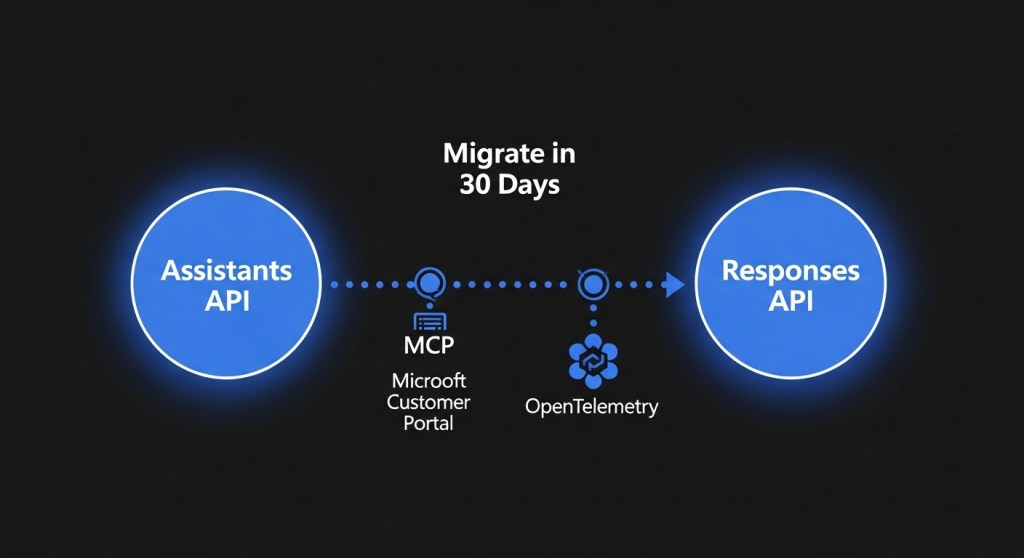
    OpenAI has deprecated the Assistants API and will sunset it on August 26, 2026. If your product or internal automations still rely on Assistants objects, this 30‑day plan helps you move to the Responses API, add MCP for tool interop, and wire up OpenTelemetry for cost, reliability, and compliance—without vendor lock‑in. Official migration guide; Assistants deprecation details.

    What’s changing—and why you should move now

    • Assistants → Prompts: Configuration (model, tools, instructions) becomes versioned prompts you manage in the dashboard.
    • Threads → Conversations: Streams of items instead of just messages—cleaner for long‑running agent loops.
    • Runs → Responses: A simpler, agentic loop with first‑party tools (web/file search, computer use) and remote MCP servers. See OpenAI’s overview of Responses API + Agents SDK and TechCrunch’s timeline coverage here.

    At the same time, enterprise agent management is arriving fast—see Microsoft’s Agent 365—and agent‑first dev tools like Google’s Antigravity IDE are normalizing multi‑agent, tool‑using workflows. Migrating now lets you standardize on MCP and add observability before agent sprawl hits.

    Who this is for

    • Startup founders & product leads shipping agentic features or internal tooling.
    • E‑commerce operators automating support, catalog ops, or merchandising across Shopify/Woo/Marketplace APIs.
    • Engineering/platform teams consolidating on Responses + MCP with guardrails and telemetry.

    The 30‑Day Migration Plan

    Days 1–7: Inventory, risk map, and quick wins

    1. Inventory Assistants: List Assistant IDs, tools, models, retrieval patterns, and where Threads persist (DB, S3, etc.). Map each to a target Prompt and Conversation.
    2. Create Prompts: In the OpenAI dashboard, convert key Assistants into Prompts for versioning and A/B rollout. See OpenAI’s Assistants → Prompts mapping.
    3. Stand up a staging environment with Responses SDKs (TS/Python) and a non‑prod OpenTelemetry collector. Use OTel’s GenAI conventions to capture tokens, latency, errors, and tool calls. Reference: OTel for GenAI.
    4. Pick one business flow to migrate first (e.g., support triage or catalog enrichment) to build momentum and templates.

    Days 8–14: Move from Threads → Conversations; Runs → Responses

    1. Swap endpoints: Replace chat/Assistants calls with /v1/responses and Conversations. Keep inputs identical initially to isolate API deltas. See migration guide.
    2. Tooling parity: Re‑declare functions/tools under Responses; test built‑in tools (file/web search, computer use) where applicable.
    3. Add MCP for interop: Expose internal systems (e.g., product DB, order API) as MCP servers and allow the Responses API to call them via the Agents SDK. Start with HTTP/SSE transport; graduate to hosted MCP tools later. Docs: Agents SDK + MCP.
    4. E‑commerce example: An MCP server offers tools like get_product(id), update_inventory(sku, qty), refund_order(id). Your agent can now resolve a support ticket or fix a catalog issue end‑to‑end—verifiably and traceably.

    Days 15–21: Observability, SLOs, and spend control

    1. Trace every call: Emit spans for model calls and tool invocations with attributes for model, tokens, cost, cache hits, user/org, and path outcome (success, fallback, human‑handoff). Use OTel processors to derive cost and per‑workflow SLOs. Reference: OTel GenAI.
    2. Define SLOs: e.g., Path success ≥ 95% for “refund request” flow; Median latency ≤ 3s; Cost ≤ $0.08 per resolved ticket. Feed failures to a dead‑letter queue for red‑teaming.
    3. FinOps dashboard: Break down spend by model, tool, team, and workflow. For practices, see our guide Agent FinOps for 2026.

    Days 22–30: Certify, govern, and roll out

    1. Evals + red‑team: Run task‑level evals and adversarial tests before production. Follow our Red‑Teaming Playbook and Reliability Engineering Playbook.
    2. Permissions + registry: Register each agent, define scopes, and enforce least‑privilege keys and secrets rotation. See our Agent Registry and Security Baseline.
    3. Gradual rollout: Ship to a pilot cohort; monitor path success, handoff rates, latency, and cost/issue. Keep a one‑click revert to the Assistant‑backed path during the pilot.

    FAQ: Practical gotchas we see in migrations

    1) Do we have to move all Threads? No. OpenAI recommends migrating new chats to Conversations and backfilling only when needed. See the official guidance.

    2) Is Assistants API truly going away? Yes—OpenAI marks it deprecated and sets the sunset for Aug 26, 2026 in docs. Press reports vary by phrasing (e.g., “H1 2026” or “second half of 2026”), but use the official date to plan. Sources: OpenAI Docs, TechCrunch, Reuters.

    3) Why add MCP now? MCP is fast becoming the way agents talk to tools across vendors. Adding it during migration avoids re‑plumbing later. See the Agents SDK MCP guide. Microsoft and others are aligning on interop standards as agent fleets grow. Coverage: Wired on Agent 365.

    4) How do we prove ROI? Treat each agentic flow like a product feature: define path success, cost per outcome, and time saved. We walk through this in Agent FinOps and our Agentic SEO experiments.

    Templates you can copy

    • Support desk (WhatsApp/Email/Shopify): Start from our 30‑day build guide here; swap Assistants for Responses; expose commerce ops via MCP tools; monitor resolved_without_handoff as your north‑star.
    • Agent platform rollouts: If you’re evaluating vendor suites, use our RFP & Scorecard to keep MCP + Telemetry requirements front and center.

    What good looks like after Day 30

    • All new chats on Conversations + Responses; prompts versioned and owned by product.
    • MCP‑based tool calls for key workflows—portable across vendors.
    • OpenTelemetry dashboards for path success, latency, cost, and handoff rate.
    • Red‑teaming + reliability gates in CI; registry + least‑privilege access in place.

    Call to action: Need hands‑on help? Book a 45‑minute Responses API migration workshop with our team. We’ll review your Assistants inventory, draft your MCP plan, and set up OTel dashboards you can reuse across every agent. Subscribe for new playbooks.

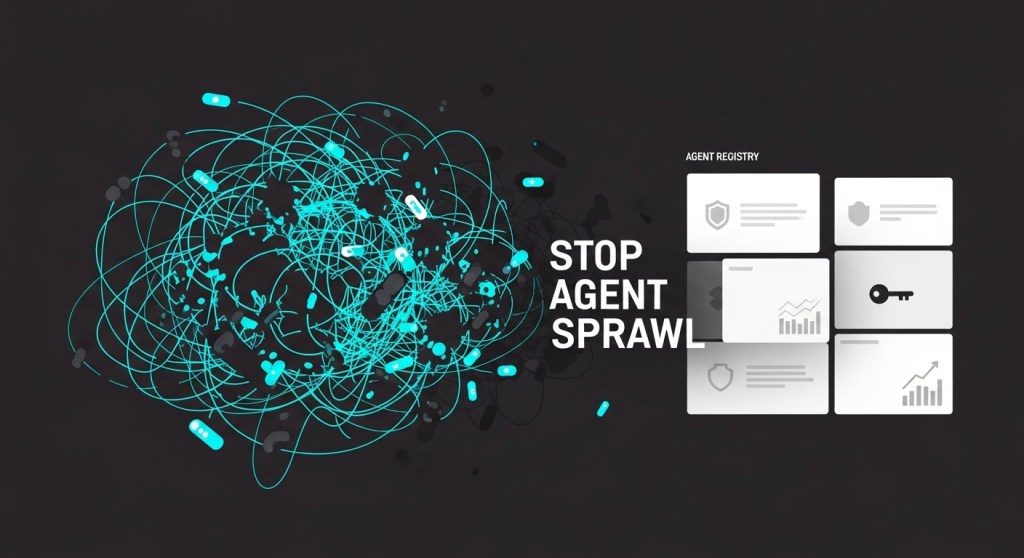
  • Stop Agent Sprawl: Build an Agent Registry and Access Model for 2026 (A2A + OpenTelemetry)

    Stop Agent Sprawl: Build an Agent Registry and Access Model for 2026 (A2A + OpenTelemetry)

    In the past week, the agent drumbeat got louder. WIRED reported Microsoft’s Agent 365—an enterprise control plane for AI bots—with the claim that companies may soon run more AI agents than employees. citeturn0news12 TechCrunch has tracked the parallel rise of OpenAI’s AgentKit and Salesforce’s Agentforce 360, signaling mainstream, cross‑vendor momentum. citeturn0search0turn0search2 Meanwhile, Microsoft’s new Magentic Marketplace experiments showed how easily agents can fail or be manipulated without proper controls. citeturn0search4

    If you’re a startup founder or e‑commerce operator, this all points to one near‑term risk: agent sprawl—dozens (soon hundreds) of semi‑autonomous agents running across tools, clouds, and teams, with unclear ownership, permissions, and observability. This guide gives you a vendor‑agnostic blueprint to ship an Agent Registry plus Access & Telemetry model in 30–60 days using emerging standards like A2A for agent‑to‑agent interop and OpenTelemetry for traces, logs, and metrics. citeturn0search5

    What is an Agent Registry and why now?

    An Agent Registry is the authoritative inventory of every AI agent your company runs—purpose, capabilities, data boundaries, identity, permissions, owners, telemetry endpoints, and lifecycle state. Think of it like a service catalog + identity directory for AI actors.

    Why now? Vendors are pushing production‑grade agent platforms (AgentKit, Agentforce 360), and Microsoft is previewing Agent 365 as an enterprise control layer. citeturn0search0turn0search2turn0news12 Without a registry—and policy tied to it—you’ll drift into shadow agents, duplicated automations, and untracked access that create security, compliance, and cost blow‑ups. Microsoft’s recent research underscores the stakes: agents can be steered or fail in surprising ways in realistic markets. citeturn0search4

    The core blueprint (vendor‑agnostic)

    1. Identity first: Issue a service identity to every agent via your IdP (e.g., Entra ID, Okta). Bind identities to the registry entry and disable shared credentials. Rotate secrets via a vault. Map each agent to a human owner and a security group.
    2. Least‑privilege permissions: Express permissions as granular, task‑level scopes (read_orders, create_refund, send_email). Deny by default; allow through an explicit allowlist referenced from the registry.
    3. OpenTelemetry everywhere: Instrument agents to emit traces for each step (goal → tool call → external API). Standardize span names and attributes (agent_id, owner_team, pii_class, customer_id_hash). Route to your observability stack for replay and RCA.
    4. A2A for cross‑agent calls: Use A2A to exchange goals and invoke actions across vendors with policy and governance. Put trust boundaries in the registry: which external agents are allowed partners, under which scopes, with what SLAs. citeturn0search5
    5. Change control + evals: Every registry change (prompt, tools, model, or scope) triggers an evaluation and a canary release. Log artifact hashes and version notes. Use a sandbox and red‑team scenarios before prod rollout, inspired by Microsoft’s synthetic market tests. citeturn0search4
    6. Cost + attribution hooks: Capture token/compute costs per agent, and tag spans with cost_center and campaign_id to enable chargeback and ROI analysis. For a deeper plan, see our FinOps playbook. Agent FinOps for 2026.

    Design your Agent Registry schema

    Start with a simple table or JSON document. You can run it in Postgres today; migrate to a service catalog later.

    {
      "agent_id": "support-refunds-v1",
      "display_name": "Support: Refunds Agent",
      "purpose": "Authorize and process refunds under policy",
      "model": { "provider": "vendor", "name": "model-x" },
      "capabilities": ["read_orders", "create_refund", "email_customer"],
      "data_boundaries": ["orders.read", "payments.redacted"],
      "owner": { "team": "CX", "oncall": "@oncall-cx" },
      "identity": { "idp": "Okta", "client_id": "..." },
      "permissions": { "allow": [ {"resource": "refunds", "action": "create", "limit": "$250" } ] },
      "telemetry": { "otel_endpoint": "https://otel-collector" },
      "a2a_trust": [ "shipping-returns-agent" ],
      "risk_class": "medium",
      "eval_suite": ["refund-sanity", "prompt-injection"],
      "release_channel": "canary",
      "version": "1.3.2",
      "last_reviewed": "2025-11-18"
    }

    Tip: tie risk_class to obligatory controls (e.g., high → human‑in‑the‑loop + dual approval for money movement).

    Implement in 30–60 days: a pragmatic rollout

    Days 1–10: Inventory and ownership

    • Inventory every agent across Zendesk, Shopify, Slack, Gmail, and internal scripts. Assign a human owner and on‑call for each.
    • Create the minimal registry (fields above). Enforce: “no registry, no production.”
    • Stand up OpenTelemetry Collector and a basic dashboard (success rate, error types, median step latency, PII touches).

    Days 11–25: Permissions, tests, and canary

    • Convert all agents to least‑privilege scopes and rotate credentials.
    • Codify canary channels. On each change, run evals: success paths, adversarial prompts, and policy edge cases. Microsoft’s agent market tests are a great inspiration set. citeturn0search4
    • Set SLOs per agent (e.g., 99% path success for critical flows) and wire alerting. For reliability tactics, see our guide: Reliability Engineering for AI Agents in 2026.

    Days 26–45: Cross‑vendor interoperability (A2A)

    • Adopt A2A for cross‑agent calls where feasible so your Shopify agent can securely hand off to a marketing or logistics agent across vendors with clear SLAs and scopes. citeturn0search5
    • Define an allowlist of external agents in the registry (a2a_trust) and enforce pre‑flight policy checks.
    • If you’re trialing a platform like AgentKit or Agentforce 360, document how each surfaces registry, policy, and eval hooks. citeturn0search0turn0search2

    Days 46–60: Production guardrails and audits

    • Require human approval for irreversible actions (refunds over threshold, price changes, vendor payments).
    • Schedule quarterly registry reviews; expire unused agents automatically.
    • Run a red‑team game day each quarter; see our playbook: Agent Evaluation & Red‑Team Certification.

    Concrete example: an agentic support desk

    Suppose you launch a returns agent that reads Shopify orders and emails customers. Your registry entry limits refunds to $250 and requires human approval above that. The agent emits OpenTelemetry spans for each step and tags them with customer_id_hash and policy_version for auditability. It can call a translation agent via A2A for multilingual responses, but only agents on the allowlist are permitted. If your company later trials Microsoft’s Agent 365 or Salesforce Agentforce, your registry remains the source of truth while those platforms provide additional control‑plane features. citeturn0news12turn0search2

    Want a full buildout? Follow our 30‑day tutorial to ship an agentic support desk across WhatsApp, Email, and Shopify: Ship an Agentic Support Desk in 30 Days.

    How this differs from “AI staff” hype

    You may see stories about fully AI‑run companies staffed by agents. They’re fun—and instructive—but they also surface failure modes like confabulation and fabricated activity. Governance via a registry, evals, and telemetry is how you avoid those pitfalls when money and customer data are involved. citeturn1search10

    Tooling notes and vendor landscape

    • Agent platforms: OpenAI AgentKit (builder, evals, connectors), Salesforce Agentforce 360 (builder + Slack integration), Microsoft Agent 365 (early access control plane). Evaluate feature parity against your registry and policy needs. citeturn0search0turn0search2turn0news12
    • Interop: A2A is emerging as a cross‑cloud protocol for agent collaboration—plan for it. citeturn0search5
    • Observability: OpenTelemetry is the neutral choice to standardize traces/logs/metrics across multi‑vendor agents.

    Checklist to keep agent sprawl in check

    • “No registry, no prod” policy is enforced.
    • Every agent has a unique identity and owner.
    • Permissions are least‑privilege and auditable.
    • OpenTelemetry spans exist for every step; alerts map to SLOs.
    • A2A trust list and SLAs are defined for cross‑agent calls.
    • Evals + red‑teaming run before every release; canaries by default.
    • Costs and ROI are tagged for chargeback and pruning.
  • The 2026 Agent Evaluation & Red‑Teaming Playbook: Certify AI Agents Before Production

    The 2026 Agent Evaluation & Red‑Teaming Playbook: Certify AI Agents Before Production

    Enterprises will run more AI agents in 2026—but only the evaluated ones will earn trust. Microsoft’s new Agent 365 and similar platforms make it easier to register, monitor, and govern agents at scale; an IDC estimate cited at Ignite projects 1.3B agents by 2028. Yet recent experiments show agents remain easy to manipulate without rigorous testing. This guide gives founders and operators a concrete, auditable way to evaluate and certify agents before rollout. citeturn1news12

    Why an agent evaluation playbook now

    Recent research from Microsoft’s Magentic Marketplace found agents suffer from first‑proposal bias and degrade as choice increases—mirroring real commerce. External coverage echoed how customer agents were steered by persuasive or injected prompts. In short: production agents need systematic evaluation, not vibes. citeturn1search0turn1search6turn1search5turn1search7

    Interest is surging, too: searches for “AI agents” rose dramatically in 2025, and platform vendors now ship built‑in evaluation tooling (e.g., Vertex AI). Your buyers and regulators will soon expect evidence that agents meet safety, reliability, and compliance bars. citeturn2search0turn3search3

    What to measure (and why it matters)

    • Task/path success rate (per scenario, per toolchain) and time‑to‑action.
    • Policy‑violation rate under adversarial conditions (prompt injection, tool poisoning, social engineering).
    • Cost per successful path and token/latency budgets.
    • Fallback coverage (HITL takeover rate) and recovery after failures.
    • Attribution: ability to tie outcomes and revenue back to agent actions. For implementation examples, see our Agent Attribution for 2026.

    The 10‑step evaluation and red‑teaming playbook

    1) Define scenarios, risks, and acceptance criteria

    List your top 5–10 revenue or support workflows (e.g., returns, subscription upgrades, fraud disputes). For each, define pass/fail thresholds for success rate, guardrail adherence, and cost per success. Keep criteria consistent across model updates.

    2) Instrument agents for traceability from day one

    Adopt OpenTelemetry’s emerging semantic conventions for AI agents so every step, tool call, and decision is traced with standard fields. This makes later audits and A/B tests reproducible across frameworks. Pair with the reliability approaches in our 99% path success playbook. citeturn1search4

    3) Build neutral and adversarial test sets

    Create golden paths and counterfactual variants (ambiguous requests, conflicting constraints, missing data). Include attack prompts for injection, persuasion (authority/social proof), and loss‑aversion nudges to mimic real manipulations observed in marketplaces. citeturn1search3

    4) Use open benchmarks to pressure‑test safety

    Run the Agent Red Teaming (ART) benchmark derived from a 1.8M‑attempt public competition where leading agents failed at least one test. Calibrate your thresholds using ART’s curated attacks, then extend with your domain prompts. citeturn3academia12turn3search6

    5) Simulate markets before touching customers

    Reproduce your buyer journey inside Magentic Marketplace by configuring assistant and service agents with your constraints. Test how your agent behaves as options scale, how fast‑first responses bias outcomes, and which mitigations reduce manipulation. Log results via OpenTelemetry for apples‑to‑apples comparisons. citeturn1search0turn1search6

    6) Lock down tools and protocols

    Harden Model Context Protocol (MCP) endpoints with signed tool definitions, OAuth‑based capabilities, and policy‑based access control to counter tool‑squatting and rug pulls—key vectors in agent failures. See our 30‑Day Agent Security Baseline for step‑by‑step setup. citeturn1academia16

    7) Test interop and multi‑agent workflows

    As A2A gains traction across vendors, include cross‑platform scenarios (e.g., a Microsoft agent delegating to a Google or Salesforce agent). Verify least‑privilege, handoff fidelity, and audit continuity across agent boundaries. citeturn0search5

    8) Add human‑in‑the‑loop (HITL) and kill‑switches

    Define HITL thresholds (e.g., high refund amounts, PII access) and ensure operators can pause, edit, or roll back. Measure takeover outcomes and use these traces to fine‑tune prompts and policies. For a quick deployment path, follow our Agentic Support Desk in 30 Days.

    9) Gate releases with a production pilot

    Run a two‑week pilot in a low‑risk segment with tight SLAs, then expand by cohort. If you’re in Microsoft’s ecosystem, our Agent 365 pilot guide shows how to register agents, enforce permissions, and stream telemetry. citeturn0news12

    10) Report outcomes with business attribution

    Publish an internal “Agent Evaluation Report” per release: scenarios, metrics, violations, mitigations, and ROI. Tie revenue and savings to specific traces and actions (learn how in Agent Attribution for 2026).

    Example: E‑commerce returns agent

    1. Scenario: Approve/deny returns with policy exceptions and multi‑item carts.
    2. Metrics: ≥95% path success, ≤2% policy violations under ART adversarial prompts, median TTA < 20s.
    3. Simulation: Use Magentic Marketplace to vary competitor offers, delivery delays, and deceptive claims; observe first‑proposal bias and tune prompts. citeturn1search0
    4. Security: Sign MCP tools for refunds and inventory, with policy‑based scopes; red‑team for tool‑squatting. citeturn1academia16
    5. Interop: Validate A2A handoff to a compliance agent for high‑value refunds. citeturn0search5
    6. Telemetry: Trace steps, tool calls, and HITL events using OpenTelemetry AI semantics. citeturn1search4

    Tooling you can use today

    • Open benchmarks: ART benchmark for adversarial prompts; HAL research for cross‑benchmark harness design. citeturn3academia12turn3academia13
    • Cloud eval: Vertex AI Agent evaluation utilities (reports + traces). citeturn3search3
    • Commercial red‑teamers: Vendors like Akto simulate MCP/agent exploits—use responsibly alongside internal tests. citeturn3search0

    Executive checklist

    • Adopt standard telemetry and logging for all agents.
    • Run adversarial tests (ART + domain prompts) before any customer traffic.
    • Simulate market dynamics with Magentic Marketplace; measure bias and drift.
    • Enforce MCP identity, permissions, and policy checks.
    • Gate releases behind a 14‑day pilot with HITL and clear SLAs.
    • Publish an evaluation report per release with ROI and incident learnings.

    Where this fits in your 2026 roadmap

    Pair this evaluation playbook with our guides on reliability engineering, Agent FinOps, and security baselines to create a complete, compliant agent platform. citeturn0news12


    Get help: Ship a safe, observable pilot in 14 days. Talk to HireNinja about audits, red‑teaming runs, and OpenTelemetry setup.

  • Reliability Engineering for AI Agents in 2026: A 10‑Step Playbook to Hit 99% Path Success (MCP + OpenTelemetry)

    Agent platforms and standards are moving fast. Microsoft’s new Agent 365 emphasizes registries, policies, and access control for fleets of bots, while Stripe’s Agentic Commerce Protocol (ACP) and Visa’s Trusted Agent Protocol (TAP) define how AI agents check out safely. Google’s Antigravity brings an agent‑first IDE to mainstream development. What’s missing in many teams, though, is a practical reliability layer that makes these agents trustworthy in production.

    This guide gives founders and operators a 10‑step reliability playbook—using Model Context Protocol (MCP) for tool access and OpenTelemetry for end‑to‑end traces—to reach 99% path success on your critical agent workflows.

    Why now: Enterprise adoption is accelerating, but multi‑step agents compound errors quickly (a known risk in production). Reliability isn’t just model choice; it’s engineering: traces, guardrails, and controlled autonomy, especially as agentic commerce standards mature.

    Signals from the market

    • Agent management is going mainstream: Microsoft Agent 365 and Workday’s agent system of record underscore the need for governance.
    • Interop standards are arriving: Microsoft is aligning with Google’s A2A for cross‑agent collaboration (TechCrunch).
    • Agentic commerce is real: Stripe’s ACP powers Instant Checkout in ChatGPT, while Visa’s TAP introduces an agent trust framework for merchants.
    • Agent‑first dev tooling: Google’s Antigravity puts multi‑agent orchestration inside the IDE.

    The reliability problem (in one paragraph)

    In multi‑step workflows, small per‑action error rates multiply into failed runs, especially when agents browse, call tools, and coordinate with other agents. Teams that treat agents like deterministic software often ship brittle systems. The fix is a reliability layer: instrumented traces, explicit SLAs and checkpoints, typed I/O schemas, automatic validators, and controlled autonomy with human gates where it matters. See also: real‑world error compounding and OpenTelemetry’s emerging GenAI conventions.

    A 10‑step playbook to hit 99% path success

    1. Define critical paths and SLAs.
      List your top 3–5 agent workflows (e.g., “refund authorization,” “SEO experiment roll‑out,” “checkout via ACP”). For each, set CLEAR‑style targets (Cost, Latency, Efficacy, Assurance, Reliability). Reference: enterprise eval research proposing CLEAR (arXiv).
    2. Instrument everything with OpenTelemetry.
      Emit spans for every tool call, agent step, and decision checkpoint. Adopt the GenAI semantic conventions so traces look the same across frameworks. Start with request → plan → action → validate → commit spans. Primer: OpenTelemetry GenAI SIG.
    3. Constrain I/O with typed schemas.
      Wrap every agent tool with JSON Schema, enforce strict parsing, and validate outputs before side effects. MCP servers make this explicit and discoverable to clients. See OpenAI’s MCP‑based tools in AgentKit and Apps SDK (TechCrunch).
    4. Add temporal assertions to catch bad sequences.
      Don’t just regex responses; verify that behavioral sequences are valid (e.g., “charge” only after “quote→confirm→ship‑stock‑check”). A temporal‑logic approach to agent traces is outlined here (Sheffler, 2025).
    5. Use trace‑driven evals (not prompt‑only tests).
      Build evals that replay real traces and grade decisions, not just final text. Score per‑step reliability and end‑to‑end path success. Many teams start with AgentKit’s evals for agents and then extend to their domain (TechCrunch).
    6. Gate high‑risk actions with trust protocols.
      For payments and identity‑sensitive operations, push decisions through ACP/TAP‑aligned flows. Examples: use ACP’s SharedPaymentToken handoff and Visa TAP’s agent intent + consumer recognition to reduce fraud and attribution ambiguity (Stripe docs, Visa release). Pair with our agent attribution guide.
    7. Apply controlled autonomy.
      Give agents autonomy where your validators are strong; require human‑in‑the‑loop where they’re weak. Start with HIL on refunds, cancellations, and purchases over your threshold, then relax as metrics improve. Microsoft’s Agent 365 model of permissions and registries is a good north star (WIRED).
    8. Budget and cap spend by path.
      Enforce budgets per workflow and per environment; emit cost per span from traces. Tie this to FinOps checks and auto‑throttle on anomalies. See our 30/60/90 FinOps plan for agents (Agent FinOps).
    9. Harden identity and permissions.
      Issue durable agent identities, narrow scopes, and least‑privilege tool access. Log consent and source of authority. Use A2A‑friendly designs for collaboration and policy enforcement (A2A overview). Ship our 30‑Day Agent Security Baseline first.
    10. Roll out with a 30‑day pilot, then scale.
      Start with one path, one model, one market. Track CLEAR metrics weekly. If path success ≥99% for 2 consecutive weeks, expand scope. Keep weekly chaos drills (bad inputs, flaky APIs) and track time‑to‑recovery. For interop across stacks, see our Agentic Interop Stack.

    Starter telemetry checklist (copy/paste into your backlog)

    • Span taxonomy: request → plan → action(tool=X) → validate(check=Y) → commit; include model, temperature, token cost, and latency on each action.
    • Error classes: parsing_error, validation_fail, tool_timeout, policy_denied, external_api_4xx/5xx, user_abort.
    • Key SLOs per path: path_success_rate, p95_latency, cost_per_success, human_intervention_rate, rollback_rate.
    • Red teams: wrong‑SKU at checkout, personally identifiable information leakage, prompt‑injection leading to data exfil.

    How this fits your 2026 roadmap

    Whether you’re piloting agentic support, running agentic SEO experiments, or preparing for agentic commerce, the reliability layer above is what moves you from cool demos to durable ROI.

    Further reading


    Call to action: Want help instrumenting your first agent path and shipping a 30‑day reliability pilot? Subscribe for our weekly agent ops briefs—or talk to HireNinja about a hands‑on reliability sprint.

  • Agent FinOps for 2026: Budget, Meter, and Charge Back AI Agents with FOCUS + OpenTelemetry

    Publishing checklist

    • Scan competitor coverage and trends from the past 7–14 days.
    • Define the audience and the pain: escalating agent spend without visibility.
    • Confirm topic fit with our categories and recent posts.
    • Do SEO pass: primary + secondary keywords and SERP gaps.
    • Ship a 30/60/90‑day Agent FinOps playbook with links and examples.

    Agent FinOps for 2026: Budget, Meter, and Charge Back AI Agents with FOCUS + OpenTelemetry

    Who this is for: startup founders, e‑commerce operators, and product leaders rolling out AI agents across support, marketing, ops, and engineering — and now being asked by finance to prove control and ROI.

    Why this matters now

    Enterprises are moving from pilots to fleets of agents. Microsoft announced Agent 365 to help companies manage bot “workforces.” Salesforce is pushing Agentforce 360. OpenAI shipped AgentKit for building and shipping agents faster. New security vendors like Runlayer target MCP‑era agent risks. And the A2A protocol is emerging for cross‑vendor agent coordination. Together, these shifts make agent cost governance a board‑level topic, not a side project. Wired on Agent 365, TechCrunch on Agentforce 360, TechCrunch on AgentKit, TechCrunch on Runlayer, TechCrunch on A2A.

    On the cost side, the FinOps Foundation’s FOCUS standard is expanding, and CFO outlets are telling finance leaders to prioritize AI‑driven cost analytics. Google Cloud reports material ROI from agentic automation — but only when it’s instrumented and governed. FinOps Foundation, CFO Dive, Google Cloud ROI.

    The Agent FinOps model (in plain English)

    Goal: make every agent’s cost and value legible to finance and product — so you can scale the winners and cap the rest.

    • Identity: every agent must have a unique, stable ID bound to an owner (team), use case, environment, and permissions. If you’re adopting MCP, make the MCP registry your source of truth.
    • Metering: track tokens, tool calls, function executions, external API costs, and business actions (orders placed, tickets resolved). Emit all of this via OpenTelemetry with consistent attributes.
    • Allocation: export cloud and platform bills in FOCUS format, then join them with agent telemetry to get a unified view by agent, BU, and project.
    • Controls: budgets, hard ceilings, time‑of‑day policies, safe fallbacks, human escalation on anomaly.
    • Chargeback/Showback: monthly reports by BU/use case with cost, value, and net margin per agent.

    What to measure

    • Unit costs: cost per 1,000 tokens; cost per tool call; cost per external API call; cost per agent‑minute (background agents).
    • Outcome costs: cost per resolved ticket, per qualified lead, per return processed, per SKU update, etc.
    • Reliability: success rate, escalation rate, mean time to recovery (MTTR), and rollback frequency.
    • Efficiency: average steps per task; cache hit rate; small‑model vs large‑model mix; parallelization vs retries.

    Reference architecture: FOCUS + OpenTelemetry + A2A

    1. Agent registry: define agent.id, owner, environment, scopes (MCP), and allowed actions.
    2. OTel traces: every agent step emits spans with attributes like:
      {
        "agent.id": "support-returns-v3",
        "agent.team": "cx",
        "agent.use_case": "returns-automation",
        "agent.env": "prod",
        "agent.session_id": "a7f...",
        "llm.tokens.input": 1824,
        "llm.tokens.output": 456,
        "tool.name": "shopify.refundOrder",
        "tool.cost_usd": 0.002,
        "a2a.correlation_id": "b3c...",
        "user.tenant_id": "shop-4421",
        "business.event": "return_refunded",
        "business.value_usd": 0
      }
    3. Billing export: pull cloud/platform usage in FOCUS and normalize into your warehouse.
    4. Join + allocate: match agent.id and a2a.correlation_id across telemetry and FOCUS tables; allocate shared costs by steps, tokens, or time.
    5. Dashboards + controls: budgets by team/use case; anomaly detection; auto‑throttle policies; push alerts to Slack/Teams.

    30/60/90‑day Agent FinOps rollout

    Days 0–30: Instrument and cap risk

    • Assign Agent IDs and owners. Register agents (MCP) and set least‑privilege permissions.
    • Emit OpenTelemetry spans for LLM calls, tool calls, and business events. Add a cost attribution span for each external API.
    • Stand up a FOCUS billing export and create the first unified spend table joined on agent.id.
    • Set budgets + ceilings per agent; add a kill‑switch and escalation routing.
    • Harden your baseline: see our 30‑Day Agent Security Baseline.

    Days 31–60: Prove showback and value

    • Publish a monthly showback by BU/use case with: cost, outcomes, net margin, and trend deltas.
    • Make cost per outcome the north star (e.g., cost per solved ticket).
    • Add policy automation: throttle long contexts, enforce small‑model defaults, cache embeddings, and restrict high‑cost tools after hours.
    • Close the loop with revenue: implement our Agent Attribution playbook so finance sees both sides.

    Days 61–90: Optimize and scale

    • Adopt A/B agents: run small reasoning agents first; elevate to large models only on failure.
    • Use A2A to outsource subtasks to cheaper/specialized agents; prefer short‑context tools.
    • Introduce tiered SLAs (gold/silver/bronze) mapped to model sizes and concurrency.
    • Portfolio review: expand winners; sunset or re‑scope bottom quartile agents.

    Example: e‑commerce returns agent

    A Shopify returns agent processes 2,000 requests/month.

    • Before: $0.20/request (8K input + 2K output tokens on a large model) → $400/month, 83% auto‑resolve.
    • After (60 days): route 70% to a small model + cache; large model only on edge cases. Cost drops to $0.07/request, auto‑resolve rises to 87%. Net: ~$140/month (‑65%) with higher CSAT. Joined FOCUS + OTel shows most savings from token cuts and fewer retries.

    Top pitfalls (and quick fixes)

    • No stable identity: if sessions stand in for agent.id, you can’t allocate costs. Fix: create a global Agent Registry.
    • Only token metrics: tools and external APIs often dominate cost. Fix: emit tool.cost_usd and api.provider in spans.
    • Unlimited contexts: long memory chains explode spend. Fix: sliding‑window summaries; cap context tokens per step.
    • No outcome ledger: cost without value is noise. Fix: attach business.event spans for each resolved outcome.
    • One‑size models: always‑large models are tax. Fix: two‑tier model strategy and strict fallbacks.

    How this fits your 2026 stack

    Platform leaders are converging on agent management (Microsoft Agent 365), enterprise agent platforms (Agentforce 360), and builder toolkits (AgentKit). Finance/IT teams now need Agent FinOps to keep costs predictable and value‑aligned. See also our vendor‑neutral RFP to compare options: Agent Platform RFP & Scorecard, and our Interop Stack guide and Agentic Support Desk plan.

    KPIs you can share with your CFO

    • Cost per resolved ticket / per order change
    • Auto‑resolve rate and escalation rate
    • Cost per 1,000 tokens and per tool call
    • Cache hit rate and average steps per task
    • Spend vs budget and anomaly count

    What’s next

    If you already publish a product metrics dashboard, add an “Agent P&L” tab that pairs FOCUS cost with business outcomes and owner. Managers should get weekly emails/slack with variance, causes, and recommended actions. Microsoft has begun publishing cost‑control guidance; expect your platform vendor to follow suit — but keep your telemetry vendor‑agnostic and your allocation model yours. Microsoft Agent cost controls.


    Call to action

    Want a working Agent FinOps baseline in 30 days? Subscribe for new playbooks, or book a 30‑minute consult — we’ll help you wire up FOCUS + OpenTelemetry and ship your first showback.

  • Google Antigravity for Founders: A 14‑Day Pilot to Bring Agentic Development Into Your 2026 Roadmap

    TL;DR: Google just launched Antigravity, an agent‑first IDE alongside Gemini 3. It introduces a Manager view for multi‑agent orchestration and “Artifacts” that make agent actions easier to verify—now in public preview. Below is a founder‑friendly, 14‑day pilot to try Antigravity safely, wire it into your stack, and measure ROI. citeturn2news12turn1search2turn2search2

    What changed on November 18, 2025—and why it matters

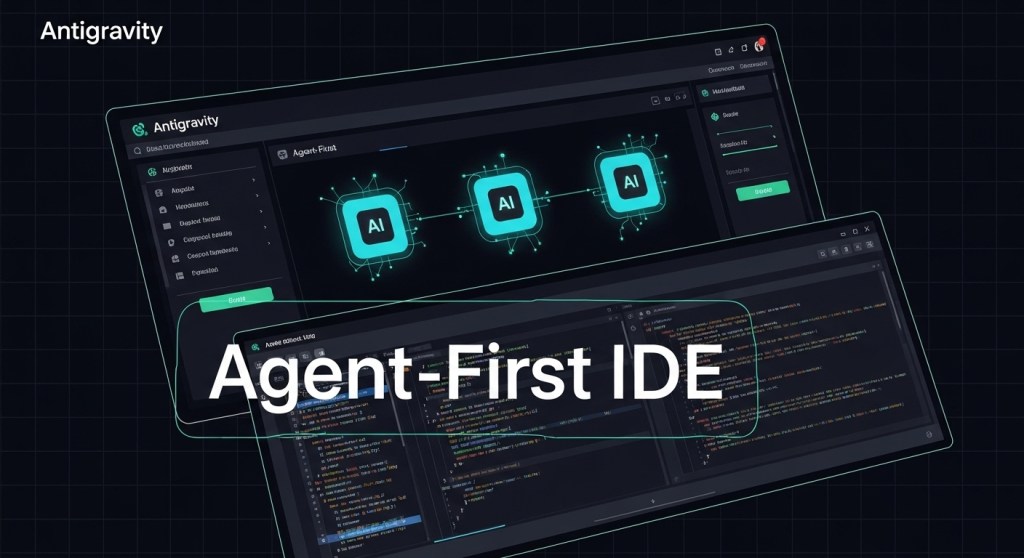
    Antigravity reframes coding from autocomplete to agentic workflows: agents get direct access to the editor, terminal, and an integrated browser—and can coordinate in parallel via a Manager view. Google also introduced “Artifacts” (plans, screenshots, browser recordings) to make outcomes auditable for humans. The tool is in public preview and supports Gemini 3 Pro plus other models. For CTOs and product leads, this accelerates real multi‑agent delivery and gives you better surface area for review. citeturn2news12turn1search2

    Google’s own announcement positions Antigravity as a new developer experience powered by Gemini 3’s reasoning and tool‑use gains, slotting into AI Studio, Vertex AI, and the broader IDE ecosystem. That means you can pilot without ripping out your toolchain—and compare it directly with your Copilot/Cursor or internal agent stacks. citeturn2search2

    Who this guide is for

    • Startup founders/CTOs evaluating agent platforms for 2026 delivery velocity and quality.
    • E‑commerce leads who want agents to fix front‑end issues, run experiments, and ship small features faster.
    • Engineering managers testing multi‑agent workflows with observability and governance from day one.

    Before you start: plug the new building block—Chrome DevTools MCP

    Google released a Chrome DevTools MCP server that lets AI coding agents debug and profile live pages in Chrome. If you already use MCP elsewhere, this is a drop‑in capability that improves agent accuracy on web tasks and gives you standard interfaces to wire in policies. We’ll use it in the pilot. citeturn3search0

    A 14‑day Antigravity pilot plan (vendor‑agnostic)

    This plan assumes one Staff+ engineer and 0.5 PM doing a contained, high‑impact trial.

    1. Days 1–2: Baseline & Scope
      • Pick 1–2 visible tasks: e.g., fix a CLS issue on PDP, ship a price‑drop badge, or add a post‑purchase survey. Keep scope under 2–3 PRs.
      • Document the current manual effort (story points/hours) and defect escape rate—this becomes your control.
    2. Days 3–4: Install Antigravity, set guardrails
      • Install Antigravity on a hardened workstation with least‑privilege repo access. Enable the Manager view but restrict agent permissions to the target repo and a sandbox environment.
      • Configure code owners and branch protection. Require PRs to pass tests plus human review of Antigravity Artifacts (plans, recordings). citeturn2news12
    3. Days 5–6: Wire observability
      • Add OpenTelemetry spans around agent tasks (plan → edit → run → verify). Track token spend, retries, and tool errors per task.
      • Define 3 SLOs: task success rate, mean cycle time, and revert rate. See our Agent Reliability Engineering starter for a template.
    4. Days 7–8: Add Chrome DevTools MCP
      • Attach the DevTools MCP server so agents can profile, inspect DOM, and capture performance traces while iterating on UI tasks.
      • Gate MCP access behind your proxy; log all MCP calls via OTel for audit. citeturn3search0
    5. Days 9–10: Multi‑agent orchestration
      • Use the Manager view to split work: one agent plans/tests, another codes, a third runs web checks. Require human approval before merge.
      • Compare throughput vs. control sprint. Capture Antigravity Artifacts as evidence in your PR template. citeturn2news12
    6. Days 11–12: Governance & security
    7. Days 13–14: ROI review & go/no‑go
      • Report deltas vs. control: cycle time, change failure rate, hotfixes, and token/$ per merged PR.
      • Decide where Antigravity fits: keep for front‑end sprints, compare against your existing stack, or explore enterprise options like Agentforce if you’re heavily on Salesforce. citeturn1search0

    How Antigravity fits your 2026 stack

    Interop: Treat Antigravity as a developer‑centric agent surface. Use MCP for browser/devtools and documentation sources; keep your production automations on your existing agent platform, but share identity, policy, and telemetry across both. If you’re just starting, use our 2026 Agentic Interop Stack as a blueprint. citeturn3search0

    Verification: Build reviews around Artifacts—they’re easier for humans to check than raw tool logs. Save them in your PRs and incident retros to strengthen auditability. citeturn2news12

    Security quick‑wins

    • Isolate agents in per‑repo sandboxes; only grant production credentials to your CI/CD, not to Antigravity workspaces.
    • Rotate short‑lived tokens; centralize secrets and deny network egress by default.
    • Continuously log agent tool calls and MCP interactions; alert on high‑risk actions.
    • Run weekly red‑team scenarios (prompt injection, malicious tool descriptors) and keep runbooks ready. See our incident playbook.

    What about model choice?

    Antigravity is optimized for Gemini 3, which Google positions as improved in planning, tool use, and coding—key for agent reliability. Because Antigravity supports other models, use your pilot to A/B for your codebase: planning accuracy, tool‑use errors, and total cost per merged PR. citeturn2search2

    Success metrics you can defend in the boardroom

    • Throughput: +X% PRs merged per sprint with unchanged headcount.
    • Quality: −Y% hotfixes within 7 days of deploy, stable test pass rate.
    • Efficiency: Token/$ per merged PR, and agent retry rate below threshold.
    • Lead time: Cycle time from ticket → merged PR.

    How this compares to enterprise agent platforms

    If your workflows live mostly in Salesforce, Agentforce 360’s tighter CRM/Slack integration may still win for business operations. But Antigravity can be your engineering team’s “mission control” for building and fixing product experiences—then hand off to your ops agents. Many teams will run both: dev teams on Antigravity; GTM/support on an enterprise agent platform. citeturn1search0

    Related playbooks to extend this pilot

    SEO snapshot (fast pass)

    • Primary keyword: Google Antigravity
    • Secondary: agent‑first IDE, Gemini 3 agents, AI coding agents, Antigravity Artifacts, Chrome DevTools MCP
    • Top SERP: The Verge explainer; VentureBeat coverage; Google’s Gemini 3 blog. Competition still light; recency advantage matters. citeturn2news12turn1search2turn2search2
    • On‑page: Use this post’s H1/H2s, include “Antigravity,” “Artifacts,” and “MCP,” and keep meta under 160 chars.

    Call to action: Ready to run this 14‑day pilot? Book a 30‑minute Agent Readiness session with HireNinja, and we’ll help you wire Antigravity, MCP, and OpenTelemetry into a safe, measurable workflow—then compare it to your current stack.

  • The 30‑Day Agent Security Baseline for 2026: Identity, Permissions, and Telemetry (MCP + A2A)

    Enterprise agent platforms are arriving fast, but so are the risks. Microsoft’s new Agent 365 focuses on agent registries and security oversight, while Salesforce’s Agentforce 360 and OpenAI’s AgentKit push build‑and‑ship workflows into production. At the same time, OWASP’s LLM Top 10 warns about prompt injection, excessive agency, and insecure plugins—and recent reporting shows AI being used in coordinated hacking campaigns. If you plan to scale AI agents in 2026, you need a security baseline you can ship in weeks, not quarters. [Sources: Wired, TechCrunch, TechCrunch, OWASP, AP]

    What “good” looks like

    An effective baseline gives you:

    • Clear identity for every agent (and its tools), with traceable actions.
    • Least‑privilege permissions and isolation boundaries that contain blast radius.
    • Telemetry that matters—end‑to‑end traces, evals, and alerts for risky behavior.
    • Repeatable tests against OWASP LLM Top 10 risks and known exploit classes.
    • Governance mapping to NIST AI RMF and your internal controls for auditability.

    This guide is vendor‑agnostic and designed to complement your platform choices. If you’re exploring platform options, see our RFP/scorecard and interop stack guides for 2026. RFP & Scorecard · Agentic Interop Stack

    The 30‑day rollout

    Week 1 — Inventory and Identity

    • Inventory every agent (internal and vendor‑hosted). Capture owner, purpose, data access, tools, and deployment surface (chat, email, API, browser).
    • Create an agent registry. Even a spreadsheet works to start, but aim for a proper registry with persistent Agent IDs, human owners, and lifecycle status. If you’re piloting Microsoft Agent 365, this is where it shines. Wired
    • Issue identities (service accounts, keys, or OAuth clients) to agents and not to humans. Separate human vs. agent credentials.
    • Map inter‑agent calls if you use agent‑to‑agent protocols (A2A). Note who can invoke whom and why. TechCrunch
    • Quick wins: turn off unused tools/connectors; expire stale API keys; enforce MFA where relevant.

    Week 2 — Permissions and Isolation

    • Enforce least privilege by scoping tool access (read vs. write; account vs. object level). Most agent incidents are permission problems in disguise.
    • Sandbox risky capabilities (browsing, code execution, file system) and prefer allowlists for network egress.
    • Secrets management: load secrets at runtime; never hardcode. Rotate on schedule and on incident.
    • Separate environments and datasets (dev/stage/prod). Route test agents away from live customer systems.
    • Contain “excessive agency” with human‑in‑the‑loop for high‑impact tasks (payments, PII exports). See OWASP LLM Top 10 for agent‑specific risks. OWASP

    Week 3 — Telemetry, Evals, and Alerts

    • Instrument end‑to‑end traces using OpenTelemetry conventions for GenAI where available—capture prompts, tool calls, errors, and decisions for every step.
    • Define “risky event” signals: prompt injection patterns, privilege escalation attempts, excessive tool retries, high‑variance responses, and anomalous spend spikes.
    • Write SLOs for safety and reliability (e.g., tool‑call success rate, blocked high‑risk actions, MTTR for incident rollback). See our Agent Reliability Engineering playbook.
    • Stand up evals that include adversarial tests and regression suites. Track drift when models or prompts change.

    Week 4 — Testing, Runbooks, and Sign‑off

    • Red‑team for OWASP LLM Top 10: prompt injection, insecure output handling, sensitive info disclosure, system prompt leakage, and “excessive agency.” OWASP
    • Tabletop an incident (agent goes rogue; supplier SDK vulnerability; token leak). Verify kill‑switches and credential rotation.
    • Document runbooks for rollback, revocation, and customer communication. Align to NIST AI RMF and the GenAI Profile so you can prove control coverage. NIST AI RMF · GenAI Profile
    • Executive sign‑off that specifies allowed use cases, risk tiers, and review cadence.

    Practical blueprint (example)

    Use case: a support agent across WhatsApp, email, and Shopify.

    1. Registry: record the agent’s ID, owner, and tools (WhatsApp API, email, Shopify Admin). See our step‑by‑step build: Agentic Support Desk in 30 Days.
    2. Permissions: read‑only to orders by default; write access limited to draft refunds; no PII export without human approval.
    3. Isolation: separate sandbox store; restricted egress; browser disabled except for allowed domains.
    4. Telemetry: trace each interaction; alert on refund attempts, CSV exports, or unusual rate spikes.
    5. Testing: adversarial prompts (refund abuse; policy bypass); verify blocks and escalation paths.

    Choosing tools (neutral guidance)

    • Agent registries: early enterprise options like Microsoft Agent 365 emphasize identity, permissions, and oversight. Wired
    • Build/deploy stacks: Salesforce Agentforce 360 and OpenAI AgentKit target faster agent shipping with governance hooks and connector registries—evaluate their security primitives, not just features. TechCrunch · TechCrunch
    • Interop: if you use A2A, document trust boundaries carefully and log cross‑agent invocations for audit. TechCrunch
    • Security testing: align your red‑teaming to OWASP LLM Top 10; track real‑world agent incidents to refresh tests. Tom’s Guide · AP

    Governance and cost: connect the dots

    Security isn’t a separate lane. It works alongside governance, reliability, and FinOps. Use this baseline with our guides to round out your program:

    Your 10‑point checklist

    1. Every agent has a unique ID, owner, and purpose recorded.
    2. Human vs. agent identities are separated; secrets rotated and vaulted.
    3. Explicit allowlists for tools, data, and network egress; high‑risk actions require approval.
    4. Prod data is never exposed to dev/test agents.
    5. OpenTelemetry traces capture prompts, tool calls, and decisions end‑to‑end.
    6. Risky‑event alerts fire and page the right people.
    7. OWASP LLM Top 10 tests pass for priority agents and are in CI.
    8. Incident runbooks and kill‑switches are documented and tested.
    9. Governance mapping to NIST AI RMF/GenAI Profile is complete.
    10. Executive sign‑off defines allowed use cases and review cadence.

    Bottom line

    Agent security can’t wait for a multi‑quarter platform program. Use this 30‑day baseline to measure what you have, shrink blast radius, and instrument what matters—so you can scale agents with confidence in 2026.

    Call to action: Want help pressure‑testing your plan? Subscribe for our upcoming templates, or book a 30‑minute Agent Security Baseline workshop with HireNinja.

  • The 2026 Agent Platform RFP & Scorecard: Agent 365 vs Agentforce 360 vs OpenAI AgentKit

    Plan for this article

    • Scan recent launches and standards shaping enterprise AI agents.
    • Define what your 2026 agent platform RFP must include.
    • Provide a scorecard you can copy for procurement and budgeting.
    • Offer a light, sourced comparison of Agent 365, Agentforce 360, and AgentKit.
    • Link roll‑out playbooks you can run in 30 days.

    Why this now

    In the last few weeks, Microsoft unveiled Agent 365 for managing fleets of AI agents, signaling that agent registries and governance are moving into the Microsoft stack. citeturn2news12 Salesforce pushed Agentforce 360 deeper into Slack and enterprise workflows. citeturn0search1 OpenAI’s AgentKit targets faster build–deploy loops and evals for production agents. citeturn0search0 Alongside platforms, interop standards are maturing: Microsoft is aligning with Google’s A2A for agent‑to‑agent collaboration, and MCP remains the dominant tool/data protocol for agents. citeturn0search3turn5search1turn5search0

    Commerce leaders are also watching real demand signals: Shopify reports a 7× rise in AI‑originated traffic and 11× growth in AI‑attributed orders, while WIRED notes consumer agents still need oversight for high‑stakes checkouts. Build with ambition—but instrument guardrails and human‑in‑the‑loop. citeturn0search5turn2search6

    Your 2026 Agent Platform RFP: 12 sections to include

    1. Interoperability & Standards — Require native support or roadmaps for:

      • Model Context Protocol (MCP) for tool/data access via standardized servers. Ask for a list of supported MCP servers and SDK languages. citeturn5search1
      • Agent‑to‑Agent (A2A) for cross‑vendor agent collaboration. Request an “Agent Card” schema and examples. citeturn5search0
    2. Agent Registry & Identity — Does the platform provide a registry of agents, capabilities, and permissions (scopes)? How are agent identities issued, rotated, and revoked? (See Microsoft’s positioning for why registries matter.) citeturn2news12
    3. Observability & Evals — Require OpenTelemetry export for traces, metrics, and logs; ask for support of GenAI/agent semantic conventions and dashboards. Include latency, cost, token usage, tool success rates, and eval hooks. citeturn4search3turn4search2
    4. Security & Governance — Ask about prompt‑injection defenses, policy enforcement, approval workflows, data loss prevention, and role‑based action controls. (NVIDIA’s guardrails push shows growing enterprise expectations.) citeturn0search6
    5. Compliance — Map features to your frameworks (EU AI Act risk controls, SOC 2, ISO/IEC 42001, and data residency). Require audit logs exportable to your SIEM.
    6. Workflow & Orchestration — Graph‑based multi‑agent support; human‑in‑the‑loop steps; long‑running tasks and resumability (A2A tasks, UX negotiation). citeturn5search0
    7. Memory & Context — RAG connectors, vector stores, episodic memory limits, PII handling, and cache policies.
    8. Channels & Surfaces — Email, chat, WhatsApp, web, and browser automation support; mobile SDKs.
    9. Deployment Options — SaaS, VPC, and on‑prem; bring‑your‑own‑model and model routing; plugin/extension ecosystem maturity.
    10. Commerce & Payments — If you sell online, ask for agent‑assisted checkout patterns, order risk checks, and rollback controls. Cross‑check claims against your PSP’s roadmap (consumer agents still need oversight). citeturn2search6
    11. Cost & FinOps — Budget controls, per‑agent quotas, dynamic model routing, and cost guardrails exported to your data warehouse for unit economics.
    12. Customer Proof — Ask for production references, agent SLOs, incident postmortems, and time‑to‑resolution stats.

    Copy‑paste Scorecard (100 points)

    Use this as a baseline; weight to fit your priorities.

    • Interoperability (MCP/A2A): 15
    • Observability & Evals (OpenTelemetry + dashboards): 15
    • Security & Governance (controls, reviews, auditability): 15
    • Workflow Orchestration (multi‑agent, HITL, long‑running): 10
    • Memory & Data (RAG, vector stores, PII policies): 10
    • Channels & Surfaces (supportdesk, email, browser): 5
    • Deployment & Extensibility (SaaS/VPC/on‑prem, SDKs): 10
    • Commerce‑readiness (checkout, risk, rollback): 5
    • Cost & FinOps (routing, budgets, quotas): 10
    • Proof & References (SLOs, incidents, case studies): 5

    Light comparison: what to ask each vendor

    Microsoft Agent 365

    Positioned as an agent management and governance layer (registry, access, monitoring). Ask about: Entra integration for identities; OpenTelemetry export; A2A roadmap for cross‑vendor collaboration; how approvals, scopes, and audit logs work across Copilot Studio and external agents. citeturn2news12turn0search3

    Salesforce Agentforce 360

    Focuses on enterprise workflow integration (Sales/Service/Slack) and new prompting tools (Agent Script) plus an Agentforce Builder. Ask about: Slack first‑class agent surfaces; MCP/A2A compatibility for external tools; governance and SLOs; and how Agent Script models “if/then” branching for predictable outcomes. citeturn0search1

    OpenAI AgentKit

    A toolkit aimed at building and deploying agents with evals, connectors, and UI components. Ask about: connector registry security, eval coverage, MCP alignment, and OpenTelemetry‑friendly traces for agent steps and tool calls. citeturn0search0

    Standards to require (no matter who you pick)

    • MCP for tool/data connectivity and a published catalog of supported servers. citeturn5search1
    • A2A for agent‑to‑agent collaboration across stacks, including task lifecycle and UX negotiation. citeturn5search0
    • OpenTelemetry GenAI/agent semantic conventions for end‑to‑end visibility. citeturn4search3

    Instrument before you scale (observability quickstart)

    Adopt OpenTelemetry’s emerging agentic semantic conventions for spans (agent creation, planning, tool calls, memory), and export traces to your APM. Many teams pair this with open‑source GenAI observability projects so you see latency, cost, and tool success in one place. citeturn4search3turn4search0

    30‑day pilot plan (with deep dives)

    1. Define 1–2 high‑ROI use cases (support triage; SEO experiments; order status) and KPIs.
    2. Stand up a minimal registry, identities, and SLOs; require MCP/A2A‑ready components.
    3. Instrument OpenTelemetry, wire dashboards and error budgets.
    4. Run weekly evals; enforce approvals for risky actions; enable human‑in‑the‑loop.
    5. Document incidents, costs, and ROI; decide go/no‑go and scale plan.

    Use these vendor‑agnostic playbooks from our library to help execute:

    FAQ: common procurement questions

    Q: Should we standardize on a single vendor?
    A: Choose a primary platform but demand A2A and MCP to avoid lock‑in and to connect external agents and tools. citeturn5search0turn5search1

    Q: Do we really need all this observability from day one?
    A: Yes—consumer agents are improving but still unreliable for high‑stakes flows; instrumentation and approvals de‑risk rollouts. citeturn2search6

    Q: How do we justify budget?
    A: Tie to measurable deflection in support, faster SEO experiment cycles, or improved conversion from agent‑assisted shopping—then monitor with OpenTelemetry to prove ROI. citeturn0search5

    The bottom line

    2026 will reward teams that buy for interoperability (MCP + A2A), prove reliability with OpenTelemetry, and govern agents like employees. Use the RFP and scorecard above to select a platform—and instrument before you scale.

    CTA: Want help drafting your RFP or standing up a 30‑day pilot? Subscribe and book a working session with HireNinja’s team.

  • Ship an Agentic Support Desk in 30 Days: WhatsApp, Email, and Shopify (MCP + A2A + AgentKit)

    Editorial checklist for this guide

    • Scan competitor coverage and trends (Agent 365, MCP security, agent funding).
    • Clarify audience and intent (founders, e‑commerce operators, tech leads).
    • Target content gap: customer support automation with agents.
    • Pick a timely, searchable topic with clear ROI.
    • Do light SEO pass and add internal/external references.

    Why now: agentic support is crossing from hype to production

    Customer support is the fastest on‑ramp for AI agents. Investors just backed a $100M round for Wonderful to put agents on the front lines of support, while Microsoft rolled out Agent 365 to govern fleets of enterprise agents and researchers are stress‑testing agent behavior in synthetic marketplaces. Security is catching up too, with new MCP‑native controls from startups like Runlayer. Standards for agentic commerce (AP2, Visa’s Trusted Agent Protocol, Stripe’s ACP) are maturing—useful context even if you’re not doing payments on day one. (TechCrunch) (WIRED) (TechCrunch) (TechCrunch) (Google Cloud) (Visa) (Stripe).

    This guide shows how to ship a production‑grade agentic support desk in 30 days across WhatsApp, email, and Shopify using MCP for secure tools, A2A for cross‑agent workflows, AgentKit for faster build, and OpenTelemetry for observability.

    What you’ll have in 30 days

    • One triage + resolution agent that handles order status, refunds/exchanges (policy‑safe), FAQs, and human‑handoff.
    • Channels: WhatsApp Business, inbound email, and Shopify storefront chat.
    • Guardrails: retrieval‑first answers, policy checks, rate limits, and sensitive‑action approvals.
    • Observability: OpenTelemetry traces for every conversation turn, with cost and latency metrics.
    • Governance: a basic agent registry + change log, ready to scale to Agent 365 later.

    Reference architecture (vendor‑agnostic)

    Core: An LLM‑orchestrated agent (AgentKit or equivalent) with MCP tools for: Shopify Admin API (orders, refunds), order DB/warehouse, knowledge base, email/CRM, and WhatsApp API. A2A enables hand‑off to specialized agents (e.g., translations or fraud screening). OpenTelemetry emits spans for planning, retrieval, tool calls, and responses. An Agent Registry tracks each agent’s ID, capabilities, data access, and owners (start simple; upgrade to Agent 365 as you scale). (A2A context) (Agent 365).

    The 30‑day rollout

    Week 1 — Scope, governance, and success metrics

    • Pick the first 5 intents: order status, refund eligibility, exchange options, shipping address changes, warranty/returns policy.
    • Define SLOs: First response < 2s, median resolution < 120s, hallucinations < 1% of turns, handoff latency < 20s.
    • Create a lightweight agent registry (sheet or JSON) with Agent ID, purpose, data access, model/version, owners, change log. Upgrade path: Pilot Agent 365 in 14 days.
    • Governance baseline: map risks and controls and log DPIAs. Use our starter: 30‑Day Agent Governance.
    • Success metrics: 30–50% deflection on the 5 intents, CSAT ≥ 4.3/5 for resolved interactions, agent cost per ticket target (see Agent FinOps).

    Week 2 — Build the MVP agent

    • Channels: Connect WhatsApp Business (Meta), route support@ via helpdesk/IMAP, embed chat on Shopify.
    • Knowledge: centralize policies (returns, warranties, SLAs) and top 100 FAQs. Retrieval‑first answers; tool calls only after a policy check.
    • MCP tool servers: Shopify Admin (read orders, create refund draft), KB search, CRM lookup, email send, translation.
    • Human handoff: If high risk/uncertainty, escalate with full agent trace + suggested reply. Add a “just‑in‑time” approval for refunds over threshold.

    Week 3 — Reliability, security, and cost

    • Observability: Emit OpenTelemetry spans for plan, retrieve, tool_call, and respond. Tie costs to spans to track $/ticket. Use our Agent Reliability playbook.
    • Adversarial testing: Prompt‑injection and jailbreaking drills (see Microsoft’s synthetic marketplace insights). (Research)
    • Security: Enforce least‑privilege API scopes; record tool permissions in the registry. Consider MCP‑aware security controls (e.g., Runlayer). (Context)
    • FinOps: Dynamic model routing and budget alerts; enforce an error budget so latency/cost trade‑offs are explicit. (Guide)

    Week 4 — Pilot, measure, iterate

    • Pilot to 5–10% of inbound; compare against control on FRT, ART, CSAT, escalations, and $/ticket.
    • Runbooks: incident response for policy drift, high refund rates, or model updates. (Runbooks)
    • Scale the registry and start a 14‑day Agent 365 pilot for centralized governance.

    Configuration snippets you can adapt

    1) Agent SLO policy (YAML)

    objectives:
      - name: first_response
        target: 0.95
        threshold_seconds: 2
      - name: median_resolution
        target: 0.90
        threshold_seconds: 120
      - name: hallucination_rate
        target: 0.99
        max_fraction: 0.01
      - name: handoff_latency
        target: 0.95
        threshold_seconds: 20
      

    2) OpenTelemetry attributes for GenAI spans (JSON)

    {
      "ai.model": "vendor/model@2025-11",
      "ai.turn_id": "${uuid}",
      "ai.intent": "refund_eligibility",
      "ai.policy_version": "returns_v7",
      "genai.input_tokens": 1423,
      "genai.output_tokens": 231,
      "genai.cost_usd": 0.0192,
      "genai.cache_hit": true
    }
      

    3) MCP tool capability (Shopify: refund draft)

    {
      "name": "refund_create_draft",
      "description": "Create refund draft for order if policy permits",
      "auth": "scoped_token:orders.read,refunds.write",
      "params": {"order_id": "string", "items": "array", "reason": "string"},
      "prechecks": ["policy_check", "risk_score <= 0.6", "amount <= threshold"]
    }
      

    Metrics that matter

    • Deflection rate on top 5 intents.
    • CSAT for resolved interactions (compare to human baseline).
    • Resolution time and handoff latency.
    • Policy adherence (e.g., unauthorized refunds = 0).
    • Cost per ticket and token per ticket (see FinOps playbook).

    Common pitfalls (and how to avoid them)

    • Over‑promising autonomy: Start with retrieval‑first answers and narrow tools. Microsoft’s synthetic tests show agents can be manipulated without guardrails; keep humans in the loop for edge cases. (Evidence)
    • Weak governance: No untracked agents. Maintain a registry and change log from day one; graduate to Agent 365 as fleet size grows. (Context)
    • Security as an afterthought: Use least‑privilege scopes, redact PII in traces, add MCP‑aware security (Runlayer). (Context)
    • Jumping to payments too early: Nail support first. When you’re ready for transactions, evaluate AP2, Visa TAP, and Stripe ACP for agent‑safe checkout. AP2 · Visa TAP · Stripe ACP

    Internal playbooks to go deeper

    What success looks like (30–60 days)

    On a typical Shopify DTC brand with 2–5k monthly tickets, teams report a 30–50% deflection on the top five intents, lower median resolution time, improved weekend coverage, and predictable spend thanks to tracing‑level cost controls. With a solid base, you can explore agent‑led returns and post‑purchase offers later—using AP2/TAP/ACP so transactions stay auditable and user‑approved.

    Call to action

    Ready to pilot an agentic support desk? Subscribe to HireNinja for weekly playbooks, or email us to get a 30‑day rollout tailored to your stack.