• Ship an AI Agent Registry + IAM in 7 Days (MCP, AgentKit, Agent 365, OpenTelemetry)

    Ship an AI Agent Registry + IAM in 7 Days (MCP, AgentKit, Agent 365, OpenTelemetry)

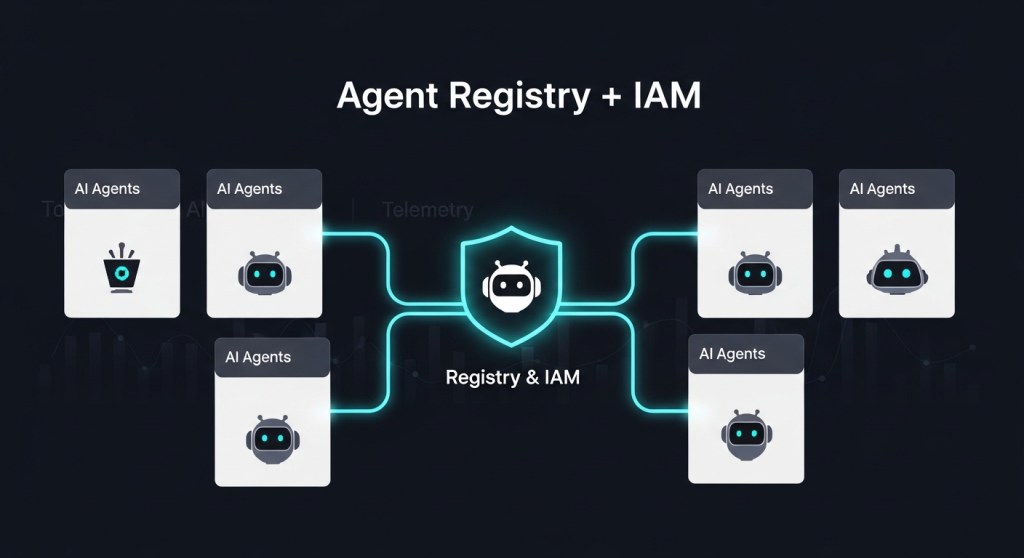
    If your org spun up multiple AI agents this year, you likely have a sprawl problem: unknown agents, inconsistent permissions, and thin audit trails. Here’s a pragmatic 7‑day plan to stand up an agent registry + identity & access management (IAM) layer your security team can live with—while keeping builders fast.

    Why now? Enterprise‑grade agent platforms and standards matured quickly: OpenAI announced AgentKit with a connector registry and eval tooling; Microsoft introduced Agent 365 for governing bot fleets; and industry protocols like MCP (for tools) and A2A (for agent‑to‑agent) are becoming the default interop layer. Add OpenTelemetry’s emerging GenAI agent semantics and you have the backbone for policy and audit. OpenAI AgentKit citeturn2search2 Microsoft Agent 365 citeturn0news14 Anthropic MCP citeturn2search0 A2A protocol citeturn3search5 OpenTelemetry GenAI agent spans. citeturn3search2

    Who this is for

    • Startup CTOs/PMs who need guardrails without slowing shipping.
    • E‑commerce ops teams adding checkout recovery, returns, or support agents.
    • Platform/SRE/SecOps leaders who must prove least‑privilege access and produce audit logs.

    The 7‑Day Registry + IAM Plan

    Day 1 — Inventory and scope

    List every agent in use (or planned): owner, purpose, models, tools/APIs, data touched, and environments. Define scopes per agent (read‑only vs write, sandbox vs prod). Decide your registry home: vendor (e.g., Agent 365) or vendor‑agnostic (Git repo + YAML/JSON + service catalog). Microsoft’s Agent 365 positions itself as an admin console with registry, security, and telemetry integrated with Entra—worth evaluating if you’re a Microsoft shop. The Verge coverage. citeturn3news12

    Day 2 — Establish the Agent Registry

    Pick a registry format and publish agent cards describing metadata, capabilities, scopes, owners, and on‑call. For interop, ensure your agent descriptors can map to A2A concepts so agents can discover and collaborate across vendors later. If you adopt OpenAI AgentKit, use its Connector Registry for standardized tool access and change control. If you’re Anthropic‑first, register tools via MCP servers and keep agent descriptors alongside them. AgentKit citeturn2search2 MCP docs citeturn2search4 A2A docs. citeturn3search5

    Day 3 — Identity, secrets, and least privilege

    Create first‑class identities for agents (service principals/app registrations) and bind only the minimal scopes needed (e.g., orders:read, returns:create). Centralize secrets; rotate automatically. For browser‑automation agents, prevent credential exposure with human‑in‑the‑loop autofill tools now emerging in the ecosystem (e.g., 1Password’s “Secure Agentic Autofill”). See The Verge. citeturn3news13

    Day 4 — Policy and guardrails

    Codify policies as code: allowed tools, data boundaries, write paths, approvals, handoff rules, and spending limits. If you’re piloting Agent 365, map policies to Entra roles and DLP; in OpenAI AgentKit, use the admin control panel + connector scopes. Keep a policy README in the registry and require changes via PRs. AgentKit policy/admin notes citeturn2search2 Agent 365 posture. citeturn0news14

    Day 5 — Telemetry and audit with OpenTelemetry

    Instrument agents and tools with OpenTelemetry GenAI agent spans. Capture: agent.create, agent.invoke, tool.invoke, result status, cost, and PII‑safe attributes. Pipe to your observability stack (e.g., OTLP → collector → your backend). This unlocks SLOs, anomaly detection, and forensic trails. GenAI agent span conventions. citeturn3search2

    Day 6 — Automated evals + red teaming

    Before go‑live, run agent evals against risky flows: prompt injections, tool abuse, data exfil, and hallucinations. OpenAI’s Evals for Agents adds datasets, trace grading, and automated prompt optimization—use it even if you route to non‑OpenAI models. Pair evals with manual red‑teaming and budget guardrails. Evals for Agents. citeturn2search2

    Day 7 — SLOs, on‑call, and change management

    Publish agent SLOs (task success rate, TTFT, TPOT, handoff rate, cost/task). Set alert thresholds; document runbooks; rehearse handoffs. Lock promotion paths (dev → staging → prod) and require eval/telemetry gates at each step.

    Reference architecture (vendor‑agnostic)

    1. Registry: agent cards (YAML/JSON), owners, scopes, policy refs.
    2. Identity: per‑agent service identity, scoped secrets, rotation.
    3. Interop: tools via MCP servers; cross‑vendor collaboration via A2A. MCP citeturn2search0 A2A. citeturn3search5
    4. Policy: least privilege, write‑paths, approvals, spend caps.
    5. Observability: OpenTelemetry genAI spans → dashboards, alerts, audits. Spec. citeturn3search2
    6. Evals: scenario suites + trace grading; pre‑prod gate. OpenAI Evals. citeturn2search2

    Make vs. buy (fast guidance)

    • Microsoft‑centric org? Pilot Agent 365 for registry + Entra policy. Layer OpenTelemetry for vendor‑neutral telemetry. Wired; The Verge. citeturn0news14turn3news12
    • OpenAI‑centric org? Use AgentKit for connector governance + evals; register MCP servers for portability. AgentKit. citeturn2search2
    • Best‑of‑breed / multi‑model? Keep a Git‑backed registry, use MCP for tools and A2A for agent collaboration; add OpenTelemetry everywhere for consistent auditing. MCP; A2A. citeturn2search0turn3search5

    Operational tips from early adopters

    • Start write‑blocked: ship read‑only agents first; flip to write with approvals after evals pass.
    • Tag every span: owner, agent version, policy version, and environment. It saves incidents later. OpenTelemetry guide. citeturn3search2
    • Separate human and agent credentials: where browser agents are unavoidable, use an approval‑gated autofill pattern to keep secrets away from LLM memory. Example. citeturn3news13
    • Future‑proof interop: A2A is gaining traction and Microsoft publicly aligned with Google’s standard for linking agents—design registries with cross‑vendor discovery in mind. TechCrunch. citeturn0search1

    How this fits with your next builds

    Once your registry + IAM is live, you can ship new agents faster and safer. Try these next:

    SEO snapshot

    Primary keyword: AI agent identity and access management. Secondary: agent registry, Agent 365, AgentKit, MCP, OpenTelemetry genAI. Current SERP includes vendor explainers and governance guides; few step‑by‑step build plans—this post fills that gap. Sources: AgentKit, Agent 365, OpenTelemetry, A2A. citeturn2search2turn0news14turn3search2turn3search5


    Call to action: Need help standing this up in a week? Book a free 30‑minute “Agent Registry & IAM” workshop with HireNinja. We’ll review your agents, map scopes, and leave you with a policy + telemetry blueprint.
  • Ship a 48‑Hour Returns & Exchanges AI Agent for Shopify + WhatsApp (MCP + OpenTelemetry)

    Editor checklist

    • Scan competitor trends and holiday returns data to validate demand.
    • Define success metrics, risks, and guardrails for a CX agent.
    • Design an MCP + OpenTelemetry reference architecture.
    • Implement a Shopify returns flow using returnProcess.
    • Ship a WhatsApp utility‑only conversation design that complies with 2025 rules.
    • Instrument evals and SLOs; plan rollout and handoffs.

    Why a returns agent, and why now?

    Holiday sales set records again, but returns balloon right after Cyber Week. Salesforce reported $1.2T in global online sales in 2024 with a 28% jump in return rates, projecting $133B in returned goods; AI and agents influenced 19% of online orders. That’s margin pressure—and opportunity to win loyalty with faster, clearer returns. citeturn6search0turn6news12

    NRF/HAPPY Returns data pegs U.S. returns near $890B in 2024 and forecasts ~16% of 2025 retail sales being returned, with e‑commerce return rates around 19%. If your CX team dreads December tickets, you’re not alone. citeturn6search6turn6search3

    Across the ecosystem, agents are professionalizing fast: Microsoft unveiled Agent 365 to govern fleets of bots, and investors just backed Wonderful with $100M to put AI agents at the front lines of support. Your returns flow is a perfect place to deploy a governed, measurable agent that creates value in days—not months. citeturn0news12turn0search1

    What you’ll build in 48 hours

    A WhatsApp‑native returns and exchanges agent that:

    • Verifies order identity and eligibility.
    • Offers refunds or exchanges based on policy and inventory.
    • Executes Shopify’s returnProcess mutation and sends confirmation updates.
    • Escalates gracefully to a human with full trace context.

    We’ll keep it portable by using MCP for tool access and OpenTelemetry for tracing, so it slots into your control plane and avoids lock‑in. citeturn3news17turn3news18

    Architecture at a glance

    • Agent host: Your preferred runtime (e.g., OpenAI AgentKit, internal agent service). Use MCP clients to reach tools. citeturn0search0
    • MCP servers: Shopify Admin GraphQL, order DB, policy service, shipping/RMA labels.
    • Messaging: WhatsApp Cloud API with utility templates (no U.S. marketing templates allowed as of Apr 1, 2025). citeturn5search3
    • Observability: OpenTelemetry Gen‑AI semantic conventions for spans, events, metrics. citeturn4search0turn4search2turn4search3

    Day 1: Foundations (6–8 hours)

    1. Define success: Target first‑response under 3s, resolution under 5 minutes, and SLOs that matter (success rate, handoff rate, cost/ticket).
    2. WhatsApp setup: Create utility templates only (order lookup, return label, exchange confirmation). U.S. marketing templates are paused; utility templates sent inside an open customer service window are free under 2025 pricing updates—design your flow to get the customer to message first (via email/SMS prompts or order pages). citeturn5search6turn10view0
    3. Shopify access: Enable Admin GraphQL API 2025‑07 and test returnProcess for refunds and exchanges; migrate away from deprecated returnRefund. citeturn7search3turn7search5
    4. Policy as data: Encode return windows, exceptions (final sale), fraud flags, and exchange logic as a JSON policy that the agent reads.
    5. Telemetry: Instrument spans: intent_detectorder_lookupeligibility_evalreturn_processnotify_customer. Use gen_ai.* attributes for inputs/outputs and gen_ai.client.token.usage metrics. citeturn4search0turn4search3

    Day 2: Ship the flow (8–10 hours)

    1. Intent + verification (WhatsApp): ask for one identifier (email or phone) and last 4 digits of order number. Minimize PII exposure; mask inputs in logs.
    2. Eligibility + options: Use order data and policy to propose refund or exchange with clear deltas (restocking fee, shipping). For apparel, default to exchange to reduce loss.
    3. Execute in Shopify: Call returnProcess with selected line items; include issueRefund details or create exchange line items. Handle and log ReturnUserError. citeturn7search3
    4. Notify (WhatsApp utility template): send confirmation and RMA/label. Keep copy transactional to remain compliant. citeturn5search2
    5. Observability + handoff: If confidence or eligibility < 0.7, route to human with the trace URL; record handoff_reason.
    6. Evals: Create a 20‑case suite (damaged item, wrong size, window expired, high‑value electronics) and run nightly. If using AgentKit, leverage its “Evals for Agents” primitives. citeturn0search0

    Conversation design that saves money

    • Open the 24‑hour window for free utility replies: Nudge customers to DM you from order pages/emails to initiate. Then your utility templates (status, labels) are free within that window under new per‑message pricing. citeturn10view0
    • Avoid U.S. marketing templates: As of April 1, 2025, they won’t deliver to +1 numbers. Keep returns flows strictly transactional. citeturn5search3

    Sample: Shopify returnProcess (refund)

    {
      "returnId": "gid://shopify/Return/945000961",
      "returnLineItems": [{"id": "gid://shopify/ReturnLineItem/677614678", "quantity": 1}],
      "financialTransfer": {
        "issueRefund": {
          "orderTransactions": [{
            "transactionAmount": {"amount": 25.99, "currencyCode": "USD"},
            "parentId": "gid://shopify/OrderTransaction/239853124"
          }]
        }
      },
      "notifyCustomer": true
    }
    

    See Shopify’s docs for full payloads, errors, and exchange flows. citeturn7search3

    Governance and safety

    • Control plane: Register the agent, tools, and policies; enforce least‑privilege tool permissions; monitor for injection/tool abuse. If you’re new to this, start with our 7‑day control plane.
    • Red‑team before scale: Simulate prompt injection, return‑policy bypass, and PII exposure; we published a 48‑hour checklist for support agents. citeturn0news13 Guide
    • Telemetry: Adopt the Gen‑AI semantic conventions so traces are portable across vendors and correlate cleanly with CX metrics. citeturn4search0

    Measuring impact (starter SLOs)

    • Return/exchange resolution rate ≥ 90% without human handoff.
    • Median TTFT ≤ 3s; TPOT (time to process outcome) ≤ 4m.
    • Cost per ticket down 25–40% with smart routing; see our FinOps playbook.

    What’s next

    Add upsell logic to exchanges outside the U.S. (where allowed), connect store credit issuance, and expand to returns kiosks or QR codes. Keep an eye on Windows/enterprise MCP support and governance products like Agent 365 as you scale your agent fleet. citeturn3news18turn0news12

    Internal links


    CTA: Want this done for you? HireNinja can deploy this returns agent (MCP + OpenTelemetry) for your store in 48 hours—governed, observable, and ready for holiday scale. Book a consult.

  • Build an Internal AI Agent Control Plane in 7 Days (MCP + A2A + OpenTelemetry)

    Planned steps

    • Scan recent competitor news to confirm what’s trending.
    • Clarify audience and problems this guide solves.
    • Map content gaps and pick a high‑value, searchable topic.
    • Do lightweight SEO research and define keywords.
    • Draft a 7‑day, step‑by‑step implementation playbook with links and code.
    • Include internal links to related HireNinja posts and external sources.

    Build an Internal AI Agent Control Plane in 7 Days (MCP + A2A + OpenTelemetry)

    In the last few weeks, the “agent control plane” idea went mainstream. Microsoft introduced Agent 365 to centrally manage AI agents like a workforce, with registries, access controls, and live telemetry. (Wired) (The Verge) Salesforce updated its agent platform with Agentforce 360, and OpenAI launched AgentKit for building and operating agents. (TechCrunch) (TechCrunch)

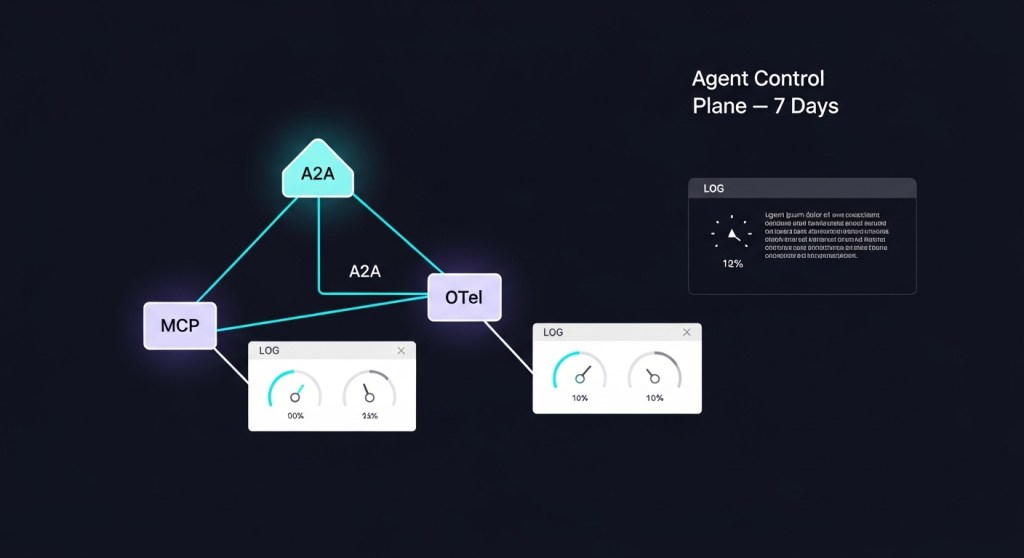
    If you don’t live entirely in one vendor’s stack, here’s how to ship a vendor‑agnostic control plane in seven days using three open pieces: MCP for secure tool access and server integrations, A2A for cross‑agent collaboration, and OpenTelemetry for end‑to‑end observability. We’ll add SLOs, evals, and policy so you can scale safely.

    What you’ll build

    • Agent Registry with versioned metadata (owners, scopes, capabilities, risk). Uses A2A-style Agent Cards for discovery and wiring.
    • Policy & Access with least‑privilege roles and environment scoping, aligned to MCP’s OAuth 2.1 updates. (MCP changelog)
    • Observability using OpenTelemetry Gen‑AI semantic conventions: latency, token usage, success rate, cost per task. (OpenTelemetry)
    • Evals & Red Team with OpenAI’s agent evals for regression tests and guardrail checks. (OpenAI docs)

    Who this is for

    Startup founders, e‑commerce operators, and platform teams who want to run multiple agents (support, finance ops, merchandising, growth) safely—without locking into one vendor or waiting for long enterprise rollouts.

    Day‑by‑day 7‑Day Plan

    Day 1 — Scope, Risks, and SLOs

    1. Pick two high‑impact tasks (e.g., support triage, checkout recovery). Define SLOs: time‑to‑first‑token, time‑to‑outcome, success rate, cost per task.
    2. Draft a simple risk register (PII exposure, prompt injection, tool abuse). Tie each risk to a control (rate limits, content scanning, human‑in‑the‑loop).
    3. Read: our 7‑day SLO playbook to define metrics and alerts. (HireNinja)

    Day 2 — Instrumentation with OpenTelemetry

    1. Deploy the OpenTelemetry Collector and your preferred backend (Grafana, Datadog, New Relic).
    2. Instrument LLM/tool calls with Gen‑AI metrics (token usage, errors) and traces for tool invocations.
    # Example attributes to record (pseudo-code)
    span.set_attribute("gen_ai.request.model", model)
    span.set_attribute("gen_ai.client.token.usage.input", input_tokens)
    span.set_attribute("gen_ai.client.token.usage.output", output_tokens)
    span.set_attribute("ai.agent.task.success", success)
    span.set_attribute("ai.agent.task.cost.usd", cost)
      

    Reference: OpenTelemetry Gen‑AI metrics. (spec)

    Day 3 — MCP servers + OAuth 2.1

    1. Stand up one MCP server for a safe tool (e.g., product catalog or ticket search). Use OAuth as per the latest spec so agents connect with scoped tokens.
    2. Add tool annotations (read‑only vs destructive), and validate responses to reduce prompt‑injection blast radius.

    Notes: MCP’s 2025 updates strengthened auth and added structured tool output—ideal for governed tool access. (spec changelog) (GitHub MCP docs)

    Day 4 — Agent Registry with A2A Agent Cards

    1. Create a Git repo folder /agents/ with one Agent Card (JSON) per agent: owner, purpose, capabilities, endpoints, scopes, SLOs.
    2. Expose cards over HTTPS and index them in a simple registry page for discovery.
    {
      "name": "checkout-recovery",
      "version": "0.2.1",
      "owner": "growth@acme.com",
      "capabilities": ["cart-lookup", "discount-offer"],
      "a2a": {"endpoint": "https://agents.acme.com/checkout"},
      "policy": {"pii": "masked", "env": "staging"},
      "slos": {"tft_ms": 1500, "success_rate": 0.85}
    }
      

    Background: A2A gives agents a common language to collaborate across vendors and clouds, now adopted across the industry (Google announced A2A; Microsoft committed support). (Google) (TechCrunch)

    Day 5 — Policy, RBAC, and Environment Boundaries

    1. Map identities (service principals or app registrations) to agents. Issue short‑lived tokens with constrained scopes.
    2. Define destructive‑action review (refunds, bulk emails) requiring human approval or sandbox execution.
    3. Block production data access in dev/staging via policy guardrails at the MCP gateway.

    Day 6 — Evals and Red‑Team

    1. Use OpenAI Agent Evals to create regression tests for your top workflows (e.g., refund eligibility, tone compliance). (docs)
    2. Run a 48‑hour red‑team sprint against critical agents. (HireNinja guide) Then apply fixes via policy and tool scopes. For long‑term hardening, follow our 30‑day plan. (HireNinja)

    Day 7 — Go‑Live, Dashboards, and Budgets

    1. Publish dashboards for SLOs, errors, and costs; wire alerts to Slack/Email.
    2. Set FinOps guardrails: daily spend caps, model routing for cheaper variants off‑peak. (HireNinja FinOps)
    3. Run a canary release for 10% of traffic; expand if SLOs hold for 72 hours.

    When to lean on vendors vs build on standards

    • Microsoft Agent 365: Centralized enterprise control with Entra integration and early‑access telemetry—great if you’re all‑in on Microsoft. (Wired) (The Verge)
    • Salesforce Agentforce 360: Deep Salesforce/Slack workflows and agent prompting features (Agent Script). (TechCrunch)
    • OpenAI AgentKit: Fast path to build, eval, and ship agents on OpenAI’s platform with a connector registry. (TechCrunch)
    • Open Standards (MCP + A2A + OTel): Best for portability, multi‑cloud, and avoiding lock‑in while keeping strong governance. (MCP) (OTel) (A2A)

    Common pitfalls and quick fixes

    • Ambiguous ownership: Each Agent Card must have a named owner and on‑call channel.
    • Opaque costs: Track cost per task in traces; auto‑route to cheaper models when SLO headroom allows.
    • Prompt injection: Mark tools as read‑only vs destructive, validate tool output, and sandbox risky actions via MCP gateways.
    • Unclear success criteria: Define outcome‑based SLOs, not just latency.

    Keep going

    • Add long‑term memory with secure RAG and audits. (HireNinja)
    • Harden your browser agents vs API automations with a decision framework. (HireNinja)
    • Red‑team support flows before peak season. (HireNinja)

    Call to action

    Want a turnkey boost? Subscribe for weekly agent ops playbooks—then book a 30‑minute session with HireNinja to adapt this control‑plane plan to your stack.

  • Browser Agents vs APIs: When to Use Each + a 48‑Hour Playbook (MCP + OpenTelemetry)

    Last updated: November 22, 2025

    Checklist for this article

    • Scan competitor coverage and trends (Agent 365, Agentforce, Antigravity).
    • Define who this is for and the problems we’re solving.
    • Identify the gap: practical browser‑agent playbook with observability.
    • Provide a clear decision framework: Browser Agent vs API/RPA.
    • Ship a 48‑hour implementation plan (MCP + OpenTelemetry).
    • Add guardrails, SLOs, and red‑team checks; include internal resources.

    Enterprise agent platforms are hardening fast. Microsoft introduced Agent 365 to register, monitor, and govern AI agents at scale, signaling that control planes for agents are becoming table stakes. citeturn0news12

    Salesforce’s Agentforce 3 added an observability‑first Command Center and built‑in MCP interoperability, reinforcing the same theme: visibility and standardized tool integration. citeturn1search3

    On the dev side, Google’s Antigravity (Gemini 3) pushes multi‑agent coding with artifact logs—useful for provenance and audits. citeturn1news13

    Who this is for

    • Startup founders and product leaders deciding whether to automate partner portals, 3PL/vendor dashboards, and long‑tail SaaS without APIs. • E‑commerce teams needing revenue‑impacting automation before Cyber Week and Q1. • Platform engineers who must keep agents observable, governed, and portable.

    The problem in a sentence

    Not every system exposes a reliable API—and even when it does, access, quotas, or timelines can block you. Browser‑native agents can bridge the gap, but only if you deploy them with the right guardrails and telemetry.

    Why browser agents are surging now

    • Platforms are standardizing control: Agent 365/Agentforce emphasize registries, access controls, and observability. citeturn0news12turn1search3
    • Developer tooling is getting agent‑first: Antigravity highlights multi‑agent orchestration with auditable artifacts. citeturn1news13
    • Market proof points: A growing ecosystem of browser agents and AI‑native browsers shows rising demand and rapid iteration. citeturn4view0
    • Training/benchmark shift: There’s a broader industry push toward RL “environments” that reward real actions, not just text. citeturn0search4

    Browser Agent vs API/RPA: a quick decision framework

    Use Browser Agents when:

    • The vendor has no API or a closed/private API and approvals will take weeks.
    • Your workflow spans multiple third‑party sites (supplier portal → carrier tracking → marketplace dispute center).
    • You need one‑off or experimental automations to validate ROI before investing in deeper integration.
    • You can instrument with OpenTelemetry and enforce runbooks/guardrails.

    Use APIs/RPA when:

    • There’s a stable, rate‑limit‑friendly, well‑documented API that covers 80%+ of steps.
    • Data fidelity and latency matter more than UI flexibility (e.g., order creation, refunds, inventory sync).
    • You have to meet strict audit/compliance where UI variability would add risk.

    Use a Hybrid when the happy path is API‑first but edge cases require controlled browser actions (e.g., appeal a marketplace claim that has no API).

    Reference architecture (portable + observable)

    1. Planner agent decomposes the task; executor agent handles browsing via a headless or extension‑based controller.
    2. MCP exposes tools (HTTP, email, Slack, vector search, private APIs) to both agents for consistent portability across platforms. citeturn1search3
    3. Policy/guardrails: domain allowlist, login vault, step limits, consent checkpoints, PII masking, screenshots disabled by default, and replay logging with redaction.
    4. Observability: instrument GenAI spans/metrics with OpenTelemetry GenAI conventions; ship traces to your APM. citeturn2search8turn2search4
    5. Control plane: register each agent with your platform of choice (Agent 365, Agentforce) to centralize access, roles, and audit. citeturn0news12turn1search3

    What to measure (and alert on)

    • TTFT / TPOT (time to first token / time per operation)
    • Step success rate (DOM action → expected DOM state)
    • Handoff rate to humans
    • Cost per resolved task (tokens + infra)
    • Retry/backoff counts; 403/429 hit rates
    • Policy violations (blocked domains, secret access denied)

    Map these to OpenTelemetry GenAI spans/metrics for consistent dashboards. citeturn2search8turn2search4

    48‑Hour Playbook: ship a safe browser agent

    Day 1 — Prototype and guardrails (≈6 hours)

    1. Scope one revenue‑adjacent task (e.g., update shipment notes on a 3PL portal when ETA slips). Define success: “Agent completes 10 tickets with zero policy violations.”
    2. Stand up the agent using your preferred SDK and a headless browser or Chrome extension. Add an MCP server exposing: http.fetch, kv.store, secrets.get, and a custom tool for your internal API.
    3. Instrument traces with OpenTelemetry GenAI spans/metrics; add attributes like gen_ai.operation.name, gen_ai.request.model, and outcome labels. citeturn2search8turn2search4
    4. Policy: domain allowlist, login via a vault; limit to read‑only until tests pass. Capture replay logs with PII redaction.
    5. Design SLOs and alerts: success rate ≥ 95%, median task time ≤ 90s, zero unauthorized POSTs. For a how‑to on SLOs, see our 7‑day plan. Guide.
    6. Red‑team for 60 minutes: inject misleading buttons/labels, CAPTCHAs, and stale DOM; verify the agent halts or escalates cleanly. Our 48‑hour red‑team guide can help. Playbook.

    Day 2 — Pilot and observe (≈6 hours)

    1. Route 10–25 tickets to the agent during business hours with a human on standby.
    2. Review traces and replay logs; tune selectors and retry rules. Align spans with your APM naming scheme. citeturn2search8
    3. Promote to read‑write on the allowlisted forms only; any new domain requires approval.
    4. Register the agent in Agent 365/Agentforce for access control and auditing; store its “agent card” (purpose, tools, owners, data scopes). citeturn0news12turn1search3
    5. Cutover rule: if three consecutive policy violations occur in 1 hour, auto‑disable the browser tool and fall back to API/human.

    Security hardening essentials

    • Content security: sanitize innerText/HTML; never eval(); restrict file downloads by type/size.
    • Auth hygiene: short‑lived cookies in a sandboxed profile; session pinning; rotation after N tasks.
    • Least privilege: scope MCP tools; deny file system writes by default; mask secrets in traces.
    • Detection: alert on unusual click loops, hidden‑element clicks, and off‑domain requests.

    For a deeper 30‑day hardening plan (MCP + OTel), start here. Security plan.

    When the API is better (and cheaper)

    Once volume stabilizes, migrate hot paths to official APIs for speed and reliability. Keep the browser agent for long‑tail exceptions and vendor portals. This hybrid cuts cost while preserving coverage.

    Tooling fit: where this runs

    • Microsoft Agent 365 for enterprise governance/registry. citeturn0news12
    • Salesforce Agentforce 3 for Command Center observability and MCP‑based interop. citeturn1search3
    • Google Antigravity as an agent‑first IDE with artifact logs for developer workflows. citeturn1news13

    Real‑world examples you can ship this week

    • WISMO deflection: agent pulls tracking status from carrier sites without APIs; posts updates to ticket comments and emails.
    • Marketplace dispute follow‑ups: file appeal templates, upload proof, and update CRM when statuses change.
    • Supplier ETA refresh: scrape availability slots and adjust delivery notes in your OMS.

    FAQ

    Will sites block my agent? Some will. Use respectful rates, human‑like pacing, and honor robots/crawling policies. Maintain an escalation path and API migration plan.

    How do I prove compliance? Keep an agent registry, store auditable artifacts (plans/screenshots with redaction), and align spans/metrics with OTel GenAI conventions. citeturn2search8turn2search4

    Are browser agents just a fad? The market is maturing: centralized control (Agent 365/Agentforce), dev tooling (Antigravity), and a flourishing ecosystem of AI browsers and extensions. citeturn0news12turn1search3turn1news13turn4view0

    Next steps

    1. Pick one candidate workflow and run the 48‑hour playbook.
    2. Add SLOs and dashboards; alert on policy violations. SLO guide.
    3. Red‑team monthly and harden. Red‑team playbook.
    4. Plan API migration for high‑volume paths; keep browser agents for edge cases.

    HireNinja can help. Need a governed, observable browser agent in production? Subscribe or book a 20‑minute consult to scope your first agent.

  • The 30‑Day AI Agent Security Hardening Plan (MCP + OpenTelemetry)

    Summary: In the past few days, enterprise agent platforms doubled down on security and control—Microsoft’s new Agent 365 emphasizes registries, permissions, and telemetry—while vendors like Salesforce (Agentforce 360) and OpenAI (AgentKit + evals) push harder into production agent use cases. If you’re scaling agents in 2026, you need a concrete hardening plan—now. This playbook gives you a 30‑day path to reduce the top risks: prompt injection, tool abuse, and data leakage. citeturn1search0turn0search4turn0search0

    Who this is for

    • Startup founders and product leaders turning pilots into production agents.
    • E‑commerce operators adding checkout recovery, support, or SEO agents.
    • Engineers and security leaders tasked with governance, observability, and cost control.

    Why now

    Agent platforms are maturing fast (registries, policy, telemetry), funding is flowing into customer‑facing agents (e.g., Wonderful’s $100M Series A), and boards want near‑term ROI. That mix elevates security and reliability from “nice to have” to “ship‑blocker.” citeturn0search1

    What you’ll ship in 30 days

    Four weekly milestones you can run in parallel with feature work.

    Week 1 — Inventory, identity, and least privilege

    1. Stand up an Agent Registry (owner, purpose, tools, data access, environments, secrets, PII tags). Microsoft’s Agent 365 story shows why: you can’t secure what you can’t see. Even if you don’t use Agent 365, the pattern (central registry + access controls + telemetry) applies. citeturn1search0
    2. Adopt OAuth 2.1 + scoped tokens for MCP. Enforce PKCE, sender‑constrained tokens (mTLS/DPoP), and scope minimization. Start sessions with read‑only scopes; elevate just‑in‑time with explicit challenges. Reference the MCP security best practices for scope design. citeturn5search0turn5search1
    3. Define tool risk tiers (R0 read‑only, R1 write‑in‑app, R2 cross‑system writes, R3 financial/PII). Require human approval for R2–R3. Document the approval path in the registry.
    4. Fence secrets: short‑lived credentials from a vault, no plaintext env vars in agent sandboxes; rotate on deployment.
    5. Set vendor‑neutral interop goals: prefer platforms supporting A2A interop to avoid lock‑in and maintain cross‑agent policy enforcement. citeturn0search6

    Related how‑tos on our blog: AI Agent Control Plane for 2026 and 48‑Hour AI Agent Governance.

    Week 2 — Guardrails, sandboxes, and input hygiene

    1. Policy‑enforce tool calls: place an authorization proxy in front of MCP servers (e.g., OPA, API gateway) to allow/deny specific tool functions, even if upstream scopes are broad. Align policies with your risk tiers and log every elevation. citeturn4search1
    2. Neutralize prompt injection: apply allowlists, strong system prompts, content filtering, and structured input validation; consider model‑agnostic pre‑filters shown to reduce attack success. For web‑navigation agents, test against the WASP benchmark to quantify resilience. citeturn5academia12turn4academia16
    3. Browser and file sandboxes: isolate downloads, disable dangerous schemes, and strip active content before parsing. Treat links and HTML as untrusted instructions to an agent.
    4. Memory safety: separate long‑term memory stores by environment and tenant; enforce schema‑validated writes. See our Agent Memory plan.

    Week 3 — Observe what matters

    1. Instrument with OpenTelemetry for GenAI: capture agent spans, model spans, events, and key metrics (latency, token usage, errors, tool outcomes). Use the emerging GenAI semantic conventions so dashboards and alerts are portable across vendors. citeturn3search1turn3search3turn3search0
    2. Define Agent SLOs: success rate, handoff rate, time‑to‑first‑token, time‑to‑objective, and cost per successful task. Wire alerts to policy violations (e.g., R2/R3 actions without approval) and injection indicators (sudden tool‑call drift). See our Agent SLOs and Agent FinOps.
    3. Hunt for identity fragmentation: unify human and machine identity; kill static secrets; prefer ephemeral, sender‑constrained tokens. This is a top MCP pain point in the wild. citeturn4news14

    Week 4 — Red team and go‑live gates

    1. Run agent evals before every release: scenario datasets, trace grading, and external‑model scoring to catch regressions. OpenAI’s Agent Evals provides a reproducible baseline you can script into CI. citeturn4search2
    2. Simulate real attacks: indirect injections in emails, calendars, product pages; tool‑squatting and rug‑pull scenarios for MCP; objective‑drift under long‑running plans. Use WASP‑style web agent tests to validate browser agents. citeturn4academia16
    3. Cut a production‑ready runbook: rollback rules, approval matrix, budget guardrails, observability checks, and vendor‑specific mitigations for platforms like Agentforce 360 and Agent 365. citeturn0search4turn1search0

    Design patterns and decisions that pay off

    • Start with a control plane (registry + policy + telemetry) so you can adopt platforms without lock‑in. A2A‑compliant ecosystems make cross‑vendor agents safer to coordinate. citeturn0search6
    • Prefer structured I/O (schemas over free‑form) to reduce injection surfaces and simplify tracing.
    • Gate high‑risk actions with human approval and post‑facto audits; treat agents like interns with narrow, escalating privileges. citeturn5news16

    What about new threats?

    Research keeps finding weaknesses (e.g., web‑agent injections) and proposing new defenses. Expect your playbook to evolve quarterly; the goal is disciplined iteration, not perfection. citeturn4academia16

    Before you ship

    • Pass your eval suite (Week 4) with no critical regressions. citeturn4search2
    • Verify OTel dashboards cover SLOs, costs, and risky tool calls (R2–R3). citeturn3search1
    • Stage‑gate via governance: see our 48‑hour governance checklist.
    • For customer‑facing agents, run a focused red‑team sprint using our 48‑hour red‑team guide.

    Vendor landscape: what to ask

    Whether you’re evaluating Agentforce 360, Agent 365, or AgentKit add‑ons, ask:

    1. Do you emit OpenTelemetry GenAI spans, agent spans, and events out‑of‑the‑box? citeturn3search1
    2. How do you enforce least privilege across tools (OAuth 2.1 + scopes + approval proxies)? Show policy examples. citeturn5search1
    3. Can we run reproducible agent evals in CI? Which failure classes are caught? citeturn4search2
    4. Do you support A2A‑style interop for cross‑vendor agent collaboration with shared policy? citeturn0search6

    Next: apply it to revenue

    Put this plan to work on a real use case. For e‑commerce, see our 24‑Hour Checkout Recovery Agent. For organic growth, build an Agentic SEO Ops stack. For platform choices, run our 2026 RFP checklist.


    Call to action: Need a hand instrumenting OTel, locking down MCP, or wiring Agent Evals into CI? Book a working session with HireNinja—ship your baseline in 30 days.

  • Ship a 24‑Hour Checkout Recovery AI Agent for Shopify (MCP + OpenTelemetry) Before Black Friday

    Ship a 24‑Hour Checkout Recovery AI Agent for Shopify (MCP + OpenTelemetry) Before Black Friday

    Why now: Cyber Week keeps breaking records—Cyber Monday 2024 hit $13.3B online, with Cyber Week at $41.1B—and Adobe expects 2025 online holiday spend to surpass $250B, with mobile as the dominant channel. Meanwhile, ~70% of carts still get abandoned. That’s a lot of recoverable revenue for a small, focused AI agent to capture this week.

    Sources: Adobe 2024; Adobe recap; Adobe 2025 outlook; Baymard 2025.

    What you’ll build in 24 hours

    • A Checkout Recovery Agent that triggers on abandoned checkout and cart updated events, engages shoppers via email/SMS/chat, and hands off to support if needed.
    • Governed access via an agent registry (identity, policy, secrets) so the agent only sees what it should.
    • Observability with OpenTelemetry’s Generative AI and Agent semantic conventions for success rate, time‑to‑first‑touch, and cost per recovery.
    • Cost guardrails and smart incentives so you recover revenue without margin leaks.

    Why standards: Microsoft just introduced Agent 365 to manage fleets of agents across enterprises. Whether or not you use it, building on open standards (MCP for tool access, OpenTelemetry for telemetry) keeps you portable. Wired.

    Who this is for

    • Shopify/WooCommerce founders who want a measurable lift on BFCM without a long integration project.
    • Growth and CX leads who need a governed, observable alternative to opaque third‑party apps dominating the SERPs.
    • Platform PMs standardizing on MCP + OpenTelemetry for agent portability and compliance.

    The 24‑Hour Plan

    Hour 0–2: Define the mission and SLOs

    • Primary goal: increase recovered revenue from abandoned checkouts in 7 days.
    • Key SLOs: Recovery Success Rate (recovered checkouts / abandonments), Time‑to‑First‑Touch (TTFT) < 5 minutes, Cost per Recovery (tokens + messaging + incentives), Escalation Rate to human < 15%.
    • Use our 7‑day SLO guide for definitions and dashboards: Ship Agent SLOs That Matter.

    Hour 2–6: Events and connectors

    1. Shopify events: subscribe to checkout/update and abandoned_checkout (or cart intent equivalent). Use a lightweight edge function to normalize payloads.
    2. Channels: email + SMS/WhatsApp + on‑site chat. Keep channel‑mix simple at launch; expand after you see telemetry.
    3. MCP for tools: expose your messaging providers and discount service as MCP tools so any agent can call them consistently. See MCP.

    Hour 6–12: The agent brain

    Start with a single Task Router + Recovery Worker pattern:

    • Task Router: classifies abandonment reason (price sensitivity, shipping friction, address failure, payment error, distraction) and picks channel + incentive.
    • Recovery Worker: executes a 2–3 step sequence, e.g., gentle reminder → targeted nudge (shipping, sizing help) → limited incentive. Escalate to a human if signals indicate confusion or high AOV risk.

    Instrument with OpenTelemetry’s Generative AI/Agent semconv so every step is traceable and comparable across models. References: GenAI semconv; Agent spans.

    Hour 12–18: Governance, identity, and policy

    • Register the agent (name, purpose, owner, allowed tools, secrets) in your agent registry. Start here: Build an Agent Registry for MCP/A2A.
    • Apply OPA‑style policies: who can approve incentives, max discount %, and PII redaction for telemetry.
    • Prep a basic red‑team pass focused on prompt injection and discount abuse. See: Red‑Team Your Customer Support Agent.

    Hour 18–24: Dashboards, thresholds, and roll‑out

    • Create an Agent Recovery dashboard with: Recovery Success Rate, TTFT, Conversions by Channel, Cost per Recovery, Discount Efficiency (revenue lift / incentive).
    • Set budget guardrails and model routing strategies for spikes. Use our FinOps playbook to cut costs 25–40%: AI Agent FinOps.
    • Launch to 10–20% of abandoned checkouts. Increase coverage as SLOs hold.

    Telemetry you must capture (and why)

    • gen_ai.operation.name, gen_ai.provider.name, tokens, latency → model cost and speed baselines. OpenTelemetry GenAI.
    • Agent spans for task routing, action execution, and tool calls → end‑to‑end recovery attribution. Agent semconv.
    • Business metrics: conversion, AOV change, discount % used, gross margin impact.
    • Safety events: personally identifiable information (PII) exposure attempts, unusual incentive requests, repeated handoffs.

    The minimal message playbook (tested patterns)

    1. Reminder (no discount): personalize with item names, size/color, and shipping promise.
    2. Obstacle removal: offer sizing help, alternative payment method, or address validation link.
    3. Targeted nudge: limited, conditioned incentive for price‑sensitive segments only (e.g., free shipping over threshold).

    Why it works: shoppers respond to relevance more than blanket discounts. Baymard’s research shows friction and uncertainty drive a large chunk of abandonment—not just price. Baymard.

    Build vs. buy: where your agent fits

    Search results for “AI cart recovery” skew toward app listings (voice/SMS/email bots for Shopify). If you need a plug‑and‑play tool, the ecosystem is rich. If you want portability, policy, and deep telemetry, building a thin agent on MCP + OpenTelemetry keeps you in control and future‑proof for platforms like Agent 365 as they mature. Examples of app‑style approaches in the wild: Revana, CartMind. Context: Agent 365 coverage, and the industry’s definition debate: TechCrunch.

    Architecture sketch (portable and observable)

    Flow: Shopify Webhook → Edge Normalizer → Task Router (classify) → Recovery Worker (channel + message) → Incentive Service → Telemetry Exporter → Dashboard/Alerts.

    {
      "task": "recover_checkout",
      "signals": {"channel": "sms","ttft_ms": 8200},
      "policy": {"max_discount_pct": 10, "aov_floor": 50},
      "otel": {"gen_ai.provider.name": "openai","gen_ai.operation.name": "chat"}
    }

    MCP exposes tools like send_email, send_sms, create_discount, and handoff_to_human so different agent frameworks can interoperate. See the MCP ecosystem: GitHub org.

    Guardrails you shouldn’t skip

    • Policy: incentives capped and conditioned; handoff on payment/address issues.
    • Privacy: redact PII in telemetry; store only hashed identifiers.
    • Red‑team: test for prompt injection, code execution, and discount manipulation before ramp. Start here: 48‑Hour Red‑Team.
    • FinOps: throttle model usage during spikes; prefer cheaper models for reminders, premium models for escalations. FinOps Playbook.

    What “good” looks like by Day 7

    • Recovery Success Rate up 10–25% from baseline (varies by category).
    • TTFT < 5 minutes on 90% of attempts.
    • Cost per Recovery trending down week‑over‑week via routing.
    • Discount Efficiency ≥ 3:1 revenue lift vs. incentive cost.

    Benchmark context: 70%+ carts are abandoned industry‑wide; during holiday peaks, shoppers are mobile‑first and time‑sensitive. Tight TTFT matters. Sources: Baymard; Adobe.

    Going further after Black Friday

    • Expand to post‑purchase upsell/returns prevention flows.
    • Add memory and A/B evaluation harnesses with standardized telemetry. See: Agent Memory.
    • Prepare for platform governance audits (ISO/IEC 42001, EU AI Act alignment). See: Governance Checklist.
    • Evaluate agent management platforms as they mature (context: Agent 365).

    CTA: Want help shipping this in 24 hours? Book a free working session with HireNinja to set up your agent registry, OpenTelemetry dashboards, and a production‑ready checkout recovery agent. Subscribe or contact us to get started today.

  • Red‑Team Your Customer Support AI Agent in 48 Hours (MCP + Evals + OpenTelemetry)

    Plan overview

    • Define what “good” looks like: support agent SLOs, guardrails, and blast radius.
    • Harden prompts, scope tools/permissions, and sandbox access.
    • Automate red teaming with benchmark attacks and OpenAI-style agent evals.
    • Instrument everything with OpenTelemetry (gen-ai) for ASR, costs, and drift.
    • Ship a remediation loop: patch prompts/policies, re-run tests, and promote safely.

    Agent platforms are racing ahead—Microsoft’s Agent 365, Google’s Mariner, Anthropic’s Claude for Chrome, and OpenAI’s AgentKit—while venture dollars are pushing customer-facing AI agents into production. That pressure makes safe-by-default support agents non‑negotiable. This guide gives founders and support leaders a 48‑hour playbook to red‑team a helpdesk/chat/WhatsApp support agent and ship with confidence.

    Who this is for

    Startup founders, support ops leaders, and AI platform teams running agents that answer tickets, process returns, issue refunds, or triage order problems across chat, email, or WhatsApp.

    Prerequisites (2–4 hours)

    1. Write 3–5 Agent SLOs (e.g., Success rate ≥ 95%, Refund-policy violations ≤ 0.5%, Time‑to‑first‑token ≤ 1.5s, Cost per resolved ticket ≤ $0.25). If you need a template, see our internal guide: Ship Agent SLOs That Matter.
    2. Register the agent with an MCP‑style agent registry (identity, capabilities, policies, secrets). Starter patterns here: Build an Agent Registry.
    3. Enable observability with OpenTelemetry’s emerging gen‑ai conventions to capture requests, token usage, tool calls, and outcomes.

    Day 1 — Hardening + Test Harness

    Morning: Lock down behavior and blast radius

    • Principle of least privilege: Give the agent only the tools it needs (e.g., create_refund up to $50, read_orders, issue_coupon), split read/write keys, and disable anything unrelated (e.g., email send).
    • Sandbox everything: Stage environment, fake payment rails, and non‑production PII. Log all tool outputs.
    • System prompt guardrails: Explicitly forbid off‑policy actions, define escalation triggers, and instruct the agent to ignore instructions inside retrieved data (“prompt injection in tool outputs”).
    • Defensive retrieval: Tag data sources. Instruct the agent to treat all retrieved content as untrusted and to require a human or policy check for actions with real‑world impact.

    Afternoon: Build the red‑team harness

    • Attack library: Prepare direct and indirect prompt injections (in tool outputs), refund‑abuse attempts, data‑exfil probes (“print last 10 credit cards”), and vendor‑impersonation emails. See Microsoft’s guidance on indirect prompt injection and agentic risk categories for inspiration. Reference.
    • Automated evals: If you’re on OpenAI’s platform, wire up Evals for Agents style tests to score policy compliance, step‑level traces, and tool‑use outcomes; otherwise, mirror the pattern with your stack.
    • Metrics to capture: Attack Success Rate (ASR), jailbreak rate, policy‑violation rate, false escalation rate, mean/95p TTFT, cost per resolved ticket.

    Day 2 — Run Attacks, Measure, Fix, Repeat

    Morning: Execute automated red teaming

    1. Batch runs: Execute 100–300 red‑team scenarios across channels (site widget, email, WhatsApp). Randomize model, temperature, and tool latency for realism.
    2. Score and cluster failures: Group by attack type (direct vs indirect), policy violated (refund limit, PII leak), and tool misuse (dangerous action without approval).
    3. Patch 1: Fix prompts/policies for the top 3 failure clusters; add allow/deny lists; tighten tool scopes; add human‑in‑the‑loop when confidence y.

    Afternoon: Instrument and operationalize

    1. Trace agents with OpenTelemetry: Emit gen_ai spans/metrics for every step: model calls, tool invocations, memory reads/writes. Capture attributes like gen_ai.operation.name, gen_ai.provider.name, gen_ai.response.finish_reasons, and custom agent.policy.outcome.
    2. Dashboards and alerts: Visualize ASR, policy violations, and cost per ticket. Page on ASR spikes or sudden cost drift. Tie alerts to auto‑rollback of risky prompt changes.
    3. Patch 2 + re‑test: Re‑run the same attack set. If ASR ≤ target and SLOs are green, promote to production.

    Starter code: minimal OpenTelemetry for agent spans

    # pip install opentelemetry-sdk opentelemetry-exporter-otlp
    from opentelemetry import trace
    from opentelemetry.sdk.trace import TracerProvider
    from opentelemetry.sdk.trace.export import BatchSpanProcessor
    from opentelemetry.exporter.otlp.proto.http.trace_exporter import OTLPSpanExporter
    
    provider = TracerProvider()
    provider.add_span_processor(BatchSpanProcessor(OTLPSpanExporter()))
    trace.set_tracer_provider(provider)
    tracer = trace.get_tracer("support-agent")
    
    # Wrap a model call
    with tracer.start_as_current_span("chat openai:gpt-4.1-mini") as span:
        span.set_attribute("gen_ai.operation.name", "chat")
        span.set_attribute("gen_ai.provider.name", "openai")
        span.set_attribute("agent.task.name", "refund_request")
        # ... call model, record token usage, tool names, and outcomes
    

    See OpenTelemetry’s evolving gen‑ai conventions for spans and metrics for more attributes you can use.

    Attack checklist (copy/paste)

    • Direct injection: User asks the agent to ignore policy and issue full refund.
    • Indirect injection: Malicious instructions hidden in an email or order note retrieved via tools.
    • Data exfiltration: Attempts to dump PII or payment data via broad queries.
    • Refund abuse: Multiple small refunds to exceed limits, or “test” charges.
    • Vendor impersonation: Fake “CEO asks for urgent coupon issuance.”
    • Model drift: Behavior changes after model/temperature swap.

    Scorecard template

    Metric Target Result Status
    Attack Success Rate (ASR) <= 2% 🟡
    Policy‑violation rate <= 0.5% 🟡
    False escalations <= 3% 🟡
    TTFT p95 <= 1.5s 🟡
    Cost per resolved ticket <= $0.25 🟡

    Why this matters now

    Enterprise push toward fleet management (e.g., Agent 365) and real web/browser agents increases the attack surface. Research and industry competitions consistently show modern agents remain vulnerable to prompt injection and policy violations, especially via indirect attacks. Don’t wait for a real incident—bake red teaming and observability into your rollout.

    Further reading and context

    Call to action

    If you’re days from launch or BFCM traffic, run this 48‑hour red team now. Need help? Subscribe for weekly agent ops playbooks—or book a HireNinja consult to harden your support agent, end‑to‑end.

  • MCP + A2A Interop: A 2026‑Ready Playbook to Keep Your AI Agents Portable Across Agent 365, Agentforce 360, Antigravity/Gemini 3, and AgentKit

    MCP + A2A Interop: A 2026‑Ready Playbook to Keep Your AI Agents Portable Across Agent 365, Agentforce 360, Antigravity/Gemini 3, and AgentKit

    Published: November 21, 2025

    Plan for this article

    • Scan the latest platform and standard updates shaping agent interop.
    • Clarify who this guide is for and the business problems it solves.
    • Map a reference architecture: MCP for tools, A2A for agent‑to‑agent, OpenTelemetry for ops.
    • Ship a 7‑step implementation checklist with sample mappings and guardrails.
    • Share an e‑commerce example and a 30‑day rollout plan.

    Why this matters now

    Enterprise agent platforms are converging fast. Microsoft introduced Agent 365 to inventory and govern an organization’s growing bot workforce, while Salesforce announced Agentforce 360 and OpenAI launched AgentKit with built‑in evaluations for agents. In parallel, open standards are hardening: MCP’s next spec release is scheduled for November 25, 2025, and Microsoft publicly backed Google’s A2A protocol for agent‑to‑agent communication. If you don’t design for interop now, you’ll buy yourself a migration later.

    Who this guide is for

    • Startup founders building agent‑powered products who need a vendor‑neutral stack.
    • E‑commerce operators adding support, merchandising, or returns automations across Shopify/WooCommerce and marketplaces.
    • Tech leaders tasked with compliance, observability, and cost control for production agent systems.

    The interop model in one slide

    MCP standardizes how agents connect to tools, data, and actions (OAuth, structured tool outputs, and security best practices). A2A standardizes how agents communicate and collaborate across vendors using Agent Cards, tasks, messages, and artifacts. Use MCP for capabilities and A2A for coordination; glue it together with OpenTelemetry for traces, metrics, and logs.

    Reference architecture (2026‑ready)

    1. Agent Registry holds identities, policies, and secrets. Pair it with the emerging MCP Registry to advertise approved MCP servers. Start with our agent registry blueprint.
    2. Capability layer (MCP) provides secure, OAuth‑backed tool access with structured outputs.
    3. Coordination layer (A2A) handles discovery via Agent Cards, task lifecycle, and multimodal messages.
    4. Control plane provides routing, policy, and drift control across AgentKit, Agent 365, Agentforce 360, and Google Antigravity/Gemini. See our control‑plane blueprint.
    5. Observability with OpenTelemetry: trace steps, measure SLOs, and attribute costs. Our Agent SLO plan shows the metrics that matter.

    7 steps to ship MCP + A2A interop without the re‑write

    1) Define the Agent Card and map to your registry

    Create an Agent Card (A2A) for each agent and map fields to your registry. Minimum set: id, name, capabilities, interfaces (transports), auth schemes, owner/org, and policy tags. Store the canonical Agent Card in your registry and publish a read‑only copy for partners.

    2) Expose tools through MCP, not custom adapters

    Wrap Shopify, Stripe, internal APIs, and data sources as MCP servers with OAuth and scoped permissions. That makes the same server usable by AgentKit, Agent 365, Agentforce 360, or Gemini‑based agents without bespoke connectors.

    3) Bridge A2A ↔ MCP: simple contract

    Use A2A for what to do (task exchange, messages, artifacts) and MCP for how to do it (tools). Each agent discovers partner capabilities via A2A, then selects MCP servers from the registry to execute actions. This clean separation keeps your agents portable across platforms.

    4) Instrument first: traces, SLOs, and cost

    Adopt OpenTelemetry’s gen‑AI conventions to record steps, tool calls, and handoffs, then define SLOs like TTFT, TPOT, success rate, and cost per task. Tie alerts to canaries so rollbacks happen before customer impact. See our 7‑day SLO guide and FinOps playbook.

    5) Policy as code and guardrails

    Centralize authorization: bind Agent Cards to OPA policies (actions allowed, data boundaries, spending caps). Enforce human‑in‑the‑loop for high‑risk actions and record every decision in your audit trail. For a fast baseline, use our 48‑hour governance checklist.

    6) Platform integration questions to de‑risk lock‑in

    • Agent 365: Does it import/export Agent Cards and subscribe to your registry? Does it support A2A‑native handoffs and MCP OAuth?
    • Agentforce 360: Can it use your MCP servers and honor policy tags during handoffs? What’s the mapping to Slack automations?
    • OpenAI AgentKit: Can you run Evals for Agents against external models and your MCP tools pre‑deployment?
    • Windows/Edge: How will Windows’ MCP support affect endpoint access and consent UX?

    7) Test like production: shadow, canaries, chaos

    Run shadow traffic across two stacks (e.g., AgentKit and Agentforce) using the same MCP servers. Canary new Agent Cards to 1–5% of traffic. Inject failures: tool timeouts, invalid scopes, prompt injection, and adversarial A2A messages.

    Quick example: cross‑stack e‑commerce returns

    Scenario: A customer emails about a defective item. Your Support Agent (on Agent 365) hands the task via A2A to a Commerce Agent (running on AgentKit) that invokes MCP servers for Shopify, a returns RMA microservice, and Stripe. Agent Cards carry the policy tag refund.limit:$150 and requires.approval:true. The action completes with an A2A artifact: refund receipt PDF and updated order state. OpenTelemetry traces the entire path with cost attribution. If the refund is above threshold, the A2A message requests a human approval step before executing the MCP call.

    Want to launch similar automations during peak season? See our BFCM cheat‑sheet: 12 AI agent automations for Shopify & WooCommerce.

    Security pitfalls to fix early

    • Over‑privileged tools: Scope each MCP server to least privilege and rotate OAuth tokens; avoid API‑key auth in production.
    • Prompt injection via tool descriptions: Treat tool and Agent Card metadata as untrusted input; sanitize and policy‑check before publish.
    • Unverified agent identities: Prefer signed Agent Cards and DID‑backed identities for cross‑org handoffs; reject unsigned cards.
    • Missing memory contracts: Define what state can persist across A2A tasks and how it’s disclosed; inconsistent memory creates compliance risk.

    30‑day rollout plan

    1. Days 1–5: Stand up an internal MCP Registry preview; migrate 3–5 critical tools (Shopify, Stripe, internal orders API).
    2. Days 6–10: Publish Agent Cards for your top three agents (Support, Merchandising, Finance) and link to policies.
    3. Days 11–15: Integrate A2A between two stacks (e.g., AgentKit ↔ Agentforce 360) on a staging dataset; instrument OpenTelemetry and set SLOs.
    4. Days 16–20: Evals + canaries: run OpenAI AgentKit Evals or framework alternatives; deploy to 5% traffic.
    5. Days 21–30: Vendor bake‑off using our 2026 AI Agent Platform RFP checklist.

    Further reading

    • MCP roadmap and Nov 25, 2025 release window.
    • Microsoft’s adoption of A2A and Windows MCP support.
    • Agent platform moves: AgentKit and Agentforce 360.

    Call to action

    Want help standing up an MCP registry, Agent Cards, and an interop control plane with SLOs and guardrails? Start here, then subscribe for new playbooks—or talk to our team to try HireNinja for a guided rollout.

  • Ship Agent SLOs That Matter: A 7‑Day Plan to Define, Measure, and Enforce SLAs for Your AI Agents (with OpenTelemetry)

    TL;DR: In one week, you’ll pick high‑impact agent flows, define SLOs, instrument with OpenTelemetry’s GenAI conventions, wire dashboards and alerts, and enforce SLAs with guardrails—without stalling your roadmap.

    Why now

    Enterprise agent platforms are landing fast (e.g., Microsoft’s Agent 365 with an agent registry and real‑time oversight), making reliability and policy enforcement table stakes. citeturn7view0 Interop is also improving via open protocols like Google’s Agent2Agent (A2A), now supported by Microsoft tooling, which means multi‑agent workflows will cross clouds—and your SLOs must, too. citeturn9view0turn13search0 Meanwhile, OpenTelemetry has published Generative AI semantic conventions so you can standardize metrics, traces, and spans across models and providers. citeturn14search1turn12view0

    What you’ll ship in 7 days

    A practical SLO/SLA baseline for your most critical agent journeys—think checkout recovery, refund automation, lead qualification, tier‑1 support—complete with dashboards, burn‑rate alerts, and policy guardrails.

    Core SLOs (start here)

    • Task Success Rate (≥ X%): percentage of end‑to‑end agent runs that achieve the intended outcome.
    • TTFT (Time‑to‑First‑Token ≤ Y s): speed to the agent’s first response. Map to gen_ai.client.operation.duration and model‑specific spans. citeturn14search1
    • TPOT (Time‑Per‑Output‑Token ≤ Z ms): sustained decode performance; track with GenAI server metrics. citeturn14search1
    • Tool Call Success Rate (≥ A%): successful external action invocations vs attempts (payments, CRM writes).
    • Safe Handoff Rate (≤ B%): share of runs requiring human takeover; lower is better, but never zero for high‑risk flows.
    • Cost per Resolved Task (≤ $C): tokens + tools + infra divided by successful outcomes.
    • Guardrail Block Rate (track): proportion of attempts blocked by content/policy guardrails; sudden spikes indicate drift. citeturn10view0

    Day‑by‑Day Plan

    Day 1 — Pick flows and write SLIs/SLOs

    List your top 2–3 revenue‑or mission‑critical agent flows. For each, define SLIs (what to measure) and targets (SLOs). Keep one “fast path” SLO (TTFT/TPOT) and one “outcome” SLO (success rate or handoffs). If you’re standardizing agents across vendors, note where A2A or MCP is involved so you can follow a common schema across systems. citeturn9view0turn13search0turn13search3

    Related reads: build a formal Agent Registry and Control Plane to keep identities, policies, and telemetry consistent.

    Day 2 — Instrument with OpenTelemetry GenAI

    Add OpenTelemetry to the agent app and gateways. Emit GenAI client metrics (gen_ai.client.operation.duration, gen_ai.client.token.usage) and model/agent spans so TTFT, TPOT, and tool calls are visible by provider and model. citeturn14search1turn12view0 If you call OpenAI, include their provider‑specific attributes for tiering/fingerprints to correlate performance with service tier. citeturn3search4

    Tip: Microsoft’s Agent Framework integrates with OpenTelemetry; use it if you’re in that stack. citeturn14search0

    Day 3 — Dashboards and SLO math

    Build Grafana dashboards for each flow: TTFT, TPOT, tool success, success rate, handoffs, and cost per task (join token/cost metrics with result outcomes). Use rolling windows and budget burn charts so on‑call sees “minutes to breach” at a glance. The GenAI metric buckets are already suggested in the spec to keep histograms comparable. citeturn14search1

    Day 4 — Alerts, error budgets, and on‑call

    Create multi‑window burn alerts (fast/slow) for your SLOs. Route to Slack/PagerDuty with run‑id, model, provider, and last tool call. Define a simple error budget policy: if you burn 30%+ of the monthly budget, pause risky experiments and switch to safer model tiers or narrower tools until stability returns. Tie alert playbooks into your Agent CI/CD kill switches.

    Day 5 — Shadow tests, canaries, and synthetic checks

    Before making SLAs public, shadow new prompts/tools behind production traffic and run synthetic checks (hourly) on the top 10 intents. Track pass/fail, latency, and drift. Promote only after the new config stays within SLO for 72 hours. See our 7‑day safe browser agent and agent memory guides for test patterns.

    Day 6 — Enforce SLAs with guardrails and policies

    Wire content safety and jailbreak defenses at ingress and before tool calls; many teams use lightweight, specialized models and explicit allowlists here. citeturn10view0 For cross‑vendor workflows (A2A/MCP), centralize policies in your registry so enforcement remains consistent across agents and clouds. citeturn9view0turn13search0

    Day 7 — Governance and sign‑off

    Document your SLOs/SLA, error budgets, and on‑call runbooks. Map the controls to ISO/IEC 42001 (AIMS) and EU AI Act timelines so stakeholders know owners and evidence paths. citeturn4search0turn4search3 If you operate in the EU, note that GPAI obligations began applying on August 2, 2025, with broader enforcement phases through 2027; align your audit trail now. citeturn4search4 Also see our 48‑hour governance checklist.

    SLOs → OTel mapping (copy/paste)

    • TTFT: derive from gen_ai.client.operation.duration and the model/server spans’ first‑token timing. citeturn14search1turn12view0
    • TPOT: use GenAI server time‑per‑token and request duration metrics. citeturn14search1
    • Tool Success: custom counter on tool invocations + span status; attach gen_ai.operation.name, model, provider. citeturn14search1
    • Success Rate: custom event at end of run with outcome attribute; join to upstream spans.
    • Handoffs: event when a human takeover occurs; alert on spikes.
    • Cost/Task: combine token usage (gen_ai.client.token.usage) with model/tool price tables and infra costs. citeturn14search1

    What this unlocks next

    With SLAs in place, you can confidently compare agent platforms—OpenAI AgentKit, Microsoft Agent 365, or others—using apples‑to‑apples SLOs, and even write SLO clauses into vendor contracts. citeturn8view0turn7view0

    Common pitfalls

    • Only latency, no outcomes: Latency SLOs without a success‑rate SLO can drift into fast‑but‑wrong behavior.
    • No policy telemetry: If guardrails block silently, you can’t see jailbreak attempts or prompt‑injection exposure. Log and meter them. citeturn10view0
    • Unobservable multi‑agent workflows: When agents call agents (A2A) across clouds, require shared IDs and GenAI spans in contracts. citeturn9view0turn13search0
    • Skipping canaries: Rollouts that skip shadow/canary stages often burn error budgets in hours. Use the CI/CD patterns we covered here.

    Example SLA language (starter)

    “Provider guarantees ≥98.5% monthly success rate for Checkout Recovery Agent (defined by confirmed order completion), TTFT ≤1.2s P95 and TPOT ≤120 ms/token P95 during business hours, tool call success ≥99.0% P99 for payments API; monthly error budget 1.5%. Breach triggers fee credits and right to fail‑open to human agents.”

    Resources

    • OpenTelemetry GenAI metrics, agent and model spans. citeturn14search1turn12view0
    • Microsoft Agent 365 background (registry, real‑time oversight). citeturn7view0
    • A2A protocol and Microsoft adoption for cross‑vendor workflows. citeturn13search0turn9view0
    • Guardrail patterns for enterprise agents. citeturn10view0
    • EU AI Act timeline and GPAI obligations; ISO/IEC 42001. citeturn4search3turn4search4turn4search0
    • Reality check on agent reliability at scale. citeturn11view0

    Next up: See our AI Agent FinOps 30‑Day Playbook and 48‑Hour Governance Checklist to round out your production readiness.

    Call to action: Subscribe for weekly agent ops playbooks—or message us to get the SLO dashboard templates and alert rules we used in this guide.

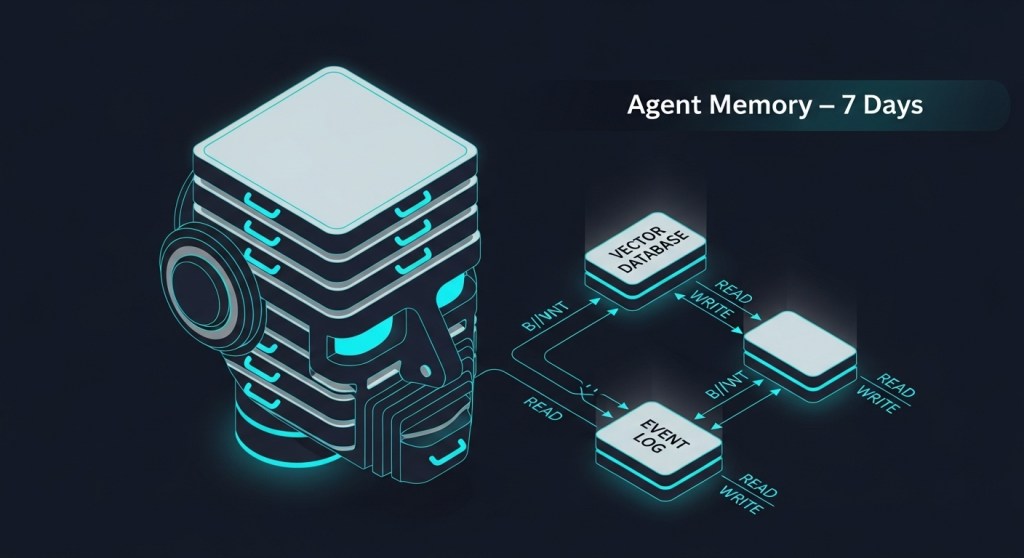
  • Ship Agent Memory That Works: A 7‑Day Plan to Add Long‑Term Memory to Your AI Agents (with MCP + OpenTelemetry)

    Editorial checklist

    • Scan competitor coverage and recent standards updates (MCP, AgentKit, OTel GenAI).
    • Define audience needs: founders and operators shipping production agents.
    • Identify gap: practical, secure long‑term agent memory.
    • Do light SEO: target “AI agent memory” and related terms.
    • Provide a 7‑day build plan with code/metrics and guardrails.
    • Cite credible sources; link to relevant HireNinja guides.

    Why agent memory—why now?

    Agent platforms are graduating from demos to daily ops. Microsoft’s Agent 365 and similar tools promise to manage fleets of bots, underscoring that persistent memory is no longer optional when agents own customer conversations and workflows. citeturn0news12

    At the same time, platform tooling like OpenAI’s AgentKit brought built‑in evals and deployment workflows to mainstream developers, while Microsoft has publicly pushed for better multi‑agent memory and standards like the Model Context Protocol (MCP). Together, this points to 2026 as the year memory design becomes a core competency—not an afterthought. citeturn0search0turn3news12

    What “agent memory” actually means

    Think in layers: short‑term context (what’s in the current prompt), episodic memory (what happened across sessions), and semantic memory (facts and preferences). Most production systems combine a retrieval‑augmented generation (RAG) store with an event log so agents can recall prior steps and outcomes. citeturn3search1

    Architecture at a glance

    1. MCP connectors for safe data access (tickets, orders, docs) with a registry and permissions. citeturn2news13turn2news12turn2search1
    2. RAG memory in a vector DB (dense + keyword hybrid) for facts, policies, product data.
    3. Episodic event store (append‑only) to track steps, decisions, approvals.
    4. Observability with OpenTelemetry GenAI metrics/traces to measure hit rates, latency, cost, and errors. citeturn2search0
    5. Policy & security: write filters, PII handling, and memory‑poisoning defenses. citeturn3academia13

    The 7‑day plan

    Day 1 — Define memory SLOs and the data map

    • Pick SLOs: memory hit rate ≥ 70% on eval questions; P95 recall latency < 600 ms; freshness < 24h for inventory/pricing; $ per memory call budget.
    • Data map: what agents may read/write (orders, tickets, user prefs) and who approves writes.
    • Start a reference eval set (20–50 Q&A) the agent must answer using memory.

    Day 2 — Stand up RAG memory

    • Choose a vector DB (e.g., pgvector, Qdrant, Weaviate). Ingest FAQs, policies, product catalog.
    • Enable OpenTelemetry GenAI metrics to track token usage and operation duration per retrieval or generation. Example metric names: gen_ai.client.token.usage, gen_ai.client.operation.duration. citeturn2search0
    // pseudo-OTel labels (attach to spans/metrics)
    attributes = {
      "gen_ai.operation.name": "retrieve",
      "gen_ai.provider.name": "openai",
      "gen_ai.request.model": "gpt-4.1-mini",
      "db.system": "vector",
      "resource.name": "memory.rag"
    }
      

    Day 3 — Add episodic memory via an event store

    • Create an append‑only store: agent_id, user_id, timestamp, action, inputs, outputs, approval, cost, trace_id.
    • Correlate each event with OTel trace_id to replay agent behavior during incidents. citeturn2search0

    Day 4 — Secure the write path

    • Introduce a memory write policy: dedupe, profanity/PII filters, and source attributions.
    • Require approvals for high‑impact writes (refund rules, pricing). Add kill‑switches and canaries using your existing agent CI/CD. See our 7‑day CI/CD and Agent Firewall posts for patterns. Agent CI/CDAgent Firewall.

    Day 5 — Retrieval quality + anti‑poisoning

    • Use hybrid retrieval (dense + BM25), re‑rank top‑k with a small reranker, and cache frequent answers.
    • Defend against memory poisoning by validating records, using consensus checks, and separating “lessons learned” from raw logs as proposed in recent research. citeturn3academia13

    Day 6 — Evals that matter

    • Run offline evals nightly on your memory Q&A set; compare accuracy with/without memory.
    • Automate evals in CI using your platform’s tooling; OpenAI’s AgentKit, for example, includes Evals for Agents to grade step‑by‑step traces. citeturn0search0

    Day 7 — Productionize with guardrails

    • Enforce SLOs with alerts on P95 retrieval latency, accuracy deltas, and cost regressions.
    • Enable A/B or shadow traffic for new memory strategies; roll back via kill‑switch if SLOs breach.
      See our FinOps playbook for cost guardrails and model routing. Agent FinOps.

    How MCP streamlines memory

    MCP standardizes how agents connect to tools and data, so your memory layer can log and attribute what was read/written per connector. With Windows support and an updated spec due November 2025, expect faster adoption and better governance hooks. citeturn2news12turn2search1

    Instrument like you mean it: an observability checklist

    • Latency: gen_ai.client.operation.duration on retrieve/generate. citeturn2search0
    • Cost: gen_ai.client.token.usage by model and provider; map to dollars. citeturn2search0
    • Quality: memory hit rate on eval set; factuality deltas vs. ground truth.
    • Safety: write‑path rejection rate; poisoning detections; approval latency. citeturn3academia13

    Example: e‑commerce support agent

    Goal: reduce “Where is my order?” tickets and upsell accessories.

    1. MCP connectors: OMS, Shopify catalog, logistics API. citeturn2news13
    2. Memory: vector store for policies and product knowledge; event store for prior resolutions.
    3. SLOs: P95 recall < 600 ms; ≥ 80% answer accuracy on top 50 intents; ≤ $0.01 per memory access.
    4. Guardrails: approvals for refunds/discounts; PII redaction before writes.

    Pair this with our BFCM automation ideas to ship results in days, not months. BFCM 2025 agent automations.

    Compliance quick notes

    Keep an audit trail for memory sources and writes. The EU AI Act phases in most obligations by August 2026, with some high‑risk product rules applying through 2027. ISO/IEC 42001 provides an AI management system baseline you can map to your agent memory governance. citeturn1search1turn1search0turn1search6

    What’s next

    The big players are aligning around standards (MCP) and enterprise controls (Agent 365). Memory will be the differentiator for agents that don’t just chat—but close loops and learn safely over time. citeturn0news12

    Resources

    • OpenTelemetry GenAI semantic conventions for metrics and traces. citeturn2search0
    • Research on defending agent memory from poisoning (design ideas for Day 5). citeturn3academia13
    • Microsoft on structured retrieval augmentation and agent memory. citeturn3news12
    • MCP spec update and Windows support. citeturn2search1turn2news12
    • Agent evals in OpenAI AgentKit. citeturn0search0

    Call to action

    Want a working memory layer in a week? Book a working session with HireNinja. We’ll help you wire MCP connectors, set SLOs, and instrument OpenTelemetry—then ship with CI/CD guardrails. Subscribe for the template pack and dashboards.