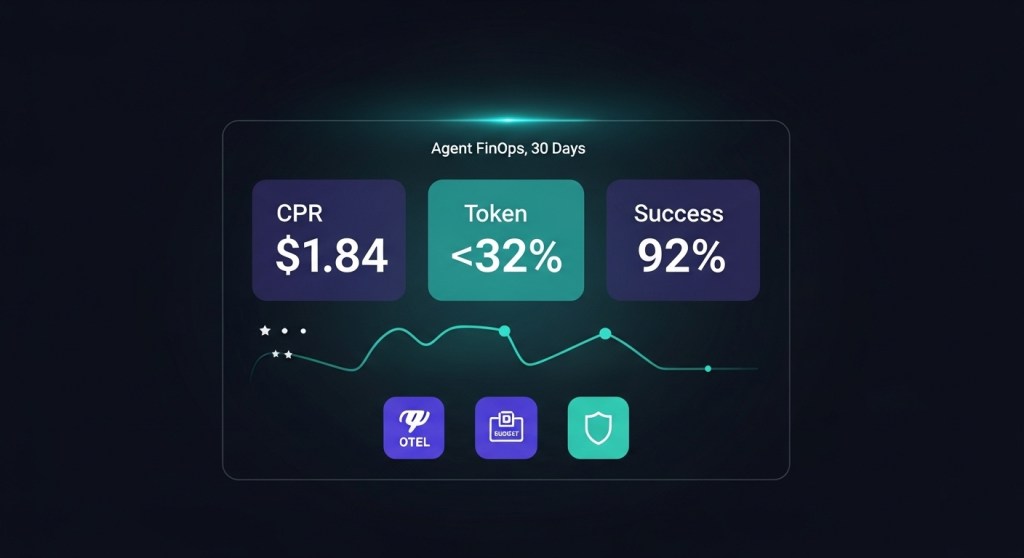
• AI Agent FinOps: A 30‑Day Playbook to Cut Costs 25–40% with OpenTelemetry and Smart Model Routing

    Agent platforms are maturing fast (Microsoft’s Agent 365, OpenAI’s AgentKit, and cross‑vendor A2A interop are now real). That’s great for capability—but it also makes costs unpredictable. This playbook shows how to measure, attribute, and reduce AI agent spend in 30 days using OpenTelemetry, simple model‑routing, and budget guardrails.

    Who this is for

    • Startup founders and product leaders who need agent ROI by the next board meeting.
    • Ops/RevOps teams who must explain “where the tokens went.”
    • E‑commerce operators who want lower cost‑per‑resolution before peak season.

    Outcomes you can expect

    • Clear cost attribution per agent, workflow, tenant, and outcome.
    • Targeted 25–40% spend reduction from caching, routing, and failure control.
    • Budget guardrails and alerts that stop overruns without breaking CX.

    The 3 metrics that matter

    1. Cost per Resolution (CPR): dollars per successful outcome (ticket solved, order updated, refund created).
      CPR = (LLM/API fees + tool calls + supervision labor + infra) / # successful outcomes
    2. Cost per Attempt (CPA): dollars per agent attempt, successful or not. Useful for spotting waste from retries/loops.
    3. Success Rate (SR): successful outcomes / total attempts. Improves when you fix failure modes, not when you just spend more.

    Week 1 — Instrument everything with OpenTelemetry

    Adopt the Generative AI semantic conventions so every agent call emits standardized telemetry. At minimum, capture model name, input/output tokens, cache hits, tool calls, latency, and outcome labels.

    • Implement OpenTelemetry gen‑ai metrics for token usage and time-per-token.
    • Track cache economics using proposed attributes for cache read/write tokens (see the community discussion here).
    • Emit span attributes for customer_id, agent_id, workflow, intent, outcome (success, escalation, retry), and cost_usd per call.

    Need a quick primer on observability for agents? Set up tracing alongside metrics; an eBPF‑style boundary tracing approach (e.g., ideas from AgentSight) helps correlate prompts, tool calls, and system effects without invasive code changes.

    Related guides on this blog:

    Week 2 — Build a cost ledger and CPR dashboard

    Create a simple cost map so each token, request, and tool call translates to dollars in your data warehouse.

    1. Cost dictionary: table of model, price_input_per_1k, price_output_per_1k, cache_write_factor, cache_read_factor, tool_fixed_cost. Update weekly.
    2. Attribution join: join OTel spans to the dictionary to compute cost_usd per span; aggregate by agent_id, workflow, customer_id, outcome.
    3. Dashboard: CPR, CPA, SR by workflow; top 10 costly prompts; retry distribution; cache hit rate; tool‑call outliers.
    // Example CPR query (pseudo‑SQL)
    SELECT workflow,
           SUM(cost_usd) / NULLIF(SUM(CASE WHEN outcome='success' THEN 1 ELSE 0 END),0) AS cpr,
           AVG(cache_hit_rate) AS cache_hit,
           AVG(retries) AS avg_retries
    FROM agent_spans_hourly
    WHERE ts >= now() - interval '30 days'
    GROUP BY 1
    ORDER BY cpr DESC;
    

    Tip: Track a “frontier cost‑of‑pass” baseline using ideas from the research community to compare accuracy‑vs‑cost across models and strategies; see the economic framing in Cost‑of‑Pass.

    Week 3 — Cut waste before you optimize

    • Kill failure loops: add timeouts and retry caps. If SR < 85% for a workflow, gate deploys via canaries (see our CI/CD guide).
    • Cache aggressively where quality holds: enable prompt prefix caching for long system prompts, embeddings caches for repeated lookups, and deterministic tool schemas to maximize hits.
    • Trim prompts: shorten instructions, compress memories, and pin retrieval windows. Every 10% token reduction compounds across traffic.
    • Guard tools: block cost‑explosive tool calls with an Agent Firewall and OPA policies (max items per call, max pages fetched, etc.).

    Week 4 — Route smartly and enforce budgets

    1. Tiered model routing: use a small/fast model for easy cases, escalate to larger models only when confidence is low or impact is high. Recent work on cost‑aware orchestration shows 20–30% savings without hurting reliability.
    2. Outcome‑aware retries: if a retry is cheaper than human escalation and keeps CPR below target, retry once with a different strategy (e.g., higher temperature + stricter tool plan).
    3. Budgets and alerts: define daily spend caps per agent_id/tenant. When approaching thresholds, auto‑switch to low‑cost routes or require human approval.
    // Pseudo‑policy for routing (YAML)
    route:
      - if: confidence >= 0.85 and risk == 'low'
        use: small_model
      - if: confidence < 0.85 and impact == 'high'
        use: large_reasoning_model
      - else:
        use: base_model
    budgets:
      default_daily_usd: 300
      actions_on_80pct: ['switch_to_small_model','require_approval']
    

    Example: Support L1 deflection CPR drops from $3.10 → $1.85

    What changed:

    • Prompt trimmed 28%; cache hit rate from 0% → 42% for long instructions.
    • Added small→large routing with one guarded retry.
    • Blocked costly web‑browse side quests with the safe browser agent patterns.

    Result (30 days): CPA −37%, SR +9 pts, CPR −40%, while CSAT held steady.

    Policy and governance pointers (don’t skip)

    Budget guardrails should sit inside your broader governance program. Use the NIST AI RMF’s Manage/Measure functions for risk controls and link to EU AI Act obligations if you operate in the EU.

    RFP context: Where vendors fit

    As you formalize budgets, expect platform features to help: Microsoft’s Agent 365 emphasizes registries and access controls; OpenAI’s AgentKit focuses on building and evaluating agents; and A2A seeks cross‑platform interop. Use these, but keep your cost ledger and routing logic vendor‑neutral.

    Your 30‑day checklist

    1. Day 1–3: Wire up OTel gen‑ai metrics; start emitting token counts, cache hits, model names, outcomes.
    2. Day 4–7: Build the cost dictionary and attribution jobs; launch CPR/CPA/SR dashboard.
    3. Day 8–14: Kill loops, cap retries, trim prompts, turn on caching; deploy an agent firewall.
    4. Day 15–21: Add small→large model routing with a single guarded retry and human escalation thresholds.
    5. Day 22–30: Set daily budgets and alerts; review the worst 10 workflows; refactor for CPR targets; update RFP asks.

    FAQ

    Will this hurt quality? Not if you fix failure modes first and escalate thoughtfully. Keep an eye on SR and CSAT, not just cost curves.

    What about compliance? Tie budget guardrails and audit logs into your governance baseline. Start with our 48‑hour governance checklist.

    Bottom line

    Agent capabilities are exploding across vendors. The teams that win won’t just build faster—they’ll manage cost per outcome. Instrument with OpenTelemetry, build a cost ledger, eliminate waste, route smartly, and enforce budgets. Do this for 30 days and you’ll have durable, compounding savings—and a story your CFO will love.

    Call to action: Want the starter dashboards, YAML policies, and SQL templates mentioned here? Subscribe to HireNinja and reply “FinOps kit”—we’ll send the templates and a 30‑minute walkthrough.
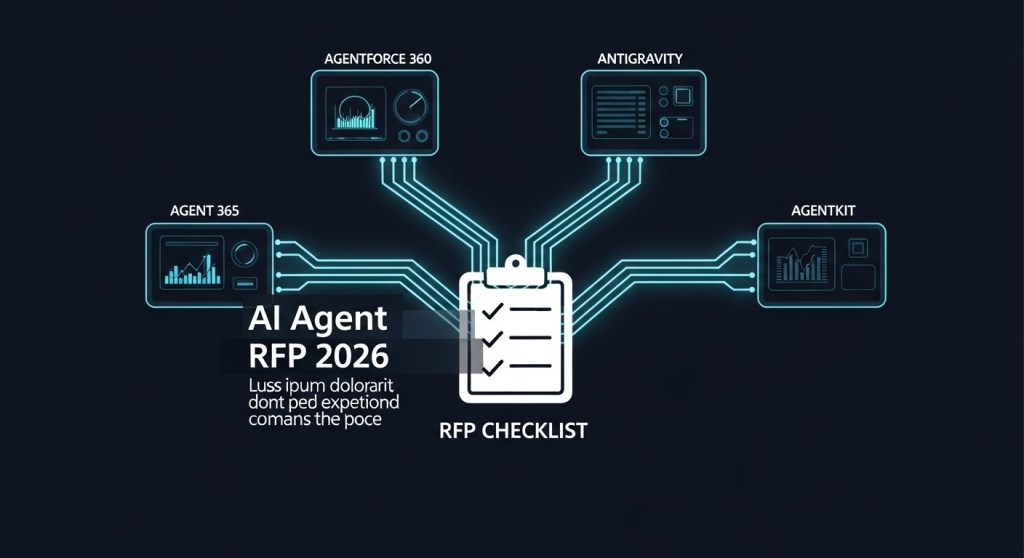
  • The 2026 AI Agent Platform RFP Checklist: Compare Agent 365, Agentforce 360, Antigravity, and AgentKit

    Quick plan for this guide

    • Scan competitors’ coverage to confirm what’s new in agent platforms and management layers.
    • Define buyer intent (founders, e‑commerce operators, and tech leads evaluating platforms for 2026).
    • Map must‑have requirements: interoperability (MCP/A2A), observability (OpenTelemetry), governance, and FinOps.
    • Build a scored RFP checklist you can copy into procurement docs.
    • Link to deeper how‑to posts for implementation: registry, CI/CD, firewall, reliability, and spend.

    Why this RFP now

    In the last 72 hours, Microsoft announced Agent 365—a control surface to manage a growing bot workforce—now in early access. citeturn1news12turn5news12 Google introduced Antigravity alongside Gemini 3, an agent‑first coding and orchestration environment. citeturn4news12turn4news13 OpenAI launched AgentKit for building and shipping agents at Dev Day. citeturn0search0 And earlier this year, Microsoft adopted Google’s A2A interoperability standard so agents can collaborate across clouds. citeturn0search1

    Regulatory timing also matters. Official EU pages still show broad applicability dates in August 2026 with staged exceptions, while a November 19, 2025 update signaled delays for some high‑risk provisions to late 2027. Build your plan assuming staggered obligations by system type and geography. citeturn2search0turn2search1turn2news12

    How to use this checklist

    This RFP framework helps you compare Microsoft Agent 365, Salesforce Agentforce 360, Google Antigravity (Gemini 3), OpenAI AgentKit—and any other agent platform—on the capabilities that actually lower risk and drive ROI.

    Category A — Interoperability and ecosystem

    • MCP support: Does the platform support Model Context Protocol (client/servers/registry), or provide adapters? citeturn3search2turn3search5
    • A2A: Can agents federate tasks with external agents via A2A or equivalent? citeturn0search1
    • Connectors: Native connectors to CRM, commerce, support, data warehouses, search, and calendars?
    • Bring‑your‑own‑model: Choice of models (Gemini, Claude, OpenAI, local NIMs) without lock‑in? citeturn4search3turn4search2
    • Marketplace/registry: Is there a trusted agent/connector registry with signed metadata?

    Category B — Observability and reliability

    • OpenTelemetry: First‑class traces, spans, and logs for agent steps; emerging semantic conventions for agents. citeturn3search4
    • Evals: Built‑in evals for tasks, step grading, and regression gates (particularly for AgentKit). citeturn0search0
    • SLOs: Error budgets and SLO dashboards for task success, latency, and hallucination rate.
    • Shadow/canary: Support for shadow trials and canary releases for agent flows.

    Category C — Security and governance

    • Policy engine: OPA or equivalent for tool permissions, data boundaries, and approvals.
    • Identity: Agent identities, least‑privilege access (e.g., Entra, SCIM), and secrets management.
    • Auditability: Tamper‑evident logs of tool calls with inputs/outputs and human approvals.
    • Standards: ISO/IEC 42001 alignment and AI impact assessments (ISO/IEC 42005). citeturn2search6turn2search5
    • Regulatory mapping: EU AI Act class mapping; plan for phased obligations in 2025–2027. citeturn2search0turn2search1turn2news12

    Category D — Cost control (FinOps)

    • Per‑job cost: Trace‑level cost/tokens by step and by tool.
    • Budget guardrails: Limits by user, team, environment; kill switches.
    • Dynamic routing: Route to cheaper/faster models based on SLOs.

    Category E — Productivity fit

    • Agent management: Central admin for agent registry, policies, and health (Agent 365 focus). citeturn1news12
    • Embedded flows: Work where teams live (Slack, Gmail, Docs, Sheets, CRM). citeturn4search0
    • Voice/telephony: Native voice agents and call analytics when needed. citeturn0search6

    60‑point RFP checklist (copy/paste)

    Score each item 0–2 (0 = missing, 1 = partial, 2 = strong). Weight categories to your use case.

    Category Items (6 each)
    Interoperability MCP client/server; A2A federation; BYO‑model; secure registry; zero‑copy data; SDK coverage
    Observability OTel spans; prompt/step logs; evals; error budgets; replay harness; redaction
    Security OPA policies; agent identity; scoped secrets; tool sandbox; jailbreak defenses; SBOM/ABOM
    Governance ISO 42001; ISO 42005 AIIA; DPIA hooks; human approvals; model cards; risk register
    Compliance EU AI Act mapping; data residency; access logs; retention; consent; vendor DPAs
    FinOps Per‑step cost; budgets; model routing; cache; usage caps; monthly reports
    Reliability Shadow; canary; rollback; deterministic tools; retry/backoff; chaos tests
    Productivity Workspace add‑ins; Slack/Gmail; ticketing; calendars; file systems; mobile
    E‑commerce Shopify/WooCommerce apps; catalog sync; OMS hooks; returns; PDP copy; promos
    Roadmap/vendor Public roadmap; SLA; pricing transparency; support tiers; references; exit plan

    Sample scoring matrix

    Platform Interoperability Observability Security FinOps Total (out of 120)
    Agent 365 __ / 12 __ / 12 __ / 12 __ / 12 __ / 120
    Agentforce 360 __ / 12 __ / 12 __ / 12 __ / 12 __ / 120
    Antigravity (Gemini 3) __ / 12 __ / 12 __ / 12 __ / 12 __ / 120
    OpenAI AgentKit __ / 12 __ / 12 __ / 12 __ / 12 __ / 120

    Tip: Keep raw notes for each score with links to docs, security questionnaires, and pilot results.

    Red flags to watch

    • Closed integrations only: No MCP/A2A path or vendor‑neutral adapters. citeturn0search1turn3news14
    • Opaque pricing: No per‑step cost view or budget guardrails.
    • Weak observability: No OpenTelemetry spans for tool calls or chain‑of‑thought disclosure controls. citeturn3search4
    • Compliance shrug: No clear ISO 42001 posture or EU AI Act mapping by system type/timeline. citeturn2search6turn2search1

    Go deeper: implement the foundations

    What we’re seeing in the market

    Agent management is becoming its own category (Agent 365), Salesforce is positioning for end‑to‑end orchestration (Agentforce 360), and Google’s developer‑first stack (Antigravity + Gemini 3) emphasizes agentic development workflows and artifacts. OpenAI’s AgentKit pushes build‑and‑eval velocity. citeturn1news12turn4search2turn4news12turn0search0

    Next steps

    1. Run a 2‑week pilot with two platforms using the scoring matrix.
    2. Instrument pilots with OpenTelemetry to track task success and cost per outcome. citeturn3search4
    3. Review governance with ISO 42001/42005 and map EU AI Act class and timing. citeturn2search6turn2search5turn2search1
    4. Decide on a control plane pattern (central registry + policies) before scaling.

    Call to action

    Want a tailored RFP and a two‑week pilot plan? Subscribe and reach out—our team at HireNinja can help you stand up an agent‑ready stack with MCP/OTel guardrails in days.

  • Agentic SEO Ops for 2026: Build an Always‑On Topic Radar with MCP, Search Console, and OpenTelemetry

    Google’s Gemini 3 and AI Overviews are reshaping how search works—and how your content gets discovered. At the same time, enterprise agent platforms like Microsoft’s Agent 365, OpenAI’s AgentKit, Salesforce Agentforce, and Amazon’s Nova Act are making it practical to run agents as always‑on teammates. This guide shows founders and e‑commerce teams how to ship an “Agentic SEO Ops” stack in days using MCP, Google Search Console (GSC), and OpenTelemetry—plus the guardrails to keep it safe and compliant. Sources: Wired on Gemini 3, Google on AI Mode, Wired on Agent 365, TechCrunch on AgentKit, Agentforce 360, Nova Act.

    What you’ll build

    An “Agentic SEO Ops” system that:

    • Runs a daily Topic Radar to spot rising queries, content gaps, and decays in rankings.
    • Triggers a Content Refresh Agent to create briefs and update pages safely.
    • Maintains a Machine‑Readable Layer (titles, headings, schema, FAQs) aligned with Google’s guidance on gen‑AI content and spam. Guidance, policy context.
    • Is observable with OpenTelemetry (token metrics, latency, success rate) and governed with OPA approvals.

    Why this matters for 2026 SEO

    • AI Overviews and AI Mode are appearing more often and in more countries, changing how links surface and what gets cited. Your site must be extractable and current. Google, Google.
    • Agents are moving from hype to operations. Managing them like services—with registries, policies, and tracing—separates teams that scale from those that stall. Wired, TechCrunch.
    • Security remains a top concern (impersonation, unsafe actions). Put approvals and a firewall in front of write operations. Business Insider.

    Reference architecture

    Build on an MCP‑ready agent with a registry and policy layer:

    1. Agent Registry (identity + secrets): store agent IDs, scopes, and API creds. See our guide: Agent Registry.
    2. MCP Connectors:
      • GSC API (read) to pull queries, CTR, impressions. docs.
      • CMS API (write) to propose draft updates.
      • Slack/Email for approvals and notifications.

      Learn MCP basics: Anthropic MCP.

    3. Policy & Approvals: Open Policy Agent (OPA) enforces “who can change what,” plus a human approval step for high‑risk edits. OPA docs.
    4. Observability: Emit OpenTelemetry spans and GenAI metrics (token usage, errors, model latency). OTel GenAI metrics, OTel blog.
    5. Safety perimeter: Route actions through an Agent Firewall with prompt‑injection checks and domain allow‑lists.
    6. CI/CD for agents: Shadow test, canary, and add kill‑switches before turning on full automation. Agent CI/CD, Reliability Lab.

    Daily Agentic SEO workflows

    1) Topic Radar (discover, prioritize, brief)

    1. Pull last 14–28 days from GSC grouped by query → page; flag: rising impressions, falling CTR, new queries with high impressions/no landing page. example queries.
    2. Cross‑reference with your product/news roadmap; auto‑draft briefs (title, H2s, FAQs, schema) and propose internal links.
    3. OPA policy gates: low‑risk metadata updates can auto‑merge; content edits require human approve.

    2) Content Refresh Agent (fix decay, improve CTR)

    • Detect pages with falling clicks but steady impressions; generate variant titles/meta; schedule A/B tests via CMS.
    • Ensure a Machine‑Readable Layer: every claim in hero banners exists as text and, where relevant, schema markup. Align with Google’s guidance on gen‑AI content and spam policies. policy.

    3) SERP Change Watcher (respond to AI Overviews)

    • Monitor queries where AI Overviews appear more often; identify what the overview cites (patterns like definitions, step lists, prices) and ensure your pages expose equivalent, current facts.
    • Refresh FAQs and add citations to authoritative sources when helpful. Track impact weekly.

    4) Internal Link Optimizer

    • Suggest links from high‑authority evergreen posts to newly published or refreshed pages, especially for seasonal peaks (e.g., BFCM). For e‑commerce ideas, see: BFCM Agent Automations.

    Governance, safety, and cost control

    • Guardrails: Put a human‑in‑the‑loop for page‑body edits; auto‑approve non‑risky metadata and link updates. Use our 48‑hour governance checklist.
    • Security: Limit tool scopes; prevent impersonation risks; require approvals for external posts. Firewall, Cohere perspective.
    • Observability: Trace every run with span attributes: query count, tokens in/out, approval outcome, publish delta. Start with OTel’s GenAI metrics. spec.
    • Cost control: Cap tokens per run, use routing and prompt diet. See our 14‑day plan: Cut Spend 20–40%.

    MVP in 48 hours: step‑by‑step

    1. Day 1 morning: Stand up an Agent Registry and connect MCP to GSC (read‑only) and your CMS (draft‑only).
    2. Day 1 afternoon: Emit OpenTelemetry spans and metrics (token usage, latency, errors, approvals). Ship dashboards and error alerts. Reliability Lab.
    3. Day 2 morning: Implement OPA policies and human approvals; enable kill switch; route all writes through the Firewall. CI/CD, Firewall.
    4. Day 2 afternoon: Turn on Topic Radar + Content Refresh in shadow mode; compare CTR and clicks; after review, promote low‑risk changes.

    KPIs to track weekly

    • New query coverage: % of rising queries with a mapped landing page.
    • Refresh velocity: briefs → approved → published cycle time.
    • CTR lift: on refreshed pages vs. baseline.
    • Token cost per net new click: use our cost playbook to keep it in check. Playbook.

    Notes on vendor landscape

    Enterprise agent management is accelerating: Microsoft’s Agent 365 for bot oversight, OpenAI’s AgentKit for agent building, Salesforce’s Agentforce 360, and Amazon’s Nova Act for browser control. Plan for interoperability and observability from day one. Sources: Wired, TechCrunch, TechCrunch, TechCrunch.

    Wrap‑up

    SEO is shifting from campaigns to systems. By combining MCP connectors, Search Console data, OPA policy, and OpenTelemetry, you can keep your content fresh, machine‑readable, and safe—ready for Google’s AI‑driven search in 2026.

    Call to action: Want a ready‑to‑ship Agentic SEO Ops template? Subscribe for playbooks or start with our Control Plane blueprint, then book a free 30‑minute consult with HireNinja to tailor it to your stack.

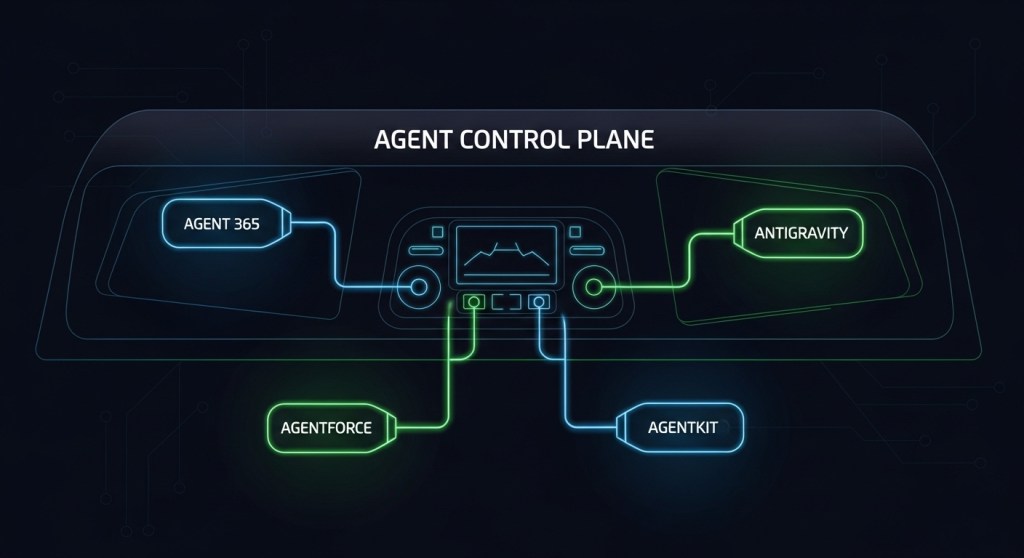
  • AI Agent Control Plane for 2026: Unify Agent 365, Antigravity/Gemini 3, Agentforce 360, and AgentKit with MCP + OpenTelemetry

    Editorial plan checklist

    • Scan the latest vendor moves (Microsoft Agent 365; Google Gemini 3 + Antigravity; Salesforce Agentforce 360; OpenAI AgentKit).
    • Define what an AI agent control plane is and why it matters now.
    • Ship a pragmatic 7‑day build plan using MCP + OpenTelemetry.
    • Map vendor integrations and risk controls.
    • Share KPIs, dashboards, and cost/safety guardrails.

    AI Agent Control Plane for 2026: Unify Agent 365, Antigravity/Gemini 3, Agentforce 360, and AgentKit with MCP + OpenTelemetry

    The week of November 18, 2025 made one thing clear: enterprise AI is moving from chat to agents. Microsoft introduced Agent 365 to manage fleets of bots; Google launched Gemini 3 and unveiled Antigravity—an agent‑first dev environment; Salesforce expanded Agentforce 360; OpenAI’s AgentKit targets production agent workflows; and Amazon’s Nova Act continues the browser‑agent push. If you operate a SaaS or e‑commerce business, you now need a vendor‑neutral way to onboard, govern, observe, and optimize agents across these stacks.

    This article gives you a practical blueprint for an AI agent control plane you can start in a week, built on two open pillars: MCP (Model Context Protocol) for interop and OpenTelemetry for observability. We also link to ready‑to‑ship components from our recent guides so you can move fast, safely.

    What is an agent control plane?

    An agent control plane is the layer that sits above vendor platforms and standardizes how you:

    • Register and identify agents, capabilities, tools, secrets, and owners.
    • Enforce policy (permissions, human approvals, risk tiers, budget caps, kill switches).
    • Observe and evaluate behavior (traces, metrics, logs, evals) with explainability hooks.
    • Interoperate across vendors via connectors and protocol standards.

    Think of it as Kubernetes‑style control for agents: consistent governance and telemetry regardless of whether the runtime is Agent 365, Antigravity/Gemini, Agentforce, or AgentKit.

    Why now

    • Microsoft Agent 365 adds a native registry, access controls, and security oversight for enterprise bots (announced Nov 18, 2025). Reuters · WIRED
    • Google Gemini 3 and Antigravity bring deeper reasoning and an agent‑first IDE (Nov 18, 2025). Google · Gemini app
    • Salesforce Agentforce 360 ships an enterprise agent suite and builder (Oct 13, 2025). TechCrunch
    • OpenAI AgentKit focuses on productionizing agent workflows (Oct 6, 2025). TechCrunch
    • Amazon Nova Act extends browser automation capabilities (Mar 31, 2025). TechCrunch

    The reference architecture (5 layers)

    1. Identity & Registry — Central registry of agents, owners, scopes, allowed tools, and secrets. Start with our template: Agent Registry.
    2. Policy & Approvals — OPA policies, role‑based permissions, risk tiers, human‑in‑the‑loop for sensitive actions. See: Agent Firewall.
    3. Interop & Connectors — Use MCP servers/clients to connect CRMs, ERPs, and internal tools once, then reuse across platforms. Explore the MCP GitHub org.
    4. Observability & Evals — Standardize traces/metrics with OpenTelemetry’s generative‑AI semantic conventions and add eBPF where helpful. Docs: OTel Gen‑AI semconv and OTel eBPF. Pair with our Agent Reliability Lab.
    5. Runtime & Safety Controls — CI/CD for agents, canaries, shadow tests, and kill switches. Use: Agent CI/CD.

    Your 7‑day build plan

    1. Day 1 — Stand up the Registry: Create agent IDs, owners, purposes, tool lists, and secrets. Export a public subset for Agent 365 and internal UIs. Guide.
    2. Day 2 — Enforce Policy: Add an agent firewall with allow‑listed tools, scoped credentials, user approval steps, and rate/budget caps. Guide.
    3. Day 3 — Wire Interop via MCP: Connect CRMs, ticketing, storefronts, and data sources once using MCP servers. This lets Agent 365, Antigravity projects, Agentforce bots, and AgentKit workflows reuse the same connectors.
    4. Day 4 — Add Observability: Emit OpenTelemetry spans with Gen‑AI attributes (model, input/output tokens, tool calls, latency, errors). Capture traces end‑to‑end, then add evals for critical tasks. Guide.
    5. Day 5 — Ship CI/CD & Safeguards: Shadow new agents, run canaries, require approvals for new tools/permissions, and wire kill‑switches. Guide.
    6. Day 6 — Pilot Browser Automations: Start with a contained task like warranty claims or invoice reconciliation using Nova Act/Mariner‑style agents. Use our safe browser‑agent playbook.
    7. Day 7 — Optimize Cost & SLOs: Route by task difficulty, shrink prompts, cache aggressively, and set SLOs/Budgets per agent. Cost playbook.

    Vendor integration notes

    • Microsoft Agent 365: Use it to inventory agents, apply policies, and quarantine risky ones. It’s positioned to manage third‑party bots too. Reuters, WIRED.
    • Google Antigravity + Gemini 3: Antigravity elevates agents to a first‑class surface in an IDE; Gemini 3 adds stronger reasoning/agentic capabilities. Google, Project Mariner.
    • Salesforce Agentforce 360: Enterprise agent suite with an agent builder and Slack integration. TechCrunch.
    • OpenAI AgentKit: A toolkit to build, evaluate, and deploy agents with a connector registry. TechCrunch.
    • Amazon Nova Act: A browser‑control agent and SDK—useful for tasks not covered by APIs. TechCrunch.

    Key design choices (quick ADRs)

    • Interop: Prefer MCP to reduce N×M integrations; maintain a private MCP server catalog for internal systems. GitHub org.
    • Observability: Adopt OpenTelemetry Gen‑AI semconv; tag spans with model, temperature, tool calls, retries, cost, and risk tier. Consider eBPF‑based collection for cross‑runtime visibility.
    • Risk: Map agent actions to human approvals (e.g., refund >$200 requires confirmation). Contain browser agents in sandboxed profiles and time‑boxed sessions.

    E‑commerce quick wins (ship in 48 hours)

    • Proactive BFCM recovery: Auto‑email customers with abandoned carts + inventory changes; escalate to a human if the agent detects frustration. Use the BFCM automations.
    • RMA triage: Parse tickets, generate labels, update ERP, and notify customers; require approval on high‑value orders.
    • Vendor follow‑ups: Agents compile late‑shipment lists and send standardized nudges, with human review on escalations.

    KPIs and dashboards

    • Reliability: Task success rate, rollback count, MTTR for failed actions, eval pass rate.
    • Cost: Cost per successful task, token per tool call, cache hit rate, model mix.
    • Risk: % actions requiring human approval, blocked policy events, injection/escape attempts.

    Use our Reliability Lab and Cost Playbook to stand up dashboards fast.

    Bottom line

    The platform race is on, but you don’t have to pick a winner. Build a thin, strong control plane on MCP + OpenTelemetry and plug in Agent 365, Antigravity/Gemini, Agentforce, and AgentKit as they mature. You’ll get portability, safety, and clean KPIs—without vendor lock‑in.

    Next steps

    1. Clone our registry/policy templates and connect first MCP servers.
    2. Instrument with OTel Gen‑AI spans and enable sandboxed browser runs.
    3. Pilot one production task with approvals and hard budget caps.

    Need help? Subscribe for weekly playbooks—or book a 30‑minute session with HireNinja to review your agent control plane.

  • The 48‑Hour AI Agent Governance Checklist for 2026 (SOC 2, ISO/IEC 42001, EU AI Act)

    Why now: Enterprise agent deployments are accelerating fast—Microsoft just introduced Agent 365 to inventory and manage bot workforces—while researchers continue to surface agent reliability and safety gaps. EU AI Act obligations phase in through 2026–2027, and buyers increasingly ask for SOC 2 and ISO/IEC 42001 evidence. If you’re piloting agents for support, growth, or ops, this 48‑hour checklist gets you from ad‑hoc to audit‑ready with minimal disruption. citeturn3view0turn4view0turn1search2

    Who this is for

    • Startup founders and product leaders spinning up AI agents for GTM, support, or back‑office automation.
    • E‑commerce operators preparing holiday/seasonal volume with autonomous workflows.
    • Engineering, data, or security teams asked to make agents safe, observable, and compliant—yesterday.

    What you’ll have in 48 hours

    A living agent inventory, baseline access and policy controls, end‑to‑end tracing, change‑management guardrails, and a mapped set of controls aligned to NIST AI RMF, ISO/IEC 42001, and the EU AI Act timeline—plus links to deeper playbooks you can ship next week. citeturn1search0turn1search4turn1search2

    Day 1 (Hours 0–24): Inventory, Access, and Policy

    1) Stand up an agent registry and inventory

    Create a single source of truth for every agent: purpose, owner, version, model, tools, credentials, data scopes, and risk rating. If you’re in the Microsoft stack, begin cataloging with Agent 365; otherwise, use your CMDB or a lightweight table now and migrate later. Our detailed guide and templates will save you hours: Build an Agent Registry for MCP/A2A and Agent 365. Also note the industry move toward agent interop standards (A2A) that your registry should capture. citeturn3view0turn6view0

    2) Lock down access, secrets, and scopes with policy‑as‑code

    Adopt OPA (Open Policy Agent) to codify what an agent may do, where, and under which approvals (Rego policies for tool access, PII redaction, and human‑in‑the‑loop overrides). Pair with a brokered secrets store and time‑boxed credentials. Our 7‑day plan here: Ship an Agent Firewall in 7 Days. For OPA concepts and integration patterns, see the official docs. citeturn2search0

    3) Add end‑to‑end traces with OpenTelemetry

    Instrument each agent action (tool call, external API, human approval) as a trace with spans and attributes (agent_id, policy_decision, cost_estimate). Stream to your existing telemetry backend via the OTel collector. This enables SLOs, incident timelines, and SOC 2 evidence. Dive deeper with our Agent Reliability Lab, and the Tracing API spec. citeturn2search1

    Day 2 (Hours 24–48): Change, Risk, and Compliance Mapping

    4) Put agents under CI/CD with shadow and canary releases

    Require pull requests for prompt/tool changes; gate merges on evals and cost budgets; ship via shadow → canary → general with automatic rollback and a kill switch. Our step‑by‑step: Agent CI/CD in 7 Days. Microsoft’s recent research on agent failures in a synthetic marketplace underscores why staged releases and safeguards matter. citeturn4view0

    5) Map controls to NIST AI RMF and ISO/IEC 42001

    Use NIST AI RMF’s GOVERN, MAP, MEASURE, MANAGE functions to structure your control set, then tag your evidence to ISO/IEC 42001 clauses. Start with a minimal set: registry (roles, ownership), policy‑as‑code (authorizations), tracing (accountability), change control (safety), incident runbook (response). Reference: NIST AI RMF 1.0 and the Generative AI Profile; ISO/IEC 42001 for AIMS requirements. citeturn1search0turn1search3turn1search4

    6) Triage EU AI Act applicability and deadlines

    Perform a quick EU AI Act triage: Are you a GPAI model provider, a downstream deployer, or a high‑risk use case? Note the staggered dates: prohibitions and AI literacy apply from February 2, 2025; GPAI obligations and governance from August 2, 2025; most rules (including high‑risk Annex III) from August 2, 2026; high‑risk AI embedded in regulated products by August 2, 2027. Capture which agents and markets are in scope and what transparency logs you’ll need. citeturn1search1turn1search2

    7) Plan for interop safely (A2A/MCP)

    As multi‑agent workflows cross tools and clouds, adopt allow‑lists, scoped credentials, and cross‑agent contracts (what goals/actions may be exchanged) in your policy layer. Track these in your registry and CI/CD so you can audit every external invocation. Microsoft’s adoption of Google’s A2A spec signals an ecosystem convergence—design for it now, with guardrails. See our registry playbook and A2A coverage. citeturn6view0

    Evidence you can produce by Monday

    • Inventory & Ownership: Agent list with owners, purposes, models, tools, scopes (registry templates).
    • Policies: OPA policies for tool access, PII handling, and approval thresholds (agent firewall).
    • Traces: OTel spans for actions and tool calls; sampling and retention documented (reliability lab). citeturn2search1
    • Change Controls: PRs, eval results, canary logs, and rollback procedures (agent CI/CD).
    • Risk Register & Mapping: NIST/ISO/AI Act mapping table with owners and dates. citeturn1search0turn1search4turn1search2

    Minimal Agent Risk Register (starter)

    Agent ID | Owner | Use Case | Data Scope | Tools | Risks | Controls | SLOs | Last Review
    A‑CS‑01  | CX Ops| Returns | PII (EU)  | Shopify API, Email | Impersonation, Prompt Injection | OPA-PII-1, FW-PR-2 | 99.9% success | 2025‑11‑21
    A‑FIN‑02 | Finance| AP Ops   | PII (US)  | ERP, Email         | Over‑payment, Data Leak        | OPA‑PAY‑1, OTel‑TX‑1 | <2% failed runs | 2025‑11‑21
    

    Tip: Add Impersonation and Prompt Injection as standard risks for any agent that reads the web or executes tools; both are active threat vectors reported in recent research and news. citeturn7view0turn8view0

    Cost and FinOps hooks

    Attach per‑span cost estimates and route high‑cost tasks to cheaper models when acceptable. Enforce budget SLOs in CI/CD to prevent regressions. Our 14‑day playbook shows how to cut 20–40%: Agent Cost‑Control Playbook.

    Common pitfalls (and how to avoid them)

    • Agent sprawl without ownership: Solve with registry + DRI per agent and quarterly reviews. Start here. citeturn3view0
    • Unobserved actions: No span, no credit—instrument everything via OTel. citeturn2search1
    • Unsafe web execution: Use allow‑lists, sandboxes, and approvals; see our safe browser‑agent guide. Recent studies show agents fail in open environments; mitigate with canaries and policies. citeturn4view0
    • Regulatory surprises: Track EU AI Act dates per market and keep a public‑facing summary of your transparency controls. citeturn1search2

    What to do next week

    1. Roll out human‑in‑the‑loop approvals for high‑risk actions (payments, refunds, data exports).
    2. Finalize your incident playbook for agent misbehavior (contain, disable credentials, export traces, notify owners).
    3. Expand interop safely: adopt A2A/MCP patterns with scoped contracts and testing sandboxes. citeturn6view0

    Bottom line

    With a registry, OPA policies, OpenTelemetry traces, CI/CD, and a basic risk map, you’ll have credible evidence for SOC 2, a running start on ISO/IEC 42001, and a clear path to EU AI Act readiness. Start small—ship in 48 hours—then iterate with guardrails as your agent footprint grows. citeturn1search4turn2search1


    Call to action: Want templates and a working demo environment? Book a 30‑minute session with HireNinja’s team—get the registry schema, OPA starter policies, and OTel pipelines wired up for your stack. Or subscribe to the blog for weekly playbooks.

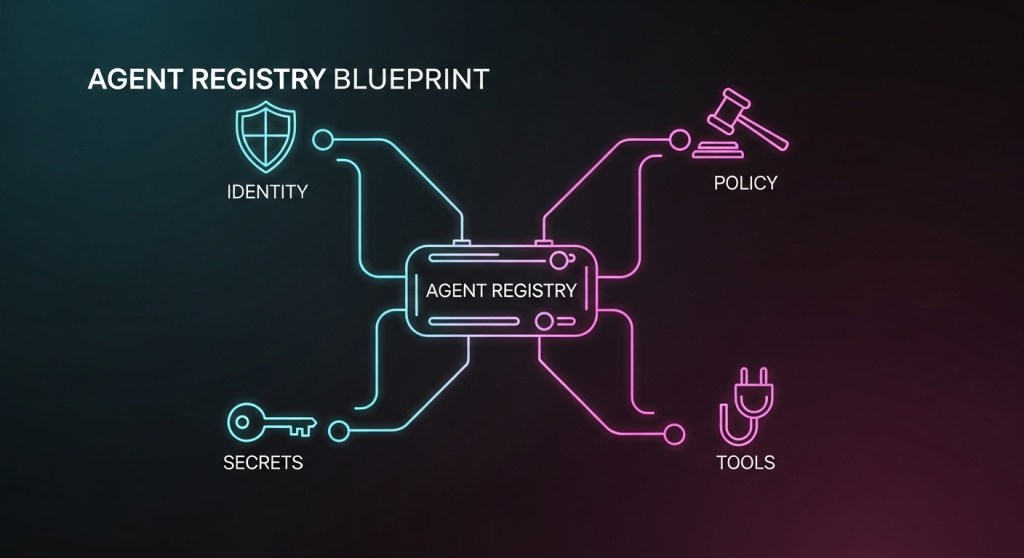
  • Build an Agent Registry for MCP/A2A and Agent 365: Identity, Policy, and Secrets (with starter templates)

    Quick plan (what you’ll get): A practical blueprint to ship an agent registry that plays nicely with MCP, A2A, OpenAI AgentKit, and Microsoft Agent 365. We’ll define the core data model, identity and RBAC, policy-as-code with OPA, secrets handling, audit/telemetry, and a 10‑step rollout plan with starter templates.

    Why an agent registry—and why now?

    Between November 18–20, 2025, Microsoft began promoting Agent 365 as the enterprise control plane for AI bots, complete with a registry and real-time security oversight (Wired). OpenAI is pushing a connector registry via AgentKit to standardize how agents attach to tools (TechCrunch). And Microsoft publicly aligned with Google’s cross‑vendor A2A standard so agents can collaborate across apps and clouds (TechCrunch). Amazon’s Nova Act underscores why browser‑capable agents need strong governance by default (TechCrunch).

    Our own recent guides covered the safety and operations pieces—agent firewalls, agent CI/CD, reliability labs, and cost control—but a durable registry tying identity, capabilities, and policy together has been missing. This post fills that gap.

    What is an agent registry?

    An agent registry is a system of record that answers six questions about every agent:

    • Who is it? (identity, ownership, lifecycle status)
    • What can it do? (capabilities, tool bindings, environments)
    • Where can it run? (prod/stage/dev, data residency)
    • Which policies apply? (OPA/Rego packages, approval flows)
    • How is it authenticated? (workload identity, secrets, rotation)
    • How did it behave? (audit trail, traces, SLOs, cost budgets)

    Design your registry so it works across vendor lines: MCP for tool connectivity (overview), A2A for cross‑agent collaboration (context), and enterprise control planes like Agent 365 (Wired).

    The minimum viable agent registry (MVAR): 7 components

    1. Identity: Issue strong, short‑lived identities to agents and tools using SPIFFE/SPIRE—no static keys. Agents receive SPIFFE IDs and X.509/JWT‑SVIDs with automatic rotation (SPIRE concepts, use cases).
    2. Capabilities catalog: Declare what an agent may do (read‑only CRM, create tickets, refund below $100). Map to MCP servers and A2A actions. Keep prod/stage/dev bindings separate.
    3. Policy as code: Enforce RBAC, tool scoping, amounts, time windows, and PII rules using OPA/Rego; attach policies at agent, team, and environment scopes.
    4. Secrets: Store any residual credentials in a vault; prefer dynamic, short‑lived secrets and avoid environment variables. Follow HashiCorp’s programmatic best practices for rotation and guardrails (Vault best practices).
    5. Approvals: Define when a human must approve actions (refunds over $100, vendor wire changes, high‑risk prompts). Log who approved and why.
    6. Observability: Emit OpenTelemetry traces for every tool call and decision; persist to your APM; build dashboards tied to SLOs and budgets.
    7. Audit & cost: Record who/what/when for actions and prompts. Attach budgets and soft/hard limits per agent and team. Pipe into FinOps.

    Starter schema (simplified)

    {
      "agent_id": "urn:spiffe://yourco.dev/agents/cs-refunds",
      "owner": "support-platform@yourco.com",
      "env": "prod",
      "model": {"provider": "openai", "family": "o4-mini", "max_output": 2048},
      "capabilities": ["refund_initiate", "refund_status", "ticket_create"],
      "tools": [{"mcp_server": "zendesk"}, {"mcp_server": "stripe"}],
      "policy_packs": ["rbac/default", "pii/redaction", "refunds/limits"],
      "approvals": {"refund_threshold_usd": 100},
      "secrets": {"mode": "spiffe_svid", "fallback": "vault_dynamic"},
      "budgets": {"daily_usd": 50, "per_txn_usd": 0.50},
      "telemetry": {"otel_service": "agent.cs-refunds"}
    }

    Policy templates you can copy

    1) Only allow read‑only CRM in prod unless on‑call approves

    package rbac.crm
    
    default allow = false
    
    allow {
      input.env == "prod"
      input.tool == "crm.read"
    }
    
    allow {
      input.env == "prod"
      input.tool == "crm.write"
      input.approval.on_call == true
    }

    2) Block high‑risk browser actions for research‑preview agents (useful if testing Nova Act–style browser agents)

    package browser.guardrails
    
    default allow = false
    
    # Allow navigation and read‑only scraping
    allow { input.action in {"navigate", "extract"} }
    
    # Never allow credential fields
    deny { input.selector in {"input[type=password]", "#ssn"} }
    

    How it fits with MCP, A2A, AgentKit, and Agent 365

    • MCP: Treat MCP servers as first‑class tool bindings in your registry; attach Rego policies per server (e.g., which Zendesk fields can be read). Helpful explainer: ITPro.
    • A2A: Store allowed external agents your agent can call and the allowed intents. This anticipates cross‑vendor agent workflows (TechCrunch).
    • OpenAI AgentKit: Map AgentKit connectors to your capabilities catalog and enforce OPA checks before connector calls (TechCrunch).
    • Agent 365: If you adopt Agent 365 as a control plane, sync your registry fields to its registry and runtime policy surfaces (see Wired coverage). Keep your canonical definitions in Git to stay vendor‑portable.

    10‑step rollout plan (7–14 days)

    1. Pick scope: Start with one high‑leverage agent (e.g., order‑status + refunds under $100).
    2. Stand up identity: Deploy SPIRE; issue SPIFFE IDs to agents and MCP servers; delete any hardcoded tokens.
    3. Define the schema: Create a minimal JSON/YAML spec (like the example above). Store in Git.
    4. Wire policies: Add OPA sidecar/gateway; author two must‑have policies (RBAC and limits). Add a unit test per policy.
    5. Secrets strategy: Use dynamic secrets; rotate anything static; block env‑var credentials; follow Vault best practices.
    6. Attach tools: Register three MCP servers (CRM, ticketing, payments) and mark them read‑only by default.
    7. Approvals: Route high‑risk actions to human approvers in Slack/Teams with reason codes.
    8. Observability: Emit OpenTelemetry spans for prompts, tool calls, approvals, costs. Build a dashboard with SLOs.
    9. Gates in CI/CD: Fail deploys when registry, policy, or budget diffs aren’t approved. See our agent CI/CD guide.
    10. Chaos & red team: Run prompt‑injection drills and browser canary tests; verify your agent firewall catches them.

    Governance tips (so you don’t relive someone else’s post‑mortem)

    • Separate dev/stage/prod registries and require promotion gates. Never let a dev agent call prod tools.
    • Default‑deny policies with explicit allow lists by environment.
    • Short‑lived everything: identities, secrets, sessions. SPIFFE/SPIRE gives you this by design.
    • Evidence packs: Auto‑export policy + telemetry + approvals each week for SOC 2/ISO audits.
    • Budget alerts: Tie agent budgets to Slack/Email; throttle or pause agents automatically when exceeded. See our cost playbook.

    Red flags to avoid

    • Unverified agents or unknown tool bindings—a common failure mode highlighted by industry commentary (TNW).
    • Browser agents without action whitelists or DOM element blocks; they will click the wrong things at the worst time.
    • Human approval dark patterns—no reason code, no context, no audit trail.

    Bottom line

    As of November 20, 2025, the industry is aligning on registries and interoperability (Agent 365, A2A, AgentKit). Your move: implement a portable agent registry with SPIFFE identity, OPA policy, MCP/A2A‑aware tool bindings, and airtight auditability. Start with one agent, ship in 7–14 days, and expand with confidence.

    Need help? HireNinja can help you stand up a production‑ready registry, policy packs, and telemetry in under two weeks—without breaking your roadmap. Get in touch or subscribe for more playbooks.

  • BFCM 2025: 12 AI Agent Automations You Can Ship This Week for Shopify & WooCommerce (A2A/MCP‑Ready)

    Checklist (what you’ll get):

    • Quick scan of what’s trending in agents this week, and why it matters for stores.
    • A minimal A2A/MCP e‑commerce agent architecture that won’t blow up costs.
    • 12 plug‑and‑play automations you can ship before Black Friday (Nov 28, 2025).
    • Guardrails: registry/RBAC, CI/CD, firewalling, observability, and rollback.
    • KPIs to track and a 48‑hour implementation plan.

    Why ship agents now

    Enterprise launches like Microsoft’s Agent 365 put agent governance and registries front‑and‑center, while Google’s Antigravity (with Gemini 3) and the industry’s Agent‑to‑Agent (A2A) protocol are accelerating multi‑agent workflows. For e‑commerce, this means safer, more capable automations you can actually deploy for BFCM. Wired, The Verge, Google Developers.

    Last BFCM, Shopify merchants processed $11.5B in sales, and 2025 U.S. holiday spend is forecast to surpass $1T. Even a 0.2–0.5% conversion lift, or a 5–10% self‑serve deflection in support, can move real dollars this week. Shopify, AP/NRF.

    And the traffic is there: Shopify reports AI‑driven orders up 11× since January. TechCrunch.

    A minimal agent architecture for stores (MCP + A2A)

    Event sources: Shopify/WooCommerce webhooks (cart, checkout, order, inventory); marketing events (email/SMS opens); support tickets.

    Agents: Task‑specific services (cart recovery, WISMO/returns, search, merchandising). Each agent advertises an Agent Card for discovery and permissions.

    Interop: MCP servers expose tools/data (catalog, orders, inventory), and A2A connects agents across stacks (e.g., a support agent calls a pricing agent). A2A.

    Guardrails: Registry/RBAC, allow‑listed tools, human approvals for risky actions, canaries and kill‑switches, and OpenTelemetry‑based tracing.

    Vendors to mix‑and‑match: Intercom Fin, Gorgias AI Agent, ShopGuide Agentic Commerce, Parallel AI Search; plus platform agents like OpenAI AgentKit, Salesforce Agentforce 360, Google Antigravity/Mariner, Amazon Nova Act. ShopGuide, Parallel Search, Agentforce 360, AgentKit, Antigravity, Mariner, Nova Act.

    12 plug‑and‑play automations for BFCM week

    1. Multi‑channel abandoned cart agent (email/SMS/chat/voice). Personalizes incentives by margin band and inventory. Escalates to human if high AOV. Wire up via Klaviyo/Omnisend + a chat agent (Intercom/Gorgias/ShopGuide). Add consent checks and a one‑click kill switch.
    2. WISMO/returns agent that resolves 60–80% of tickets using carrier data and order status. Integrate AfterShip and your helpdesk; require approvals for address changes/refunds.
    3. Search + product finder agent for natural‑language discovery (“I need trail shoes for winter under $120”). Backed by AI search like Parallel; cross‑sells bundles when stock is deep.
    4. Back‑in‑stock + waitlist agent that proposes substitutes if ETA exceeds X days and offers automated price‑protect coupons.
    5. Checkout coach agent that answers fit/sizing, compares variants, and nudges financing or ship‑to‑store. In chat sidecar; deny tool access to payment except through platform APIs.
    6. Promo compliance bot that audits PDPs/collections for correct prices, tags, and legal copy; opens a ticket or auto‑fixes with approval.
    7. High‑risk order triage using a fraud score + rules. Agent summarizes signals and requests a human decision; auto‑releases low‑risk orders.
    8. Review response agent with tone guardrails; routes 1–2★ with “make it right” macros; harvests 4–5★ for UGC blocks.
    9. UGC curation agent that pulls tagged IG/TikTok assets, checks brand safety, and proposes PDP placements.
    10. Merchandising refresh agent that rotates hero SKUs by real‑time sell‑through and campaign goals; raises alerts on stockouts.
    11. Price‑drop watchlist agent that creates a dynamic segment and pings opted‑in shoppers when a threshold is met.
    12. VIP concierge agent that prioritizes loyalty tiers, offers early access links, and books store appointments via A2A with a calendar agent.

    Reality check: fully autonomous agentic shopping is still maturing, so keep humans‑in‑the‑loop on money‑movement and post‑purchase edge cases. Wired.

    48‑hour implementation plan

    Today (Day 0, evening): Stand up your Agent Registry + RBAC. Create Agent Cards with least privilege (catalog read, order read, refunds approve=false). Add your Agent Firewall allowlist and prompt‑injection filters.

    Day 1 (AM): Ship two “sure bets”: WISMO/returns agent and abandoned cart agent. Use your helpdesk’s AI agent (Gorgias/Intercom) + ShopGuide or Parallel for on‑site. Instrument with OpenTelemetry traces + SLOs.

    Day 1 (PM): Add search + product finder and checkout coach. Gate any price edits/discounts behind human approvals via canaries and kill switches. Roll 10% traffic first, expand if metrics are green.

    Day 2: Layer high‑risk triage, promo compliance, and VIP concierge. Add a safe browser‑capable agent for competitive checks (no direct checkout actions). Review unit economics and SLOs.

    Governance and safety (copy/paste)

    • Registry & RBAC: Every agent must be registered with owner, purpose, scopes, and data retention. Use change‑approval for new tools. Guide.
    • CI/CD for agents: Shadow trials, canaries, manual approvals, and instant disable flags. Guide.
    • Firewall & policies: Deny risky functions by default (refunds, payment, PII moves). Add pattern‑based prompt‑injection filters. Guide.
    • Observability: End‑to‑end traces for reasoning/tool calls; label every outcome with cost, latency, and revenue impact. Guide.

    Tooling notes

    • Platform agents: Antigravity (Gemini 3) for coding/evals; Mariner/Nova Act for controlled browsing; AgentKit/Agentforce 360 for enterprise orchestration; A2A for cross‑agent workflows. The Verge, TechCrunch, TechCrunch, TechCrunch, TechCrunch, Google Developers.
    • Reality check: Consumer‑grade checkout agents are improving but not yet fully autonomous—keep approvals for payments/refunds. Wired.

    KPIs to track this weekend

    • Checkout conversion (global + campaign), AOV, and attach rate for bundles.
    • CS deflection rate (WISMO/returns/self‑serve), first‑contact resolution, and CSAT.
    • Unit economics: cost per resolution, cost per cart recovery, margin impact by incentive tier. Use our cost control playbook.
    • Reliability: SLOs for agent success rate, latency, and rollback triggers. reliability lab.

    What to ship next week (if these work)

    Graduate to platform bake‑offs across AgentKit, Agentforce 360, Vertex Agent Builder (Antigravity), and Nova Act with a 14‑day RFP + bake‑off, and prep your stack for Gemini 3/Antigravity vs AgentKit/Agentforce.


    Call to action: Need help shipping two agents by Friday? Start with our 7‑day A2A/MCP support agent playbook or subscribe for our day‑by‑day BFCM checklist.

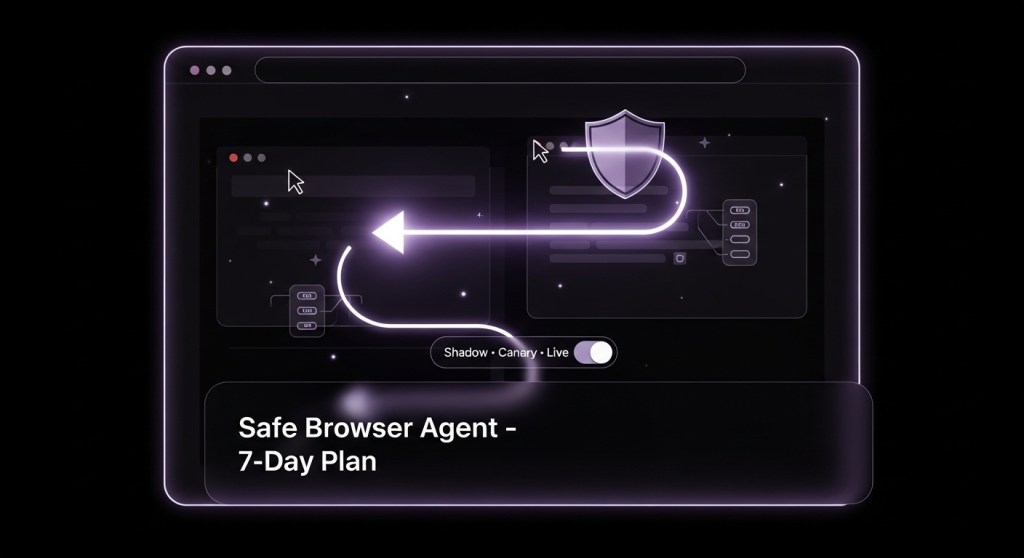
  • Ship a Safe Browser AI Agent in 7 Days (Antigravity, Mariner, Nova Act)

    Who this is for: startup founders, e‑commerce ops leaders, product/AI teams shipping agentic automation fast but safely.

    Today’s plan (quick checklist)

    • Pick a browser‑capable agent stack (Antigravity, Mariner, Nova Act) and define a narrow use case.
    • Run in shadow mode with strict network/domain and action allow‑lists.
    • Add an “agent firewall”: prompt‑injection filters, OPA policies, and human approvals for risky steps.
    • Instrument OpenTelemetry tracing + evals; set measurable SLOs and cost caps.
    • Promote with canaries and a kill‑switch; monitor live KPIs and rollback paths.

    Why browser agents, and why now?

    Vendors are shipping agent‑first tools that can read and act inside your browser or a headless session: Google’s Antigravity built on Gemini 3, Google’s web agent Project Mariner, and Amazon’s Nova Act. These promise faster task automation (research, form fills, reconciliations) and unlock high‑ROI workflows that APIs alone can’t cover. See Antigravity’s agent‑oriented IDE approach, Google’s Mariner rollout, and Nova Act’s browser control research preview for context. Antigravity, Project Mariner, Nova Act.

    But browser agents also widen the attack surface: indirect prompt injections embedded in pages, delayed tool invocation, and unsafe actions on sensitive sites. Researchers have shown how calendar or document text can coerce an agent into executing unintended actions. Evidence and examples.

    The 7‑Day Shipping Plan

    Day 1 — Choose your stack and carve a small win

    • Pick one: Antigravity (Gemini 3 IDE + multi‑agent orchestration), Google Project Mariner (web browsing agent), or Amazon Nova Act (browser‑control agent, SDK). Links above.
    • Use case: start with a read‑only e‑commerce task: competitor price check, shipping‑policy diffs, or product content QA.
    • Interop: map where A2A (agents talking to agents) or MCP servers will broker tool access later. Microsoft and Google are aligning on A2A‑style standards—plan for it now. Background.

    Day 2 — Run in shadow mode with strict sandboxes

    • Launch your agent in shadow (no customer‑visible actions). Whitelist domains, block third‑party trackers, disable downloads, and use non‑privileged accounts.
    • Force read‑only until evals pass. Explicitly block forms, payments, cart edits, and account settings.
    • Log all DOM reads, link clicks, and navigation events for later replay.
    • Helpful: our guide to shadow, canary, and kill switches.

    Day 3 — Add an agent firewall (policies + approvals)

    • Prompt‑injection defenses: strip hidden text, block off‑domain instructions, and require a policy check before executing any action sourced from page content. See known risks here.
    • OPA policy gates: Author policies like: “Only POST to domains on allow‑list,” “Never submit forms with fields matching payment or PII regex,” “Require human approval for actions labeled High‑Risk.”
    • Human‑in‑the‑loop: add approvals inside Slack/Chat where the agent presents a structured diff: URL, action, DOM selector, captured fields, and redacted preview.
    • Deep dive: Ship an Agent Firewall.

    Day 4 — Instrument tracing and set SLOs

    • Add OpenTelemetry spans for every browse, parse, and action step; tag with URL, selector, latency, retries, and approval outcome.
    • Define SLOs: Task Success Rate ≥ 95% on shadow scripts; False‑Action Rate ≤ 0.5%; P95 latency by page type; Cost per successful task.
    • Reference: Agent Reliability Lab.

    Day 5 — Build evals that mimic the messy web

    • Create a fixture set of 50–100 pages representing CAPTCHAs, pop‑ups, consent banners, infinite scroll, A/B variants, and paywalls.
    • Automate checks: expected DOM nodes present, correct price parsed, correct currency, and no sensitive forms submitted.
    • Fail the build if new prompts or tools regress the eval score by more than 1–2 points. OpenAI’s AgentKit includes eval building blocks you can adapt. AgentKit.

    Day 6 — Canary, budget caps, and rollback

    • Promote to a canary cohort (e.g., 5% of internal tasks or low‑risk domains). Enforce real‑time budget caps per agent via token/step/URL limits.
    • Ensure one‑click rollback and an emergency kill switch wired to your ops channel.
    • Related playbook: Agent CI/CD in 7 Days.

    Day 7 — Go live with controlled writes

    • Enable write actions for a single, preapproved workflow (e.g., update out‑of‑stock badges) with human approval on first N=50 executions.
    • Publish dashboards: task success, approval rate, blocked actions by policy, cost per task. Review weekly and tighten policies.
    • Watch spend: follow our cost‑control playbook.

    Architecture: a minimal, safe browser‑agent stack

    • Agent runtime: Antigravity, Mariner, or Nova Act SDK.
    • Policy layer: OPA (deny‑by‑default) + URL/selector allow‑lists + secrets vault.
    • Interop: MCP servers for tool access; A2A gateway for chaining with CRM/IT agents (aligns with industry movement toward shared agent protocols).
    • Observability: OpenTelemetry + central trace store; redact PII at the edge.
    • CI/CD: prompt/versioning, eval gates, canary deploys, kill switch.

    Security patterns that actually work

    1. Off‑domain instruction blocking: Reject any page‑sourced instruction to visit or submit to an unapproved domain.
    2. Selector whitelists: Only act on DOM nodes matching vetted selectors (e.g., .add-to-cart on known templates).
    3. Sensitive‑field redaction: Never pass values for fields matching payment/SSN/credential regex; require human approval if detected.
    4. Delayed‑action review: Queue writes; a human reviews diffs before commit. This thwarts delayed tool‑invocation tricks described by researchers.
    5. Session scoping: Rotate ephemeral identities; tie cookies and tokens to one task; auto‑purge on error or timeout.

    Three fast, ROI‑positive use cases

    • Price and promo monitors: crawl competitor PDPs daily, extract prices and promo banners, alert via Slack. Start read‑only; later, update your catalog labels via an MCP connector.
    • Returns policy QA: detect changes in refund windows and shipping thresholds; open tickets with proposed policy tweaks.
    • Product content QA: flag missing alt text, broken links, and size‑chart discrepancies; submit PRs to your CMS.

    If you run Salesforce, note the enterprise push toward agentic platforms like Agentforce 360 that coordinate agents across sales, service, and Slack—useful when your browser agent must hand off to CRM workflows. Context.

    What about SEO and content agents?

    Pair a browser agent (for live‑web research, SERP parsing, fact checks) with an always‑on content agent for drafting and publishing. See our SEO agent 7‑day playbook to wire both safely.

    Buyer’s notes

    • Antigravity + Gemini 3: strong multi‑agent orchestration; developer‑friendly IDE; pair with strict policies.
    • Project Mariner: closer to Google’s ecosystem and Vertex; good for teams already on Gemini and AI Pro tiers.
    • Nova Act: flexible SDK and headless workflows; still maturing—keep canaries tight.

    Wrap‑up and next steps

    Browser agents can unlock high‑ROI automation fast—if you ship them with guardrails. Use shadow runs, an agent firewall, evals, tracing, canaries, and cost caps. Align with MCP/A2A so your browser agent can hand off safely to CRM, IT, and finance automations as you scale.

    Want help? Subscribe for weekly playbooks, or talk to us about a 14‑day pilot to stand up a safe browser agent for your team.

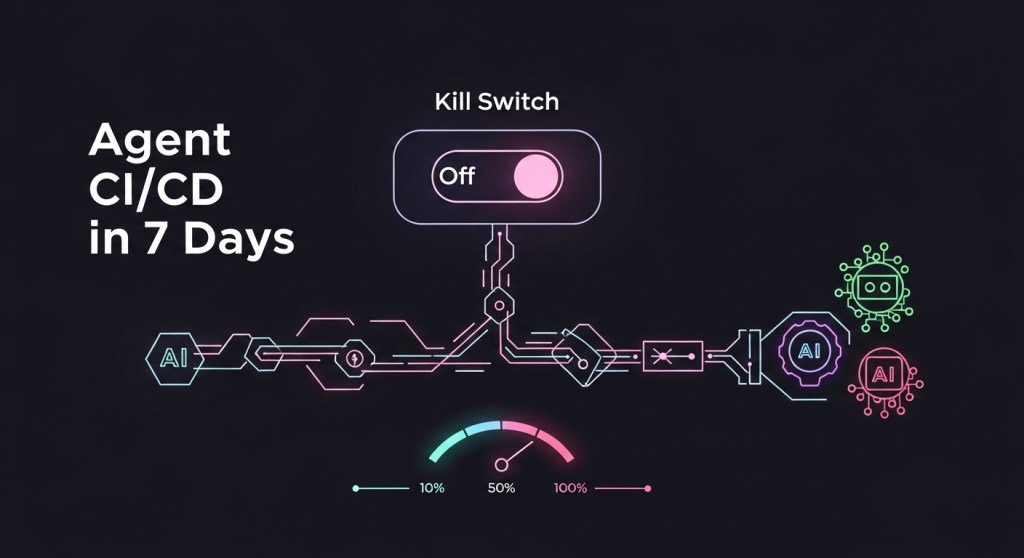
  • Ship Agent CI/CD in 7 Days: Shadow, Canary, and Kill Switches for MCP/A2A

    Summary: Use this 7‑day playbook to stand up Agent CI/CD for Model Context Protocol (MCP) and A2A (agent‑to‑agent) workloads—complete with shadow testing, canary releases, human approvals, instant kill switches, and OpenTelemetry‑backed KPIs.

    Why now

    Enterprises are moving from a few pilots to fleets of agents. Microsoft’s new Agent 365 frames the need for registries, policy, and oversight at scale, signaling that bot fleets will be managed much like employees. Source. Meanwhile, OpenAI’s MCP and connectors make it easier for agents to act in production systems, which raises the bar for safe deployment and rapid rollback. Docs · Help Center.

    If you already shipped the building blocks—registry & RBAC, reliability lab with Evals + OTel, and an agent firewall—this is the missing layer that lets you deploy continuously without fear.

    What you’ll build in 7 days

    • Shadow testing for every agent change; no user impact.
    • Canary releases with automated promotion/rollback based on KPIs.
    • Human approvals at key risk gates.
    • Instant kill switches via feature flags and config.
    • OpenTelemetry-instrumented traces and Gen‑AI metrics for spend, quality, and latency.

    Pre‑reqs

    • MCP‑ready agent stack (OpenAI Agents SDK or compatible). Guide.
    • Registry/RBAC (Agent 365 or your own). See our 7‑day registry guide.
    • Agent firewall/policies (prompt‑injection, tool scoping). See agent firewall.
    • Observability backend with OTel Collector.

    Day‑by‑day plan

    Day 1 — Baseline your pipelines and KPIs

    Create a Git‑based pipeline per agent with environments: shadow, canary, prod. Define SLOs and promotion criteria (examples):

    • Cost per successful task: gen_ai.client.token.usage ÷ task_success ≤ target. OTel Gen‑AI metrics.
    • Task success rate ≥ 95% on eval set; escalation rate ≤ 3%.
    • Median latency < Xs; P95 < Ys.

    Emit standardized attributes using OTel semantic conventions so dashboards stay consistent across agents. OTel SemConv.

    Day 2 — Add shadow testing to every PR

    Wire your pipeline to deploy the new agent version in shadow alongside the current production agent. Shadow receives mirrored traffic or a replayed eval set; it can only observe and log.

    • For HTTP/K8s apps, use Argo Rollouts Experiment with baseline/canary templates to run A/B shadows safely. Docs.
    • For browser agents, keep actions read‑only during shadow to avoid unintended writes.

    Gate merge on evals + tracing checks from your Agent Reliability Lab.

    Day 3 — Introduce canary releases with automated analysis

    Promote from shadow → canary with progressive traffic splitting and automated analysis:

    • Kubernetes: Argo Rollouts with NGINX/Istio/Consul traffic shaping and AnalysisTemplates that query your KPIs; auto‑promote or auto‑rollback. Overview · NGINX.
    • Canary design: follow SRE guidance—one canary at a time, short duration if you deploy often, and representative users. Google SRE canarying.

    Day 4 — Add human approvals where risk is high

    Not every change needs manual review, but the ones that touch money, identity, or PII do. Use MCP tool approvals in your agent runtime or your CI to require a human to approve risky connectors/actions before promotion. Agents SDK (approvals).

    Day 5 — Ship kill switches and load shedding

    Feature flags give you a single click rollback for a misbehaving agent or tool. Create:

    • Service kill switch: disable an agent or a specific tool (e.g., “checkout.write”).
    • Degrade modes: turn off expensive behaviors (e.g., web‑browse) under load.
    • Ownership & TTL: who can flip, and when the flag is removed.

    See operational flag practices (naming, RBAC, relay proxy). Guide · Best practices.

    Day 6 — Wire everything into observability

    Add spans/metrics that tie business outcomes to release steps:

    • agent.release.stage: shadow | canary | prod
    • agent.id, agent.version, mcp.server, tool.name
    • gen_ai.client.token.usage, task_success, task_escalated

    Alert on budget KPIs (see our cost‑control playbook) and security signals (see firewall).

    Day 7 — Launch checklist

    1. Shadow: green on evals + traces for 24h or N requests.
    2. Canary: 10% → 25% → 50% with auto analysis; no SLO breach.
    3. Approvals: risky tools allowed only after review.
    4. Kill switches: tested in staging; owners on‑call.
    5. Runbooks: rollback, disable tool, degrade mode.

    Architecture reference

    Flow: Git push → CI builds agent → deploy to shadow (no writes) → auto evals + OTel checks → promote to canary with Argo Rollouts analysis → auto‑promote/rollback → prod. Approvals and flags can interrupt at any point.

    Windows & MCP: If you’re on Windows fleets, the new MCP discovery/registry (ODR) improves visibility, containment, and audit across agents. Microsoft Learn.

    Worked example: e‑commerce checkout helper

    Use case: an agent assists with returns and replacements. Risks: payment actions, PII, fraud.

    • Shadow: replay 5k anonymized sessions; block write tools.
    • Canary: route 10% of post‑purchase chat flows; require human approval for payment updates.
    • Kill switch: flags for “refunds.write” and “address.change”.
    • KPIs: escalation ≤ 3%, refund errors ≤ 0.5%, median handle time −15% vs control.

    If KPIs hold across two canary steps, auto‑promote; otherwise rollback and flip the tool‑level kill switch. This mirrors how modern platforms are bringing agents into frontline CX (see recent funding momentum in agent CX platforms). Reuters.

    Implementation notes

    • Argo Rollouts: progressive traffic, automated analysis, and experiments for shadow trials. Docs.
    • Feature flags: treat kill switches as short‑term operational flags with owners + TTL. Best practices.
    • OTel: adopt gen‑AI metrics for token usage and tie them to release stages to calculate cost per success. Spec.
    • MCP connectors: use require‑approval for write actions and restrict scopes. Guide.

    Common pitfalls

    • Long‑lived flags that rot and break months later—add TTLs and clean up. Guide.
    • Multiple parallel canaries contaminating signals—run one at a time. SRE workbook.
    • Unobserved browser agents—keep a strict shadow mode and add a firewall.

    Where this fits in your stack

    Pair this with our Agent 365 prep plan and Always‑On SEO Agent playbook to get an end‑to‑end AgentOps foundation.

    TL;DR rollout template (K8s + Argo Rollouts)

    # Pseudocode snippet for a canary with automated analysis
    strategy:
      canary:
        steps:
          - setWeight: 10
          - pause: { duration: 5m }
          - analysis:
              templates:
                - templateName: task-success-rate
                - templateName: cost-per-success
          - setWeight: 50
          - pause: { duration: 10m }
          - analysis:
              templates:
                - templateName: escalation-rate
        trafficRouting:
          nginx: {}
    

    See official docs for full manifests and providers. Argo Rollouts.


    Call to action: Need help implementing Agent CI/CD or audits for MCP/A2A? Subscribe for new playbooks, or talk to HireNinja about a 2‑week AgentOps jumpstart.

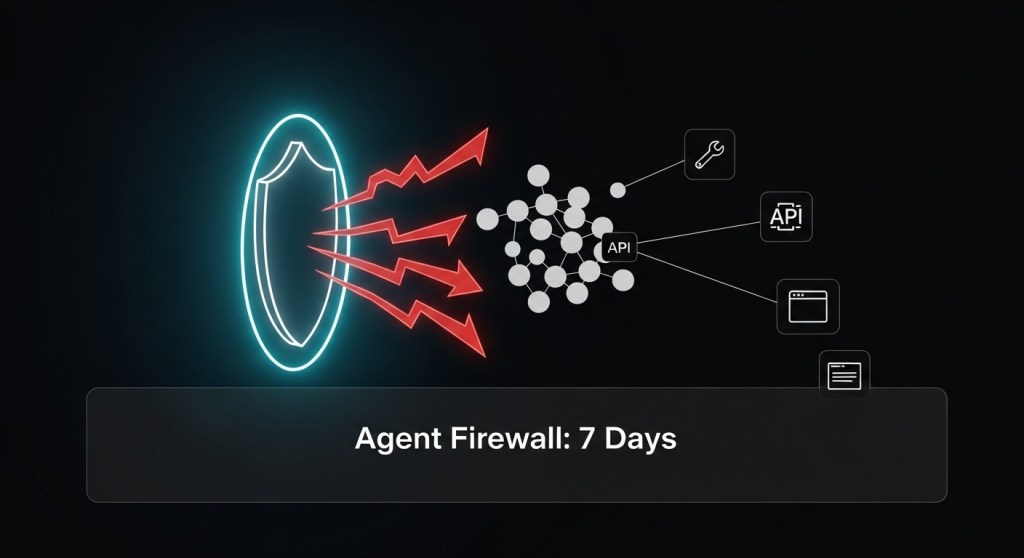
  • Ship an Agent Firewall in 7 Days: Practical Security for MCP/A2A Agents

    Agent sprawl is here—and with it, new attack paths. As platforms like Microsoft Agent 365, Google Gemini 3 + Antigravity, and A2A interoperability accelerate deployment, even a single unsafe tool call can leak data or trigger costly actions. This 7‑day playbook shows founders and operators how to ship an “agent firewall” that blocks prompt‑injection attempts, enforces least‑privilege access, and sandboxes risky actions—without grinding productivity to a halt.

    What is an “Agent Firewall”?

    It’s a control layer that sits between your AI agents (chat, workflow, or browser/computer‑use agents) and the tools, data, and networks they access. Think of it as policy + approvals + observability around every tool invocation, not just perimeter security. Concretely, it combines:

    • Identity & RBAC for agents (unique identities, rotating short‑lived credentials).
    • Policy‑as‑code (Open Policy Agent/Rego) to allow or deny tool calls based on purpose, user, tenant, data class, region, and risk.
    • Human‑in‑the‑loop confirmations for high‑risk actions (per MCP guidance).
    • Egress controls & sandboxes for network, filesystem, and browser actions.
    • Observability & tamper‑evident logs for audit and incident response.

    Why this matters now: enterprise rollouts (and the headlines) show that agent autonomy is rising, interoperability is expanding, and prompt‑injection remains the #1 risk in OWASP’s LLM Top 10. Treat these as design inputs, not afterthoughts. Agent 365, Gemini 3 + Antigravity, A2A, OWASP LLM Top 10, and MCP.

    Day 0: Pre‑reqs and quick wins

    • Inventory tools your agents can call (MCP servers, SDK tools, custom actions). Label each with risk (low/med/high), data class (public/internal/PII/PAN/PHI), and region.
    • Scope agent identities: create per‑agent service accounts with short‑lived tokens (e.g., Workforce/Workload Identity Federation). Avoid static keys. Guide.
    • Turn on tracing for tool calls and browser actions. If you haven’t yet, stand up the Agent Reliability Lab (OpenTelemetry, evals, SLOs).

    Day 1: Define policy boundaries (Rego + risk tiers)

    Author an initial policy set in OPA that expresses “who/what/why” for each tool. Start deny‑by‑default; allowlist only what’s essential. Example:

    package agentfirewall
    
    default allow = false
    
    # Input shape (example)
    # input = {
    #   "agent": {"id": "seo-agent-1", "role": "marketing", "tenant": "acme-us"},
    #   "tool": {"name": "send_email", "risk": "high"},
    #   "purpose": "campaign",
    #   "params": {"to": "user@example.com", "attachment": null},
    #   "data_class": "internal",
    #   "region": "us"
    # }
    
    # Allow only if purpose + role + data class are compatible
    allow {
      input.tool.name == "send_email"
      input.purpose == "campaign"
      input.agent.role == "marketing"
      input.data_class != "PII"
      input.region == "us"
    }
    
    # Require human approval for high‑risk tools
    require_approval {
      input.tool.risk == "high"
    }
    

    Wire this into your agent runtime: on every tool invocation, call OPA’s policy decision API; if require_approval is true, route to an approval UI before execution.

    Day 2: Implement human‑in‑the‑loop gates (MCP‑aligned)

    The MCP spec explicitly recommends human approval for tool invocations. Build an approval card that summarizes: agent, user, purpose, tool, parameters, data touched, and proposed effect. Always show the raw output intent (e.g., email body, SQL) before execution. See MCP’s trust & safety guidance on tools/sampling/elicitation. MCP tools, sampling.

    Tip: Start with a 2‑tier gate—auto‑allow low‑risk tool calls; require human approval for anything that can persist data, send messages, transfer funds, or access PII.

    Day 3: Egress controls, secrets, and sandboxes

    • Network allowlists: restrict outbound HTTP/DNS from agent sandboxes to known domains. Block file uploads by default.
    • Short‑lived credentials: exchange OIDC/SAML for temporary tokens; rotate frequently; avoid long‑lived API keys. How‑to.
    • Filesystem & browser sandboxes: mount read‑only project dirs; isolate temp dirs per task; for browser agents, clear cookies/localStorage per session.

    Day 4: Prompt‑injection defense in depth

    Prompt injection is still the top LLM risk. Combine multiple controls:

    • Instruction segregation: hard‑separate system prompts from untrusted content; never concatenate raw HTML/Markdown into system instructions.
    • Input scrubbing: strip/refuse dangerous patterns (e.g., “ignore previous,” base64 blocks, code fences) before tool calls.
    • Trust tags: label retrieved content as untrusted and instruct models to treat it as data, not instructions.
    • Verification patterns: require the model to restate goals and proposed actions; compare against policy before executing.
    • Content provenance: prefer sources with C2PA Content Credentials where possible; never auto‑act on unverifiable content.

    Background: see OWASP LLM Top 10 and a practical MCP security discussion of injection risks. OWASP, Analysis.

    Day 5: Observability and tamper‑evident logs

    • Trace every tool call with inputs/outputs, decision (allow/deny/approved), approver, and latency.
    • Surface security signals into dashboards (blocked tool invocations, egress to non‑allowlisted domains, approval response times).
    • Link traces to agents in your registry with RBAC and change controls. If you haven’t shipped it yet, use our Agent Registry + RBAC plan.

    Day 6: Red‑team and eval

    Automate security evals in CI. Include scenarios for OWASP LLM risks (prompt injection, excessive agency, output handling). Open‑source tools like Promptfoo have OWASP test packs you can adapt. Track a security score and block releases that regress. Example.

    Day 7: Shadow, stage, and ship

    • Shadow mode: run the firewall in “monitor only” for 24–48 hours; review false positives and tighten rules.
    • Gradual enforcement: move critical actions to approval‑required; then to hard deny where needed.
    • Runbooks & SLAs: define on‑call, break‑glass escalation, and kill‑switch behavior for agents.

    Policy patterns you can copy

    Apply these reusable patterns across agents and tools:

    1. Purpose binding: tool calls must match declared purpose (e.g., “customer_support”).
    2. Data‑class constraints: block PII/PAN from leaving tenant/region; mask specific fields on retrieval.
    3. Time‑boxed access: approvals auto‑expire; tokens are rotated per task.
    4. Region pinning: restrict data egress to residency region.
    5. High‑risk list: always require human approval for payments, sending external messages, code deploys, and file exfiltration.

    KPIs to prove it works

    • Blocked high‑risk tool calls per 1,000 invocations
    • Approval median time and false‑reject rate
    • Egress to non‑allowlisted hosts (should trend to zero)
    • PII exfiltration attempts caught by masking/filters

    What about new agent stacks?

    As you pilot new systems—Agent 365, Antigravity/Gemini 3, Agentforce, Operator, Nova Act—keep the firewall layer consistent: the agent may change, the guardrails stay. News and docs worth tracking: Agent 365, Gemini 3/Antigravity, A2A adoption.

    Wrap‑up

    You don’t need to freeze innovation to be safe. In one week, you can ship an agent firewall that embeds purpose‑based policies, human approvals, short‑lived credentials, and tight egress controls—then iterate. Pair this with reliability SLOs from our Agent Reliability Lab and cost guardrails from our Agent Cost Playbook for a secure, scalable agent stack.

    Call to action: Want help implementing this 7‑day plan or tailoring OPA policies to your stack? Talk to HireNinja—we’ll help you ship safely, fast.