• Where to List Your AI Agent in 2025: MCP Registries, Marketplaces, and NLWeb (plus a 21‑day go‑to‑market plan)

    What you’ll get: a fast, founder-friendly playbook to publish your AI agent where buyers actually look in 2025—MCP registries, enterprise marketplaces, NLWeb endpoints—and a 21-day plan to launch with guardrails, attribution, and ROI.

    Why distribution is the new moat for AI agents

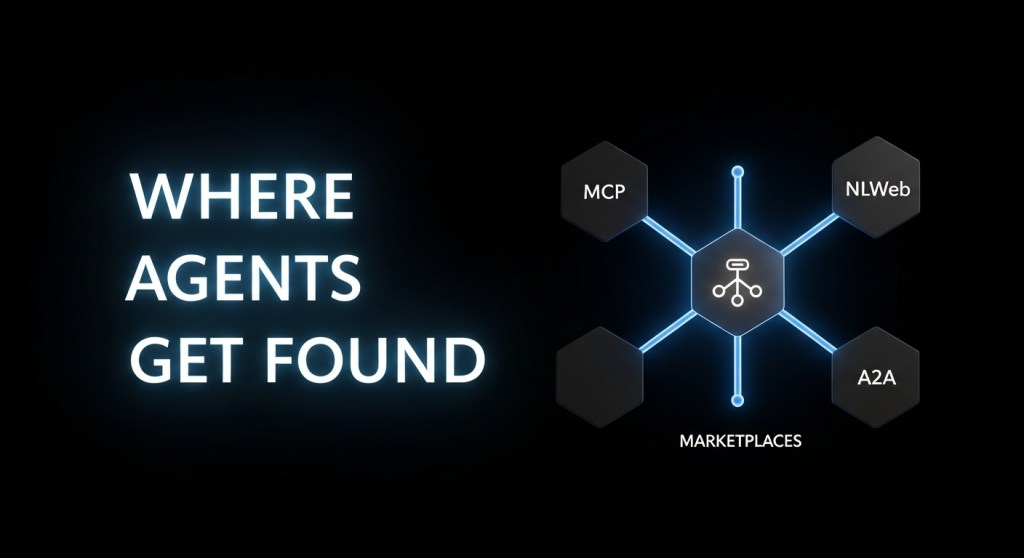
    In 2025, agent platforms went from experiments to ecosystems. OpenAI shipped AgentKit with an enterprise Connector Registry, Microsoft added MCP support in Windows, and clouds and suites rolled out dedicated agent stores. If your agent isn’t listed where admins shop, or discoverable via NLWeb/MCP, you’re invisible at the exact moment budgets are shifting to automation. OpenAI AgentKit, Connector Registry, Windows MCP support, Anthropic MCP, and Microsoft’s NLWeb together define the new distribution surface.

    The 2025 agent distribution map (what matters and why)

    1. MCP registries and OS surfaces – Microsoft is bringing the Model Context Protocol (MCP) to Windows with a gated registry and consent prompts, positioning MCP as the “USB‑C of AI apps.” Listing an MCP server makes your agent discoverable across tools that speak MCP. The Verge, Anthropic.
    2. Your website as an agent endpoint (NLWeb) – NLWeb turns your site into a conversational API and—crucially—every NLWeb instance is also an MCP server. That means one implementation helps both humans and agents find your catalog or docs. Microsoft, NLWeb, GitHub.
    3. Enterprise marketplaces – Buyers want vetted listings they can procure on existing POs:
      • AWS Marketplace now has an “AI Agents & Tools” catalog with MCP/A2A indicators. AWS.
      • Google Cloud Marketplace accepts AI agents using A2A “Agent Cards.” Google.
      • Oracle Fusion launched an AI Agent Marketplace for business apps. Oracle.
    4. App‑suite ecosystems – Salesforce’s Agentforce 360 and Slack integration surface agents inside daily workflows; Notion’s agent automates across pages and databases. Salesforce/Slack, Notion.
    5. Browser/assistant agents – Google’s Mariner and Amazon’s Nova Act bring agent actions to the web and voice. Optimizing for these means clean markup, stable flows, and safe purchase protocols. Mariner, Nova Act.

    Before you list: hard truths on readiness

    • Security & maintainability – Early research flags novel vulnerabilities in community MCP servers; Windows’ MCP rollout reflects tighter gating for safety. Bake in permissions, logging, and rate limits up front. arXiv, The Verge.
    • Value clarity – Gartner expects >40% of agentic projects to be scrapped by 2027 due to cost and unclear ROI. Your listing must articulate the job-to-be-done and prove outcomes within weeks. Reuters/Gartner.
    • Safe purchases – If your agent touches checkout, support agent‑driven purchases via AP2 to ensure traceability and dispute handling. TechCrunch on AP2.

    How to make your agent discoverable (and buyable)

    1. Ship an MCP server that exposes stable tools and telemetry. If you run on Windows, prepare for registry policies and consent prompts. Anthropic MCP, Windows MCP.
    2. Add NLWeb to your site so humans and agents can query your catalog in natural language. NLWeb instances double as MCP servers; you get discoverability for free. Microsoft, NLWeb.
    3. Publish in enterprise marketplaces where your buyers already procure:
      • AWS Marketplace – list with clear deployment options and note MCP/A2A support. AWS.
      • Google Cloud Marketplace – create an A2A Agent Card and listing; buyers can add you to Agentspace. Google.
      • Oracle Fusion – if you automate ERP/SCM/Finance workflows. Oracle.
    4. Integrate with platform registries such as OpenAI’s AgentKit Connector Registry to govern data access across ChatGPT and API orgs. OpenAI, TechCrunch.
    5. Optimize for browser agents (Mariner, Nova Act): use clean semantic HTML, avoid fragile flows, and implement AP2 for checkout. Mariner, Nova Act, AP2.

    A 21‑day go‑to‑market plan (templates + internal resources)

    Assumes you already have an agent that delivers a clear job-to-be-done (returns automation, lead capture, order status, etc.).

    1. Days 1–3: Prep
      • Define 1–2 golden workflows and SLOs (e.g., “90% of return requests auto‑approved in < 30s”). Set evals and error budgets. See: AgentOps in 2025.
      • Instrument agent attribution: mandates/webhooks → CRM/BI. See: Agent Attribution Playbook.
    2. Days 4–7: Ship the surfaces
      • Publish an MCP server with scoped tools and OpenTelemetry traces.
      • Add NLWeb to your website; expose product or docs search in natural language.
      • Harden identity and anti‑spoofing (mandates, signed calls). See: Stop Agent Spoofing.
    3. Days 8–14: List where buyers are
      • Create an A2A Agent Card and submit to Google Cloud Marketplace. Guide.
      • List in AWS Marketplace (AI Agents & Tools) with deployment and pricing. Guide.
      • Enable OpenAI AgentKit Connector Registry integration for governed access. Docs.
    4. Days 15–21: Prove value
      • Run a closed beta with 5–10 design partners. Publish SLOs and an incident playbook. AgentOps.
      • Enable agent checkout using AP2 and recordable mandates. Agent‑Ready Store, AP2.
      • Ship an agent SEO update: schema, NLWeb, MCP discovery. AEO 2025.

    Positioning your listing for admins

    • Lead with the workflow: “Automates order-status and returns across Zendesk + Shopify in <30 seconds.”
    • Proof in numbers: pre‑commit to two ROI KPIs (AHT reduction, CSAT lift, % automated) and a time‑to‑value under 21 days.
    • Security page: permissions model, data residency, audit trails, jailbreak defenses. Link your incident response policy.
    • Procurement ready: pricing tiers (pilot, production), legal artifacts, SOC2/ISO status, and AP2 for any purchase flow.

    Example: a DTC e‑commerce brand

    • Add NLWeb to expose conversational product search. • Publish an MCP server for order lookup, returns, and warranty. • List a managed deployment in AWS Marketplace and an A2A Agent Card on Google Cloud. • Connect the OpenAI Connector Registry for governed access across ChatGPT and your app. • Optimize your storefront for Mariner/Nova Act with semantic HTML and AP2 for agent checkout. • Track mandates and revenue in your CRM using our attribution playbook and AgentOps SLOs.

    KPIs to watch

    • Discovery: registry impressions, marketplace page views, add‑to‑workspace/install rate.
    • Activation: first successful tool call, time to first closed loop (mandate → action → confirmation).
    • Reliability: success rate, median time to resolve, incident frequency (with public postmortems).
    • Revenue: mandates to paid conversions, AP2 purchases, LTV/CAC by channel.

    Common pitfalls (and how to avoid them)

    • “Agent washing” – Don’t list a chatbot as an agent. Show real tool use and guardrails; Gartner sees many projects failing for lack of value clarity. Reuters/Gartner.
    • Weak identity and auditing – Use signed mandates, scoped tokens, and OpenTelemetry traces. See our anti‑spoofing playbook.
    • Fragile browser flows – Mariner and Nova Act punish brittle DOM assumptions; prefer stable selectors and semantic HTML. Mariner, Nova Act.

    Wrap‑up

    Distribution for agents is finally getting boring—in a good way. Publish an MCP server, add NLWeb, and meet buyers in their marketplaces and suites. Tie everything back to SLOs, attribution, and AP2 so your CFO sees mandated revenue, not magic.

    CTA: Want help shipping this in 21 days? Subscribe for more playbooks or use our Zendesk agent quick‑start—then talk to HireNinja about an agent GTM sprint.
  • Agent SEO (AEO) in 2025: Win AI Answers and Shopping Agents with NLWeb, MCP, and AP2

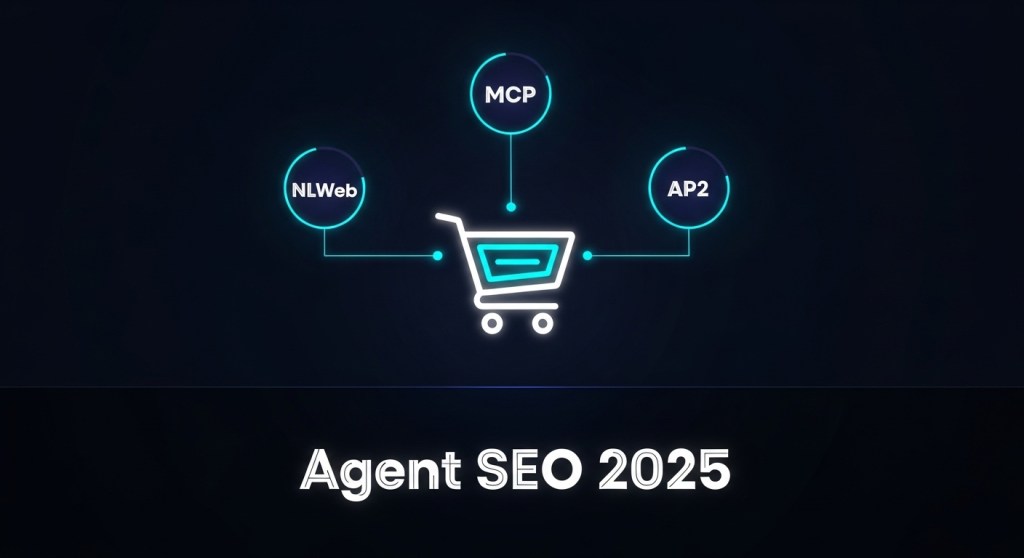
    TL;DR: AI shopping agents are coming fast—but most stores aren’t agent‑readable or agent‑transactable yet. This guide shows how to ship “Agent SEO” (AEO) in 14 days using Microsoft’s NLWeb for content exposure, Anthropic’s Model Context Protocol (MCP) for secure first‑party data access, and Google’s Agent Payments Protocol (AP2) to authorize purchases safely—plus the KPIs and guardrails that prove ROI.

    Why AEO matters now

    Investors and platforms are doubling down on agents (OpenAI AgentKit; Salesforce Agentforce), and Google’s AP2 aims to make agent‑led purchases auditable and interoperable across providers. At the same time, reporting suggests fully hands‑off holiday shopping won’t be mainstream in 2025, so the winners will be the brands that make their data and flows agent‑ready today. citeturn0search0turn0search4turn5search0turn1search4

    The three building blocks of Agent SEO (AEO)

    1. Expose content with NLWeb — NLWeb lets you add a simple natural‑language API to your site and re‑use your Schema.org markup. Each NLWeb endpoint can also act as an MCP server, making your catalog queryable by agents. Start with read‑only product/category Q&A and availability lookups. citeturn4search1turn4search0
    2. Connect first‑party data via MCP — MCP standardizes how agents securely reach into your PIM, CMS, inventory, and order data. Use least‑privilege MCP servers (read for catalog and stock; write only for draft carts or RMA intents) and log everything. citeturn3search0turn3search1
    3. Transact safely with AP2 — AP2 is an open protocol for agent‑initiated payments that adds identity, roles, and verifiable audit to the checkout path. Use it alongside your existing PSPs and card rails; start in sandbox with budget caps and allow‑lists. citeturn5search0

    14‑day AEO launch plan (Shopify/WooCommerce examples)

    Days 1–2: Baseline

    • Run an AEO audit: confirm Product schema coverage, freshness of price and availability, FAQ depth, and internal linking to key categories.
    • Instrument attribution: create UTMs and webhook endpoints to capture agent referrals and intent events (e.g., agent_viewed_product, agent_created_cart).

    Days 3–5: NLWeb endpoint

    • Deploy an NLWeb instance that reads your existing product feed and exposes ask endpoints for: “Compare X vs Y,” “Find gifts under $50,” “Is size M in stock?”
    • Return JSON aligned to Schema.org and link back to product PDPs with canonical URLs. Add a rate‑limit and an API key for pilot agents. citeturn4search1

    Days 6–8: MCP servers for live data

    • Create MCP servers for Inventory (read), Orders (read), and Returns (write: RMA intents). Map roles to service accounts and log via OpenTelemetry.
    • Test end‑to‑end: an agent asks NLWeb, fetches live stock via MCP, and assembles a draft cart.

    Days 9–11: AP2 sandbox checkout

    • Integrate AP2 with a $1 test SKU, require per‑transaction limits and merchant allow‑lists. Capture mandates, transaction IDs, and agent identity claims in your data warehouse. citeturn5search0
    • Define human‑in‑the‑loop rules: price deltas >10%, high‑risk SKUs, or address mismatch require approval.

    Days 12–14: Content and answer coverage

    • Publish concise, answer‑first content for high‑intent queries: sizing, compatibility, shipping cut‑offs, warranties, returns, and care instructions. Agents favor short, unambiguous answers; keep one fact per paragraph when possible. citeturn4search16
    • Add product‑led comparisons and bundles (“Under‑desk treadmills under $500,” “iPhone 16 Pro camera accessories”).

    What good looks like (KPIs and dashboards)

    • Coverage: % of top 100 questions answerable via NLWeb within 1 response; % of catalog with complete Product schema.
    • Attribution: agent‑referral sessions, draft carts, and orders; mandate approvals vs. denials; refund rate on agent‑originated orders.
    • Reliability: success rate of agent asks; AP2 error codes; MCP timeouts; mean time to human‑review.
    • Unit economics: blended agent CAC vs. paid search; conversion rate on agent‑referred sessions; support tickets deflected by agent Q&A.

    Architecture and safety guardrails

    Adopt a layered design: NLWeb for answers, MCP for controlled data access, and AP2 for approvals and payments. Enforce identity (agent keys + MCP roles), least privilege, budget caps, and an audit trail. Add “tripwires” for spoofing or unusual sequences, and default to human approval on risky actions. Industry leaders have warned that impersonation and autonomy risks are real; protect your brand before peak season. citeturn0news13

    Also remember: despite rapid progress, full autonomy isn’t here yet. Set expectations with leadership and stage your rollout: assistive first (recommendations, comparisons), then semi‑autonomous (draft carts, RMAs), then autonomous purchases under strict AP2 policies. citeturn1search4

    Real‑world example: gifts under $50

    “A shopper asks an agent: ‘Find eco‑friendly gifts under $50 that ship in 2 days.’” Your agent hits NLWeb to retrieve candidate products, validates stock and SLAs via MCP, returns a short ranked list with reasons, and—if approved—creates a draft cart. If the user says “Buy #2,” AP2 authorizes the payment within limits and logs the mandate + receipt for attribution.

    How this fits with your stack

    Implementation notes and gotchas

    • Content: prefer compact paragraphs; include explicit specs (materials, compatibility), and keep price/availability synchronized with your feed.
    • Technical: treat MCP servers like microservices—versioned, tested, instrumented. Trace all NLWeb → MCP → AP2 spans with OpenTelemetry.
    • Legal: surface terms, returns, and warranty in the agent response. Store mandates/consents alongside order IDs for audits.
    • Scaling: as agent platforms mature (e.g., AgentKit, Agentforce), expect more agent traffic. Rate‑limit, cache popular answers, and watch unit economics. citeturn0search0turn0search4

    Bottom line

    You don’t need fully autonomous agents to win this season. Make your catalog answerable (NLWeb), your data reachably secure (MCP), and your checkout auditable (AP2). Then measure coverage, attribution, and conversion like you would any high‑intent channel. Ship the foundation now; expand autonomy as reliability and policy catch up. citeturn4search1turn3search0turn5search0

    Call‑to‑action: Want help standing up NLWeb + MCP + AP2 in 14 days? Subscribe or book a free 30‑minute Agent Readiness consult with HireNinja.

  • Browser Agents vs API Agents in 2025: How E‑Commerce Teams Should Choose (Mariner, Nova Act, AgentKit, AP2/A2A)

    Our plan for this article

    • Scan competitor coverage to spot fresh agent trends.
    • Clarify who this is for and the decision it solves.
    • Map content gaps vs. our recent AP2/A2A posts.
    • Compare browser agents vs API agents with real trade‑offs.
    • Give a 21‑day pilot plan, KPIs, and guardrails.

    Browser Agents vs API Agents in 2025: How E‑Commerce Teams Should Choose

    If you’re shipping agent experiences for Holiday 2025, you face a core decision: build browser‑native agents that navigate websites like a power user, or invest in API‑first agents using AP2/A2A for secure, attributable transactions. This guide compares both approaches and gives you a practical 21‑day plan to decide fast.

    Who this is for

    Startup founders, e‑commerce operators, growth and CX leaders who need to automate shopping, support, and post‑purchase workflows without creating a compliance or reliability nightmare.

    What changed in the last 90–180 days

    • Google expanded access to Project Mariner, a web‑browsing agent for complex multi‑step tasks. citeturn0search6
    • Amazon introduced Nova Act, a browser‑control agent and SDK. citeturn0search3
    • OpenAI launched AgentKit to take agents from prototype to production with evals, connectors, and admin controls. citeturn0search1
    • Microsoft rolled out an AI‑powered Copilot Mode in Edge, signaling mainstream browser assistance. citeturn1news12
    • Google announced AP2 (Agent Payments Protocol) for agent‑initiated purchases with multi‑party backing. citeturn0search0
    • A2A (Agent‑to‑Agent) shipped roadmap updates, including signed Agent Cards for stronger verification. citeturn1search1

    TL;DR

    • Use browser agents when speed to market is critical, you don’t control the target site’s APIs, and the task is high‑variance but low risk (e.g., research, price checks, UGC moderation assistance).
    • Use API‑first (AP2/A2A) agents when you need dependable transactions, attribution, and fraud controls (e.g., checkout, returns, warranty claims, account changes).
    • Most teams will land on a hybrid: browser agents for exploration, API agents for execution.

    How browser‑native agents work

    Browser agents (e.g., Google’s Project Mariner, Amazon’s Nova Act) “see” the DOM, click, type, and adapt flows across arbitrary websites. They shine when you need broad coverage quickly—especially for competitor research, catalog enrichment, or legacy portals without APIs. citeturn0search6turn0search3

    Pros

    • Fast coverage: Automate sites you don’t control—no integration wait.
    • Flexible: Handles UI changes better than brittle scripts, with reasoning and self‑correction.
    • Great for discovery: Price/stock checks, content QA, PDP audits before committing dev time.

    Cons

    • Reliability variance: Dynamic UIs, paywalls, anti‑bot rules can drop success rates.
    • Compliance & impersonation risk: Harder to prove identity/mandates; regulators frown on scraping‑like behaviors for transactions. citeturn0news13
    • Attribution gaps: Tougher to tie actions to revenue vs. verifiable, signed API calls.

    How API‑first agents work (AP2/A2A + MCP)

    API‑first agents negotiate and transact through protocols and signed calls. With AP2, the user grants an intent mandate and a cart mandate; sellers can verify agent identity, item specifics, and payment authorization. A2A provides interoperable agent‑to‑agent messaging and discovery with evolving trust primitives (e.g., signed Agent Cards). citeturn0search0turn1search1

    Pros

    • Reliability: Typed interfaces and mandates reduce ambiguity and failure modes.
    • Attribution & audits: Verifiable trails map agent actions to revenue and refunds by design.
    • Safety: Easier to enforce guardrails, reputations, and risk checks per action.

    Cons

    • Integration time: Requires protocol endpoints or connectors—slower if partners aren’t ready.
    • Coverage trade‑off: Long tail sites without AP2/A2A remain out of reach unless you fall back to the browser.

    Security, spoofing, and governance

    Impersonation is becoming the new “hallucination”—particularly dangerous for finance and account actions. Use identity proofs (signed Agent Cards, AP2 mandates) and isolate high‑risk steps behind human‑in‑the‑loop or policy engines. Investors are funding front‑line agent deployments (e.g., Wonderful’s $100M Series A), but leaders emphasize hardening security before scale. citeturn0news13turn0search2

    A simple decision tree

    1. Is the task transactional or account‑changing? If yes, favor AP2/A2A first; else continue.
    2. Do counterparties expose AP2/A2A or stable APIs? If yes, API‑first; if no, start with a browser agent pilot.
    3. Can you prove attribution and identity? If not, add mandates, signed cards, or pause deployment.
    4. Will failure cause material harm? If yes, require human review or block until API path exists.

    21‑day pilot plan (hybrid)

    Week 1 — Define, baseline, and guardrail

    • Pick 3–5 use cases: price checks, PDP QA, returns creation, reorder flow.
    • Set SLOs and evals (AgentOps 2025 guide). Track success rate, task time, unit cost, and incident rate.
    • Add identity and mandates early to prevent spoofing (14‑day anti‑spoofing playbook).

    Week 2 — Build two paths

    • Browser path: Pilot using Mariner/Nova‑style capabilities for research/QA flows; capture traces and screenshots.
    • API path: Implement AP2 checkout + A2A messaging for returns or order status; wire OpenTelemetry for traces.
    • Instrument attribution (Agent attribution playbook).

    Week 3 — Compare and ship

    • Pick winners by SLOs: success rate, median task time, $/task, customer SAT.
    • Productionize the API path for transactions; keep browser path for discovery and fallbacks.
    • Publish runbooks and incident playbooks; add A2A+MCP endpoints for partners.

    Metrics and cost model

    • Success rate: % tasks completed without human help (target ≥90% for API flows; ≥70% acceptable for browser research).
    • Latency: Median seconds per task; budget timeouts by use case.
    • Unit cost: Model tokens + browser compute time + retries + observability. Compare $/successful task, not $/call.
    • Attribution: Revenue captured via AP2 mandates and signed calls vs. heuristic browser logs.

    Compliance checklist

    • Map high‑risk actions (payments, PII changes) to AP2/A2A with mandates and audit trails. citeturn0search0
    • Gate risky steps with human review; log traces to OpenTelemetry (guide).
    • Add anti‑spoofing signals and signed Agent Cards (playbook). citeturn1search1

    Realistic use‑case map

    • Browser agents: competitive price scanning, content QA, coupon validation, marketplace listing QA.
    • API agents: checkout and payments, returns/exchanges, warranty claims, address updates, subscription changes.
    • Voice + support: combine with WhatsApp/phone agents and Zendesk for end‑to‑end journeys (Voice agents playbook, Zendesk agent in 7 days).

    Bottom line

    Don’t choose one forever. Use browser agents for speed and coverage; use AP2/A2A where money moves and identities matter. Fund both for 21 days, compare on SLOs and $/task, and ship a hybrid that’s fast, safe, and attributable for Holiday 2025.


    Further reading: Google Project Mariner; Amazon Nova Act; OpenAI AgentKit; AP2 overview; A2A roadmap; impersonation risks; Wonderful’s funding signal for front‑line agents. citeturn0search6turn0search3turn0search1turn0search0turn1search1turn0news13turn0search2

    Ready to pilot? We can help you stand up both tracks with attribution, SLOs, and guardrails—then pick the winner. Make your store agent‑ready and see what works now. Subscribe for updates or get in touch to start a 21‑day pilot.

  • Stop Agent Spoofing in E‑Commerce: A 14‑Day Playbook using AP2 Mandates, MCP Identity, and OpenTelemetry

    TL;DR checklist

    • Verify what’s new: AP2 mandates for agent payments; MCP for tool/identity; emerging agent observability standards.
    • Define your threat model: agent spoofing, mandate abuse, and tool misuse.
    • Ship a 14‑day rollout: identity + mandates + telemetry + red team.
    • Track KPIs: impersonation rate, false‑rejects, chargebacks, time‑to‑contain.

    Why this matters now

    Agent‑led commerce is moving fast. Google announced the Agent Payments Protocol (AP2) to standardize how agents get permission to pay on a user’s behalf, with support from major payments players. AP2 introduces mandates (cryptographically signed instructions) so merchants and issuers can trust agent‑led purchases. [Source: Google Cloud blog.] Learn more.

    At the same time, the Model Context Protocol (MCP) is becoming the common way to connect agents to tools and data across vendors, with active roadmaps and enterprise integrations from hyperscalers. [Sources: Reuters; MCP roadmap; AWS MCP proxy.] Reuters · MCP roadmap · AWS MCP proxy.

    Security leaders are warning about impersonation as one of the biggest agent risks. You need verifiable agent identity, user‑signed permissions, and end‑to‑end auditability—before your agents place orders or issue refunds. [Source: Business Insider.] Read the warning.

    The core controls (in plain English)

    1. Agent identity you can verify. Use MCP to standardize how agents connect to your systems and expose capabilities, then pin the agent you trust using allowlists, keys, and registries. This makes it harder for a random bot to pretend to be “your” agent. [MCP roadmap/AWS MCP proxy.] Roadmap · AWS.
    2. User‑signed mandates for payments. AP2 defines Intent, Cart, and Payment mandates as verifiable credentials. Instead of an agent just saying “trust me,” the user signs a mandate with constraints (budget, items, TTL). Merchants and issuers can verify the mandate before charging. [Google Cloud/AP2 spec.] AP2 intro · Spec.
    3. End‑to‑end telemetry. Instrument agents with OpenTelemetry so every step is traceable: the prompt, plan, tool calls, and the mandate verification. This turns incidents into auditable trails and accelerates fixes. [OTel blog; Microsoft Learn.] OTel AI agent observability · Tutorial.

    Your 14‑day rollout plan

    Days 1–2: Map the blast radius

    • Inventory every place an agent can act (checkout, refunds, discounts, inventory updates, customer messaging).
    • Create an agent allowlist by name, key, and entrypoint (MCP server/client IDs, IPs, app IDs).
    • Define SLOs (e.g., Impersonation Rate < 0.1%, Time‑to‑Contain < 10 minutes).

    Days 3–5: Standardize identity with MCP

    • Require all commerce‑touching agents to connect via MCP endpoints (or a proxy) with mutual TLS and key rotation. Example.
    • Publish a capabilities manifest (read‑only vs. write, payment initiation, refund scope). Deny anything not in the manifest by default.
    • Log agent identity attributes into your data lake for correlation (agent_id, client_hash, key_id).

    Days 6–8: Pilot AP2 mandates in sandbox

    • Implement Cart Mandate for human‑present flows (user confirms the exact basket), and Intent Mandate for human‑not‑present flows (budget + constraints). Spec.
    • Bind mandates to: payer, payee, payment token, TTL, risk signals, and agent identity. Reject if any binding mismatches.
    • Gate production behind feature flags; start with $ limits and a narrow SKU list.
    • If you sell on marketplaces, keep users in human‑present mode until your fraud and telemetry hit targets.

    Days 9–10: Add OpenTelemetry traces

    • Adopt AI/agent semantic conventions so spans cover parse → plan → tool call → mandate verify → payment. Guide.
    • Emit attributes for agent.id, mandate.type, mandate.ttl, payment.token_provider, decision.reason, and risk.score. Tutorial.
    • Set alerts for spikes in mandate‑mismatch, high‑risk overrides, and refund‑without‑mandate.

    Days 11–12: Red team and chaos test

    • Simulate a spoofed checkout bot, a man‑in‑the‑middle mandate edit, and a stale key reuse. Verify all are blocked and traced.
    • Follow our AI Agent Red Teaming Playbook for test ideas and go‑live gates.

    Days 13–14: Operationalize

    • Publish an Agent Incident Playbook with auto‑contain (revoke keys, disable write scopes, flip to human‑present only). See AgentOps in 2025.
    • Expand your Agent Attribution dashboard to include mandate type, risk review time, and spoofing blocks. Pair with our Attribution Playbook.

    KPIs to watch

    • Impersonation rate = blocked spoof attempts / total agent sessions.
    • False rejects = good mandates incorrectly denied (keep < 0.5%).
    • Chargeback rate on agent‑led orders (target below your card‑not‑present baseline).
    • Time‑to‑contain spoofing incidents (alert → scope reduced → keys rotated).
    • Agent‑led revenue with verified mandates (to keep security aligned to growth).

    Shopify/WooCommerce quick start

    • Expose a dedicated MCP endpoint (read‑only first) for product/price/availability; require signed client IDs.
    • Implement AP2 Cart Mandates for agent‑assisted checkout; use short TTLs and SKU whitelists in week one. AP2 overview.
    • Tag agent orders with agent_id + mandate_id; send both to your BI and fraud tools.
    • Instrument agent flows with OpenTelemetry; start with console exporter, then ship to your APM.

    What competitors and standards bodies are signaling

    Vendors keep shipping agent capabilities (OpenAI AgentKit) and enterprises are rolling out agent control planes. Standards like MCP and AP2 are maturing. The opportunity: implement guardrails now and turn agent trust into a growth advantage. AgentKit.

    Bottom line

    Agent impersonation is solvable with today’s building blocks: verifiable agent identity (MCP), user‑signed permissions (AP2 mandates), and end‑to‑end telemetry (OpenTelemetry). Start small, trace everything, and scale scope as your KPIs stabilize.

    Need help? HireNinja can stand up this 14‑day plan for your store and leave you with dashboards, playbooks, and measurable ROI.

    Book a free consult or make your store agent‑ready next.

  • AgentOps in 2025: SLOs, Evals, and Incident Playbooks for Customer‑Facing AI Agents

    TL;DR: 2025 is the year agents meet real customers—and ops teams carry the risk. This guide gives you a concrete AgentOps baseline: what to instrument on day 0, how to stand up multi‑turn evals in a week, which SLOs actually matter, and how to respond when something breaks in prod. We also show where AP2, MCP/A2A, AgentKit, LangSmith, and OpenTelemetry fit together.

    Why now

    Agent platforms have gone from demos to deployment: OpenAI’s AgentKit added native evals and admin controls; Salesforce and others are productizing agent stacks; and funding keeps flowing into customer‑facing agent startups. If you’re shipping support or shopping agents this quarter, you need reliability plans on paper—not just prompts. (Sources: OpenAI AgentKit; TechCrunch coverage of recent agent funding.) citeturn4search0turn0search1

    Who this guide is for

    • E‑commerce leaders rolling out shopping/checkout agents.
    • SaaS founders adding support, onboarding, or billing agents.
    • Product and platform teams responsible for uptime, quality, and safety.

    Your AgentOps baseline (instrument these on day 0)

    Start with a minimal, universal telemetry set that works across frameworks (OpenAI Agents/AgentKit, Anthropic via MCP, LangGraph/LangChain, CrewAI):

    • Goal Completion Rate (per intent): % of sessions where the agent achieves the user’s goal (refund issued, order placed, ticket resolved).
    • Tool Success Rate: % of successful tool/API calls (e.g., Shopify refund, Zendesk macro, Stripe charge). Track error families, not just 200/500.
    • Latency: First Token Time and Time‑to‑Decision (tool call issued), not just request duration.
    • Fallbacks & Handover: % of sessions routed to human + handover reason taxonomy.
    • Containment: % of sessions resolved without human; for sales, Revenue per Agent Session and AOV delta.
    • Safety Signals: refusal/guardrail triggers, sensitive‑action approvals, and impersonation checks.
    • Cost per Resolved Session: model + tools + infra per successful outcome.
    • AP2 Checkout Signals (if you sell): Intent Mandate present, Cart Mandate present, Step‑up challenge success.

    Use OpenTelemetry’s Generative AI semantic conventions so these metrics aren’t bespoke. You’ll get portable traces/metrics like token usage and time‑per‑token across vendors, which simplifies dashboards and SLOs. citeturn4search2

    Stand up a week‑one eval + observability loop

    Goal: catch regressions before customers do, and prove improvements with data.

    1. Days 1–2: Capture traces + labels. Turn on structured traces (requests, tool calls, errors, guardrails, decisions). Store intent labels and outcome labels on every conversation thread.
    2. Days 3–4: Build an offline eval set. 50–150 real prompts per top intent; add gold outcomes + acceptable tool sequences. Start with one critical path (e.g., “return with exchange” for Shopify).
    3. Day 5: Add multi‑turn evals. Move beyond one‑shot grading—evaluate the whole trajectory to verify goals were actually achieved and where the plan failed. LangSmith’s multi‑turn evals and Insights Agent are built for this. citeturn1search3
    4. Day 6: Define SLOs and error budgets. Examples below. Wire alerts from traces/metrics (PagerDuty/Slack).
    5. Day 7: Ship a pre‑prod gate. Require “green” multi‑turn evals + SLO adherence before new agent versions roll to production.

    Suggested SLOs (tune to your business)

    • Support agent: 7‑day Goal Completion Rate ≥ 85%; Containment ≥ 60%; Median TTD ≤ 5s; Safety incident rate ≤ 0.1% of sessions.
    • Shopping agent: Checkout success ≥ 75% when Intent + Cart Mandates are present; Step‑up completion ≥ 90% (human‑present); Refund dispute rate ≤ baseline.

    Payments and checkout: add AP2 signals early

    If your agent can buy things, integrate Agent Payments Protocol (AP2) primitives into your telemetry and disputes flow from day one. AP2 standardizes agent‑led purchases across platforms and payments, and works alongside A2A/MCP. Instrument the presence of signed Intent and Cart Mandates, the human‑present vs. not‑present flag, and outcomes of step‑up challenges—then join those to approvals, chargebacks, and AOV. citeturn2search3

    Going deeper? See our 30‑day storefront checklist for Shopify/WooCommerce and how AP2 compares to ACP: Make Your Store Agent‑Ready: AP2 vs ACP.

    Safety and incident response (copy this runbook)

    Agents that browse or operate computers inherit new classes of risk. A recent agentic browsing flaw shows why you need rapid triage, rollback, and comms—before holiday traffic hits. citeturn0news13

    When something breaks

    1. Freeze the impacted version and route to human for the affected intents. Roll back via feature flag or traffic split.
    2. Snapshot traces, prompts, and tool outputs for the failing threads; preserve AP2 mandates where payments are involved.
    3. Classify the failure: prompt injection, tool outage, data drift, impersonation, safety/guardrail miss, AP2 step‑up failure.
    4. Contain: disable risky tools, require confirmations for sensitive actions, or tighten allow‑lists.
    5. Communicate to customers affected (templates ready), especially for financial or privacy‑related incidents.
    6. Fix + Verify in staging using multi‑turn evals; require green runs before re‑enable.
    7. Postmortem: root cause, contributing factors, and prevention items (tests, evals, policy rules).

    Helpful references from our library: AI Agent Red Teaming in 2025 and Stop Agent Impersonation.

    Choosing your stack (where each piece fits)

    • Agent build + governance: OpenAI AgentKit (Agent Builder, ChatKit, Evals). It brings visual workflow design, embeddable chat UIs, and trace‑level grading out of the box—useful if your core models are already OpenAI. citeturn4search0
    • Interoperability: Anthropic’s MCP for tool/data connections; pair with A2A for agent‑to‑agent messaging. This keeps you portable across models and vendors.
    • Observability + evals: LangSmith for multi‑turn evals and production insights; align traces/metrics with OpenTelemetry so your ops team can use the same observability backbone they use for microservices. citeturn1search3turn4search2
    • Commerce: AP2 for mandates, step‑ups, and cross‑platform agent checkout; wire AP2 signals into your attribution and disputes systems. citeturn2search3

    Example dashboard tiles (copy/paste)

    • Support: GCR by intent; tool success by connector; median TTD; escalation rate; cost/session; safety incidents; eval pass‑rate (multi‑turn).
    • Shopping: AP2 mandate presence; step‑up success; checkout success; revenue per agent session; refund dispute rate; agent attribution share (see our 2025 Agent Attribution Playbook).

    7‑day rollout plan (starter)

    1. Mon: Enable traces + OpenTelemetry GenAI metrics; label intents/outcomes.
    2. Tue: Draft top‑3 intents and success criteria; sample 100 real conversations.
    3. Wed: Build offline evals; add tool‑sequence golds.
    4. Thu: Turn on multi‑turn evals; define pass thresholds per intent.
    5. Fri: Add SLOs + alerts; wire to Slack/PagerDuty.
    6. Sat: Add AP2 signals (if applicable) and basic incident runbook.
    7. Sun: Dry run a rollback + handover drill; ship pre‑prod gate.

    Bottom line

    AgentOps isn’t extra work—it’s how you protect revenue, brand, and customer trust while moving fast. Get the baseline in place, then iterate with evals and SLOs tied to outcomes your board cares about.

    Next step: Want a 60‑minute AgentOps review (free) on your storefront or support queue? Start with our Zendesk agent playbook or launch a voice agent in 14 days—then book a consult.

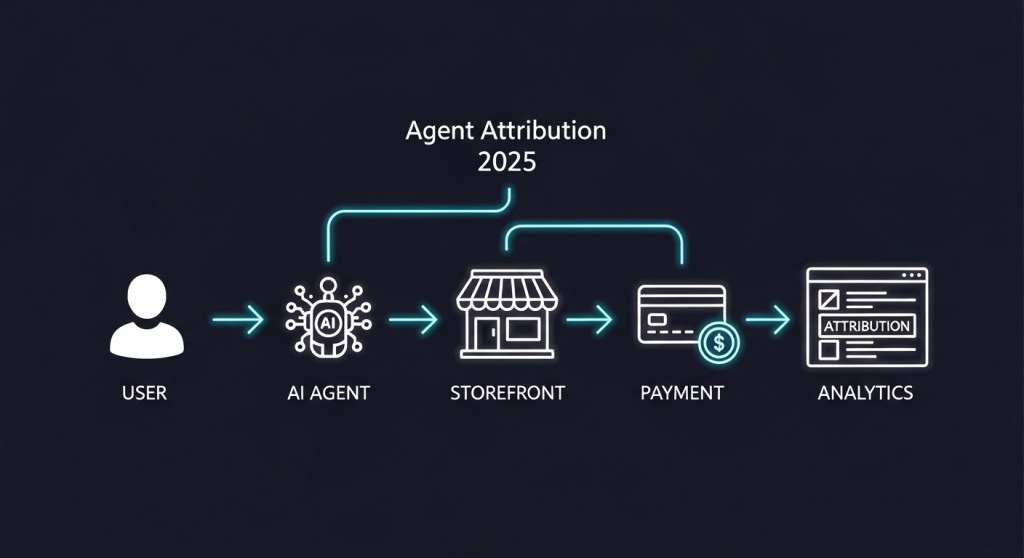
  • From Clicks to Mandates: The 2025 Agent Attribution Playbook for E‑Commerce and SaaS

    Editorial checklist

    • Scan competitors’ latest agentic commerce coverage and standards (ACP, AP2, A2A).
    • Clarify the audience and use cases: startup founders, e‑commerce operators, tech leads.
    • Identify the gap: analytics and attribution for agent-led purchases and support.
    • Deliver a 14‑day implementation plan with KPIs, dashboards, and guardrails.
    • Cite standards and news; link internally to our recent agent rollout guides.

    Why agent attribution matters now

    On September 29, 2025, OpenAI launched Instant Checkout in ChatGPT, powered by the open Agentic Commerce Protocol (ACP) co‑developed with Stripe. U.S. users can buy from Etsy listings today and from over a million Shopify merchants soon—directly in chat. For merchants, ACP is the new programmatic handshake between agents and stores. For growth teams, it changes attribution: clicks give way to structured order messages and server events. citeturn5view0turn3search0

    In parallel, Google announced the Agent Payments Protocol (AP2), a payment‑agnostic standard that introduces cryptographically signed “mandates” (Intent and Cart) to prove user authorization in both human‑present and human‑not‑present purchases—critical telemetry for fraud prevention and downstream analytics. citeturn4search1turn4search2

    Interoperability across agent stacks is also accelerating. Google’s A2A protocol lets agents collaborate across platforms and vendors, with discovery via Agent Cards—useful for tracing multi‑agent workflows and their contribution to outcomes. Microsoft has said it will support A2A in Azure AI Foundry and Copilot Studio. citeturn11search0turn0search7

    What this playbook solves

    You’re likely asking:

    • How do we measure revenue and support impact when the “session” happens inside an AI agent—not our site?
    • Which fields or events from ACP/AP2/A2A should we persist to attribute conversions and resolution outcomes?
    • How do we deter spoofed “agent sales” while preserving conversion rate?

    Below is a fast, pragmatic plan you can ship in two weeks.

    KPIs to add to your 2025 dashboard

    • Agent‑Sourced Revenue (ASR): Gross order value where agent channel is present in the server‑side payload (ACP checkout or AP2 mandate chain).
    • Agent‑Assist Rate: % of total orders or support cases initiated or resolved by an agent (voice, chat, email).
    • Cart Mandate Conversion (AP2): Cart mandates issued vs. successfully paid—proxy for frictions inside agent UX. citeturn4search1
    • First‑Contact Resolution by Agent (FCR‑A) and Escalation Rate (agent → human).
    • Cost per Successful Step (CPSS): Agent platform cost divided by successful action steps (e.g., order.create, return.authorize).
    • Mean Time to Refund/Return (Agent): Tracks post‑purchase service reliability of agent‑origin orders.

    Where the data comes from

    1) ACP order events (ChatGPT Instant Checkout)

    ACP defines a merchant‑controlled checkout interface and server‑to‑server callbacks for order acceptance and payment orchestration. Store the agent platform identifier (e.g., “chatgpt”) and request or order IDs that arrive in the ACP payloads; tie them to customer and SKU. This becomes your ground truth for agent‑sourced revenue. citeturn7view0

    2) AP2 mandate metadata

    AP2 introduces signed mandates (Intent, Cart, and Payment) to verifiably capture user authorization and agent involvement. Persist mandate references and the presence type (human‑present vs human‑not‑present) in your data warehouse for fraud analytics, dispute workflows, and cohort analysis. citeturn4search1

    3) A2A task traces

    For multi‑agent workflows (e.g., a shopping agent coordinating with a fulfillment agent), A2A task IDs and Agent Cards provide a clean join key to attribute which agent contributed which step. Include these IDs in your internal events so you can reconstruct the path later. citeturn11search0

    4) Platform evals and traces

    OpenAI’s AgentKit ships evals and step‑by‑step traces; use them to benchmark conversion and error rates by flow version and prompt. Pipe trace summaries to your observability stack (e.g., logs + metrics). citeturn0search0

    A 14‑day rollout plan

    1. Day 1–2 — Inventory agent surfaces
      List voice (Twilio/WhatsApp), chat (ChatGPT Instant Checkout), helpdesk, and browser agents. Map each to the platform (OpenAI, Anthropic, custom), protocol (ACP/AP2/A2A/MCP), and channel owner.
    2. Day 3 — Define attribution schema
      In your warehouse, add columns for agent_platform, agent_request_id, ap2_presence_type, ap2_mandate_id, a2a_task_id, and source_protocol (ACP/AP2/A2A). Use a slowly changing dimension for agent versions.
    3. Day 4–5 — Wire ACP webhooks
      Capture ACP order acceptance and payment events; normalize into orders_agent table. Start reporting ASR and Cart Mandate Conversion if available. citeturn7view0
    4. Day 6 — Add AP2 mandate logging
      When available, persist Intent and Cart mandate IDs and presence flag with each order. This adds provable consent context to your analytics and reduces false positives in fraud review. citeturn4search1
    5. Day 7 — Thread A2A IDs through workflows
      If you orchestrate multi‑agent flows (e.g., catalog enrichment → price check → checkout), pass A2A task IDs in your internal events and tie them to orders or tickets. citeturn11search0
    6. Day 8 — Instrument support agents
      For Zendesk/Help Scout agents, capture ticket create/resolve events with an agent_actor field. Then compute FCR‑A and Escalation Rate. Cross‑link to order history.
    7. Day 9 — Build the dashboard
      Create an “Agent Commerce” dashboard: ASR, Agent‑Assist Rate, Cart Mandate Conversion, CPSS, FCR‑A, and returns.
    8. Day 10 — Add cost telemetry
      Join platform billing exports (e.g., OpenAI usage) to traces by agent_request_id and compute CPSS.
    9. Day 11 — Guard against spoofing
      Validate signatures where provided (AP2 mandates), maintain an allowlist of agent platforms per protocol, and require per‑agent rate limits and mTLS/API keys for agent‑facing endpoints. See our guide on stopping agent impersonation. Read it.
    10. Day 12 — QA with synthetic orders
      Run ACP sandbox orders and AP2 test mandates; verify events flow correctly to your warehouse and dashboards. citeturn7view0turn4search1
    11. Day 13 — Set targets
      Agree on Q1 targets: e.g., 8–15% of DTC revenue via agents, FCR‑A ≥ 65%, CPSS ↓ 30% vs. baseline.
    12. Day 14 — Ship and review
      Go live with a small SKU set and a subset of support intents. Weekly ops review on agent KPIs.

    Design notes: accuracy, safety, and ops

    • Accuracy over hype: ACP’s goal is to preserve merchant control and observability; AP2’s mandates are about provable user intent. Design your data model around these primitives, not scraped UTM tags. citeturn5view0turn4search1
    • Fraud and disputes: Mandate IDs plus presence type let you triage chargebacks more confidently and segment risky flows (e.g., human‑not‑present delegated purchases). citeturn4search1
    • Multi‑agent complexity: A2A traces and Agent Cards clarify who did what in a chain—useful when debugging outcomes or allocating budget. citeturn11search0
    • Evals for agents: Bake in step‑level evals (success, latency, cost) so growth and engineering share a single truth. OpenAI’s AgentKit shows the direction. citeturn0search0

    How this fits your 2025 roadmap

    If you’re running e‑commerce, start with our new 30‑day agent‑readiness checklist and AP2 vs. ACP comparison to ready your store for the holidays, then add attribution using this playbook. Agent‑ready store checklist. For support, pair this with our 7‑day Zendesk agent rollout and red‑teaming guide. Zendesk agent in 7 daysAgent red‑teaming.

    Market signal: investor interest in customer‑facing agent platforms is spiking—e.g., Wonderful’s $100M Series A. If you can prove agent ROI and safety with clean attribution, you’ll be ahead of budget conversations in Q1. citeturn0search1

    Closing example: a simple attribution pipeline

    1. ACP webhook receives order; payload contains agent platform identifier and request/order IDs.
    2. Warehouse job enriches with AP2 mandate references (if present) and A2A task IDs from internal logs.
    3. BI dashboard shows ASR, Cart Mandate Conversion, CPSS, FCR‑A by agent version.
    4. Alerts fire if Cart Mandate Conversion dips or CPSS spikes after a prompt/version change.

    Take action

    Want help instrumenting ACP/AP2, stitching A2A traces, and proving ROI in two weeks? Talk to HireNinja. We’ll stand up the schema, webhooks, and dashboards, and ship guardrails that don’t tank conversion.

    Further reading: Interop via A2A, ACP details, AP2 mandates, and real‑world lessons on agent fallibility. citeturn11search0turn7view0turn4search1turn0news12

  • Make Your Store Agent‑Ready: AP2 vs ACP and a 30‑Day Checklist for Shopify & WooCommerce

    Make Your Store Agent‑Ready: AP2 vs ACP and a 30‑Day Checklist for Shopify & WooCommerce

    Agentic checkout is moving from demos to production. Google announced the Agent Payments Protocol (AP2) with 60+ partners; OpenAI and Stripe code‑released the Agentic Commerce Protocol (ACP) powering Instant Checkout in ChatGPT; and PayPal launched agentic commerce services and partnerships. Together, these shifts mean AI agents will increasingly discover products and complete purchases on your behalf—and on your customers’ behalf. AP2, ACP, OpenAI commerce docs, PayPal.

    Who this is for

    • Shopify, WooCommerce, and custom‑stack merchants preparing for Q4/Q1 growth.
    • Founders and product leaders evaluating AI shopping agents and conversational commerce.
    • Ops, payments, and security teams who must keep fraud low and attribution clear.

    AP2 vs ACP in plain English

    AP2 (Agent Payments Protocol) is a Google‑led open protocol that defines how AI agents get permission (“mandates”), authenticate, and complete payments across providers—designed to complement A2A and MCP for cross‑agent interoperability. Think: a standardized trust and payments layer that many platforms can implement. See the announcement and GitHub samples.

    ACP (Agentic Commerce Protocol) is an OpenAI/Stripe open standard that lets agents (e.g., ChatGPT) render product listings and execute checkout while sellers remain merchant of record. It’s already powering Instant Checkout pilots (Etsy live in the U.S.; Shopify coming). See Stripe, OpenAI docs, and Reuters.

    They’re complementary: AP2 focuses on permissioned, auditable payments across ecosystems, while ACP focuses on merchant‑controlled product feeds and checkout flows inside agent surfaces. Expect bridges across A2A/MCP and payments tokens (e.g., Stripe shared payment tokens; PayPal agent flows). Google Cloud × PayPal, TechCrunch.

    What changes for merchants in the next 90 days

    1. New discovery surfaces: Agents (ChatGPT, Perplexity, etc.) will show products during conversational queries—your product feed quality and policy compliance matter more than ad placement.
    2. Checkout shifts closer to the conversation: Single‑item agentic checkout is rolling out now, with multi‑item carts on the roadmap. Post‑purchase still routes to your existing OMS/PSP.
    3. Trust and fraud evolve: “Mandates,” delegated tokens, and agent identity signals will augment traditional risk decisioning. You’ll need new telemetry and allow/deny rules for agent‑initiated orders.

    The 30‑Day Agent‑Ready Checklist (Shopify/WooCommerce)

    Week 1 — Strategy, Data, and Guardrails

    • Define eligible SKUs: Start with low‑risk, in‑stock, single‑item products; exclude hazmat/age‑restricted items via feed rules.
    • Policies: Publish plain‑English returns/shipping windows and restocking fees; expose them in your feed and order confirmation.
    • Security posture: Map agent risks against our red‑teaming playbook and impersonation controls.

    Week 2 — Product Feeds and Eligibility

    • Structure your feed: Include canonical titles, attributes (size/color), tax/shipping, stock, and media. Keep updates ≤15 minutes for fast stock changes.
    • Agent‑safe content: Avoid claims that trigger compliance blocks; add age, region, and shipping restrictions per SKU.
    • Telemetry: Tag agent channel/source in UTM and order metadata to measure conversion and refunds separately.

    Week 3 — Payments & Risk

    • Delegated tokens: Enable shared/payment tokens with your PSP (e.g., Stripe SPT) or PayPal agent flows; verify soft caps, expiry, and allowed MCCs.
    • Mandates & step‑up: Support step‑up challenges (3DS, address verification) if risk exceeds thresholds; log mandate IDs to the order.
    • Fraud rules: New signals: agent platform, mandate scope, device/browser automation flags. Create allowlists for trusted agent origins.

    Week 4 — Observability, SLAs, and Support

    • Observability: Emit OpenTelemetry spans for agent discovery → checkout → fulfillment. Copy our Agent Observability blueprint.
    • Support automations: Pipe agent orders to your helpdesk with intents (e.g., cancel/return). Follow our 7‑day Zendesk agent playbook.
    • Go‑live gates: Dry‑run with sandbox tokens, then 50‑order pilot, refund SLA ≤ 48h, refund rate < 4%, chargeback rate < 0.5% before scaling.

    Architecture patterns you can copy

    • AP2‑forward store: Expose an A2A/MCP endpoint for negotiation; implement AP2 mandates and cart approvals; route to PSP via your gateway. Start with Google’s AP2 samples.
    • ACP‑ready store: Publish a clean product feed; implement Agentic Checkout + Delegated Payment endpoints; accept delegated tokens; reconcile orders in OMS. See OpenAI commerce docs and Stripe newsroom.
    • Hybrid: Use a gateway that can accept both delegated tokens and traditional PANs; normalize mandates/metadata into your orders table; centralize risk decisions.

    KPIs that prove ROI (and keep costs in check)

    • Agent discovery → add‑to‑cart rate (target: within 10% of site PDP baseline after two weeks).
    • Agent order approval rate (post‑risk) vs. web baseline; keep decline deltas ≤2 p.p.
    • Refund and chargeback deltas for agent channel vs. site (goal: no worse than +0.2 p.p.).
    • CAC impact: measure “organic agent” orders sourced from agent surfaces vs. paid ads.
    • Unit economics: track PSP + protocol fees minus ad savings; apply our cost‑control playbook.

    Risk, compliance, and spoofing

    Adopt signed mandates, verified agent identities, delegated tokens, and explicit per‑order audit trails. Combine that with behavioral rules (velocity, shipping risk) and human‑in‑the‑loop review for high‑value orders. See AP2’s mandate model and PayPal/Google’s joint approach to secure agent collaboration. AP2 announcement, Google × PayPal. For end‑user safety and brand protection, also review our guide on stopping agent impersonation.

    Getting started this week (TL;DR)

    1. Pick 25–50 SKUs, clean the data, and publish a test product feed.
    2. Enable delegated tokens with your PSP or PayPal agent flows; set mandate limits.
    3. Add agent channel tagging and OpenTelemetry traces.
    4. Run a 50‑order pilot; compare KPI deltas vs. web baseline.
    5. Scale behind allowlists; expand SKU coverage and countries as metrics hold.

    Further reading

    Ready to accelerate?

    HireNinja helps founders and e‑commerce teams ship agent‑ready commerce in weeks—not months. From product feeds and delegated tokens to observability, impersonation guardrails, and red‑teaming, we’ve got your back. Start with our shopping agents guide, then book a consult to plan your 30‑day rollout.

  • Voice AI Agents in 2025: Launch on WhatsApp and Phone in 14 Days (Compliance, KPIs, Cost)

    Voice AI Agents in 2025: Launch on WhatsApp and Phone in 14 Days (Compliance, KPIs, Cost)

    WhatsApp is rolling out business voice calling APIs and enterprises are deploying real voice agents in the wild—from city 911 triage to car dealerships. If you run an e‑commerce brand or a startup support desk, this is the most practical place to capture ROI from agents in Q4 2025. citeturn2search6turn2search0turn2search1

    What actually works today

    • WhatsApp Business voice calling + AI: Meta is enabling voice pipelines for large business accounts via API, making it feasible to run AI voice agents for support and sales inside a channel customers already trust. citeturn2search6
    • Real deployments: 911 centers use AI voice to triage non‑emergency calls; dealerships handle scheduling and parts inquiries with agents. These are not demos—they’re in production. citeturn2search0turn2search1
    • Latency is viable: Orchestrators report sub‑700 ms model latency over web calls, plus ~200 ms for phone connectivity—good enough for natural turn‑taking. citeturn2search2
    • Builder tooling is maturing: OpenAI’s AgentKit introduced agent evals, connectors, and a visual builder; the Responses API and Agents SDK made multi‑step agents and eval workflows easier. citeturn0search0turn0search4

    Before you build: constraints and compliance

    Robocalls & disclosure (U.S.): The FCC formally clarified that AI‑voiced robocalls fall under TCPA restrictions; treat consent and disclosures seriously, especially for outbound. Use branded introduction lines and capture opt‑ins. citeturn2search4

    WhatsApp policy changes: Reports indicate that starting January 15, 2026, WhatsApp will ban general‑purpose chatbots via the Business API. Business workflow automations (support, booking, order status) are still permitted—so design your agent around specific, transactional workflows rather than open‑ended assistant behavior. Plan migrations accordingly. citeturn3news14turn3news12

    Reference architecture for a safe, measurable voice agent

    1. Telephony & channel: SIP/phone (e.g., Twilio) and/or WhatsApp Business voice calling API. Route to a voice orchestration layer. citeturn2search6
    2. Orchestration & state: A runtime that coordinates STT → LLM/tool use → TTS, with conversation state, retries, and handoff rules. Sub‑700 ms latency targets keep conversations fluid. citeturn2search2
    3. Speech stack: Best‑in‑class STT/TTS paired with a modern LLM. Start deterministic for payments or account changes; open‑ended for FAQs.
    4. Tools & data: Connect order APIs, CRM, ticketing, and knowledge bases. Use retrieval for long‑tail answers and function calls for transactions.
    5. Evals & observability: Scenario tests, trace‑based grading, and business KPIs. OpenAI’s agent evals help automate acceptance gates; instrument the stack with OpenTelemetry. citeturn0search0
    6. Safety & governance: Blocklist/allowlist, rate limits, human handoff, and transaction scopes. Log identity assertions and permission checks on every step.

    Deep dives from our library:

    A 14‑day launch plan (from pilot to production)

    Days 1–2: Scope, compliance, and success metrics

    • Pick one high‑volume intent: where’s my order, order changes, appointment scheduling, or returns.
    • Decide in‑policy channels (inbound phone, WhatsApp Business voice) and confirm consent language for any outbound follow‑ups. citeturn2search4turn2search6
    • Define KPIs: answer rate, first‑call containment (no agent handoff), average handle time (AHT), CSAT, and cost per resolved interaction.

    Days 3–5: Wire up the plumbing

    • Provision telephony (SIP/number) and/or WhatsApp Business voice calling. Route to your orchestrator.
    • Stand up the speech + LLM stack; set strict function permissions for account lookups, order edits, and refunds.
    • Add a human handoff to your helpdesk for confidence dips or compliance triggers (e.g., payments). Consider Zendesk handoff patterns.

    Days 6–7: Build your happy paths

    • Draft short, friendly call flows: greeting → purpose → authentication → task → confirmation → post‑call summary.
    • Prepare structured prompts and small talk guardrails; keep replies concise (7–12 seconds).
    • Implement fail‑safes: three misrecognitions → route to human; any payment/identity ambiguity → pause + human.

    Days 8–9: Evals and acceptance tests

    • Use agent evals to score scripted scenarios (intent, auth, tool use, policy adherence). Gate deployment on threshold scores. citeturn0search0
    • Run 50–100 synthetic calls plus 20 real calls with staff. Review traces and fix top 5 error modes.

    Days 10–11: Observability, cost, and safety

    • Ship OpenTelemetry spans for each step (STT, intent, tool call, TTS). Dashboard answer rate, containment, AHT, CSAT, and cost/call. See our observability blueprint.
    • Apply identity & permissions playbook (role scopes, secure secrets, transaction ceilings). Reference: impersonation controls.
    • Model unit economics: speech + LLM + orchestration + telephony; target ≤ $0.40/resolved inbound call for FAQs, higher for transactional flows. See cost control playbook.

    Days 12–14: Pilot, iterate, and expand

    • Soft‑launch during business hours to ensure fast human backups.
    • Iterate on top failure reasons (auth fallbacks, noisy environments, accents). Note: production users have successfully scaled in noisy, variable environments like dealerships and public call centers. citeturn2search1turn2search0
    • Expand intents once containment ≥ 60% and CSAT ≥ 4.4/5 with net savings.

    KPIs that predict ROI

    • Answer rate: ≥ 98% during staffed hours; ≥ 95% off‑hours.
    • Containment: 40–70% (FAQ and order status at the high end; complex account changes lower).
    • AHT: 2–4 minutes for FAQ; 4–7 minutes for transactional flows.
    • Cost per resolved call: Driven by STT/LLM/TTS plus telephony. See strategies to trim 30–60% using caching and routing in our unit economics guide.

    Guardrails you shouldn’t skip

    • Disclosure & consent: Open with a branded disclosure that the call uses an AI agent and how data is used. Respect opt‑out. citeturn2search4
    • Authentication tiers: Lightweight (order email/ZIP) vs. sensitive (OTP, vault‑backed tokens). No changes without verified identity.
    • Transaction ceilings: Refund caps and manager approval flows; log every permission check. See transaction controls.
    • Handoff to humans: Confidence dips, policy boundaries, or user request → immediate warm transfer.
    • Red‑team before launch: Jailbreak attempts, prompt injection via DTMF or background audio, identity spoofing. Start with our 2025 red‑teaming playbook.

    What’s next (and what to park)

    Now: Inbound support and scheduling on phone/WhatsApp; outbound callbacks to consented lists; multilingual handling with careful testing. citeturn2search6turn2search4

    Park for later: Open‑ended, general‑purpose WhatsApp agents. Reports of WhatsApp policy changes starting January 15, 2026, mean you should keep flows task‑specific and be ready to adjust. citeturn3news14turn3news12

    Template: Go‑live gate

    1. Evals pass rate ≥ 90% on scripted scenarios; zero critical policy violations. citeturn0search0
    2. Observability live with OpenTelemetry; alerts for error spikes and long turns.
    3. Documented disclosures and opt‑out; TCPA alignment for outbound. citeturn2search4
    4. Containment ≥ 50% on pilot cohort or clear savings vs. baseline.
    5. Warm handoff SLAs ≤ 30 seconds to human for escalations.

    Need a hand?

    HireNinja helps founders ship measurable, safe voice agents—in weeks, not quarters. Want us to tailor this 14‑day plan to your stack? Learn where to list your agent next, then book a working session to design your pilot.

  • Launch a Zendesk AI Support Agent in 7 Days (with Shopify/WooCommerce) — A Holiday 2025 Playbook

    Who this is for: e‑commerce founders, support leaders, and startup teams who want a safe, measurable AI support agent live on Zendesk before Black Friday/Cyber Monday (Nov 28–Dec 1, 2025 in the U.S.).

    Why now

    Zendesk’s latest agentic platform pushes toward high automation in support (they’ve publicly targeted high autonomous resolution rates), while OpenAI highlights how Zendesk is using GPT‑4o‑class models for agentic, resolution‑focused workflows. Shopify also simplified returns in July 2025 with the new Returns Processing API — perfect timing for peak‑season refunds and exchanges. citeturn2search4turn2search5turn2search0

    Enterprise proof points keep stacking up: Verizon reports sales lift and shorter calls after rolling out Google’s Gemini‑based assist to 28,000 agents, showing real ROI when you blend AI with strong process design. citeturn3news12

    What you’ll launch in 7 days

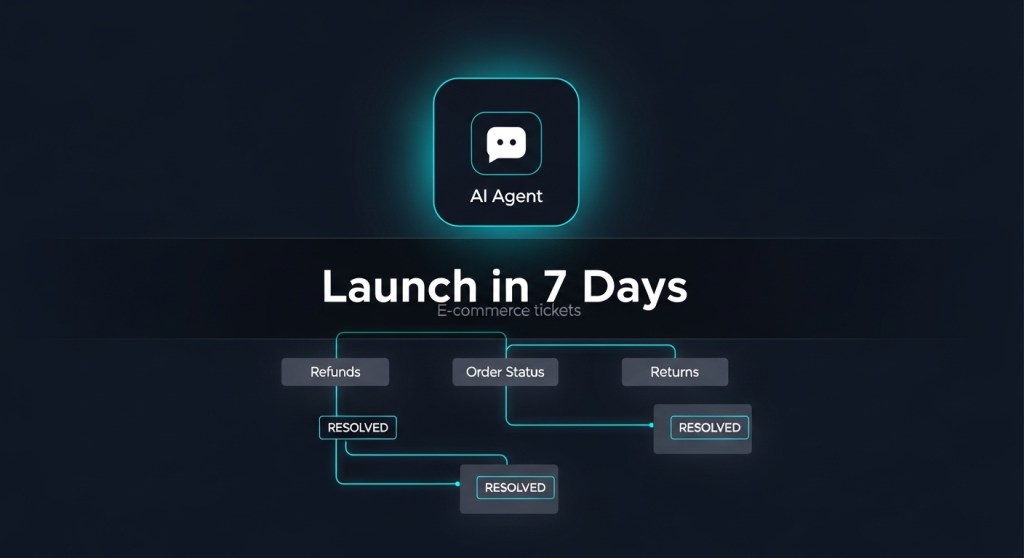
    • A Zendesk AI agent that handles top contact reasons (order status, returns/refunds, shipping changes, basic product Q&A) across messaging and email.
    • Secure connections to Shopify/WooCommerce for read/write tasks (e.g., initiate returns/exchanges safely).
    • Guardrails: clear identity, permissions, human‑in‑the‑loop for risky actions, and red‑team checks.
    • Measurement: GA4 + CRM attribution, deflection vs. true resolution, CSAT, AHT, and cost per resolution.

    KPIs to track

    • Resolution rate (not just deflection): % of conversations closed to customer satisfaction without human intervention.
    • Time to first response and median handle time (agentic vs. human).
    • Cost per resolution and model/tooling spend per 1,000 contacts (see our cost controls guide). Cost‑Control Playbook.
    • Attribution: revenue influenced by support (saves/upsells); tag offers, coupon redemptions, and re‑purchase events in GA4/CRM.

    Day‑by‑day rollout

    Day 0: Prerequisites

    • Enable Zendesk AI Agents (Resolution Platform) and Messaging. Confirm access to the AI Agent Builder and instructions. citeturn2search1turn2search6
    • Grant the AI agent a dedicated identity with scoped API access. Do not reuse human accounts. citeturn2search2
    • Pick one channel to start (web widget or email). Keep scope tight to ship fast.

    Day 1: Pick 3–5 high‑intent use cases

    Pull 90 days of tickets and stack‑rank by frequency and resolution pattern. For e‑commerce, the usual winners are:

    • “Where’s my order?” (WISMO)
    • Returns/exchanges and refund status
    • Address changes pre‑fulfillment
    • Basic product availability/sizing

    Map each to authoritative data: Shopify orders/returns, policy pages, and help center articles.

    Day 2: Configure your Zendesk AI Agent

    1. Persona & instructions: Define tone and compliance rules (refund caps, geographic exceptions). Zendesk’s agent supports instructions and multiple knowledge sources. citeturn2search6
    2. Knowledge: Connect your help center and policy URLs first; keep sources current.
    3. Actions: Add safe API actions for order lookup, cancellations, and returns. If you’re on Shopify, migrate to the new Returns Processing API (returnProcess) for cleaner refund/exchange flows (API version 2025‑07). citeturn2search0

    Day 3: Guardrails before go‑live

    • Identity & permissions: Use least‑privilege tokens; require human approval for refunds above $X, addresses after fulfillment, or multi‑item exchanges. For design patterns, see Agent Identity & Permissions.
    • Red teaming: Test prompt injections, policy reversals (e.g., “my manager said override”), and data exfiltration. Use our playbook: Agent Red Teaming 2025.
    • Human‑in‑the‑loop (HITL): Set thresholds so the agent asks for approval before “high‑risk actions” (publishing, purchasing, sharing PII) — a pattern also emphasized by leading browser/OS agent rollouts. citeturn0search1

    Day 4: Evals and small A/B pilot

    • Create 30–50 gold‑standard conversations per use case (ground‑truth answers + allowed actions).
    • Run offline evals and a 10–20% live traffic pilot on a single channel.
    • Instrument traces and business KPIs; see Agent Observability Blueprint.

    Day 5: Returns & refunds that don’t backfire

    Use Shopify’s new consolidated flow to pair disposition and financial outcome in one step. Sample GraphQL shape:

    {
      mutation ReturnProcess($returnId: ID!, $actions: [ReturnProcessActionInput!]!) {
        returnProcess(returnId: $returnId, actions: $actions) {
          return { id status }
          userErrors { field message }
        }
      }
    }
    

    Start with low‑risk actions (approve return label, create exchange order), then queue refunds for human approval above $X or in fraud‑prone segments. citeturn2search0

    Day 6: Expand channels; keep controls tight

    • Roll from web to email. Zendesk’s AI agents for email can automate a significant share of messages with on‑brand responses; keep clear escalation to humans. citeturn2search6
    • Add voice only after peak if you lack QA bandwidth; enterprises report strong results with Voice AI but it demands careful monitoring. citeturn3search0

    Day 7: Report ROI and decide next steps

    • Resolution vs. deflection: Treat true resolution as the north star (not just self‑service offload). Zendesk has publicly discussed ambitions toward high automation; set your own target by use case. citeturn2search4
    • Revenue influence: Attribute saves/upsells by tagging agent‑issued coupons or assistance on high‑intent pages; Verizon’s experience shows sales lifts when AI assists well‑designed flows. citeturn3news12
    • Scale or pause: If CSAT ≥ target and error rate ≤ threshold, widen traffic; otherwise, iterate instructions and actions before BFCM surge.

    Pro tips from the field

    • Keep it honest: The “year of the agent” has also surfaced confabulations and over‑eager autonomy. Force the agent to show its work on decisions customers care about (refund eligibility, timelines) and prefer retrieval+actions over guesswork. citeturn0news12
    • Design for trust: Retail shoppers say they’ll trust agents that are transparent, easy to turn off, and require approval before purchases; mirror these expectations in support UX. citeturn3search2
    • Control costs: Cap tool calls, cache common policy snippets, and route complex cases to humans; see our Unit Economics Playbook.
    • Compliance: Document runtime controls and evidence mapping (ISO 42001, NIST AI RMF, EU AI Act). Use our checklist to get audit‑ready: Compliance Checklist.

    What to park for 2026

    Full multi‑agent orchestration across channels and proactive outbound support can be powerful but is riskier during peak. If you’re just starting, keep scope to top three intents and one or two channels, then revisit after the holidays.

    Next: go further

    Call to action

    Need a hand? Book a free 30‑minute “Support Agent Sprint” with HireNinja. We’ll help you configure Zendesk AI, wire up Shopify/WooCommerce actions, add guardrails, and ship in a week — with the dashboards you need to prove ROI. Subscribe for more playbooks.

  • A2A + MCP in 2025: The Interoperability Blueprint to Make Your AI Agents Talk Across Clouds

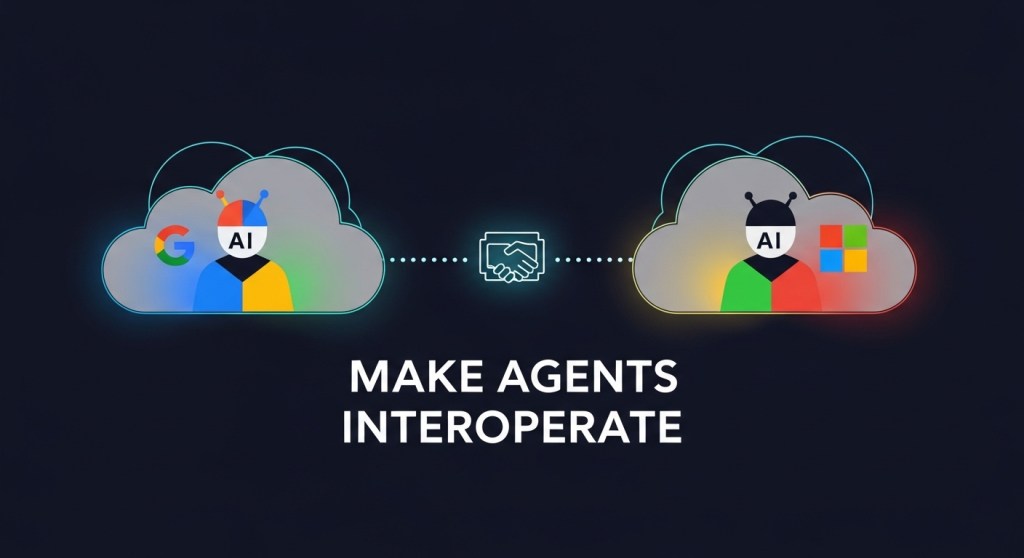
    A2A + MCP in 2025: The Interoperability Blueprint to Make Your AI Agents Talk Across Clouds

    TL;DR: Ship agents that collaborate across vendors. Use Google’s Agent2Agent (A2A) for agent‑to‑agent communication, Anthropic’s MCP for tool/data access, and OpenAI’s AgentKit for evals and guardrails. Then measure outcomes, not vibes.

    Why interoperability just became urgent

    In April 2025, Google introduced the Agent2Agent (A2A) protocol to let AI agents communicate and coordinate across platforms—an inflection point for multi‑agent systems. citeturn2search1

    By May, Microsoft said it would support A2A in Azure AI Foundry and Copilot Studio, signaling cross‑cloud momentum rather than another closed ecosystem. citeturn2search0

    A2A is open‑sourced and evolving in the wild, with a repo and community docs you can implement today. citeturn2search4turn2search2

    A2A vs. MCP: How they fit together

    • A2A: A messaging/coordination layer for agents to discover each other, negotiate capabilities, and exchange tasks/results. Think “agents talking to agents” across clouds. citeturn2search1turn2search5
    • MCP (Anthropic): A standard interface for agents to use tools and data via connector servers (DBs, APIs, files, etc.). Think “USB‑C for agent tools.” citeturn4search0

    Used together: your support agent (A2A) asks an external returns agent to authorize an exchange, while your internal inventory agent fetches stock via MCP. citeturn2search1turn4search0

    Reference architecture (e‑commerce example)

    Scenario: Customer requests a size exchange.

    1. Support Agent (hosted on your site) parses the user request.
    2. It discovers a Returns Agent via A2A Agent Card; sends a task with order ID and policy constraints.
    3. Inventory Agent queries stock via MCP servers (Postgres + ERP) and returns options.
    4. Returns Agent negotiates a prepaid label and confirms exchange window, then posts a status update (A2A task lifecycle).
    5. Support Agent summarizes next steps to the user and logs metrics.

    Why this works: A2A standardizes discovery, messaging, and long‑running task status; MCP standardizes tool/data calls. citeturn2search2turn4search0

    7‑day rollout plan

    Day 1–2: Pick the high‑leverage workflow + define capabilities

    • Choose one cross‑team task (returns/exchanges, warranty claims, VIP outreach).
    • Draft each agent’s capability contract (inputs, skills, auth scopes, KPIs).
    • Create an Agent Card (agent.json) to advertise skills and endpoints. citeturn2search2

    Day 3: Wire internal tools with MCP

    • Expose read‑only DB queries and specific actions (e.g., create RMA) via MCP servers with OAuth. citeturn4search0
    • Restrict to least‑privilege tools and log calls for audits.

    Day 4: Security, identity, and permissions

    • Use the A2A Agent Card to declare auth and permitted actions; adopt enterprise identity (e.g., W3C DID) as supported by the spec/community. citeturn2search2
    • Add transaction limits and dual‑control for refunds (see our post on stopping agent impersonation).

    Day 5: Evals, traces, and guardrails

    • Stand up Evals for Agents (OpenAI AgentKit) to grade traces, regressions, and prompt changes. citeturn3search1
    • Instrument steps and costs; see our OpenTelemetry blueprint.

    Day 6: Pilot with a partner agent

    • Start with one trusted external agent (e.g., shipping/3PL). Stage, then canary 5–10% of traffic.
    • Measure success, handle time, human‑handoff rate, and cost per resolved task.

    Day 7: Go‑live gates

    • Run an agent red‑team and break‑glass drills before full rollout. citeturn1news12
    • Finalize policies and evidence for audits (see compliance checklist link below).

    Quickstart: Minimal Agent Card and A2A task

    {
      "agent": {
        "name": "returns-agent",
        "version": "1.0",
        "skills": ["create_rma", "get_return_label"],
        "auth": {"type": "oauth2", "scopes": ["returns.create", "returns.read"]},
        "endpoints": {
          "task": "https://returns.example.com/a2a/task",
          "status": "https://returns.example.com/a2a/status/{task_id}"
        }
      }
    }
    // Client sends a task to the Returns Agent
    POST /a2a/task
    {
      "goal": "Authorize exchange and generate label",
      "input": {"order_id": "SO-12345", "sku": "SWEATER-XL"},
      "callback_url": "https://support.example.com/a2a/callback",
      "auth": {"bearer": "<token>"}
    }

    See community docs and repo for full spec details and samples. citeturn2search2turn2search4

    Reliability and safety: set expectations

    • Computer‑use reliability: OpenAI’s Computer‑Using Agent (which powers Operator/agent mode) is still improving and requires oversight on sensitive actions—plan your human‑in‑the‑loop accordingly. citeturn3search0turn3search2
    • Avoid “agents are tools” anti‑pattern: Use A2A for agent‑to‑agent negotiation; use MCP for tool/data integrations. citeturn2search5turn4search0
    • Real‑world caveat: Fully AI‑staffed experiments show promise and pitfalls; keep clear go‑live gates, policies, and telemetry. citeturn1news12

    KPIs and costs to track from day one

    • Success rate per task type: % of A2A tasks that finish without human handoff.
    • Median time‑to‑result: Submission → status=done.
    • Handoff rate: % escalated to human; instrument reasons.
    • Unit economics: $ per resolved task (model + infra + refunds leakage). See our cost‑control playbook.
    • Guardrail breaches: blocked actions, auth failures, PII policy hits.

    Tooling picks that play nicely with interop

    • Build: Google ADK with native A2A; Anthropic’s MCP servers; OpenAI AgentKit for workflow builder and evals. citeturn2search6turn4search0turn3search1
    • Observe: OpenTelemetry traces for spans per agent step; see our observability blueprint.
    • Ship: When listing in agent stores, ensure your Agent Card is accurate and security docs are ready; see our agent‑store guide.

    Common pitfalls (and how to avoid them)

    1. Over‑permissioned agents: Scope each agent narrowly; add daily transaction caps and approval flows. See our permissions guide.
    2. No evals or canaries: Run trace grading and regression tests before changing prompts/tools. citeturn3search1
    3. Compliance as an afterthought: Map runtime controls to ISO 42001/NIST AI RMF/EU AI Act evidence. See our compliance checklist.
    4. Skipping human‑in‑the‑loop for high‑risk actions: Require confirmations on refunds, credentials, or PII changes. citeturn3search0

    Next steps

    Call to action: Want help shipping A2A + MCP without drama? Subscribe for weekly agent playbooks—or talk to HireNinja about a 2‑week interop pilot.