• A2A Interoperability in 2025: How to Connect AgentKit, Agentforce 360, and MCP—Plus Go AP2‑Ready in 14 Days

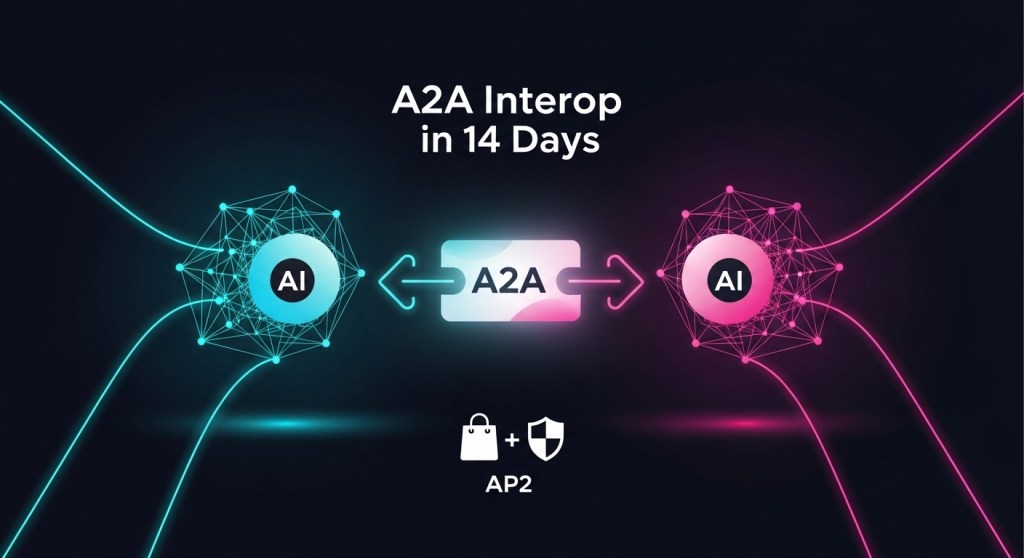
    A2A Interoperability in 2025: How to Connect AgentKit, Agentforce 360, and MCP—Plus Go AP2‑Ready in 14 Days

    Agent platforms and protocols matured fast this fall. OpenAI’s AgentKit made building and evaluating agents easier; Salesforce’s Agentforce 360 put enterprise agents into daily workflows; Google’s Agent2Agent (A2A) and Anthropic’s Model Context Protocol (MCP) created shared rails for agents to talk and use tools. Put them together and you can ship reliable, governed automations—and even agent‑assisted checkout—without a 6‑month project.

    What each piece does (in plain English)

    • A2A: An open protocol so independent agents can discover each other, exchange tasks, and collaborate securely across vendors. Spec · Docs
    • MCP: A standard for connecting agents to tools, data, and systems (think: a “USB‑C for agents”). Announcement · Docs
    • AgentKit: OpenAI’s toolkit (Agent Builder, ChatKit, Evals for Agents) to design, embed, and measure agent workflows. Details
    • Agentforce 360: Salesforce’s enterprise agent platform that plugs into Customer 360, Slack, and Google Workspace. Coverage
    • AP2 (Agent Payments Protocol): An open protocol for agent‑initiated purchases that builds on A2A/MCP to add authorization and auditability for commerce. Overview · GitHub

    Reference architecture (one afternoon to whiteboard)

    Start with a Host Orchestrator Agent (AgentKit or Agentforce) that receives the user’s goal. It delegates via A2A to specialist remote agents (pricing, catalog, support, fraud). Those specialists call tools and data through MCP servers (e.g., Postgres, Shopify Admin API, Slack, Drive). If a purchase is needed, the Host triggers an AP2 flow to obtain a cryptographic mandate, capture user intent (human‑present or not), and complete the transaction with traceability.

    14‑Day interop plan

    Day 1–2: Scope and guardrails

    • Pick a single use case (e.g., “recover abandoned carts via email + chat + discount code”). Define success KPIs: recovery rate, AOV change, CSAT impact, human‑handoff rate.
    • Decide on your Host: AgentKit (developer‑led) or Agentforce 360 (CRM‑led). Document data boundaries, PIIs, and approvals.
    • Adopt controls from our 2025 Agent Governance Checklist and Agent Observability Blueprint.

    Day 3–5: Wire up MCP for tools and data

    • Stand up MCP servers for your systems of record (e.g., product DB, order history, email). Start with read‑only, then add scoped writes.
    • Register MCP connectors in AgentKit (via Connector Registry) or expose them to Agentforce using your integration layer.
    • Instrument OpenTelemetry traces at tool and step level; push logs to your SIEM. See our observability guide.

    Day 6–8: Enable A2A multi‑agent collaboration

    • Create specialist remote agents for pricing, copywriting, and support. Publish an AgentCard for each (capabilities, auth, endpoint).
    • From the Host, delegate subtasks via A2A to those specialists; stream updates back to your UI (site, chat, or email).
    Example AgentCard (trimmed)
    {
      "id": "pricing-agent",
      "version": "0.2.2",
      "capabilities": ["quote", "discount"],
      "endpoint": "https://agents.example.com/pricing",
      "auth": {"type": "bearer"}
    }

    Day 9–11: Go AP2‑ready for checkout

    • Integrate AP2’s mandate and intent flows; start with human‑present card payment samples, then expand. AP2 docs
    • Log every step (discovery → intent → authorization → settlement) to your audit lake; include mandate IDs and user presence flags.
    • Add step‑up challenges for riskier scenarios (high value, address mismatch, new device).

    Day 12–14: Evals, safety, and launch

    • Build Evals for Agents suites in AgentKit or your test harness. Include adversarial tests inspired by Microsoft’s synthetic marketplace failure modes (e.g., hostile merchant agents, dark patterns). Study summary
    • Run a controlled pilot (5–10% traffic). Define manual overrides and human‑in‑the‑loop criteria. Track ROI and safety KPIs daily.

    KPIs to track from day one

    • Outcome: Cart recovery rate, revenue uplift, AOV, refund rate.
    • Reliability: Task success %, human‑handoff %, average steps per resolution.
    • Safety/compliance: % of AP2 mandates with verified signatures, step‑up challenge rate, PII redaction coverage, incident MTTR.
    • Cost: Cost per resolved task vs. human baseline; model/tool/inference spend per order.

    Risk and governance: bake it in

    Agent systems fail in subtle ways—over‑delegation, hallucinated confirmations, or phishing‑like prompts. Use deny‑by‑default policies for A2A tasks, require AP2 mandates for spend, and maintain full traces for every agent step. Our governance checklist pairs well with this blueprint.

    Stack choices: when to pick what

    • AgentKit if you need fast iteration, embedded chat UIs, and built‑in evals around your own product. AgentKit
    • Agentforce 360 if your workflows and data already live in Salesforce and Slack; you want CRM‑native governance, cases, and analytics. Overview
    • A2A + MCP either way to reduce vendor lock‑in and enable cross‑agent collaboration with standardized tool access. A2A · MCP

    Example rollout for e‑commerce

    1. Host agent in AgentKit; connect catalog and orders via MCP servers.
    2. Expose pricing and support agents via A2A to the Host.
    3. Pilot AP2 human‑present card flow on checkout; require mandate for discounts over a set threshold.
    4. Instrument traces and ship dashboards following our observability blueprint.

    What’s next

    Standards will keep evolving (e.g., AP2 from v0.1 toward broader methods). Keep your agents protocol‑first, with clear guardrails, and your org will be ready for the agentic holiday season—and beyond.


    Call to action: Want a hands‑on checklist, sample AgentCards, and AP2 mandate templates? Subscribe to HireNinja and we’ll send the full starter kit—or reply to get a 30‑minute architecture review.
  • Agent Observability in 2025: A Practical Blueprint to Trace, Evaluate, and Govern MCP/AP2‑Enabled AI Agents

    Quick plan (what you’ll get)

    • Scan competitors for AI‑agent trends and standards.
    • Clarify audience and the deployment problems we solve.
    • Map content gaps vs. our recent governance/ROI guides.
    • Choose a timely, high‑intent topic (agent observability).
    • Do light SEO/SERP research and outline unique value.
    • Deliver an actionable, standards‑based playbook with examples.

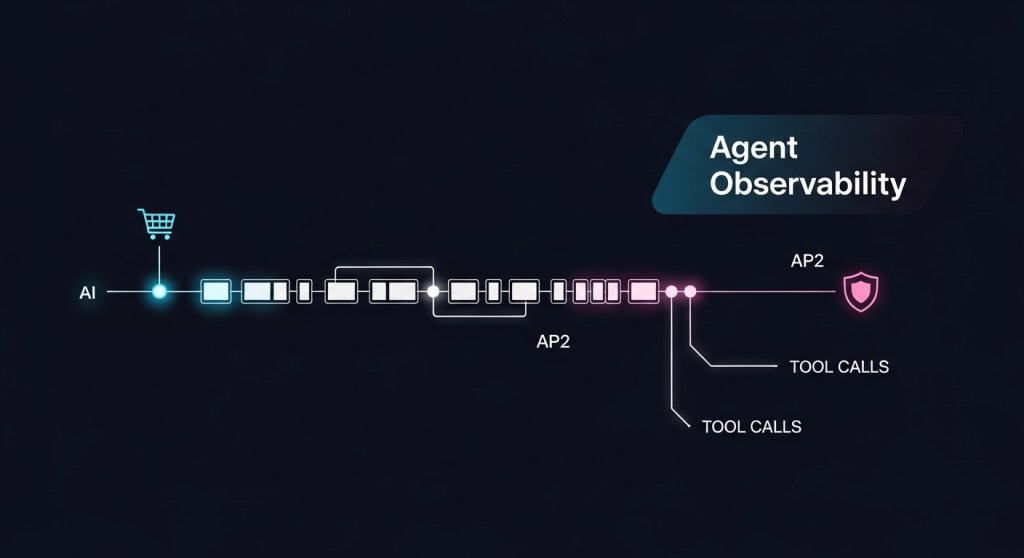
    Agent Observability in 2025: A Practical Blueprint to Trace, Evaluate, and Govern MCP/AP2‑Enabled AI Agents

    Who this is for: founders, e‑commerce operators, and engineering leaders rolling out AI agents for support, checkout, and back‑office workflows.

    The problem: agents now browse, buy, and trigger workflows—but most teams still lack observability: consistent traces, KPIs, and incident response. Without it, you can’t prove ROI, pass audits, or fix failures quickly.

    What’s changed lately: OpenTelemetry’s GenAI conventions are maturing; Microsoft’s Agent Framework ships first‑class OTEL hooks; and the industry is coalescing around Model Context Protocol (MCP) for tool access and Agent Payments Protocol (AP2) for agent‑led purchases. Together, these make production‑grade observability both possible and urgent. citeturn3search3turn3search0turn3search2turn4search0turn4search1

    Why observability is non‑negotiable for agents now

    • Risk & security: recent warnings highlight impersonation and misuse risks, and researchers are publishing MCP‑specific attack benchmarks—hard to mitigate without traces and approvals. citeturn0news13turn1academia19
    • Real threats: AI‑orchestrated campaigns show why you need forensics‑ready audit trails and anomaly detection. citeturn0news12
    • Commerce: as AP2 ushers in agent‑driven purchases, you’ll need consistent IDs and event traces to reconcile mandates, outcomes, refunds, and chargebacks. citeturn4search1

    The 7‑step Agent Observability Blueprint

    1) Define outcomes, SLOs, and guardrails

    Pick 5–8 KPIs that tie directly to business value and safety. For e‑commerce support and checkout agents:

    • Success rate (task completion) and First Attempt Pass
    • Mean time to resolution (MTTR) and loop rate (stuck reasoning)
    • Tool error rate and tool latency (P95)
    • Cost per resolved task and revenue per agent hour
    • AP2 events: mandate approvals, declines, disputes

    Map each KPI to an alert or review policy (e.g., human approval for high‑risk actions, daily safety review report). Tie these to your 2025 Agent Governance Checklist.

    2) Instrument agents and tools with OpenTelemetry (OTEL)

    Use the GenAI semantic conventions to emit traces, metrics, and logs for: prompts, responses, tool calls, and model metadata. Microsoft’s Agent Framework includes built‑in OTEL, making this fast to enable. Example (C#):

    // Pseudocode: instrument agent and export traces
    var tracer = Otel.Setup("StorefrontAgents");
    var chatClient = new AzureOpenAIClient(endpoint, cred)
      .AsIChatClient().AsBuilder()
      .UseOpenTelemetry(sourceName: "StorefrontAgents", configure: c => c.EnableSensitiveData=false)
      .Build();
    var agent = new ChatClientAgent(chatClient, name: "CheckoutAgent")
      .WithOpenTelemetry(sourceName: "StorefrontAgents");
      

    Start with sensitive data off in production; enable it only in test or under incident response. citeturn3search3turn3search0turn3search2

    3) Normalize tool usage via MCP

    Wrap internal APIs as MCP servers and record each invocation as a span with attributes like mcp.tool.name, tool.version, request.hash, response.hash, latency_ms, and approval.required. This standardizes telemetry across platforms (Claude, ChatGPT, Gemini, etc.) and improves portability. citeturn4search0turn4news12

    4) Capture commerce trails with AP2

    When agents transact, attach AP2 IDs to your spans: ap2.mandate_id, ap2.payment_id, ap2.status, ap2.provider. Store these alongside the agent’s plan, tools, and approvals so finance, risk, and support can reconcile outcomes quickly. citeturn4search1

    5) Add evals on traces—not just prompts

    Move beyond unit prompts. Run nightly evals that grade traces: action sequences, tool correctness, and safety gates. Use emerging resources (e.g., OpenAI’s eval push, community demos) and research like MSB for MCP‑specific threats. citeturn2search0turn3search4turn1academia19

    6) Dashboards and alerts your execs will use

    • Ops: task success rate, loop rate, tool errors by endpoint, P95 latency
    • Finance: cost per task, AP2 approvals/declines, refund rate
    • Risk: impersonation flags, prompt‑injection detections, privileged‑tool usage

    Alert when loop rate spikes or when a privileged tool is used without an approval span.

    7) Incident response for agents (90‑minute drill)

    1. Freeze the agent version; route risky tasks to human fallback.
    2. Collect the full trace (prompts, tools, AP2 events) and session replay.
    3. Classify failure via a taxonomy (environment vs. agent) to speed fix paths. citeturn3academia12
    4. Patch prompts, permissions, or tool contracts; add a regression test.
    5. Approve & ship via your governance controls.

    Example: tracing an agentic refund

    Scenario: a support agent handles “Where’s my order?” and issues a refund if shipment is lost.

    1. Plan span: intent = refund‑eligibility; risk_tier = medium.
    2. Tool span (MCP): order.lookup → success (220 ms).
    3. Policy span: auto‑approve < $50; else escalate.
    4. AP2 span: mandate_id=MDT‑123; status=approved.
    5. Outcome span: refund_issued=true; email_sent=true.

    From this single trace, CX can audit the decision, Finance can reconcile payouts, and Security can verify approvals.

    Security notes you should not skip

    • Impersonation & over‑permissioning remain top risks—treat identity like code, with approvals logged as spans. citeturn0news13
    • MCP risks are being actively studied (maintainability, tool poisoning, name‑collision, and injection). Build detections and allow‑lists into your tool registry. citeturn1academia18turn1academia19
    • Threat reality: AI is showing up in offensive campaigns; design for forensics from day one. citeturn0news12

    14‑day rollout plan (works for most teams)

    1. Days 1–2: Pick KPIs and wireframe dashboards; decide sensitive‑data policy.
    2. Days 3–5: Enable OTEL on one agent + two MCP tools; ship basic spans. citeturn3search0turn3search2
    3. Days 6–8: Add AP2 span attributes in sandbox; validate mandate → payment links. citeturn4search1
    4. Days 9–11: Stand up trace‑based evals; add loop‑rate + privileged‑tool alerts. citeturn3search4
    5. Days 12–14: Run a live pilot; review incidents via our governance checklist; green‑light next agent.

    How this fits with your existing stack

    • Agent platforms: Whether you’re on OpenAI AgentKit, Salesforce Agentforce 360, Amazon Nova Act, or Google Mariner, you can still emit OTEL spans and normalize tools via MCP for cross‑vendor visibility. citeturn0search0turn0search4turn0search2turn0search5
    • System of Record: Pipe traces and approvals into your Agent System of Record for compliance and lifecycle management.
    • Holiday readiness: Pair this blueprint with our Agentic Checkout in Holiday 2025 plan to track conversion, approvals, and failures end‑to‑end.

    What competitors cover—and what they miss

    News cycles (funding, launches) rarely explain how to operationalize evals, AP2 audit trails, and MCP span design. This guide bridges that gap so you can ship agents that are fast, safe, and measurable.

    Further reading

    • OpenTelemetry on AI agent semantic conventions. citeturn3search3
    • Microsoft Agent Framework observability docs (C# and Python). citeturn3search0turn3search2
    • Anthropic’s MCP intro + The Verge coverage. citeturn4search0turn4news12
    • Google’s AP2 announcement for agent‑driven purchases. citeturn4search1
    • MCP security/maintainability studies and benchmarks. citeturn1academia18turn1academia19turn1academia15

    Call to action

    Want a done‑for‑you rollout? HireNinja can instrument your agents with OTEL, wire up MCP/AP2 audit trails, and stand up dashboards in two weeks. Subscribe for more playbooks or talk to our team to start a pilot.

  • Agentic Checkout in Holiday 2025: What AP2, MCP, and A2A Let E‑Commerce Teams Ship in 14 Days

    Plan for this article

    • Scan competitor coverage to pinpoint what’s real vs hype
    • Summarize the protocols that matter (AP2, MCP, A2A)
    • Lay out a 14‑day agentic checkout rollout plan
    • Define KPIs and a test suite you can run this week
    • Add governance and security guardrails

    Agentic Checkout in Holiday 2025: What AP2, MCP, and A2A Let E‑Commerce Teams Ship in 14 Days

    It’s November 2025, and every platform is promising shopping agents. Reality check: fully autonomous “do my holiday shopping” experiences aren’t mainstream yet—but agent‑assisted shopping and safer checkout flows are. If you lead an e‑commerce team, you can ship measurable wins in 14 days by leaning on three building blocks: AP2 for purchases, MCP for tool/data access, and A2A for cross‑agent handoffs. citeturn2search5

    What’s real right now

    • Agent Payments Protocol (AP2) formalizes how agents request and approve purchases via intent mandates and cart mandates, giving you auditability and limits on spend. citeturn2search0
    • Model Context Protocol (MCP) is gaining momentum as the “USB‑C for AI apps,” letting agents access catalogs, inventory, order systems, and content safely through standardized servers/connectors. Microsoft is pushing MCP across Windows and enterprise tooling. citeturn1search0turn1news15
    • Agent‑to‑Agent (A2A) is emerging to let agents coordinate tasks (e.g., your store’s fulfillment agent collaborating with a travel agent). It complements MCP (tools/data) rather than replaces it. citeturn1search2
    • Major players are aligning around agent platforms (OpenAI AgentKit; Salesforce Agentforce 360), but most real deployments are assistive, not fully autonomous. citeturn0search2turn3news12

    Why this matters for Q4

    Shoppers are already researching and clicking from AI surfaces (ChatGPT, search, and shopping assistants). OpenAI is adding shopping UIs and memory‑aware recommendations; Google and others are piloting agentic purchasing standards. Your job is to make your catalog and checkout agent‑addressable with clear guardrails—so agents can discover, compare, and safely initiate purchases on behalf of users. citeturn2search1turn2search0

    The 14‑day rollout plan

    Days 1–2: Baseline and KPI setup

    • Pick KPIs: agent‑assisted sessions, add‑to‑cart rate from agent referrals, AP2 mandate approval rate, and refund/chargeback rate.
    • Instrument a referral parameter (e.g., ?src=agent) across PDPs and checkout for basic attribution.
    • Define maximum daily exposure for agent‑originated carts (e.g., 5% of daily orders) while you learn.

    Days 3–5: Make your catalog agent‑readable

    • Ensure complete, structured PDP data (price, availability, size/color, shipping, returns). Include up‑to‑date schema.org markup so answer engines and agents can parse facts quickly.
    • Expose a minimal catalog endpoint (read‑only) via an MCP server (products, inventory status, promo eligibility). Use allow‑lists and per‑route rate limits. citeturn1search0
    • Add canonical images and feature bullets optimized for answer snippets. Consistency beats prose here.

    Days 6–9: Pilot AP2‑style approvals (“assistive mode”)

    Even if you’re not fully live on AP2, you can mirror its core ideas:

    1. Intent mandate: The user or upstream agent specifies category, constraints (price cap, brand exclusions), and timeframe.
    2. Cart mandate: You present the exact SKU(s), total, taxes, and policies for final approval.

    Sample (illustrative) JSON you can pass between your agent integration and checkout service:

    {
      "intent": {
        "goal": "buy trail running shoes",
        "constraints": {"max_total": 140, "sizes": [9.5], "brands_exclude": ["BrandX"]},
        "valid_until": "2025-12-05T23:59:00Z"
      },
      "cart_proposal": {
        "items": [{"sku": "TRAIL-ALP-95-TEAL", "qty": 1}],
        "total_estimate": 129.99,
        "policies": {"returns_days": 30, "shipping": "2-day"}
      }
    }

    This mirrors AP2’s mandate pattern for traceability and reduces accidental or unauthorized purchases—one of the main blockers to agentic shopping. citeturn2search0

    Days 10–12: Add observability and guardrails

    • Log every agent‑assisted step: mandate received, catalog calls (MCP), cart creation, mandate acceptance, payment gateway auth/settle.
    • Require SCA/3‑D Secure on all agent‑originated transactions over a threshold.
    • Set velocity checks: unique user+device per hour; cap on first‑time customers; flag mismatched shipping/billing regions.
    • Create a human‑in‑the‑loop review queue for edge cases for the first 2 weeks.
    • If you’re on Salesforce/Service Cloud, evaluate Agentforce 360’s visibility tooling to trace agent actions back to outcomes. citeturn3news12

    Days 13–14: Test suite and launch

    Before you flip the switch, run these scenarios:

    • Constraint respect: Agent proposes an item above price cap—verify rejection and a compliant alternative.
    • Variant precision: Size/color mismatch detection on PDP vs cart.
    • Promo eligibility: Agent added a code not valid for category—ensure clear explanation and recovery path.
    • Out‑of‑stock mid‑flow: Cart refreshes inventory and proposes a similar SKU or waitlist.
    • Payment failure: Retry with alternate tender; keep audit trail tied to mandates.
    • Return policy surfaced: Ensure policies are present during cart mandate (not just post‑purchase).

    KPIs and what “good” looks like in week one

    • Agent‑assisted sessions: 3–8% of total sessions route through agent‑labeled entry points.
    • Add‑to‑cart from agent referrals: Within 10% of your sitewide baseline (parity is a win early on).
    • Mandate acceptance rate: >60% of presented cart mandates convert to checkout attempts.
    • Refund/chargeback rate: At or below your sitewide baseline; investigate any uplift immediately.

    Competitor reporting suggests that even big platforms are still tuning reliability and business model details for agentic shopping. Set expectations accordingly: ship assistive value now, expand autonomy later. citeturn2search1turn2search5

    Architecture quick‑start

    1. MCP gateway: Stand up a minimal MCP server exposing read‑only catalog, inventory, and pricing. Start with a single channel and rotate keys frequently. citeturn1search0
    2. AP2 adapter: Implement intent/cart mandate objects in your middleware and persist them for audit.
    3. Attribution: Tag agent referrals at the edge (CDN or app proxy) and pass through to analytics.
    4. Platform hooks: If you’re experimenting with AgentKit or similar frameworks, map their evals/telemetry to your mandate IDs to track outcomes. citeturn0search2

    Governance essentials

    • Approvals & limits: Use AP2‑style mandates with price caps and explicit SKU lists for “auto‑approve” flows. citeturn2search0
    • Transparency: Log agent identity, tools used (MCP servers), and every state change; expose a customer‑readable order timeline.
    • Interoperability: Favor open standards (MCP, A2A) to avoid vendor lock‑in as the ecosystem matures. citeturn1search0turn1search2

    Recommended next reads

    Bottom line

    Holiday 2025 is the season to ship assistive agentic checkout that’s safe, observable, and standards‑aligned. Start with MCP for data access, mirror AP2’s mandate model for approvals, and keep A2A in view for the next wave of cross‑agent collaboration. That’s how you de‑risk now and compound ROI into 2026. citeturn1search0turn2search0turn1search2

    Call to action: Want help standing this up in 14 days? Subscribe for our implementation kit or talk to HireNinja about an agentic checkout pilot.

  • The 2025 Agent Governance Checklist: 12 Controls Every Team Needs Before Shipping AI Agents

    The 2025 Agent Governance Checklist: 12 Controls Every Team Needs Before Shipping AI Agents

    2025 is the year when pilots become production. Major vendors are folding “agents” into mainstream products, and customers expect them to actually do work, not just chat. That shift comes with risk—and new compliance dates. If you’re moving agents from prototype to production in Q4, this governance checklist will help you ship safely without slowing growth. citeturn3search0turn2search0

    Who this is for

    • Startup founders and product leaders making agent features GA.
    • E‑commerce operators wiring agents to catalogs, carts, and payments.
    • Engineering, security, and data teams accountable for risk, logs, and uptime.

    Why now

    Key EU AI Act milestones began on February 2, 2025, with general‑purpose model obligations and governance following on August 2, 2025—and broader high‑risk rules in 2026–2027. Translation: regulators expect evidence of control, not slideware. citeturn2search0turn2search1

    Vendors are also standardizing enterprise controls. OpenAI’s AgentKit adds evals and admin controls; OpenTelemetry is formalizing agent observability conventions. Together, that’s your fast path to measurable governance. citeturn3search1turn4search2

    The 12 essential controls

    1. Agent identity and authentication: Issue a unique identity per agent and per environment (dev/stage/prod). Rotate keys, require mTLS or signed tokens for backend calls, and record user/agent impersonation context. Interop standards are emerging for multi‑agent handshakes across vendors—track these as you integrate partners. citeturn0search3
    2. Least‑privilege scopes: Grant only the tools and data an agent needs, nothing more. Use your platform’s admin console/connector registry to enforce SSO, RBAC, and per‑tool consent. Build a quarterly access review. citeturn3search1turn3search4
    3. Human‑in‑the‑loop for irreversible actions: Require explicit approval for purchases, refunds, deletions, and permissions changes. Log who approved, what changed, and why.
    4. End‑to‑end audit logging: Capture prompts, tool calls, external API calls, model versions, and outputs—plus the user/session that triggered them. Emit traces and metrics via OpenTelemetry so your SecOps tools can alert on anomalies. citeturn4search2turn4search0
    5. Guardrails against spoofing and prompt injection: Validate agent identity on inbound traffic and sanitize/ground inputs before tool use. If you expose a public agent endpoint, require signed requests and rate‑limit unknown origins. For e‑commerce, combine identity checks with telemetry to spot impersonation. See our 14‑day anti‑spoofing playbook. Read the guide.
    6. Data minimization and residency: Keep PII out of context windows when possible. Snapshot only what’s required for auditability. Align with NIST AI RMF outcomes for Govern/Map/Measure/Manage. citeturn5search0turn5search2
    7. Red‑team and evals before launch: Create eval suites for safety, accuracy, and cost regressions. Use platform eval tooling where available and gate releases on eval quality bars. citeturn3search1
    8. Operational SLAs and error budgets: Define SLOs for successful task completion, latency, handoff rates to humans, and cost per task. Tie rollback criteria to error budgets.
    9. Change management: Version prompts, tools, and policies. Roll out via staged traffic (1% → 10% → 50% → 100%). Require change tickets for new tools or expanded scopes.
    10. Incident response for agents: Pre‑write playbooks for data leakage, runaway spend, and unsafe actions. Your IR runbook should include: disable agent, revoke keys, snapshot logs, customer comms, and postmortem.
    11. Third‑party and marketplace risk: If you integrate external agents or list yours, require security attestations and telemetry hooks. Some enterprises are adopting an “Agent System of Record” to centralize risk and costs—mirror that pattern even if you build in‑house. citeturn0search6
    12. Executive accountability: Assign a named owner for agent risk. Map controls to the EU AI Act where applicable and to NIST AI RMF cross‑walks for U.S. programs. Review quarterly. citeturn2search0turn5search5

    Metrics that matter

    • Task success rate (target ≥ X% on gold tasks)
    • Human‑handoff rate (by reason: uncertainty, permissions, failure)
    • Mean time to correction (policy violations → approval/rollback)
    • Cost per task (tokens + API calls + human review minutes)
    • Security signals (spoof attempts, prompt injection detections)

    14‑day rollout plan (works for new or existing pilots)

    1. Day 1–2: Inventory agents, tools, data access, and environments. Create an agent registry with owners, purposes, and scopes.
    2. Day 3–4: Implement identity + least‑privilege scopes. Turn on SSO/RBAC and per‑tool consent in your agent platform’s admin console. citeturn3search1
    3. Day 5–6: Instrument logs and traces with OpenTelemetry. Standardize span attributes for prompts, tool calls, and external APIs. Pipe to your observability backend. citeturn4search2
    4. Day 7–8: Add human‑approval gates for irreversible actions (refunds, deletes, purchases). Set default spending limits and per‑session ceilings.
    5. Day 9–10: Build a minimal eval suite (accuracy, safety, cost) and set pass/fail thresholds. Wire evals into CI. citeturn3search1
    6. Day 11–12: Write incident playbooks; practice a 60‑minute tabletop (spoofing, data leakage, runaway spend). For customer‑facing agents, review our anti‑spoofing checklist. See the playbook.
    7. Day 13–14: Stage rollout (1%→10%→50%→100%) with SLO alerts, error budgets, and auto‑rollback.

    Standards and references you can cite internally

    • EU AI Act timeline and governance milestones for 2025–2027. citeturn2search0turn2search1
    • NIST AI RMF (and Generative AI Profile) for mapping controls. citeturn5search0turn5search1
    • OpenTelemetry agent observability conventions for standard traces and metrics. citeturn4search2
    • Vendor capabilities you can leverage today (evals, RBAC, audit logs). citeturn3search1

    Related guides from HireNinja

    Bottom line

    You don’t need to pause innovation to satisfy regulators. Pick a small set of controls that deliver outsized safety: identity, least privilege, approvals, and audit+telemetry. With evals and standard traces in place, you can scale agents confidently across your stack. If you need help, we can review your registry, wire up OpenTelemetry, and stand up a CI eval gate in two weeks.

    Call to action: Subscribe for weekly field notes on AI agents—and book a 30‑minute Agent Governance review with HireNinja.

  • The 2025 ROI Playbook for AI Agents: A Practical TCO Model and a 30‑60‑90 Rollout Plan

    Agent platforms and standards matured fast in 2025—payments for agent‑initiated purchases (AP2), enterprise‑grade kits (AgentKit, Agentforce 360), and real‑world deployments in support and sales. Leaders now need a CFO‑ready playbook: how to quantify value, model total cost of ownership (TCO), and ship a rollout plan that proves return in one quarter.

    Who this is for

    • Startup founders validating agent use cases before a raise or a board meeting.
    • E‑commerce operators aiming to lift conversion and deflect repetitive support tickets.
    • Tech/product leaders tasked with shipping agent pilots while minimizing risk.

    The ROI equation for AI agents

    We’ll use a classic framing and tailor it to agentic work:

    ROI = (Total Benefits − Total Costs) / Total Costs

    Benefit buckets you can measure:

    • Revenue lift: higher conversion/AOV from guided shopping and proactive recovery flows (e.g., back‑in‑stock, coupon guidance).
    • Cost savings: ticket deflection, faster handling, automation of back‑office ops (refund checks, data entry, order changes).
    • Risk reduction: fewer chargebacks, correct policy application, reduced manual errors.

    Cost buckets to include in TCO:

    • Platform licenses (agent platform, observability, incident tooling).
    • Inference/compute (LLM usage, vector search, browser automation minutes).
    • Integration/engineering (connectors, webhooks, API hardening).
    • AgentOps and evals (SLOs, red‑teaming, regression suites).
    • Security, compliance, and governance (PII handling, audit, identity).
    • Human‑in‑the‑loop (HITL) review overhead during early phases.

    A simple TCO model you can copy

    Create a one‑page sheet with monthly lines for each cost bucket. Example structure:

    Licenses          = $X (platform) + $Y (observability)
    Inference         = (requests × avg tokens × $/token) + (browser mins × $/min)
    Integration       = (dev hours × blended rate) amortized over 12 months
    AgentOps/Evals    = tooling + (analyst/reviewer hours × rate)
    Security/Compliance = audit, logging, pen‑tests, data retention, HITRUST/SOC2 work
    HITL              = (interventions × avg review time × rate)

    Keep the sheet conservative: assume no revenue lift in month one, cap deflection at a modest rate, and include a contingency line (10–15%).

    KPIs that actually move ROI

    • Ticket deflection rate (% fully resolved without human handoff).
    • Agent‑initiated revenue (trackable when you support an open protocol like AP2 for checkout).
    • Conversion lift on assisted sessions vs. control.
    • AOV lift on agent‑assisted orders.
    • First response and handle time (p95), reopen rate, CSAT.
    • Intervention rate in HITL (should trend down as evals improve).

    Instrument these KPIs from day one. If you use enterprise kits such as OpenAI AgentKit or Salesforce Agentforce 360, take advantage of built‑in evals, connectors, and admin controls to capture traces and outcomes.

    Worked example: support deflection + guided checkout

    Assume a DTC store with 120k monthly visits, $80 AOV, 60% gross margin, 6,000 support tickets/month, and $25 fully loaded agent cost/hour.

    1. Cost: $6,500 licenses + $3,500 inference + $5,000 amortized integration + $2,000 AgentOps + $1,500 HITL = $18,500/month.
    2. Savings: 20% deflection × 6,000 tickets × 7 minutes saved × $25/hour ≈ $3,500.
    3. Revenue lift: 3% of sessions assisted × 120k visits = 3,600 assisted; +0.4 pp conversion → +14 additional orders/day × 30 × $80 AOV × 60% margin ≈ $20,160.
    4. Net benefit: $3,500 + $20,160 = $23,660.

    ROI = ($23,660 − $18,500) / $18,500 = 27.9% in the first steady month. Your numbers will vary; the point is to make the drivers explicit and testable.

    30‑60‑90 rollout plan (with checkpoints)

    Days 0–30: Pilot and proof

    • Pick one narrow, high‑volume workflow (FAQ deflection or order‑status automation).
    • Publish an agent‑readable surface for your catalog and policies; see our guide: 7‑asset starter kit for AP2/MCP.
    • Add guardrails and identity (policy checks, telemetry). Read: Stop Agent Spoofing.
    • Ship evals and SLOs early; see AgentOps in 2025.
    • Decision gate: continue if deflection ≥10% or assisted conversion shows a positive signal at p95 quality.

    Days 31–60: Expand and monetize

    • Turn on AP2‑style checkout for low‑risk SKUs or gift cards to begin attributing agent‑initiated revenue to your P&L. See background on the protocol here.
    • List your agent in relevant registries/marketplaces and NL‑discoverable surfaces: distribution guide.
    • Instrument OpenTelemetry spans for actions (search, add‑to‑cart, refund) to tie outcomes to traces.

    Days 61–90: Harden and scale

    • Adopt an Agent System of Record (ASoR) to govern versions, permissions, and traces across multiple surfaces; compare build/buy options in our buyer’s guide.
    • Expand skills via standardized tool protocols (e.g., MCP servers) for reliable integrations; the OSS ecosystem is growing rapidly.
    • Security posture check: permission boundaries, audit logs, and incident playbooks for mis‑actions.
    • Board‑ready ROI update using the same model as day 0—no moving goalposts.

    Choosing a platform? Map features to the model

    When evaluating platforms such as AgentKit, Agentforce 360, or browser‑native agents from Google/Amazon, connect features directly to cost and benefit drivers: built‑in evals → lower AgentOps cost; connector registries → lower integration cost; browser automation → more revenue lift but higher inference minutes. For market context on browser agents, see coverage of Google’s Mariner and Amazon’s Nova Act.

    Reality check: reliability and ethics

    Agent hype is high, but reliability and governance matter. A recent narrative of trying to run a startup with ‘employees’ as agents is a reminder to keep humans in the loop, measure outcomes, and not over‑delegate judgment. Use guardrails, audits, and clear escalation paths.

    Wrap‑up

    Agents can create real value in weeks if you quantify the drivers, instrument the stack, and ship with guardrails. Copy the TCO sheet above, pick one workflow, and run the 30‑60‑90 plan. When you can attribute agent‑initiated revenue and sustained deflection with stable quality, scale to more surfaces and skills.

    Next: If you’re deploying in customer support, read our 21‑day CS agent guide and our 2025 enterprise platform comparison.


    Cited background reading: AP2 overview (TechCrunch); AgentKit launch (TechCrunch); Agentforce 360 (TechCrunch); agent reliability narrative (Wired); MCP ecosystem growth (Hacker News).

    Call to action: Want a copy of the ROI/TCO spreadsheet? Subscribe and reply “ROI” — we’ll send the template and help you tailor the 30‑60‑90 plan to your stack.

  • The 2025 Enterprise Guide to AI Agent Platforms: AgentKit vs Agentforce 360 vs Project Mariner vs Nova Act
    • Scan competitor coverage from the past 1–6 weeks to spot what’s trending.
    • Map audience intent: founders, e‑commerce, and tech leads choosing an agent platform.
    • Identify gaps: we lack a cross‑vendor buyer’s guide.
    • Do quick SEO and SERP checks around platform names and standards (A2A, MCP, AP2).
    • Publish a practical comparison + a 14‑day evaluation plan with guardrails and KPIs.

    Why this guide and who it’s for

    2025 really is the year of the agent. Every week brings new launches and claims—great for innovation, confusing for buyers. If you lead product, engineering, or e‑commerce, this guide helps you select a platform to standardize on for the next 6–12 months, not just the next demo.

    For context, mainstream outlets are framing this as a step‑change—from chat assistants to autonomous workflows that act on your behalf. That hype comes with real risks (reliability, spoofing, attribution), but the opportunity is material. citeturn0news12

    The short list: four platforms you’ll hear in every RFP

    • OpenAI AgentKit — Visual agent builder, ChatKit UI, evals, connector registry; designed to take agents from prototype to production on OpenAI’s stack. Ideal if you’re already on ChatGPT Enterprise or the OpenAI API and want first‑party evals and UI. citeturn9search0
    • Salesforce Agentforce 360 — An enterprise agent platform baked into Customer 360/Slack with governance, hybrid reasoning, and deep GTM integrations; strong fit for sales/service ops in SFDC shops. citeturn10search4
    • Google’s Project Mariner — A research‑to‑early‑access browser agent system (multi‑tasking, computer‑use) shipping via AI Ultra, Gemini API, and Vertex; compelling for browser automation and Google‑centric stacks. citeturn13search2
    • Amazon Nova Act — A browser‑automation agent + SDK with IDE integrations and Bedrock tie‑ins; good for teams standardizing on AWS and needing robust, scriptable browser agents. citeturn12search6

    Quick buyer snapshots

    OpenAI AgentKit

    Best for: product teams that want a first‑party build‑measure‑iterate loop (builder + evals) and embedded chat UIs. Standout: unified evals, visual workflows, and a connector registry simplify production hardening. Watch‑outs: plan for data governance across connectors and clear SLOs for agent actions. citeturn9search0

    Salesforce Agentforce 360

    Best for: companies already invested in Salesforce who want agents in Sales, Service, IT, and Slack with enterprise controls. Standout: governance and deep app surface area. Watch‑outs: vendor lock‑in and license complexity; evaluate model choice and integration costs. citeturn10search4

    Google Project Mariner

    Best for: teams that need safe, scalable browser agents and plan to build on Gemini API/Vertex. Standout: multi‑task computer‑use, rolling into developer surfaces. Watch‑outs: phased availability; validate latency and success rates on your critical flows. citeturn13search2turn13search5

    Amazon Nova Act

    Best for: AWS‑first orgs with web workflows (portals, forms, procurement) that need policy‑enforced browser automation. Standout: SDK + IDE extension and Bedrock integration. Watch‑outs: early previews require hands‑on validation and guardrails. citeturn12search6turn12search5

    Open standards that reduce platform risk

    • A2A (Agent‑to‑Agent): a Linux‑Foundation‑hosted protocol for agent interoperability—discover, delegate, and collaborate across vendors. If you expect multi‑agent workflows, prioritize vendors shipping A2A support. citeturn8view0
    • MCP (Model Context Protocol): a fast‑maturing standard for agent‑to‑tool access (auth, structured outputs, security best practices). Prefer platforms that expose MCP so your agents can use the same tools everywhere. citeturn2search9
    • AP2 (Agent Payments Protocol): Google’s open protocol for verifiable, agent‑led purchases using cryptographically signed “mandates” (intent → cart → payment). If you plan to transact, require AP2‑style proofs and audit trails. citeturn5view0

    How to choose (in 10 questions)

    1. Primary surface: chat UI, browser automation, API automations—or all three?
    2. Governance: can you set SLOs, eval loops, and escalation policies per agent?
    3. Security: does it support signed mandates, identity, and action tracing?
    4. Interoperability: native A2A/MCP support, and import/export of agent definitions?
    5. Observability: step traces, OpenTelemetry, red‑team logs, and replay?
    6. Human‑in‑the‑loop: approvals, reversible actions, and role‑based controls?
    7. Data control: tenancy, PII redaction, vaults, and bring‑your‑own‑keys?
    8. Cost model: eval/browsing/tool costs; human review; infra egress; storage.
    9. Ecosystem: registries/marketplaces for agents and tools; enterprise connectors.
    10. Roadmap risk: GA vs preview, vendor lock‑in, and migration paths.

    A 14‑day side‑by‑side evaluation plan

    Run two finalists against the same tasks and KPIs. Keep humans in the loop.

    1. Day 1–2: Scope & guardrails. Pick 3 real tasks (e.g., refund flow, invoice intake, restock alerts). Define success (completion rate, time‑to‑complete), risk (bad action rate), cost ($/successful task). Add AP2‑style approvals for any payment or account change. citeturn5view0
    2. Day 3–6: Build. Implement once per platform. Use MCP tools where possible to keep portability high; wire OpenTelemetry traces. citeturn2search9
    3. Day 7–10: Run + measure. 100 task trials per use case; capture success, latency, human interventions, and production‑like errors.
    4. Day 11–12: Evals. Grade step traces, regress with test datasets, and red‑team indirect prompt injections on web data. citeturn13search5
    5. Day 13–14: Decision. Compare KPI deltas and governance fit. Document migration path via A2A/MCP to reduce lock‑in. citeturn8view0turn2search9

    Real‑world fits by use case

    • Customer support automation: Agentforce 360 if you’re deep in Salesforce; AgentKit if you want granular evals and custom UIs; Nova Act or Mariner if your support flows live across browser‑only portals. citeturn10search4turn9search0turn12search6turn13search2
    • E‑commerce tasks (restock, pricing, promotions): Mariner or Nova Act for browser actions; AgentKit where you need fast custom chat surfaces and evals; pair with AP2 for safe checkout. citeturn13search2turn12search6turn9search0turn5view0
    • Sales/RevOps orchestration: Agentforce 360 for Slack + CRM loops; consider A2A to collaborate with partner/marketplace agents. citeturn10search4turn8view0

    Standards and governance: non‑negotiables for 2025

    We recommend you mandate three things in every RFP:

    1. Interoperability: A2A + MCP support so agents talk to other agents and tools without glue code. citeturn8view0turn2search9
    2. Payments trust: AP2‑style mandates any time money moves. citeturn5view0
    3. AgentOps: SLOs, incident playbooks, and eval loops with trace‑level observability. If you need a primer, see our AgentOps guide.

    Related playbooks from HireNinja

    SEO snapshot (quick)

    • Primary keyword: AI agent platforms (buyer intent).
    • Secondary: AgentKit, Agentforce 360, Project Mariner, Nova Act, A2A, MCP, AP2, enterprise AI agents.
    • SERP leaders today: OpenAI product page (AgentKit), Salesforce press/GA posts (Agentforce 360), Google blog (Mariner), AWS posts (Nova Act), TechCrunch coverage. We target a practical compare‑and‑decide angle not covered in those announcements. citeturn9search0turn10search4turn13search2turn12search6turn0search0

    Bottom line

    If you want the fastest path to production with built‑in evals and UI, start with AgentKit. If your revenue stack lives in Salesforce, Agentforce 360 will feel native. If your biggest gap is reliable browser work, pilot Mariner or Nova Act. Whichever you pick, reduce lock‑in with A2A + MCP, and require AP2‑style proofs before agents touch money. citeturn9search0turn10search4turn13search2turn12search6turn8view0turn2search9turn5view0

    Call to action: Need help choosing and piloting? Talk to HireNinja. We’ll run your 14‑day, two‑platform bake‑off with A2A/MCP/AP2 guardrails and deliver a go‑live checklist. Subscribe or contact us to get started.

  • Customer Support AI Agents in 2025: What to Buy, What to Measure, and How to Launch in 21 Days
    • Plan: define scope, KPIs, risks, and timeline.
    • Select: shortlist 2–3 agent platforms for a bake‑off.
    • Secure: apply MCP/AP2 identity, least privilege, and logging.
    • Pilot: ship a 21‑day plan with success criteria.
    • Scale: add AgentOps SLOs and an Agent System of Record.

    Why now: support is where AI agents are going live first

    In the past few weeks and months, customer support agents have moved from demos to production. Salesforce unveiled Agentforce 360, positioning fully‑featured enterprise agents across channels. Startups are scaling fast—Wonderful raised a $100M Series A to put AI agents on the front lines of support. And real‑world impact is showing up in metrics: Lyft reported an 87% reduction in average resolution time after deploying Anthropic via Bedrock. Gartner projects that by 2029, agentic AI will autonomously resolve 80% of common support issues. Source.

    Meanwhile, developer tooling matured: OpenAI launched AgentKit; Google published the Agent Payments Protocol (AP2) for agent‑initiated purchases; and major labs rolled out browser‑capable agents like Google’s Project Mariner, OpenAI’s Operator, and Amazon’s Nova Act.

    Who this guide is for

    Support leaders at startups and e‑commerce brands, product and ops teams owning helpdesk/CRM, and founders planning to reduce cost‑per‑resolution while improving CSAT.

    Quick definitions

    • Customer support AI agent: An autonomous assistant that reads context (tickets, orders, policies), takes actions (refunds, cancellations, status updates), and escalates with human‑in‑the‑loop controls.
    • AgentOps: The operational discipline to run agents safely (SLOs, evals, incident playbooks, observability).
    • MCP: Model Context Protocol—standard for agent‑tool connections; widely adopted across platforms; also a new security surface you must harden.
    • AP2: Agent Payments Protocol—traceable, interoperable agent‑initiated purchases and refunds across platforms.

    Buyer’s checklist: capabilities you actually need

    1. Channels: Email, chat, voice, SMS, WhatsApp/Instagram DMs. Voice should support low‑latency ASR/TTS and barge‑in.
    2. End‑to‑end actions: The agent must do more than answer—e.g., create/modify orders, process returns, issue refunds, update shipping, reset passwords.
    3. Knowledge grounding: RAG over help center, policy, and product data with up‑to‑date indexing and per‑brand tone.
    4. Helpdesk & CRM integrations: Native connectors for Zendesk, Intercom, Salesforce, Shopify/WooCommerce, and order/inventory systems.
    5. Human‑in‑the‑loop: Clear policies for approvals, handoff, and escalation paths; agent transcripts attached to tickets.
    6. Security & compliance: Permissioned tools via MCP, OAuth‑based auth, AP2 for payments/refunds, audit logs, PII redaction.
    7. Observability: Step‑level traces, structured events, failure taxonomies, and red‑team tools; OpenTelemetry support preferred.
    8. Evals & SLOs: Test suites for policy adherence, refund correctness, hallucination, and tone; target CSAT/FCR/containment SLOs.
    9. Cost control: Token and latency budgets by policy; caching; model routing; and clear per‑resolution costing.

    Enterprise suites (e.g., Salesforce Agentforce 360) bundle many of these; specialist startups may deliver faster iteration and better channel depth. Validate both in a pilot.

    KPIs that predict ROI

    • Containment rate (no human needed): target an initial 30–50% for L1 workflows; raise with better grounding and tools.
    • First‑contact resolution (FCR): percent resolved on first interaction.
    • CSAT / Quality: post‑interaction score and calibrated QA rubric.
    • Average handle time (AHT) and time to first response.
    • Cost per resolution vs baseline human cost.
    • Refund/adjustment accuracy and policy compliance.

    For examples of SLOs and incident response, see our AgentOps in 2025 playbook.

    Security guardrails you should not skip

    Agents expand your attack surface—especially via MCP tool catalogs and browser‑control agents. Microsoft has brought MCP support into Windows with extra consent and a controlled registry, a sign that this is powerful and sensitive. Source. Academic work has highlighted MCP‑specific attacks (tool poisoning, preference manipulation, name collisions) that can exfiltrate data or escalate privileges. Study 1, Study 2.

    • Identity & attribution: Enforce signed agent identities and mandates; log every action with user, scope, and tool. For commerce actions, prefer AP2‑compatible flows. AP2.
    • Least privilege: Narrow tool scopes; separate read vs write servers; revoke unused tools automatically.
    • Hardening: Sanitize tool metadata; block prompt‑injection in descriptions; require OAuth instead of raw API keys.
    • Observability: Emit step‑level traces to your SIEM; alert on anomalous actions and spoofed identities. Our anti‑spoofing playbook has a ready‑to‑use checklist.

    Platform landscape (fast take)

    • Salesforce Agentforce 360: Deep CRM/helpdesk integration, enterprise policy controls, Slack surface. TechCrunch.
    • Specialist support agents: New entrants like Wonderful focus on multilingual, multi‑channel support at scale. TechCrunch.
    • Build with kits: Engineering teams can assemble bespoke agents with OpenAI AgentKit plus browser agents like Mariner and Nova Act for complex workflows.

    Choosing between suite vs. specialist vs. build‑your‑own? See our browser vs API agents guide.

    A 21‑day pilot plan (repeatable, measurable)

    Days 1–3: Define scope and data

    • Pick 3–5 high‑volume L1 intents (order status, refunds under $X, cancellations, address changes).
    • Export 500 recent tickets and policies; build a gold‑set for evals; define pass/fail criteria.
    • Success metrics: containment ≥35%, CSAT within −2 pts of baseline, refund accuracy ≥99.5%.

    Days 4–7: Integrate and harden

    • Connect helpdesk (Zendesk/Intercom/Salesforce) and commerce backends; enforce OAuth scopes.
    • Stand up MCP servers with least‑privilege tools; sanitize tool metadata; enable step tracing.
    • Route refunds through AP2‑like flows where available; require human approval >$X.

    Days 8–14: Evals and supervised launch

    • Run offline evals on your gold‑set; fix policy misses. Enable supervised mode (human approves actions).
    • Measure AHT, FCR, CSAT, containment; tag failure modes: grounding, tool, policy, language.

    Days 15–21: Scale and handoff

    • Lift guardrails gradually (auto‑approve low‑risk actions). Add weekend/night coverage first.
    • Publish an AgentOps runbook with SLOs, rollback steps, and on‑call rotation. Reference: AgentOps in 2025.
    • Archive pilot data, compute ROI, and present a go/no‑go deck to leadership.

    Governance and scale

    As agent count and complexity grow, you’ll need a place to track identities, permissions, and performance across teams and vendors. See our guide to an Agent System of Record to avoid agent sprawl.

    Bottom line

    Agents in support are no longer experimental. With proven impact stories (e.g., Lyft’s resolution‑time gains) and maturing vendor options, the winners will be the teams that pilot quickly, measure rigorously, and harden security from day one.

    Next step: Book a 30‑minute consult with HireNinja to scope your 21‑day pilot, or subscribe for weekly playbooks on agents, MCP hardening, and AEO.

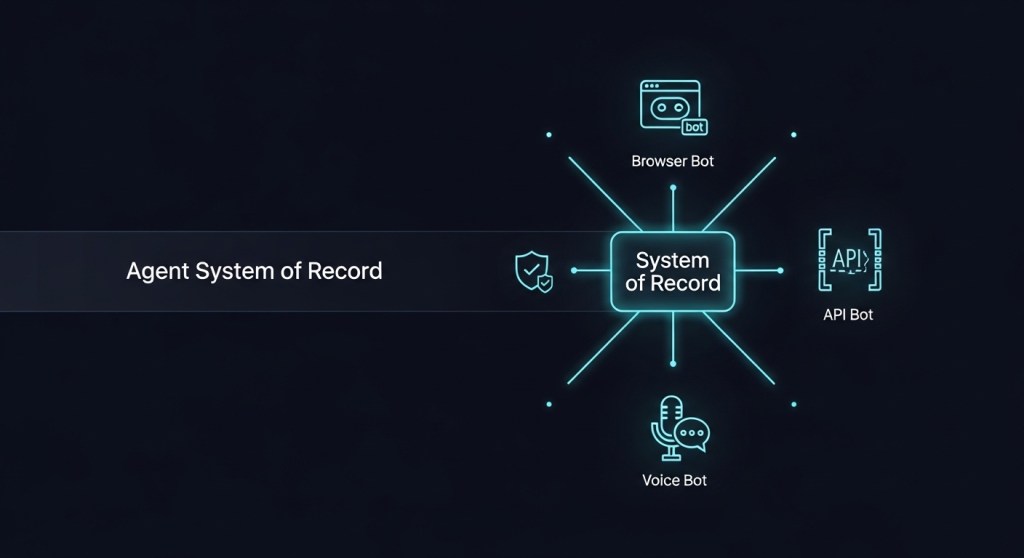
  • Do You Need an Agent System of Record? A 2025 Buyer’s Guide to Managing AI Agents with A2A, MCP, and AgentKit

    Do You Need an Agent System of Record? A 2025 Buyer’s Guide to Managing AI Agents with A2A, MCP, and AgentKit

    Teams are shipping browser agents, API agents, and voice agents faster than they can govern them. The result: duplicated skills, unclear ownership, rising costs, and compliance risk. A new class of platform—the Agent System of Record (ASoR)—is emerging to centralize identity, policy, telemetry, and ROI for your agent fleet. citeturn4search1

    What is an Agent System of Record?

    An ASoR is a control plane for AI agents—much like an HRIS is for employees or a CRM is for customers. It catalogs every agent (who it is), scopes what it can do (skills, permissions, data), tracks what it actually did (events, costs, outcomes), and enforces policies (guardrails, approval flows). Enterprise vendors are beginning to formalize this layer to manage both first‑party and third‑party agents in one place. citeturn4search0

    Why 2025 is the tipping point

    • Interoperability moves mainstream: Microsoft joined Google’s agent‑to‑agent (A2A) standard push so agents can collaborate across apps and clouds—accelerating multi‑agent workflows. citeturn0search3
    • Browser‑native agents mature: Google’s Project Mariner brings safe, parallelized browsing actions, increasing the number of tasks teams can offload to agents. citeturn0search1
    • Developer tooling improves: OpenAI’s AgentKit streamlines building, evaluating, and deploying production agents with connectors and evals—reducing in‑house plumbing. citeturn0search2
    • Proof that agents drive outcomes: Customer support agents are attracting sizable funding and reporting high resolve rates, pushing leaders to standardize governance and measurement. citeturn0search7

    ASoR core capabilities (buyer’s checklist)

    Use this checklist when evaluating platforms—or when composing a build‑your‑own stack.

    1. Identity & Access: Unique agent identity, signed requests, environment scoping, and least‑privilege credentials. Tie identities to protocol‑level claims and your SSO. See our 14‑day playbook to stop agent spoofing.
    2. Policy & Guardrails: Task boundaries, spending limits, human‑in‑the‑loop gates, and allowlists for external actions (AP2/ACP, payments, PII).
    3. Observability & Traceability: End‑to‑end traces per action with tool calls, DOM/API diffs, and outcomes; export via OpenTelemetry; real‑time alerts for drift or anomalies. Pair with our AgentOps SLOs & incident playbooks.
    4. Cost & ROI: Native cost meters for model usage, tools, and infra; attribution to orders, tickets, and MQLs. See our Agent Attribution Playbook.
    5. Interoperability: Support for agent‑to‑agent protocols (A2A) and a tool registry (MCP servers) so agents can discover and call skills across systems. citeturn0search3turn3search7
    6. Evaluation & Quality: Built‑in eval loops, regression suites, red‑team datasets, and safe rollouts. AgentKit‑style evals are a plus even if you’re not on OpenAI. citeturn0search2
    7. Audit & Compliance: PI/PCI posture, retention, regional routing, and documented incident handling. Voice/UX channels require special handling.

    Build vs. Buy in 2025

    Buying an enterprise ASoR

    If you’re already on a major platform, an enterprise ASoR may be the fastest route to governance, with centralized visibility into agent tasks, access, and costs. Vendors are positioning ASoR offerings to treat agents as first‑class digital workers alongside employees and contractors. citeturn4search1

    Building a pragmatic ASoR stack

    Engineering‑led teams can assemble a lean stack with:

    • Registry & Interop: MCP servers for internal tools (e.g., GitHub, Gmail, Custom APIs) so agents can discover capabilities consistently. citeturn3search3turn3search5
    • Execution: Mix API‑first agents (AP2/A2A) with browser agents for long‑tail sites. Our guide on Browser vs. API agents covers trade‑offs. Google’s Mariner shows what modern browsing agents can safely automate. citeturn0search1
    • Agent Dev Layer: Use OpenAI AgentKit or your preferred framework for agent workflows, connectors, and evals. citeturn0search2
    • Telemetry: Standardize traces via OpenTelemetry; stream to your observability stack; alert on policy or SLO breaches.
    • Commerce Hooks (if applicable): Wire AP2/ACP for secure cart, pay, and fulfillment. Start with our Shopify/Woo and 7‑step agent‑ready weekend checklists.

    Who needs an ASoR now?

    • E‑commerce with >5 agents in production: return/exchange, catalog QA, PDP enrichment, merchandising, and checkout/upsell agents often overlap and conflict.
    • SaaS with support and sales agents: as resolution rates climb and new channels launch (e.g., Mariner‑capable browser agents), you need shared identity, policy, and ROI views. citeturn0search1turn0search7
    • Regulated or global teams: you’ll need audit trails, regional routing, and consistent approvals.

    A 14‑day pilot plan

    1. Days 1–2: Inventory & risks. List every agent, inputs, secrets, actions, and current metrics. Flag high‑risk actions (refunds, payouts, PII). Pair this with our AgentOps SLOs.
    2. Days 3–4: Identity and policy. Issue distinct credentials, scopes, and spending caps per agent. Add approval gates for money moves. See agent spoofing playbook.
    3. Days 5–6: Instrumentation. Add OpenTelemetry spans for each tool call and external action; centralize logs.
    4. Days 7–9: Interop baseline. Register a minimal tool set via MCP (search, email, product DB). If collaborating agents, add A2A messaging and capability tags. citeturn3search7turn3search4
    5. Days 10–11: Evals & guardrails. Run regression scenarios, set SLOs (success, latency, cost), and define rollback. AgentKit‑style evals are a plus. citeturn0search2
    6. Days 12–14: Report & decide. Produce a single report: agents, actions, costs, incidents, ROI by workflow. Choose build vs. buy and plan your next 30 days.

    Example: A mid‑market Shopify brand

    A cosmetics retailer runs five agents: returns, VIP support, PDP enrichment, inventory sync, and checkout cross‑sell. After adopting an ASoR, they consolidate secrets, enforce refund approvals over $150, and tag capabilities through MCP so the cross‑sell agent can check inventory before offering bundles. Resolution time drops 28%, refund fraud falls, and they can attribute $97k/month in agent‑assisted upsell revenue using last‑action mandates from AP2/ACP. See our Agent SEO and Attribution Playbook for measurement patterns.

    Risks and how to mitigate them

    • Over‑permissioned agents: adopt least privilege and rotate keys; require explicit mandates for financial actions.
    • Shadow agents: scan for unregistered agent traffic; block unknown signatures at the edge.
    • UI drift and brittle browser automations: prefer APIs for critical paths; reserve browser agents for long‑tail sites or research. Google’s Mariner points to safer parallelization, but you still need rollbacks. citeturn0search1
    • Vendor lock‑in: favor open protocols (A2A, MCP) and exportable traces so you can switch foundations. citeturn0search3turn3search5

    Bottom line

    If you operate more than a handful of production agents—or plan to in Q1 2026—an Agent System of Record is the difference between scale and sprawl. Whether you buy a turnkey platform that treats agents as first‑class digital workers, or assemble a lightweight stack around A2A and MCP with AgentKit‑style evals, the organizations that centralize identity, policy, telemetry, and ROI will win. citeturn4search1turn0search2turn0search3

    Further reading

    • Enterprise ASoR momentum and features. citeturn4search1turn4search0
    • Agent‑to‑Agent standardization (A2A). citeturn0search3
    • MCP server ecosystem round‑up. citeturn3search3turn3search7
    • Browser agents landscape (Mariner). citeturn0search1
    • OpenAI AgentKit launch and evals. citeturn0search2

    Ready to centralize your agents? Subscribe for weekly playbooks, or talk to HireNinja about piloting your Agent System of Record in 14 days.

  • Make Your Product Pages Agent‑Readable: A 7‑Asset Starter Kit for AP2/ACP, MCP, and AEO

    TL;DR: Agent checkout is here. With Google’s Agent Payments Protocol (AP2) and OpenAI/Stripe’s Agentic Commerce Protocol (ACP), buyers can complete purchases inside agents like ChatGPT or via interoperable agent flows. Expose your catalog cleanly and safely with seven lightweight assets: JSON‑LD, product sitemaps, a minimal Products API, an MCP server, AP2/ACP endpoints (or stubs), a secure agent webhook, and observability. Then track agent‑led revenue with a few key KPIs.

    Why now? Google announced AP2 with backing from more than 60 payments and tech partners, and Stripe/OpenAI launched ACP to power Instant Checkout in ChatGPT. Microsoft, meanwhile, is backing open agent protocols like A2A and MCP across its platforms. Together, this signals a pragmatic shift from demos to dependable agent commerce. TechCrunch on AP2, Google Cloud blog, Stripe on ACP, Worldpay support, Microsoft + A2A, Anthropic on MCP.

    Who this is for

    • Shopify/WooCommerce operators who want agent‑led discovery and checkout (AP2/ACP) without a full rebuild.
    • Founders and product leads who need measurable wins (catalog exposure, safer payments, traceable attribution) this quarter.
    • Dev leads who prefer standards (Schema.org, MCP, OpenAPI) and minimal glue code over monoliths.

    The 7‑Asset Starter Kit

    Use these seven assets to make your products easy for agents to find, understand, and purchase.

    1) Product JSON‑LD (Schema.org Product + Offer)

    Add rich structured data to every PDP. This is still the lowest‑effort way to make details unambiguous to answer engines and agents.

    <script type="application/ld+json">
    {
      "@context": "https://schema.org",
      "@type": "Product",
      "name": "Acme Road Helmet",
      "sku": "AC-HELM-42",
      "image": ["https://example.com/img/helmet42.jpg"],
      "description": "Lightweight MIPS road helmet with magnetic buckle.",
      "brand": {"@type": "Brand", "name": "Acme"},
      "offers": {
        "@type": "Offer",
        "price": "119.00",
        "priceCurrency": "USD",
        "availability": "https://schema.org/InStock",
        "url": "https://example.com/products/helmet-42"
      }
    }
    </script>

    Tip: keep titles concise, expose SKU/GTIN, and include canonical URLs and in‑stock signals.

    2) Product sitemap (fast discoverability)

    Ship a dedicated sitemap_products.xml including PDPs and category hubs. Update hourly during promotions. Link it from /robots.txt.

    3) Minimal Products API (documented with OpenAPI)

    Expose a read‑only, rate‑limited JSON endpoint for agents to fetch what the page already shows (no privileged data). Document it with OpenAPI.

    openapi: 3.0.3
    info: { title: Products API, version: 1.0.0 }
    paths:
      /api/products/{sku}:
        get:
          summary: Get product by SKU
          parameters:
            - in: path
              name: sku
              required: true
              schema: { type: string }
          responses:
            "200":
              description: OK
              content:
                application/json:
                  schema:
                    $ref: '#/components/schemas/Product'
    components:
      schemas:
        Product:
          type: object
          properties:
            sku: { type: string }
            name: { type: string }
            description: { type: string }
            images: { type: array, items: { type: string, format: uri } }
            price: { type: number }
            currency: { type: string }
            availability: { type: string }
            url: { type: string, format: uri }
    

    4) MCP server (catalog as tools)

    The Model Context Protocol lets agents call your tools safely. Provide two tools: search_products and get_product_by_sku. Host locally first; add auth and per‑IP rate limits before public exposure. See Anthropic’s announcement and official GitHub org for SDKs and server examples. MCP overview, MCP GitHub.

    {
      "name": "acme-catalog-mcp",
      "version": "0.1.0",
      "tools": [
        {"name": "search_products", "input_schema": {"q": "string", "limit": 10}},
        {"name": "get_product_by_sku", "input_schema": {"sku": "string"}}
      ]
    }
    

    5) AP2 or ACP checkout endpoints (agent‑safe transactions)

    Pick the path your customers will meet first:

    • ACP (OpenAI/Stripe) for ChatGPT Instant Checkout. Implement create/update/complete/cancel cart endpoints, secured with HMAC + HTTPS. Stripe ACP.
    • AP2 (Google) for mandate‑based, payment‑agnostic flows. Implement intent and cart mandates; keep audit trails. Google AP2, coverage.

    You can stub both in parallel and graduate the one your audience uses more.

    6) Secure agent webhook (events + verification)

    Create a single /agent-events webhook to ingest AP2/ACP events. Require signatures, rotate secrets, and store request/response bodies for dispute resolution. Consider Nvidia’s guardrails (content safety, topic enforcement, jailbreak prevention) if your agents converse pre‑checkout. TechCrunch.

    7) Observability (OpenTelemetry + KPIs)

    Emit traces from MCP tool calls and checkout steps. Three KPIs to watch:

    • Agent‑discoverable coverage: % of in‑stock SKUs with valid JSON‑LD + sitemap entry + API response.
    • Agent‑to‑cart rate: AP2/ACP intents that progress to cart mandates (or ACP checkout session creation).
    • Agent AOV vs. site AOV: catch bundle/upsell opportunities surfaced in agent conversations.

    For a deeper attribution setup, see our 14‑day playbook: From Clicks to Mandates.

    Security and governance (don’t skip)

    • Principle of least privilege: The Products API and MCP tools should only return public PDP data. No PII or admin‑only fields.
    • Mandate hygiene: For AP2, store both intent and cart mandates with timestamps and IDs. For ACP, retain signed checkout payloads.
    • Patch quickly: Early agent‑web stacks have had security hiccups; patch and pin dependencies, and add SSRF/path‑traversal tests to CI. Example.
    • Human‑in‑the‑loop: For high‑risk SKUs (e.g., age‑restricted), route to review. Nvidia’s guardrails can help enforce topic/flow limits. Details.

    Example: A weekend pilot

    Scenario: Acme Cycling runs Shopify. Goal: win agent citations and enable Instant Checkout in ChatGPT while preparing for AP2.

    1. Embed JSON‑LD on top 50 PDPs; validate with Rich Results Test.
    2. Publish sitemap_products.xml; link from robots.txt.
    3. Stand up a read‑only Products API (/api/products/{sku}); document with OpenAPI.
    4. Deploy a local MCP server with search_products and get_product_by_sku.
    5. Implement ACP endpoints for 1–2 SKUs; dogfood in staging; enable HMAC verification.
    6. Add /agent-events webhook; log all events; ship OpenTelemetry traces.
    7. Launch with a test cohort; monitor agent‑to‑cart and AOV for a week; iterate.

    Want a deeper platform comparison before you pick browser vs. API agents? Read: Browser Agents vs API Agents and AP2 vs ACP checklist.

    What good looks like by Day 14

    • 80%+ in‑stock SKUs with valid JSON‑LD and API responses.
    • AP2 or ACP integration live for your top 20 SKUs, with audit‑ready mandates/receipts.
    • Agent traffic and conversions visible in your analytics, broken out by protocol/source.
    • Guardrails and on‑call runbooks in place for agent incidents.

    Reality check: agents aren’t magic

    Operator stories show agents can over‑promise, confabulate, or wander without tight scopes, evals, and guardrails. Build instrumentation first; widen powers later. Wired case study.

    Next steps

    Call to action: Ready to make your catalog agent‑readable? Book a 30‑minute working session with HireNinja. We’ll review your PDPs, generate the seven assets, and stand up a safe, measurable AP2/ACP pilot.

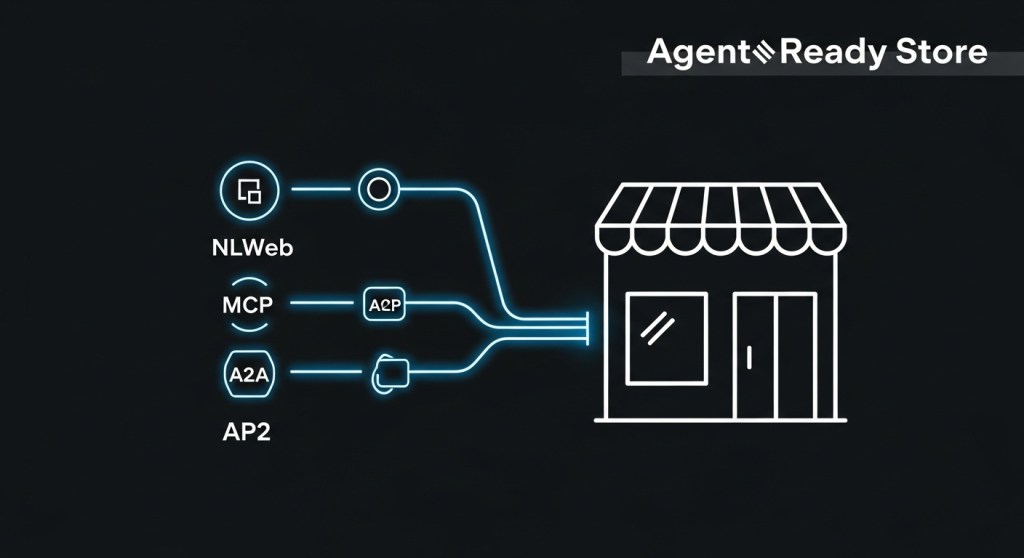
  • Make Your Store Agent‑Ready in a Weekend: NLWeb + MCP + A2A AgentCard + AP2 (7 steps)

    Make Your Store Agent‑Ready in a Weekend: NLWeb + MCP + A2A AgentCard + AP2 (7 steps)

    AI shopping agents moved from demos to distribution in 2025. Browser agents like Google’s Project Mariner and Amazon’s Nova Act are expanding access, while platform toolkits such as OpenAI AgentKit make production launches quicker. citeturn0search5turn0search2turn4search0

    For merchants, the practical question is simple: how do I make my existing store discoverable to agents and safe to purchase from—fast? Below is a 7‑step, copy‑paste‑friendly playbook using four open building blocks: NLWeb for natural‑language interfaces, MCP for standardized tool access, A2A AgentCard for agent‑to‑agent discovery, and AP2 for agent payments. citeturn2search3turn1search3turn5search8turn3search6

    What you’ll ship by Sunday night

    • An NLWeb endpoint that lets agents query your content/catalog in natural language.
    • An MCP server (or connector) exposing product search and order status safely.
    • An AgentCard at /.well-known/agent.json listing your capabilities. citeturn5search0
    • A pilot AP2 “human‑present, card” flow for secure agent checkout. citeturn3search6

    Step 1 — Turn on NLWeb for your domain

    NLWeb (Natural Language Web) lets your site behave like an app that agents can query semantically. Every NLWeb instance is also an MCP server, so you get agent compatibility by design. Start with Microsoft’s intro and sample templates; plan to host your endpoint on a subpath like /nlw. citeturn2search3

    Security note: Microsoft patched an early NLWeb path‑traversal bug in July 2025; keep your implementation updated and avoid copying stale code. citeturn2news12

    Step 2 — Expose product and order data via MCP

    MCP (Model Context Protocol) is the emerging standard that agents use to call tools and read data across vendors. Implement minimal read‑only tools first—e.g., product_search, inventory_lookup, order_status—with OAuth where applicable. The current protocol version is 2025‑06‑18; follow the changelog’s security best practices (OAuth resource indicators, structured tool outputs). citeturn1search3turn1search2

    Step 3 — Publish your A2A AgentCard

    Agents discover other agents through an AgentCard, a small JSON manifest placed at a well‑known path. Publish it at https://yourdomain.com/.well-known/agent.json and list your skills (capabilities), authentication scheme, and endpoint. citeturn5search8turn5search0

    {
      "name": "Acme Store Agent",
      "description": "Product discovery and orders for Acme",
      "endpoints": {"a2a": "https://api.acme.com/a2a"},
      "authentication": {"type": "oauth2", "scopes": ["catalog.read", "orders.read"]},
      "capabilities": {
        "skills": [
          {"id": "cap:product_get", "version": "0.1"},
          {"id": "cap:search", "version": "0.1"}
        ]
      },
      "extensions": [{
          "uri": "https://github.com/google-agentic-commerce/ap2/tree/v0.1",
          "params": {"roles": ["merchant"]}
      }]
    }

    The example uses a CAP‑style skill prefix and advertises AP2 support via the extension URI, which many client agents use for capability discovery. citeturn5search7turn3search7

    Step 4 — Instrument a safe, measurable checkout with AP2

    AP2 (Agent Payments Protocol) adds cryptographic mandates that prove user intent and agent involvement, giving issuers and merchants clear evidence for risk and disputes. Start with the v0.1 human‑present card sample to validate end‑to‑end flows locally, then gate production behind feature flags. citeturn3search6

    AP2 is gaining visibility after Google’s September 16, 2025 announcement; the spec and samples are public. citeturn3search3turn3search5

    Step 5 — Register for discovery

    Point your AgentCard to internal catalogs or vetted registries so agents can find you. MCP’s official roadmap also references a Registry moving toward GA, useful for enterprise/private listings while public options mature. Combine this with thoughtful linking from your site (e.g., a footer link to /.well-known/agent.json). citeturn1search1

    Step 6 — Add observability and evals

    Use platform tracing/evals to measure task success, escalation rates, and AP2 mandate conversions. OpenAI AgentKit provides tracing and eval hooks you can leverage even if your core agent stack is mixed. Track: product_search to add‑to‑cart, mandate issued, mandate authorized, refund/dispute rate. citeturn4search1turn4search6

    Step 7 — Pilot with a constrained surface

    Keep scope tight: 100 SKUs, read‑only order status, and one payment method. Ship, watch logs, then expand. If you want a deeper primer on attribution and spoofing defenses, see our recent posts: Agent Attribution Playbook, Stop Agent Spoofing, and AgentOps SLOs.

    Why these standards?

    • NLWeb: Simple natural‑language interface for websites; each instance doubles as an MCP server. citeturn2search3
    • MCP: Cross‑vendor, open protocol standardizing how agents call tools and fetch data; current spec date is 2025‑06‑18. citeturn1search3
    • A2A + AgentCard: Lets agents discover and collaborate directly; the well‑known agent.json location is recommended. citeturn5search8
    • AP2: Open protocol for agent‑initiated purchases with verifiable intent and liability clarity. citeturn3search6

    Risk guards to bake in

    • Keep NLWeb up to date to avoid known vulnerabilities; validate path handling and dependency versions. citeturn2news12
    • Enforce OAuth scopes and least‑privilege across MCP tools; follow the June 2025 security guidance. citeturn1search2
    • Separate read vs. write tools and require explicit user confirmation for write actions.
    • Log AP2 mandate IDs in your analytics pipeline to attribute agent‑led revenue.

    Execution cheat‑sheet (copy/paste)

    1. Provision /nlw with NLWeb starter; wire to your catalog search and docs. citeturn2search3
    2. Create an MCP server with product_search, inventory_lookup, order_status (OAuth). citeturn1search3
    3. Publish /.well-known/agent.json with skills and AP2 extension. citeturn5search0turn3search7
    4. Run AP2 human‑present card sample locally; issue/verify mandates. citeturn3search6
    5. Enable AgentKit tracing/evals for KPI dashboards. citeturn4search1
    6. List your AgentCard URL in your site footer and internal registries; monitor logs. citeturn5search8

    Where this is heading

    Vendors are converging on open protocols for the “agentic web.” Microsoft publicly backed MCP (and introduced NLWeb) at Build on May 19, 2025, and AP2 was announced with industry partners on September 16, 2025. Expect rapid tooling improvements and more agent directories through Q1–Q2 2026. citeturn2news14turn2search3turn3search3

    Next up from HireNinja

    Want the code scaffolding for Shopify/Woo? See: AP2 vs. ACP (30‑day checklist) and our Agent SEO playbook for distribution tips.


    Call to action: Need help shipping this in a weekend? Book a free 30‑minute Agent Readiness consult with HireNinja—implementation, KPIs, and guardrails included.